The Mechanical Divide: Open vs. Limited Slip Differentials
When evaluating drivetrain upgrades for off-road, track, or heavy-towing applications, the choice between an open differential and a limited slip differential (LSD) fundamentally alters a vehicle's traction capabilities, thermal management requirements, and fluid dynamics. As we navigate the 2026 automotive landscape—characterized by high-torque EV platforms and advanced thermal management systems in trucks like the Ram TRX and Ford F-150 Raptor—understanding the mechanical and fluid-level differences between these carriers is critical for drivetrain longevity.
An open differential relies on a simple spider gear cross-shaft assembly. It distributes torque equally (a 1:1 ratio) to both axle shafts but allows them to rotate at different speeds during cornering. The fatal flaw of the open carrier is its inability to transfer torque to the wheel with traction when the opposing wheel loses grip; torque follows the path of least resistance, resulting in the infamous 'one-wheel peel.' Standard open carriers, such as the Dana 706008X for the Dana 44 axle, are lightweight, generate minimal parasitic heat, and operate efficiently on standard 75W-90 GL-5 gear oil.
Conversely, a limited slip differential introduces internal resistance to bias torque toward the wheel with traction. This is achieved via clutch packs (e.g., Auburn Gear, Eaton Positraction) or helical gear meshes (e.g., Eaton Truetrac). The Torque Bias Ratio (TBR) defines this capability. A TBR of 2.5:1 means the diff can transfer up to 2.5 times more torque to the high-traction wheel before the low-traction wheel begins to spin. However, this internal friction generates significant shear heat, fundamentally changing the axle's fluid requirements and cooling dynamics.
Thermal Loads, Fluid Viscosity, and Differential Pressure Flowmeter Validation
The transition from an open differential to a high-performance LSD introduces a massive thermal penalty. Clutch-type LSDs generate intense localized heat during slip events, which can rapidly degrade conventional gear oil, leading to clutch glazing, chatter, and eventual failure. To combat this, engineers specify higher-viscosity, shear-stable synthetic fluids like 75W-140.
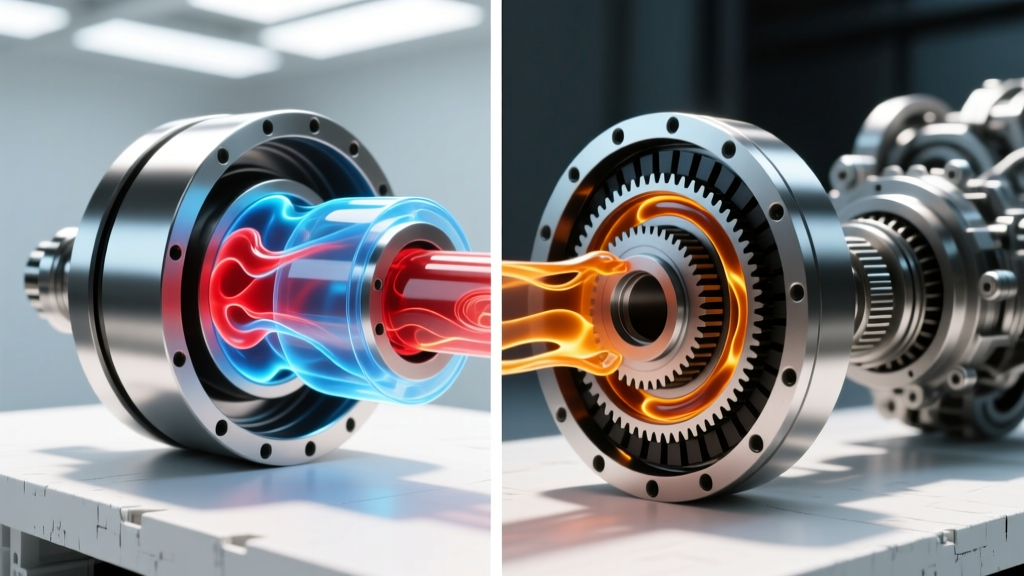
In modern performance and heavy-duty applications featuring active differential cooling loops (where gear oil is pumped through an external heat exchanger), this viscosity change presents a fluid dynamics challenge. When retrofitting these axles, drivetrain engineers utilize a differential pressure flowmeter to validate the cooling circuit's efficiency. A differential pressure flowmeter measures the pressure drop (Delta P) across a restriction—such as the axle's internal cooling galleries or an orifice plate in the cooling line—to calculate the exact volumetric flow rate of the gear oil.
Engineering Insight: If you upgrade to a clutch-type LSD and switch to a thicker 75W-140 fluid without verifying the active cooling pump's capability, the increased fluid resistance can trigger a high Delta P reading on the differential pressure flowmeter. This indicates flow starvation, which leads to pump cavitation, inadequate heat extraction, and catastrophic LSD clutch burnout within the first 500 miles of heavy use.
By monitoring the system with a differential pressure flowmeter, calibrators can adjust the PWM (Pulse Width Modulation) duty cycle of the axle's electric fluid pump to ensure adequate flow rates (typically 2.5 to 4.0 GPM under load) are maintained despite the higher kinematic viscosity of the limited-slip fluid.
2026 Buyer’s Matrix: Differential Carriers and Specifications
Selecting the right differential requires balancing your traction needs, budget, and maintenance tolerance. Below is a comparison matrix of popular differential types for standard light-truck and SUV axles (e.g., Dana 44, Ford 8.8, GM 8.6).
| Differential Type | Example Part Number | Torque Bias Ratio (TBR) | Fluid Requirement | Avg. Cost (2026) |
|---|---|---|---|---|
| Open Carrier (OEM) | Dana 706008X | 1:1 (None) | 75W-90 GL-5 | $120 - $180 |
| Helical Gear LSD | Eaton 19586-010 (Truetrac) | 2.5:1 to 3.5:1 | 75W-90 / 75W-140 GL-5 (No FM) | $600 - $750 |
| Clutch-Type LSD | Auburn 504118 (Pro Series) | 3.5:1 to 5.0:1 | 75W-140 GL-5 + FM Additive | $550 - $700 |
| Automatic Locker | Eaton 010417 (Detroit Locker) | Locked (Infinite) | 85W-140 GL-5 | $700 - $900 |
Helical Gear vs. Clutch-Pack: The Maintenance Reality
The Eaton Truetrac operates on a helical gear planetary design. Because it relies on gear mesh rather than friction clutches, it requires zero friction modifier (FM) additives and operates virtually maintenance-free until the gear teeth themselves wear. It is the premier choice for daily-driven trucks and front-axle applications where clutch chatter would ruin steering dynamics.
Clutch-type LSDs, however, demand strict adherence to fluid protocols. The friction modifiers alter the coefficient of friction on the clutch plates, allowing them to slip smoothly during low-speed cornering rather than grabbing and chattering. Neglecting this additive, or using a fluid with an inadequate FM package, will destroy the clutches in short order.
Precision Installation: Torque Specs and Backlash
Installing an LSD is not a simple drop-in procedure; it requires precision measurement to ensure the hypoid ring and pinion gear set survives. Whether you are installing a Truetrac or an Auburn LSD, the carrier bearing preload and gear backlash must be meticulously set.
- Ring Gear Bolt Torque: For a Dana 44 or Ford 8.8, ring gear bolts must be torqued to 65–85 lb-ft (verify specific axle manual) in a star pattern. Always use a medium-strength threadlocker like Loctite 242 (Blue) to prevent backing out under high-torque shock loads.
- Bearing Cap Torque: Main bearing caps should be torqued to 60–75 lb-ft. Over-torquing can distort the housing, leading to premature bearing failure and whining noises.
- Backlash Specifications: Target a backlash of 0.006” to 0.010”. Use a dial indicator mounted to the axle housing to measure gear play. Too tight, and the gears will overheat and bind; too loose, and the ring gear will hammer the pinion, leading to tooth shearing.
- Contact Pattern: Apply yellow gear-marking compound to the ring gear teeth. Under applied rotational torque, the pattern should be centered on the drive side of the tooth face. Adjust the pinion depth shims and carrier side shims accordingly.
Fluid Dynamics: GL-5 Ratings and Friction Modifiers
The 'diff-fluid' category is dominated by API GL-5 specifications, which contain high levels of sulfur-phosphorus extreme pressure (EP) additives. These additives are mandatory for the sliding friction inherent in hypoid gear sets. However, these same sulfur compounds can be corrosive to the yellow metals (bronze/copper) used in some differential thrust washers and synchronizers, making it vital to check your specific carrier's metallurgy requirements.
For clutch-type LSDs, the base GL-5 oil must be supplemented. Most OEMs and aftermarket manufacturers recommend adding 2 to 4 ounces of Limited Slip Friction Modifier (such as GM EOS additive or equivalent) per axle.
The Break-In Procedure
Proper break-in is essential for seating the clutch packs and mating the new ring and pinion gears. Failure to follow this protocol will result in permanent axle noise and reduced LSD effectiveness.
- Fill the axle with the specified synthetic gear oil and friction modifier.
- Drive the vehicle for 15-20 miles at moderate speeds (under 50 mph) to bring the fluid up to operating temperature.
- Perform 10-12 slow, tight figure-eight maneuvers in an empty parking lot. This forces the LSD clutches to slip and mate evenly, distributing the friction modifier across all clutch surfaces.
- Allow the axle to cool completely (minimum 8 hours).
- For the first 500 miles, avoid heavy towing, drag launches, or sustained highway speeds over 70 mph to allow the hypoid gear metallurgy to work-harden properly.
Final Verdict: Choosing Your Traction Solution
If your application involves rock crawling, deep mud, or extreme drag racing, a full locking differential (like the Spicer/Detroit Locker) is mandatory. For 90% of enthusiasts—ranging from overlanding in a Jeep Wrangler to track days in a Ford Mustang IRS—the helical gear Eaton Truetrac offers the best compromise of traction, longevity, and fluid simplicity. However, if you are integrating your axle into an active thermal management loop, never skip the step of validating your fluid circulation rates with a differential pressure flowmeter. In the high-torque era of modern drivetrains, traction is nothing without thermal control.