The Hydraulic Reality of Modern Automatics
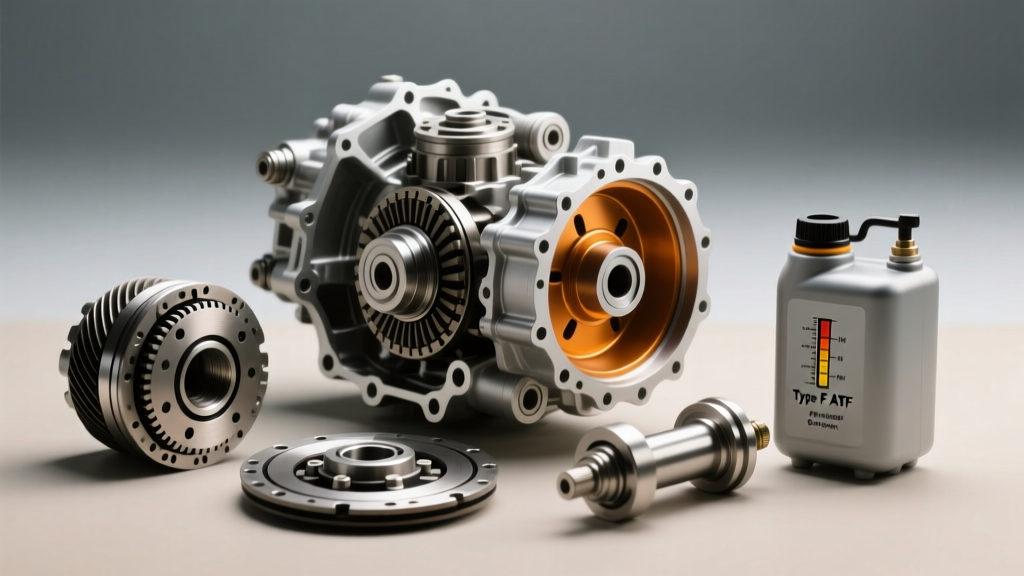
To understand low transmission fluid symptoms, you must first discard the notion that automatic transmission fluid (ATF) is merely a lubricant. In modern hydraulic control units (HCUs), ATF is the working medium—a liquid computer. Whether you are driving a vehicle equipped with a GM 6L80, a Chrysler TorqueFlite 8-speed (ZF 8HP), or a legacy 4L60E, the transmission relies on precise hydraulic volume and pressure to actuate clutch packs, manage torque converter lockup, and cool the internal components.
When the fluid volume drops below the engineered threshold, the transmission's gerotor or vane pump begins to draw in aerated fluid. This cavitation leads to an immediate drop in mainline pressure. The result is not just inadequate lubrication; it is a catastrophic failure of the hydraulic logic that governs shift timing and clutch apply force. Recognizing these symptoms early is the difference between a simple fluid top-off and a $4,500 transmission rebuild.
Clinical Symptoms of Low ATF Volume
Low fluid symptoms often mimic internal mechanical failures or faulty shift solenoids. However, by analyzing the specific behavior of the transmission under load, a trained technician can isolate fluid volume loss from component degradation. Below is a diagnostic matrix correlating driver-reported symptoms with their underlying hydraulic failures.
| Symptom | Hydraulic Cause | Affected Components | Common DTC | Severity |
|---|---|---|---|---|
| Delayed Engagement (D or R) | Insufficient mainline pressure to fill the clutch drum volume before apply. | Forward clutch pack (D), Low/Reverse clutch (R) | P0868 (Line Pressure Low) | High |
| Slipping During 2-3 or 3-4 Shift | Aeration in the apply circuit causing clutch pack friction material to glaze. | 2-4 band, 3-5-R clutch pack | P0732, P0733 (Gear Ratio Error) | Critical |
| Whining or Buzzing at Idle | Pump cavitation due to the pickup tube drawing in air instead of fluid. | Transmission oil pump, pickup screen | None (Audible) | Medium |
| Harsh, Bang-Shift on Downgrade | Valve body spools sticking due to lack of hydraulic damping and cooling. | Accumulator pistons, shift valves | P0729 (Gear 6 Incorrect Ratio) | High |
| Rapid Overheating Under Load | Reduced thermal mass and inadequate flow through the transmission cooler. | Torque converter, cooler lines, TCM | P0218 (Trans Over Temp) | Critical |
Advanced Diagnostic Procedures: The No-Dipstick Era
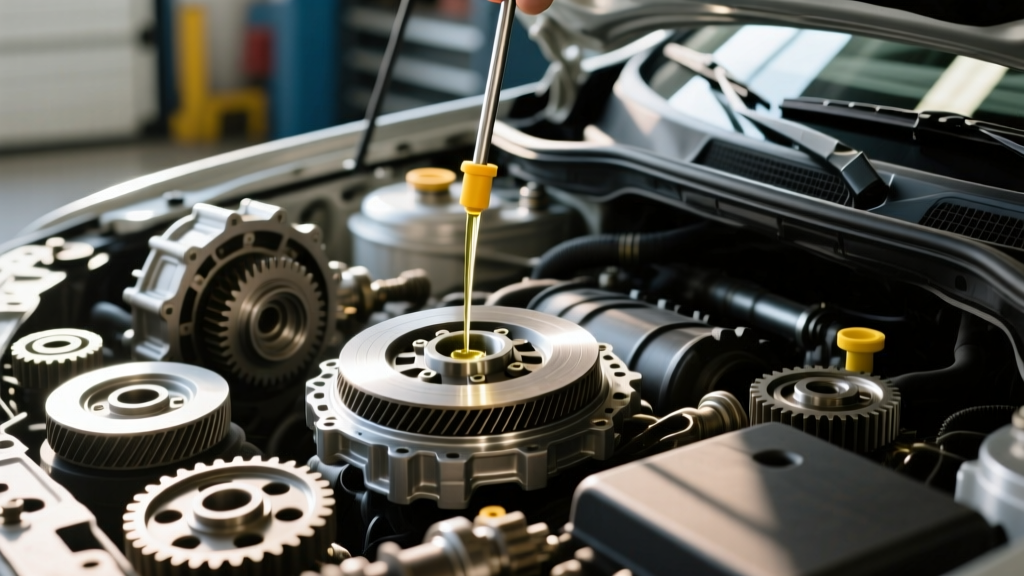
The era of the universal transmission dipstick is largely over. Modern manufacturers have eliminated dipsticks to prevent overfilling and contamination, relying instead on precision leveling plugs and strict temperature-dependent diagnostic procedures. Checking the fluid level incorrectly will yield false low-fluid symptoms and lead to severe overfilling, which causes the rotating assembly to whip the fluid into a froth, mimicking the exact symptoms of low fluid.
GM 6L80 / 6L90 Level Check Procedure
The GM 6L80 and 6L90 transmissions utilize a side-mounted oil level control plug. To accurately diagnose a suspected low fluid condition:
- Vehicle Position: Must be perfectly level on a hoist or pit.
- Engine State: Engine MUST be running. Checking with the engine off will result in fluid draining from the torque converter into the pan, giving a falsely high reading and causing you to underfill the system.
- Temperature Dependency: Connect a bi-directional scan tool to monitor the Transmission Fluid Temperature (TFT) sensor. The fluid must be between 86°F and 122°F (30°C - 50°C).
- Execution: With the engine idling in Park, remove the 10mm Allen level plug. Fluid should drip steadily. If it does not, the system is low and requires fluid injection via the fill tube until a steady drip is achieved.
ZF 8HP (Chrysler 8-Speed / BMW / Audi) Procedure
The ZF 8HP series features an integrated plastic oil pan and filter assembly. The leveling plug is located on the bottom of the plastic pan. According to ZF Aftermarket Technical Guidelines, the check procedure requires the TFT to be strictly between 30°C and 50°C. Because the plastic pan expands with heat, checking the fluid at 80°C will result in a severe underfill once the transmission cools. Furthermore, the ZF 8HP requires the vehicle to be shifted through all gears and paused for 3 seconds in each to fill the respective clutch drums before checking the level plug.
CRITICAL WARNING: Never diagnose low transmission fluid symptoms by checking the level with the engine off on a modern automatic. The torque converter drains back into the sump, artificially raising the pan level. You will mistakenly believe the fluid is full or overfilled, leading to a catastrophic underfill when the engine is started.
Volume vs. Viscosity: When to Change Automatic Transmission Oil
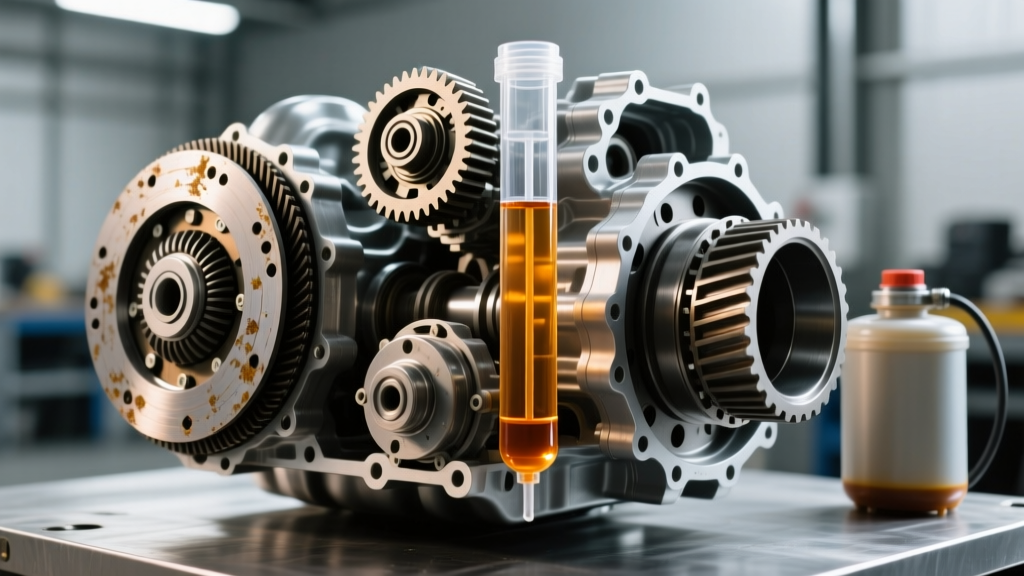
A common diagnostic trap is assuming that low fluid symptoms are strictly the result of a physical leak. In many high-mileage vehicles, the fluid volume may be adequate, but the fluid's chemical properties have collapsed. Understanding the intersection of fluid degradation and hydraulic performance is the core factor in determining when to change automatic transmission oil.
ATF is formulated with a precise base oil and a complex additive package, including friction modifiers, anti-wear agents, and viscosity index improvers. Over time, the shearing forces of the clutch packs and the extreme heat of the torque converter break down the long-chain polymers in the fluid. When viscosity drops, the fluid becomes too thin to maintain the necessary hydraulic seal across the clutch piston O-rings and the valve body spools.
The Viscosity Breakdown Matrix
According to Valvoline Global ATF Engineering Data, a degraded fluid will exhibit the following symptoms that perfectly mirror a low-volume condition:
- Micro-Slipping: The fluid is too thin to maintain apply pressure, causing the clutch pack to slip by fractions of a millimeter, generating immense heat.
- Solenoid Flutter: The pressure control solenoids (PCS) cannot modulate the thin fluid accurately, leading to hunting or oscillating line pressure.
- Varish and Sludge: Oxidized fluid leaves a varnish residue on the valve body separator plate and shift valves, restricting flow and mimicking a low-volume starvation event.
If your scan tool data shows normal fluid levels, but you are experiencing delayed engagements and slipping, the answer to when to change automatic transmission oil is immediately. A simple drain, filter replacement, and refill with the correct OEM-specified fluid (e.g., ZF LifeguardFluid 8 or GM Dexron VI) will restore the hydraulic viscosity and cure the 'low fluid' symptoms without requiring a mechanical teardown.
Service Specifications: Torque and Fluid Capacities
When rectifying low fluid symptoms, precision during the refill and resealing process is non-negotiable. Over-torquing aluminum transmission pans or ZF plastic pans will warp the sealing surface, guaranteeing a future leak that will immediately recreate the low fluid condition. Below are the critical specifications for common platforms:
GM 6L80 / 6L90 (RWD Applications)
- Pan Bolt Torque: 10 Nm (89 lb-in). Note: These are small M6 bolts; using a standard 1/2-inch drive torque wrench will strip the threads in the aluminum case.
- Level Plug Torque: 25 Nm (18 lb-ft).
- Fluid Type: Dexron VI (Do not substitute with older Dexron III or generic multi-vehicle fluids, as the friction modifier profile will cause immediate shudder in the torque converter clutch).
- Service Fill Capacity: Approximately 6.0 Quarts (5.7 Liters) for a pan drop and filter change.
ZF 8HP70 / 8HP75 (Chrysler / Dodge / Jeep)
- Pan/Filter Assembly: The plastic pan and filter are a single, non-serviceable unit. The entire assembly must be replaced during a fluid service.
- Pan Bolt Torque: 10 Nm (89 lb-in) in a specific crisscross sequence to prevent warping the plastic molding.
- Level Plug Torque: 12 Nm (106 lb-in) for the plastic threaded plug.
- Fluid Type: ZF LifeguardFluid 8 (Mopar ZF 8&9 Speed ATF).
- Service Fill Capacity: Approximately 5.5 to 6.5 Quarts depending on the specific cooler line volume and torque converter drain-back.
Conclusion: Proactive Hydraulic Management
Low transmission fluid symptoms are the vehicle's final distress signal before irreversible mechanical damage occurs. By utilizing temperature-dependent diagnostic procedures, understanding the hydraulic implications of mainline pressure loss, and recognizing the difference between physical volume loss and chemical viscosity breakdown, technicians and enthusiasts can accurately diagnose and resolve these issues. Maintaining the correct fluid level and knowing exactly when to change automatic transmission oil based on shear-stability data rather than arbitrary mileage intervals is the cornerstone of modern drivetrain longevity.