The Ghost in the Drivetrain: Understanding Intermittent Clutch Symptoms
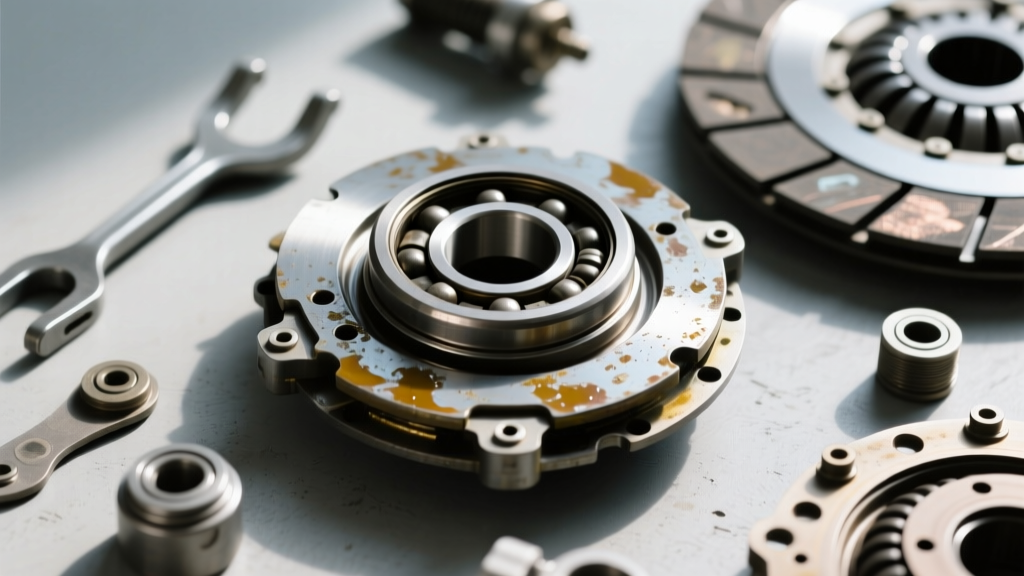
Intermittent clutch problems are the bane of drivetrain diagnostics. Unlike a completely glazed friction disc that slips predictably under wide-open throttle, or a shattered pressure plate diaphragm that refuses to disengage, intermittent issues are elusive. A squeal on cold mornings, a gritty pedal feel exclusively in stop-and-go traffic, or a mysterious vibration that vanishes above 3,000 RPM can leave both drivers and novice mechanics chasing ghosts. At the heart of many of these phantom symptoms lies the clutch throwout bearing (often referred to as the release bearing).
As manual transmissions have evolved, so has the throwout bearing. The traditional fork-and-pivot setup has largely been replaced by the Concentric Slave Cylinder (CSC), which integrates the hydraulic actuator and the bearing into a single unit. According to technical bulletins from Schaeffler REPXPERT, CSC-related intermittent failures often stem from internal seal bypass, thermal expansion of polymer wear sleeves, or localized grease starvation that only manifests under specific operating temperatures. Diagnosing these issues requires a methodical approach that isolates the bearing from the pilot bearing, input shaft, and clutch fork.
Anatomy of an Intermittent Throwout Bearing Failure
To diagnose the problem, you must understand the failure modes. A throwout bearing does not usually fail all at once unless it suffers catastrophic cage disintegration. Instead, it degrades in ways that cause intermittent symptoms:
- Thermal Binding: As the transmission heats up in heavy traffic, the bearing's internal tolerances shrink. A bearing that is silent when cold may begin to chirp or bind after 45 minutes of driving.
- Dry Grease Pockets: In traditional sealed bearings, the grease can migrate away from the load-bearing race. The bearing will be quiet when the grease is distributed evenly, but will rattle or grind when the grease pools at the bottom of the housing during extended highway cruising.
- CSC Seal Bypass: In hydraulic setups, microscopic tears in the internal rubber seals allow DOT 3 or DOT 4 brake fluid to bypass the piston under high pressure. This results in an intermittent "soft" pedal or delayed engagement that resolves itself after pumping the clutch.
The "Pump and Hold" Driveway Diagnostic Test
Before dropping the transmission, perform this static diagnostic sequence to isolate the clutch throwout bearing:
- Engine Off, Static Load: Press the clutch pedal slowly. Feel for mechanical binding or a "notchy" sensation. If the pedal feels rough before the engine even starts, the issue is likely in the pedal pivot, master cylinder pushrod, or a dry clutch fork pivot ball—not the throwout bearing.
- Engine On, Free Play Test: Start the engine in neutral. Rest your foot lightly on the clutch pedal, applying just enough pressure to take up the free play (about 5-10 lbs of force). If a high-pitched squeal or metallic rattle immediately begins and stops when you either release the pedal or press it fully to the floor, the throwout bearing is the primary suspect.
- The RPM Sweep: With the clutch fully depressed (disengaged), slowly sweep the engine from 1,500 to 4,000 RPM. A failing throwout bearing will often change pitch or exhibit a harmonic vibration at specific RPMs due to resonance in the worn bearing races.
Differentiating Throwout Bearing Noise from Other Drivetrain Faults
Misdiagnosing a throwout bearing is an expensive mistake, as the labor to access it requires a full transmission removal. Use the matrix below to differentiate between common manual transmission noises.
| Component | Symptom Trigger | Noise Characteristic | Pedal Feedback |
|---|---|---|---|
| Clutch Throwout Bearing | Light pedal pressure (taking up slack) | High-pitched squeal, chirp, or metallic rattle | Gritty, vibrating, or notchy at the bite point |
| Pilot Bearing / Bushing | Clutch fully depressed (disengaged) | Deep growl or scraping that stops when pedal is released | Difficulty shifting into 1st or Reverse when stopped |
| Input Shaft Bearing | Vehicle in neutral, clutch released (engaged) | Constant whine or growl that changes with engine RPM | None (pedal feel remains normal) |
| Clutch Fork Pivot Ball | Initial pedal depression | Metallic "tick" or "clunk" synchronized with pedal movement | Sharp mechanical notch felt through the pedal |
Real-World Case Studies: Intermittent Scenarios
Case 1: The GM LS Platform (Tremec T56/Magnum)
The GM LS engine mated to a Tremec T56 uses a traditional clutch fork and external slave cylinder. A common intermittent issue on this platform is a "chirp" that only occurs on cold starts and disappears once the engine bay warms up. While many blame the throwout bearing, the true culprit is often the clutch fork pivot ball. The factory stamped-steel fork wears a groove into the hardened steel pivot ball. When cold, the metal-on-metal contact chirps; as heat expands the components, the noise vanishes. Fix: Replace the pivot ball with an adjustable aftermarket unit and upgrade to a bronze clutch fork pivot sleeve. Torque spec for the Tremec T56 bellhousing to LS block is 37 lb-ft (50 Nm).
Case 2: Ford EcoBoost & Modular V8s (Getrag MT-82)
Modern Ford Mustangs utilizing the MT-82 transmission employ a Concentric Slave Cylinder (CSC). Drivers frequently report an intermittent "dragging" clutch when the vehicle is hot, making it difficult to shift into first gear at a stoplight. This is rarely the friction disc. Instead, the CSC's internal seals allow hydraulic fluid to bypass when the fluid is hot and thin, or the CSC's polymer wear sleeve expands and binds on the transmission input shaft sleeve. Fix: Flush the hydraulic system with a high-temperature fluid like Castrol SRF or Motul RBF 600, and replace the CSC with an upgraded RockAuto sourced LuK or Sachs unit.
Replacement Economics: Parts, Labor, and Specifications
As of 2026, the average independent shop rate for manual transmission removal and replacement (R&R) has climbed to $150 to $185 per hour. Because the labor to access the throwout bearing is identical to the labor required to replace the entire clutch assembly, it is universally recommended to replace the clutch disc, pressure plate, and flywheel simultaneously.
- Parts Cost: A premium LuK RepSet Pro or Sachs Performance kit (including CSC, disc, and pressure plate) ranges from $220 to $450 depending on the application.
- Flywheel Resurfacing vs. Replacement: A dual-mass flywheel (DMF) cannot be resurfaced and must be replaced ($400-$900). A solid cast-iron flywheel can be resurfaced ($50-$100) provided it is within the manufacturer's maximum runout specification (typically 0.004 inches measured with a dial indicator).
- Total Job Cost: Expect to pay between $1,100 and $1,800 for a complete clutch and throwout bearing replacement at an independent shop, and upwards of $2,500 at a dealership.
Critical Torque Specifications (General Reference)
Always consult the factory service manual for your specific vehicle, but here are standard benchmarks for popular platforms:
- GM LS Flywheel to Crankshaft: 74 lb-ft (OEM bolts) or follow ARP specifications (typically 85 lb-ft with ARP Ultra-Torque lube).
- Pressure Plate to Flywheel: 15 to 25 lb-ft (depending on bolt size, usually M8x1.25). Always tighten in a star pattern to prevent diaphragm distortion.
- Transmission to Bellhousing: 25 to 35 lb-ft. Ensure the alignment dowels are perfectly seated; a misaligned dowel will cause the throwout bearing to wear eccentrically, leading to premature failure.
Expert Tips for Preventing Premature Wear
The clutch throwout bearing is designed to spin only when the clutch pedal is depressed. The most common cause of premature wear is "riding the clutch"—resting your foot on the pedal while driving. This applies a light, constant load to the bearing, generating immense friction and heat without fully engaging the hydraulic system to cool or lubricate it.
Furthermore, hydraulic fluid is hygroscopic, meaning it absorbs moisture from the atmosphere over time. This moisture lowers the fluid's boiling point and promotes internal corrosion within the CSC and master cylinder. To ensure longevity, flush the clutch hydraulic system with fresh DOT 4 fluid every 24 months or 30,000 miles. By understanding the nuanced symptoms of a failing clutch throwout bearing, you can accurately diagnose intermittent drivetrain gremlins before they leave you stranded in traffic.