The Evolution of E Clutch Motorcycles and Acoustic Diagnostics
The introduction of electronic clutch systems has fundamentally changed the manual riding experience. As Honda expands its E-Clutch architecture across the 2026 Transalp, NC750X, and Africa Twin lineups—building on the pioneering CB650R and CBR650R platforms—technicians are encountering a new hybrid of mechanical and electronic failure modes. Diagnosing noise in e clutch motorcycles requires a dual-brain approach: you must differentiate between the acoustic signatures of a traditional wet multi-plate clutch basket and the high-frequency whines of dual-stepper motor actuators.
When a rider reports grinding, squealing, or chirping, the instinct is to immediately tear down the wet clutch pack. However, in an E-Clutch system, the electronic actuator assembly and hydraulic control unit (HCU) are equally suspect. This expert guide breaks down the precise diagnostic pathways for isolating and resolving E-Clutch noise profiles, utilizing OEM torque specifications, micrometer measurements, and electronic diagnostic trouble codes (DTCs).
Actuator vs. Mechanical: Isolating the Source of the Grind
The Honda E-Clutch system utilizes two dedicated electric motors: one for clutch engagement (assist) and one for disengagement (auto-blip and lever-less shifting). These motors drive a planetary gear reduction system connected to the traditional clutch pushrod.
Stepper Motor Whine vs. Planetary Gear Grinding
A high-pitched, servo-like whine during lever-less upshifts is entirely normal; this is the sound of the engagement stepper motor operating at peak RPM. However, a metallic grinding or crunching noise originating from the right-side actuator cover indicates internal planetary gear lash or actuator shaft bearing failure.
- Diagnostic Step: Connect an OBD2 scanner capable of reading Honda motorcycle-specific PGM-FI and E-Clutch modules. Look for DTC 81-1 (Clutch Actuator Motor Malfunction) or DTC 82-1 (Clutch Sensor Error).
- Physical Verification: Remove the right-side actuator cover (requires draining the engine oil). Inspect the actuator drive gear for pitting. If the actuator shaft exhibits more than 0.15mm of radial play, the internal needle bearings have failed, causing the gear to bind and grind against the housing.
Expert Tip: Never attempt to force the E-Clutch actuator arm by hand when the ignition is off. The internal reduction gears are not designed for back-driving and will strip, resulting in a $1,200+ actuator assembly replacement. Always use the Honda MCS (Motorcycle Communication System) tool to command the clutch into the 'service release' position before mechanical disassembly.
Chirping and Rattling: Aluminum Basket Tang Notching
If the grinding or chirping noise is most prominent at idle and fades as engine RPM rises, the fault likely lies within the traditional wet clutch basket. E-Clutch motorcycles manage low-speed friction zone slip electronically, which can subject the clutch basket tangs to aggressive, micro-stuttering impacts that traditional manual riders naturally smooth out with lever modulation.
Measuring Tang Wear and Friction Plate Degradation
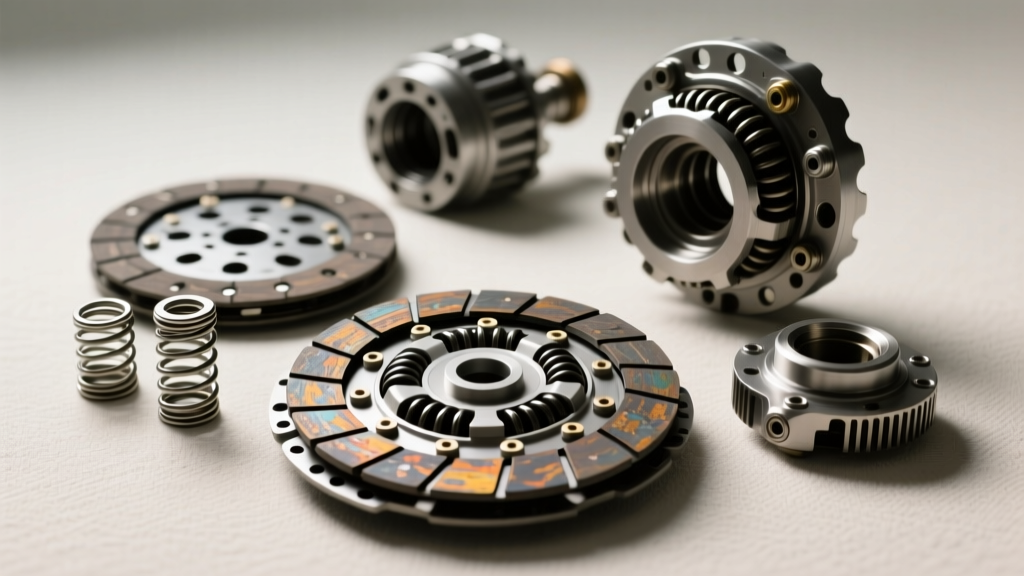
The friction plates feature outer tabs that slot into the aluminum clutch center (basket). Over time, the E-Clutch's automated micro-slipping during stop-and-go traffic hammers these tabs, creating notches. When the clutch engages, the plates momentarily hang in these notches before snapping free, producing a distinct metallic chirp or rattle.
During teardown, measure the friction plates using a micrometer. For the Honda CB650R E-Clutch platform, the standard friction plate thickness is 3.00 mm, with a strict service limit of 2.60 mm. More importantly, inspect the aluminum basket tangs. If the notch depth exceeds 0.3 mm, the basket must be replaced. Continuing to use a notched basket with new friction plates will cause the new plates to deform within 2,000 miles, leading to severe clutch chatter and erratic E-Clutch sensor readings.
Squealing Under Load: Release Bearings and Oil Shear Dynamics
A high-frequency squeal that occurs precisely when the E-Clutch auto-blips on downshifts, or when the rider pulls the manual override lever, points to the clutch release bearing or hydraulic fluid aeration.
Release Bearing Preload and Failure
The clutch release bearing (OEM Part 91105-KY3-003) is subjected to immense lateral force when the E-Clutch actuator pushes the clutch lifter. If the bearing lacks proper lubrication or the internal races are scored, it will emit a sharp squeal. Unlike traditional manual setups where the bearing only spins under lever pressure, the E-Clutch actuator maintains a dynamic baseline preload on the pushrod to eliminate slack and ensure sub-50-millisecond shift times. This constant preload accelerates bearing wear if the engine oil is degraded.
The Critical Role of MA2 Friction Modifiers
E-Clutch systems are hyper-sensitive to oil viscosity and friction modifiers. Using standard automotive oil or an incorrect JASO rating will cause the wet clutch plates to squeal and slip under the ECU's aggressive engagement mapping. Always use a JASO T 903 standard MA or MA2 certified oil. Honda's GN4 10W-30 is specifically formulated with the friction modifiers required for the E-Clutch's aluminum and paper-based friction material interface. According to Honda Powersports technical service bulletins, switching to a heavier 10W-40 or 20W-50 oil in E-Clutch models can delay actuator response times and induce low-speed squealing due to improper hydraulic damping.
E-Clutch Noise Diagnostic Matrix
Use this structured matrix to rapidly isolate the source of the noise based on operational state and acoustic profile.
| Noise Profile | Operational State | Probable Fault Source | Diagnostic Action & Fix |
|---|---|---|---|
| Metallic Grinding | Lever-less upshifts / Auto-blip downshifts | Actuator Planetary Gear Lash / Shaft Bearing | Scan for DTC 81-1. Inspect actuator shaft radial play. Replace actuator assembly. |
| Rhythmic Chirping | Idle in gear, clutch engaged | Clutch Basket Tang Notching | Measure basket notches (>0.3mm limit). Replace clutch center (22200-MJE-D01). |
| High-Pitched Squeal | Manual lever pull or heavy load engagement | Release Bearing / Incorrect Oil Viscosity | Verify JASO MA2 oil. Inspect release bearing (91105-KY3-003) for scoring. |
| Low-Frequency Chatter | Taking off from a stop (E-Clutch auto-engage) | Warped Steel Plates / Glazed Friction Material | Check steel plate runout (>0.2mm limit). Replace clutch pack and flush HCU. |
Precision Reassembly: Torque Specs and Clearances
Reassembling an E-Clutch motorcycle requires strict adherence to torque specifications. The E-Clutch ECU calculates clutch wear and engagement points based on the exact physical distance between the actuator arm and the clutch pack. Over-torquing or under-torquing the clutch center locknut will alter this stack height, causing the ECU to hunt for the friction zone, resulting in actuator gear whine and premature wear.
Critical Fastener Torques
When reinstalling the clutch center and primary drive components on the Honda 650cc E-Clutch inline-four platform, utilize the following specifications:
- Clutch Center Locknut: 127 N·m (94 lb-ft). Must use OEM clutch holder tool (07923-KY3-0000) to prevent basket damage.
- Primary Drive Gear Locknut: 127 N·m (94 lb-ft).
- Clutch Spring Bolts: 12 N·m (9 lb-ft) in a crisscross pattern.
- Actuator Mounting Bolts: 12 N·m (9 lb-ft). Ensure the actuator pushrod is fully seated in the lifter cup before tightening.
After mechanical reassembly and oil fill, the E-Clutch system must undergo an electronic initialization. This cannot be bypassed. Using the Honda diagnostic software, navigate to the E-Clutch menu and select 'Clutch Position Learning'. The system will cycle the stepper motors to map the physical engagement point. As noted in comprehensive teardowns by Cycle World, failing to perform this initialization will result in the ECU defaulting to a safety map, causing harsh engagements, stalling, and severe actuator grinding noises.
Sourcing OEM vs. Aftermarket Components
While aftermarket clutch springs and Kevlar friction plates are popular for traditional manual bikes, they are strongly discouraged for E-Clutch applications. The E-Clutch ECU expects a specific coefficient of friction. Aggressive aftermarket Kevlar plates can cause the ECU's slip-control algorithm to panic, leading to erratic actuator behavior and chatter. Stick to OEM paper-based friction plates (e.g., Honda Part 22100-MJE-D00 for the friction plate set) to ensure seamless integration with the factory software mapping. For deep-dive OEM part diagrams and pricing, technicians frequently reference Partzilla's Honda Motorcycle Catalog to verify superseded part numbers for the latest E-Clutch revisions.
By combining traditional mechanical measurement with modern electronic actuator diagnostics, technicians can accurately pinpoint the source of grinding, squealing, and chirping in e clutch motorcycles, ensuring a smooth, silent, and reliable ride for the next 50,000 miles.