The Intersection: Pedal Drop and Acoustic Failure
When a driver reports their clutch going to floor, the immediate assumption is often a simple hydraulic failure, such as a blown master cylinder seal or a leaking external slave. However, when this sudden loss of pedal resistance is accompanied by distinct acoustic warnings—grinding, squealing, or chirping—the diagnostic landscape shifts dramatically. You are no longer dealing with a mere fluid leak; you are witnessing a catastrophic mechanical intersection where hydraulic bypass meets severe friction component degradation.
In modern manual transmissions, from the Mazda SkyActiv-MT to the heavy-duty Tremec T56 Magnum, the clutch release system operates under extreme thermal and kinetic stress. A pedal that drops to the floor while emitting noise indicates that the release bearing, clutch fork, or pressure plate diaphragm has physically failed, causing the hydraulic piston to over-extend and bypass its internal seals. This guide provides a master-level diagnostic framework for identifying, isolating, and repairing these complex dual-symptom failures.
Acoustic Triage: Decoding the Clutch Noise
To accurately diagnose a clutch system, technicians must treat sound as a primary data point. The specific frequency and trigger of the noise will isolate the failing component before the transmission is even dropped.
Squealing and Chirping: The Bearing Dilemma
A high-pitched squeal or rhythmic chirping that occurs precisely as the clutch pedal is depressed (or when it is fully on the floor) typically points to the release bearing (throw-out bearing) or the pilot bearing.
- The Release Bearing Squeal: If the noise appears when taking up the free-play of the pedal and worsens as the pedal goes to the floor, the release bearing's internal needle rollers are likely dry or spalled. In vehicles equipped with Concentric Slave Cylinders (CSC), such as the Ford Mustang EcoBoost, a failing CSC bearing will chirp continuously when the pedal is held to the floor due to lateral runout on the transmission input shaft.
- The Pilot Bearing Chirp: If the chirp occurs only when the clutch is fully disengaged (pedal on the floor) and the transmission is in gear, the pilot bearing is seizing. The input shaft is spinning at engine RPM while the clutch disc is stationary, creating immense friction on the seized pilot bearing bushing.
Metal-on-Metal Grinding: Catastrophic Mechanical Failure
Grinding is an urgent acoustic red flag. If your clutch is going to floor with a harsh, metallic grinding sensation vibrating through the pedal, the mechanical linkage has suffered a structural failure.
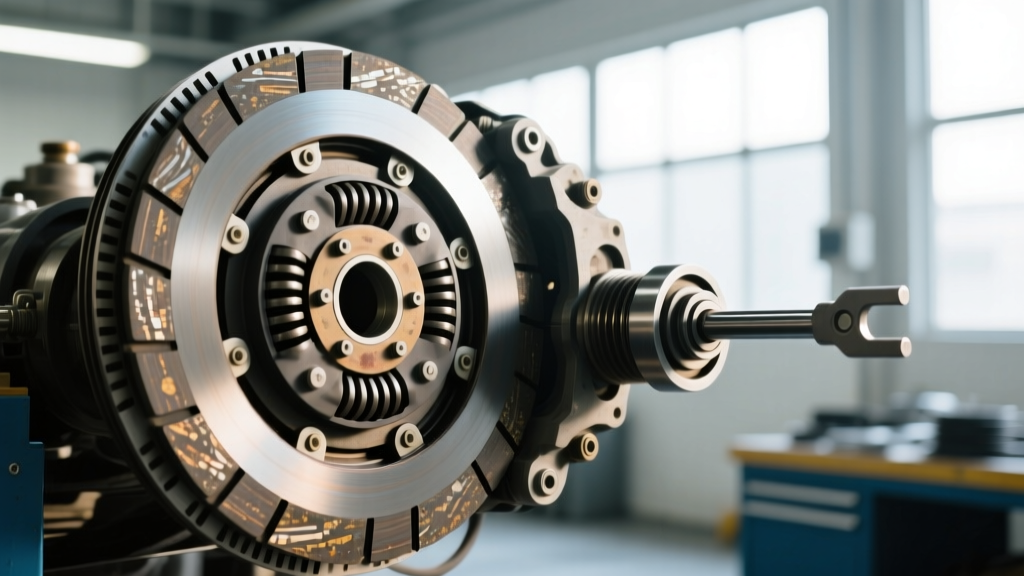
One common culprit is the clutch fork pivot ball. Over time, the spherical pivot point wears a groove into the cast or stamped steel fork. When the pedal is depressed, the fork slips off the pivot ball, dropping the pedal to the floor and causing the fork to grind directly against the bellhousing or the pressure plate diaphragm fingers. Another severe failure mode is a shattered diaphragm spring. If a finger breaks off the pressure plate, the release bearing will grind against the uneven, jagged edge of the spring, resulting in a violent grinding noise and an immediate loss of pedal return pressure.
Expert Insight: Never ignore a 'crunch' felt at the bottom of the pedal travel. According to teardown analyses published by Transmission Digest, a crunching sensation paired with a grinding noise almost always indicates that the release bearing has over-traveled past the diaphragm spring's high point, physically snapping the spring fingers and destroying the hydraulic slave cylinder in the process.
Diagnostic Matrix: Noise vs. Pedal Behavior
Use this structured matrix to cross-reference the acoustic symptoms with the hydraulic pedal behavior before authorizing a teardown.
| Acoustic Symptom | Pedal State | Primary Suspect | Secondary Damage Check |
|---|---|---|---|
| High-pitched Squealing | Mid-travel to Floor | Dry/Spalled Release Bearing | CSC scoring, fork wear |
| Rhythmic Chirping | Fully on Floor (In Gear) | Seized Pilot Bearing | Input shaft galling |
| Harsh Metallic Grinding | Dropping to Floor | Broken Diaphragm Spring | Shattered TOB, slave blowout |
| Scraping / Clunking | Bottoming Out | Worn Fork Pivot Ball | Bellhousing gouging |
| Silent Drop (No Noise) | Sudden Loss of Pressure | Hydraulic Seal Bypass | Master/Slave internal leaks |
Advanced Teardown Metrics and Flywheel Runout
Once the transmission is removed, the physical inspection must be meticulous. A clutch going to floor due to mechanical binding is often the result of improper previous installation or ignored tolerances.
When inspecting a Dual-Mass Flywheel (DMF), such as those found in Volkswagen TDI or Subaru WRX applications, you must measure both rotational free-play and axial runout. According to engineering standards from Schaeffler (LuK), a DMF axial runout exceeding 0.050 inches (1.2 mm) will cause the release bearing to wobble violently. This wobble generates the chirping noise and eventually snaps the bearing retainer collar, allowing the CSC to bottom out and push the pedal to the floor.
Furthermore, inspect the transmission input shaft splines. If the clutch disc hub splines are corroded or lack proper lubrication, the disc will 'hang up' on the shaft. The hydraulic slave will push with maximum force (causing internal hydraulic bypass and pedal drop) while the fork grinds against the stuck disc. Always lubricate input shaft splines sparingly with a high-molybdenum grease like Molykote BR2 Plus. A single gram is enough; over-application will migrate to the friction material, causing severe clutch slip.
2026 Repair Costs and Part Selection Best Practices
When replacing components that have caused a pedal-drop and noise scenario, opting for OEM or premium aftermarket kits is non-negotiable. Cheap replacement release bearings are the leading cause of repeat chirping complaints.
- LuK RepSet Pro (Includes DMF): For European and heavy-duty applications, expect to pay between $450 and $850 for the kit. These include the pre-bled CSC, eliminating the air pockets that cause spongy pedal feel and over-travel grinding.
- Sachs / ZF Clutch Kits: Ideal for Porsche, BMW, and Audi applications. Pricing ranges from $300 to $600. Always replace the pilot bearing and rear main seal concurrently.
- Labor and Machining: Transmission R&R labor typically runs $800 to $1,400 depending on the vehicle's subframe complexity. If the flywheel surface is scored from a shattered diaphragm spring, replacement is mandatory, as resurfacing a DMF is strictly prohibited by SAE International friction standards.
Reassembly Torque Specifications
Proper clamping force ensures the pressure plate diaphragm maintains its geometry, preventing the fork from over-extending. Always use a calibrated torque wrench and follow the star-pattern sequence.
- Pressure Plate to Flywheel (M8 Bolts): 18-22 lb-ft (25-30 Nm)
- Pressure Plate to Flywheel (M10 Bolts): 35-40 lb-ft (47-54 Nm)
- Dual-Mass Flywheel to Crankshaft (e.g., GM LS V8): 74 lb-ft + 90-degree turn
- Bellhousing to Engine Block: 35-50 lb-ft (crucial to prevent input shaft misalignment and subsequent pilot bearing chirp)
Final Bleed and Calibration
After reassembly, the hydraulic system must be bled using a pressure bleeder set to 15-20 PSI. For vehicles with a CSC, gravity bleeding is rarely sufficient to remove the micro-bubbles trapped in the concentric piston. If air remains, the slave cylinder will over-compensate, pushing the release bearing past its intended stroke limit, recreating the exact grinding noise and floor-drop scenario you just spent thousands of dollars to fix. Perform 30 slow pedal actuations with the bleeder open to ensure a rock-solid pedal stop and silent engagement.