The Forensics of Friction: Reading Clutch Disc Wear
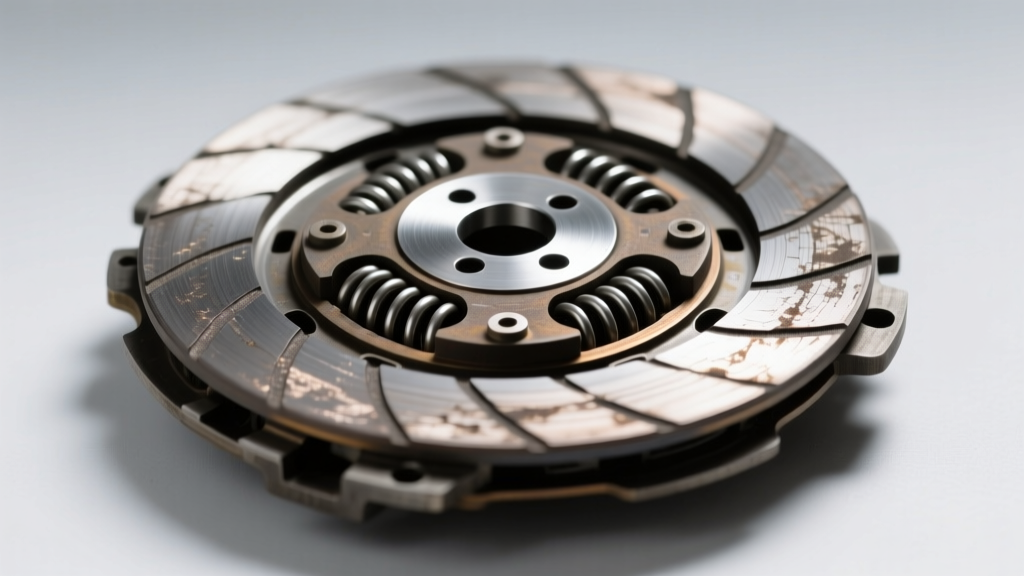
When a manual transmission vehicle experiences slipping, chatter, or premature failure, the immediate instinct is often to blame the friction material itself. However, as any seasoned drivetrain specialist will tell you, a worn clutch disc is rarely the root cause; it is merely the victim of a broader systemic issue. By treating a removed clutch disc like a crime scene, you can decode its wear patterns to diagnose underlying failures in other clutch kit components, the flywheel, or the transmission input shaft.
In this expert guide, we break down the specific visual cues left on clutch friction surfaces, correlate them to mechanical faults, and outline the precise torque specs, flywheel Roughness Average (RA) requirements, and installation best practices needed to ensure your next clutch replacement survives the long haul.
Visual Diagnostic Chart: Decoding Wear Patterns
Before discarding your old friction disc, lay it on a clean workbench under bright, direct light. Use the following diagnostic matrix to identify the primary wear signature and its corresponding mechanical culprit.
| Wear Pattern | Visual Cue | Root Cause Diagnosis | Corrective Action |
|---|---|---|---|
| Concentric Grooving | Deep, circular scratches mirroring the flywheel surface. | Contaminated friction surface, embedded debris, or incorrect flywheel RA finish. | Resurface or replace flywheel; verify RA specs match the new friction material. |
| Asymmetric / Tapered Wear | One side of the disc is worn down to the rivets, while the opposite side has material remaining. | Input shaft misalignment, bent bellhousing, or worn pilot bearing/bushing. | Check bellhousing runout with a dial indicator; replace pilot bearing. |
| Thermal Blueing & Heat Spots | Dark blue or black scorched patches on the friction material and corresponding flywheel. | Severe slipping, riding the clutch pedal, or inadequate pressure plate clamp load. | Upgrade to a higher clamp-load pressure plate; address driver habits or hydraulic drag. |
| Hub Spline Galling | Metal transfer or heavy wear on the inner steel splines of the disc hub. | Lack of input shaft lubrication, aggressive engagement, or misalignment binding. | Clean shaft splines; apply proper molybdenum disulfide spline grease. |
| Marcelling (Wave) Flattening | The cushion segments (marcel springs) between the friction pucks are completely crushed. | Normal end-of-life wear, or severe over-torqueing during aggressive drag launches. | Replace disc; consider a solid-hub (unsprung) disc for dedicated race applications. |
Deep Dive: Flywheel Surface and RA Mismatches
One of the most common mistakes when sourcing new clutch kit components is ignoring the flywheel's surface finish. Friction materials require a specific Roughness Average (RA) measured in microinches to bed in correctly. If you install a ceramic or sintered iron disc on a flywheel machined for an organic disc, the results will be catastrophic.
Matching RA Specs to Friction Materials
- Organic / Kevlar Composites: Require a smooth finish, typically between 20 and 60 RA. If the flywheel is too rough, it will act like a cheese grater, tearing the organic fibers and causing immediate chatter and grooving.
- Ceramic / Sintered Iron: Require a rougher, more aggressive finish, typically between 60 and 80 RA. If installed on a mirror-smooth flywheel, the ceramic will not bite. Instead, it will slip, generate immense heat, and glaze the friction surface within the first 50 miles.
- Multi-Puck Sintered Discs: Often require cross-hatching on the flywheel to provide leading edges for the pucks to grab, preventing the infamous 'on-off' switch engagement that plagues poorly matched multi-puck setups.
Expert Tip: Never assume a 'new' flywheel from a parts store is machined to the correct RA for your specific disc. Always measure the RA with a profilometer, or provide your machine shop with the friction manufacturer's exact spec sheet before resurfacing.
Asymmetric Wear and the Alignment Imperative
If your clutch disc exhibits tapered wear—where the inner edge is worn to the rivets but the outer edge is relatively thick—you are dealing with an alignment issue. The transmission input shaft is not sitting perfectly parallel to the engine crankshaft. This forces the clutch disc to flex laterally within the pressure plate, destroying the marcel springs and wearing the friction material unevenly.
Diagnosing Bellhousing Runout
According to Tremec Engineering, maximum allowable bellhousing runout for high-performance applications (such as the T-56 Magnum or TKO 600) is 0.005 inches. To verify this:
- Mount a dial indicator to the crankshaft or flywheel.
- Sweep the indicator across the inner bore of the bellhousing.
- If runout exceeds 0.005", the clutch disc will wobble, leading to premature release bearing wear and tapered friction wear.
- Fix this using offset dowel pins (available in 0.007", 0.014", and 0.021" offsets from manufacturers like Lakewood or RobbMc Performance).
The Pilot Bearing: The Forgotten Component
A seized or worn pilot bearing will drag the input shaft, preventing the clutch from fully disengaging. This causes the disc to slip against the pressure plate while the transmission is in gear, leading to severe thermal blueing and heat spots. When replacing clutch kit components, always replace the pilot bearing. For high-horsepower street/strip builds, upgrade from a porous bronze bushing to a sealed needle-roller pilot bearing to handle the increased lateral load of heavy input shafts.
Spline Binding and Lubrication Protocols
Examine the inner hub splines of the worn clutch disc. If you see galling, metal transfer, or 'step' wear on the leading edges of the splines, the disc was binding on the transmission input shaft. When the disc cannot slide freely along the splines, the pressure plate cannot fully retract it, resulting in dragging and gear grind.
The Fix: Clean the input shaft splines with a wire wheel and brake cleaner. Apply a very light coating of high-molybdenum disulfide grease (such as Tremec #TREM-100 or Honda Moly Paste). Never pack the splines with standard chassis grease or anti-seize; centrifugal force will sling the excess grease onto the friction surfaces, ruining the new clutch kit instantly.
Best Practices: Torque Sequences and Break-In
Proper installation of the pressure plate is just as critical as the disc itself. Uneven torqueing of the pressure plate bolts can warp the diaphragm spring, leading to uneven clamp load and localized hot spots on the clutch disc.
OEM Torque Specifications (Reference Guide)
- GM LS / LT V8 (Flywheel to Crank): 74 lb-ft (Use new torque-to-yield bolts or apply red Loctite to reusable ARP bolts).
- Ford Coyote 5.0L (Flywheel to Crank): 59 lb-ft + 90 degrees.
- Pressure Plate to Flywheel (Most 10.5" - 12" setups): 25 to 35 lb-ft, tightened in a strict star/crisscross pattern, one full turn at a time to compress the diaphragm spring evenly.
The 500-Mile Break-In Protocol
Organic and Kevlar clutch kit components require a proper bedding process to transfer a layer of friction material into the microscopic pores of the flywheel. For the first 500 miles, avoid wide-open-throttle (WOT) launches, heavy towing, and aggressive stop-and-go traffic. Perform 20-30 moderate accelerations from 2,000 to 4,000 RPM, allowing the drivetrain to coast down between pulls to dissipate heat. Ceramic discs generally require less break-in but still demand 100-200 miles of moderate use to seat properly.
Cost Analysis: Sourcing the Right Components
When replacing your clutch, buying a cheap, mismatched kit will cost you double in labor when it fails prematurely. Here is a realistic 2026 market pricing breakdown for common replacement tiers:
- OEM Replacement (e.g., LuK RepSet / Sachs): $250 - $400. Ideal for daily drivers under 350 hp. Includes matched disc, pressure plate, release bearing, and alignment tool.
- Performance Street (e.g., ACT HD-SS, Centerforce DYAD): $550 - $900. Features a heavy-duty diaphragm spring (30-40% more clamp load) with a streetable organic or Kevlar disc. Best for modified vehicles up to 550 hp.
- Race / Multi-Disc (e.g., McLeod RST, Tilton): $1,200 - $2,500+. Required for 800+ hp applications. Utilizes twin or triple ceramic/sintered discs to multiply torque capacity without requiring brutal pedal effort.
For deeper technical specifications on dual-mass to single-mass flywheel conversions and their impact on drivetrain harmonics, consult the engineering bulletins available via Schaeffler Aftermarket. Additionally, reviewing pressure plate clamp-load charts from McLeod Racing can help you select a diaphragm spring that balances holding power with acceptable pedal effort for your specific chassis.
Final Thoughts
A clutch disc does not fail in a vacuum. By taking ten minutes to analyze the wear patterns on your removed friction disc, you can uncover hidden issues with your flywheel RA, bellhousing alignment, or hydraulic release system. Treat your clutch kit components as a precision system, adhere strictly to torque and lubrication protocols, and your manual transmission will deliver seamless, reliable power delivery for thousands of miles.