The Search Intent Mismatch: Dinner vs. Drivetrain
If your browser history is currently cluttered with clutch kitchen & pour house reviews, you have likely taken a wrong turn on the internet searching for a weekend dinner spot and craft cocktails. But if you are reading this, you aren't looking for a Miami restaurant—you are looking for the real clutch performance: automotive drivetrain engagement. Whether you are upgrading a T56 Magnum in an LS-swapped chassis, building a high-RPM Coyote track car, or rebuilding the 4-5-6 clutch hub in a 6L80 automatic, selecting the correct clutch disc size and diameter is the single most critical decision in your drivetrain build.
As we navigate the 2026 performance aftermarket, the trend is shifting away from simply "buying the biggest disc possible" toward precision-matched rotational mass and friction material science. This comprehensive buyer's guide breaks down the physics, part numbers, and installation specifications required to choose the right clutch diameter for your specific application.
The Physics of Clutch Disc Diameter and Rotational Mass
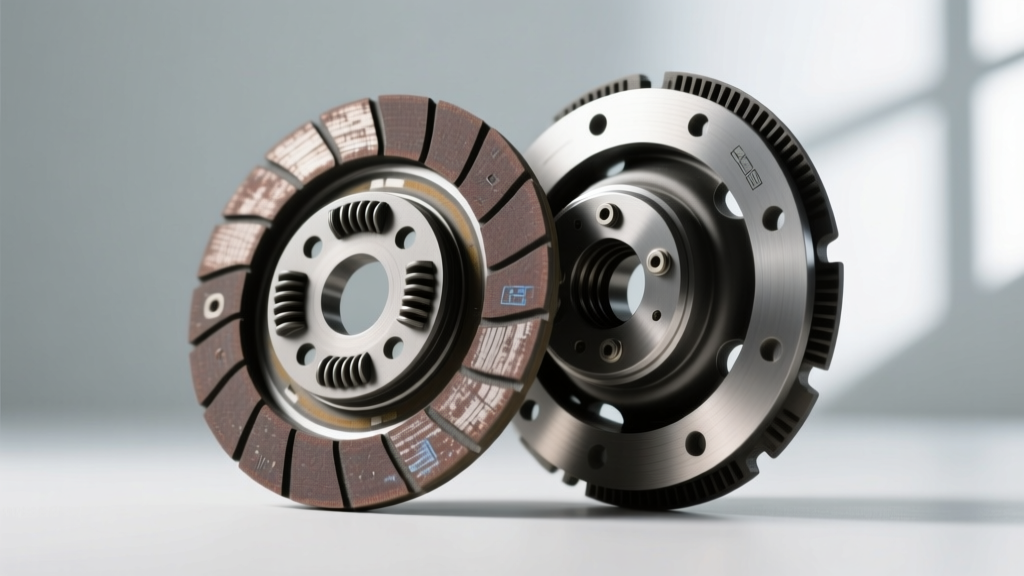
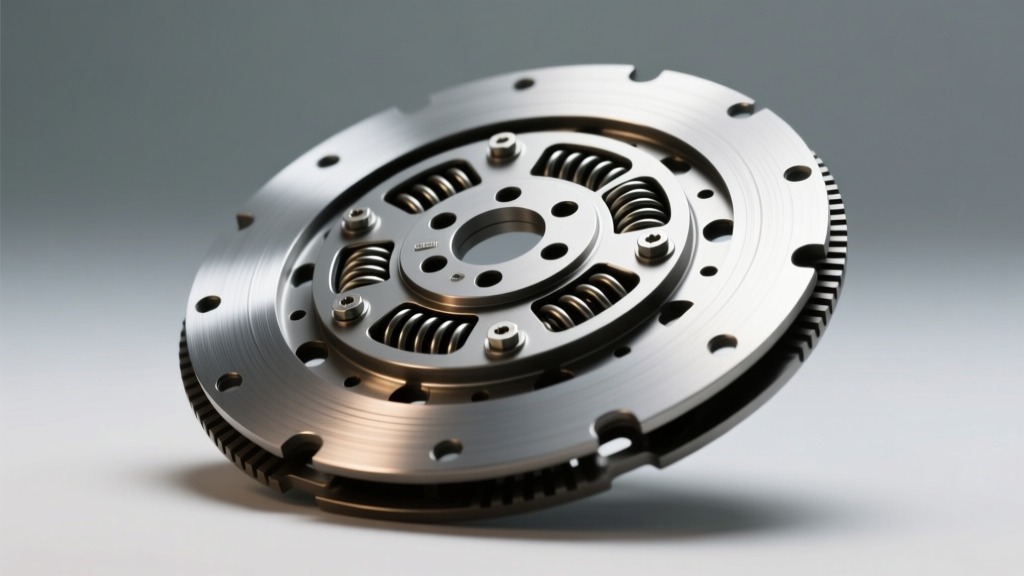
When selecting a clutch disc, diameter dictates two primary factors: friction surface area and Moment of Inertia (MOI). A larger diameter clutch (e.g., 12-inch or 13-inch) provides a longer lever arm from the center of the crankshaft, allowing for higher torque capacity without necessarily requiring extreme pressure plate clamp loads. However, this comes at a severe penalty to rotational mass.
Moment of Inertia (MOI) Explained
MOI determines how much energy is required to change the rotational speed of the clutch assembly. A heavy, large-diameter steel clutch disc will store a massive amount of kinetic energy. While this is excellent for low-RPM torque delivery in heavy diesel trucks or drag cars launching on a trans-brake, it is detrimental to road racing or high-RPM naturally aspirated builds. In a road racing scenario, a heavy 12-inch clutch will cause "rev-hang" during downshifts, overworking the synchronizers in your manual transmission and destabilizing the chassis under braking.
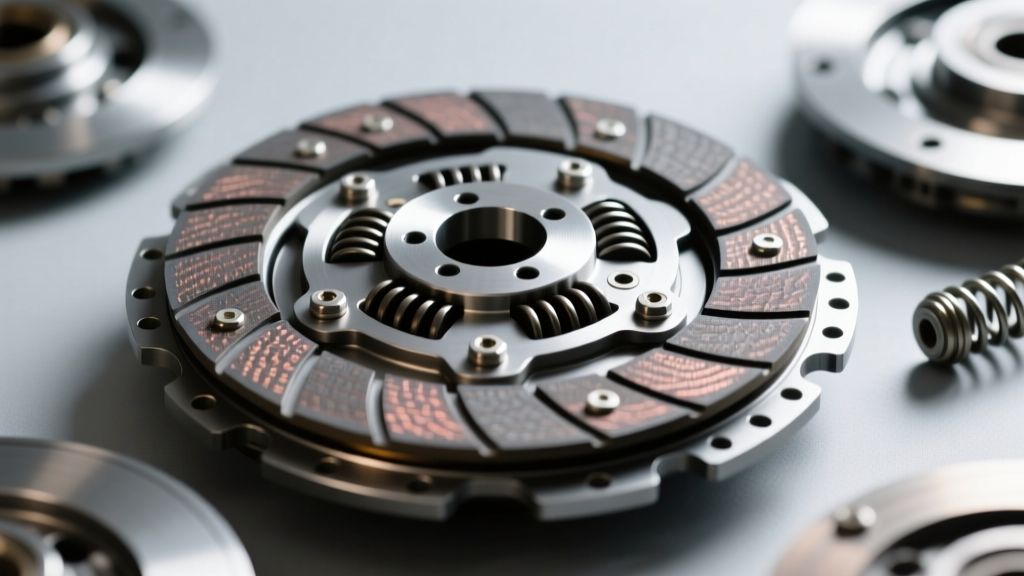
Conversely, a smaller diameter clutch (e.g., 9.5-inch or 10.5-inch) drastically reduces MOI, allowing the engine to rev and drop RPMs instantaneously. To compensate for the reduced surface area and shorter lever arm, these smaller clutches utilize aggressive cerametallic or sintered iron friction materials and multi-disc configurations to maintain high torque capacity.
Manual Transmission: Diameter Comparison Matrix
The following matrix compares common manual transmission clutch diameters, their ideal use cases, and their impact on drivetrain dynamics. For deeper technical specifications on manual transmission input shaft tolerances, refer to the Tremec T56 Magnum Documentation.
| Diameter | Typical Application | Spline Config | Torque Capacity (Organic/Cerametallic) | Rotational Inertia Impact |
|---|---|---|---|---|
| 9.5" / 241mm | High-RPM Road Racing, FWD Time Attack | 1" x 23 / 24 | 350 lb-ft / 550 lb-ft | Ultra-Low (Instant throttle response) |
| 10.5" / 267mm | Street/Strip, GM LS/T56, Nissan CD009 | 1-1/8" x 26 | 450 lb-ft / 750 lb-ft | Low-Medium (Balanced daily driving) |
| 11.0" / 279mm | Ford Coyote/Modular, C6 Corvette | 1-1/8" x 26 | 550 lb-ft / 850 lb-ft | Medium (Smooth engagement, slight rev hang) |
| 12.0" / 305mm | Heavy Duty Diesel, Big Block Drag | 1-1/4" x 31 | 800 lb-ft / 1200+ lb-ft | High (Sluggish revs, massive heat capacity) |
Automatic Transmissions: Clutch Pack Diameter & Apply Area
The concept of diameter selection extends deeply into automatic transmissions, specifically regarding internal clutch packs. In units like the GM 6L80, 8L90, or the ZF 8HP, torque capacity is not determined by a single large disc, but by the cumulative surface area of stacked friction and steel plates within a clutch drum.
6L80 and 8L90 Clutch Pack Clearances
When upgrading an automatic transmission for high-horsepower applications, simply increasing the diameter of the clutch drum is often impossible due to casing constraints. Instead, builders utilize thinner friction materials (like Raybestos GPZ or BorgWarner High Energy) to fit more clutch discs into the existing diameter. For example, the notorious 4-5-6 clutch hub in the 6L80 requires strict attention to pack clearance. The ideal clearance for the 4-5-6 clutch pack is between 0.060" and 0.080". If the clearance is too tight due to adding an extra friction disc to increase surface area, the pack will drag, generating immense heat and burning up the transmission fluid. Always consult the SPEC Clutch Tech Center or OEM service manuals for exact snap-ring thickness adjustments.
2026 Buyer's Guide: Top Kits by Diameter
Selecting the right kit requires matching the disc diameter to your flywheel step height, transmission spline count, and torque output. Here are three benchmark kits dominating the 2026 market.
10.5-inch Street/Strip Option: SPEC Clutch Stage 3+ (GM LS)
- Part Number: SC395
- Price Range: $650 - $720
- Specs: 10.5" diameter, 1-1/8" 26-spline hub, carbon-semi-metallic friction.
- Verdict: The SC395 is the gold standard for bolt-on LS applications (LS1, LS2, LS3) mated to a T56 or TR6060. It handles up to 780 lb-ft of torque while retaining enough organic material for manageable street engagement. The 10.5" diameter keeps MOI low enough for quick shifts without destroying the transmission synchronizers.
11-inch Twin Disc Option: McLeod RST (Ford Coyote/Modular)
- Part Number: 691003
- Price Range: $1,150 - $1,299
- Specs: 11" twin ceramic discs, 1-1/8" 26-spline, aluminum flywheel.
- Verdict: For forced-induction Coyote builds pushing 800-1000 whp, an 11-inch single disc would require a brutal pressure plate that destroys the crankshaft thrust bearing. The McLeod RST twin disc utilizes two 11" ceramic discs to distribute the clamp load, providing massive torque capacity with a surprisingly soft pedal feel. For more on twin-disc alignment, see McLeod Racing Technical Articles.
12-inch Heavy Duty Option: Ram Clutches Pro Series (Cummins/Duramax)
- Part Number: 95-1250 (Application Dependent)
- Price Range: $850 - $1,100
- Specs: 12" or 13" diameter, sintered iron, 1-1/4" 31-spline.
- Verdict: Diesel applications require massive diameter to handle low-RPM torque spikes. The 12"+ sintered iron discs are virtually slip-proof under heavy towing or sled-pulling conditions, though they demand a heavy-duty aftermarket flywheel to handle the extreme thermal cycling.
Critical Installation Torque Specs & Flywheel Mating
Even the most perfectly sized clutch disc will fail catastrophically if the mating surfaces and hardware are not torqued to specification. The flywheel mating surface must be machined flat within 0.005" of total indicated runout (TIR). Below are the critical torque specifications for common performance platforms:
- GM LS Flywheel to Crankshaft (OEM Torque-to-Yield): 60 lb-ft + 50 degrees. (If using aftermarket ARP 7/16" bolts: 95 lb-ft with ARP Ultra-Torque lube).
- Ford Modular/Coyote Flywheel to Crankshaft: 59 lb-ft (Verify specific year, some require a multi-step torque angle sequence).
- Pressure Plate to Flywheel (M8 Bolts): 22 - 25 lb-ft. (Always apply medium-strength threadlocker).
- Pressure Plate to Flywheel (M10 Bolts): 35 - 40 lb-ft.
- Bellhousing to Engine Block: 35 lb-ft. (Crucial for maintaining input shaft alignment with the pilot bearing; misalignment will destroy a T56 Magnum input shaft in under 500 miles).
Expert Tip: Never use an impact wrench to seat a pressure plate. You must use a clutch alignment tool and tighten the pressure plate bolts in a star-pattern, one full turn at a time, to prevent warping the clutch cover diaphragm spring. A warped diaphragm will result in uneven clamping force, leading to localized hot-spotting and premature disc glazing.
Ultimately, whether you are calculating the apply area of a 6L80 automatic clutch pack or selecting a 10.5" cerametallic disc for a track car, diameter selection is a balancing act between thermal capacity, rotational inertia, and drivability. Ignore the restaurant reviews, focus on the physics, and build a drivetrain that hooks every single time.