The Art of Auditory Triage in Manual Transmissions
In the modern automotive landscape, manual transmissions have largely vanished from daily commuter vehicles, but they remain the lifeblood of performance, heavy-duty, and enthusiast segments. When a customer complains of a chirping, squealing, or grinding clutch, the margin for diagnostic error is razor-thin. Misdiagnosing a $15 pilot bearing as a failing transmission input shaft results in pulled housings, wasted labor, and destroyed customer trust. When benchmarking diagnostic workflows, high-volume specialty shops like Mike's Boise Clutch & Automotive have refined the art of auditory triage to a science. By isolating variables based on pedal position, engine RPM, and vehicle load, expert technicians can pinpoint drivetrain failures before ever unbolting a bellhousing.
This guide breaks down the exact methodologies, torque specifications, and component-level insights required to accurately diagnose manual clutch noises in 2026, whether you are working on a Tremec T56 Magnum, a ZF S6-650 in a Super Duty, or a Honda K-series platform.
The Clutch Noise Diagnostic Matrix
Before reaching for a wrench, use this triage matrix to correlate the specific auditory symptom with the mechanical state of the clutch pedal. This framework is heavily utilized by top-tier drivetrain shops to eliminate guesswork.
| Noise Type | Pedal State & Condition | Probable Culprit | Verification Test |
|---|---|---|---|
| Chirping / Squeaking | Pedal UP, Idling in Neutral | Pilot Bearing / Bushing | Rev engine slightly; chirp frequency matches RPM, not drivetrain load. |
| Chirping / Rattle | Pedal Depressed 1/2 inch (Taking up free-play) | Release Bearing (TOB) or CSC | Apply light pressure; noise appears as bearing contacts diaphragm fingers. |
| High-Pitch Squeal | During Engagement / Disengagement | Clutch Fork Pivot Ball Wear | Inspect pivot stud for grooving; check fork pad wear. |
| Grinding / Crunching | Shifting into Gear (Pedal fully depressed) | Clutch Drag / Hydraulic Air / Worn Synchros | Attempt to shift into 1st or Reverse after 5 seconds in Neutral; if it grinds, clutch is dragging. |
| Marbles in a Can (Rattle) | Idling in Neutral, Pedal UP | Dual-Mass Flywheel (DMF) Internal Spring Failure | Depress pedal fully; if rattle disappears, DMF or input shaft gear lash is the cause. |
Decoding the 'Chirp': Pilot vs. Release Bearings
A chirping noise is almost always the sound of a dry, failing rotational bearing. The key to diagnosis is isolating whether the bearing is spinning when the pedal is released, or only when the pedal is applied.
The Pilot Bearing Failure Mode
The pilot bearing supports the transmission input shaft tip inside the engine crankshaft. When the clutch is engaged (pedal UP), the engine, flywheel, clutch disc, and input shaft are all locked together and spinning at the exact same RPM. The pilot bearing is effectively stationary and under no rotational stress. However, the moment you depress the pedal even a fraction of an inch, the clutch disc stops driving the input shaft, and the pilot bearing must immediately begin spinning at engine RPM to support the stationary shaft.
If a vehicle chirps at idle with the pedal UP, and the noise changes or disappears when the pedal is depressed, the pilot bearing is the culprit. On platforms like the GM LS or Honda K20, the OEM needle-style pilot bearings are notorious for dropping their needles into the crankshaft bore. Expert Tip: When replacing a failed needle pilot bearing, always upgrade to a sintered bronze oil-impregnated bushing (e.g., National 615-114 or equivalent) to prevent catastrophic input shaft scoring.
Concentric Slave Cylinder (CSC) and Release Bearing Whine
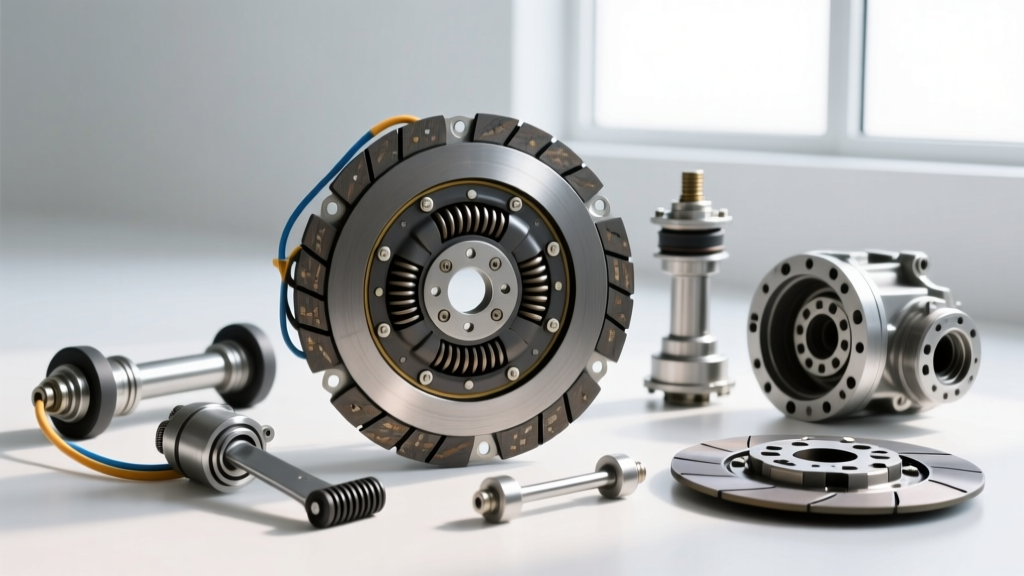
Modern vehicles (including most GM, Ford, and Porsche applications) utilize a Concentric Slave Cylinder that acts as both the hydraulic actuator and the throw-out bearing. If a whining or chirping noise initiates the moment you apply 10-15 lbs of pressure to the pedal, the CSC bearing is failing. According to Schaeffler REPXPERT technical bulletins, CSC failures in 2026 are frequently traced back to contaminated hydraulic fluid. DOT 3 and DOT 4 fluids are hygroscopic; moisture ingress causes internal bore corrosion in the master cylinder, sending microscopic aluminum and rust particles down the hard line to score the CSC bore. Always flush the hydraulic system with fresh DOT 4 or DOT 5.1 fluid and bench-bleed the master cylinder during any CSC replacement.
Squealing and the Clutch Fork Pivot Geometry
A harsh, metallic squeal that occurs during the physical movement of the pedal is rarely a bearing issue—it is almost always a friction issue at the clutch fork pivot. In external slave cylinder setups (like the classic Ford Mustang T5 or heavy-duty truck applications), the stamped steel or cast iron clutch fork pivots on a spherical ball stud.
Over 60,000 miles, the constant high-pressure friction wears a groove into the pivot ball or the fork's contact pad. As the fork articulates, it binds in this groove, creating a high-pitch squeal.
- The Band-Aid Fix: Smearing high-temperature molybdenum disulfide grease (like Honda Moly 60 or Motorcraft XL-3) onto the pivot. This will quiet the noise for 5,000 miles before the grease is slung off by centrifugal force.
- The Expert Fix: Replace the worn fork and upgrade to an adjustable, hardened steel pivot ball (available from aftermarket manufacturers like McLeod or Ram Clutches). This allows you to perfectly set the diaphragm finger height, ensuring the release bearing maintains proper air-gap clearance when disengaged.
Grinding on Shifts: Drag, Hydraulics, and DMF Rattle
Customers often report 'grinding' when shifting into 1st or Reverse from a stop. While worn synchronizer rings (especially the carbon-fiber lined blockers in ZF and Tremec units) can cause this, a true expert rules out clutch drag first. If the clutch hydraulic system has air, or if the master cylinder is internally bypassing, the slave cylinder will not achieve full stroke. The clutch disc remains partially clamped to the flywheel, keeping the input shaft spinning and causing the gears to clash.
The 5-Second Verification Test: With the engine idling and the vehicle in neutral, depress the clutch pedal fully. Wait exactly 5 seconds. If the input shaft is still spinning due to drag, shifting into Reverse will yield a violent grind. If it shifts cleanly after the 5-second wait, the synchronizers or the fluid viscosity in the transmission are the likely culprits, not the clutch.
Dual-Mass Flywheel (DMF) Marbles
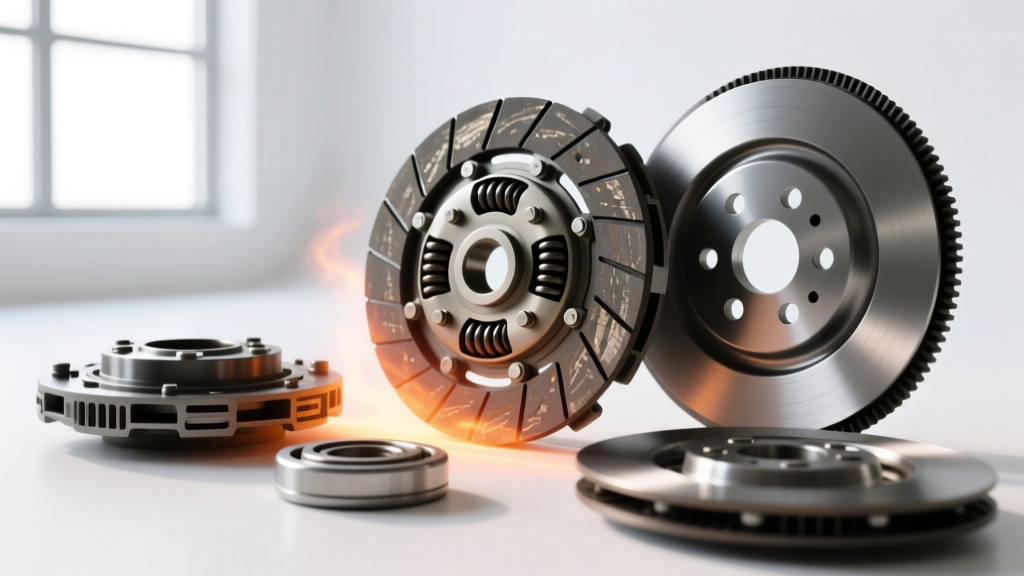
Modern diesel trucks and high-torque sports cars utilize DMFs to absorb torsional vibrations. Inside the DMF are heavy damping springs. When these springs fatigue or break, the flywheel halves rattle against each other at idle, sounding exactly like a handful of marbles in a tin can. Depressing the clutch pedal loads the assembly and often silences the noise. According to Tremec drivetrain guidelines, pairing a solid-mass aftermarket flywheel conversion kit with a dampened clutch disc (like a Sachs or LuK organic sprung hub) is the most cost-effective 2026 solution for chronic DMF rattle, saving the customer $400-$800 in recurring OEM DMF replacement costs.
2026 Best Practices: Assembly Torque and Runout Limits
Even a perfectly diagnosed clutch will chirp and vibrate upon reassembly if the technician ignores bellhousing alignment and torque sequences. High-volume shops strictly enforce the following protocols:
The Golden Rule of Bellhousing Runout: Never bolt a manual transmission to an engine block without dial-indicating the bellhousing bore. Total Indicator Reading (TIR) must not exceed 0.005 inches. Excessive runout forces the input shaft to bend slightly at RPM, causing the release bearing to ride at an angle, leading to premature chirping and catastrophic transmission case wear.
Critical Torque Specifications (General Benchmarks)
Always verify with the specific OEM service manual, but adhere to these industry-standard practices for common platforms:
- Flywheel to Crankshaft (e.g., GM LS / Ford Coyote): Typically 74 lb-ft + an additional 90-degree turn (Torque-to-Yield). Must use new TTY bolts and thread locker.
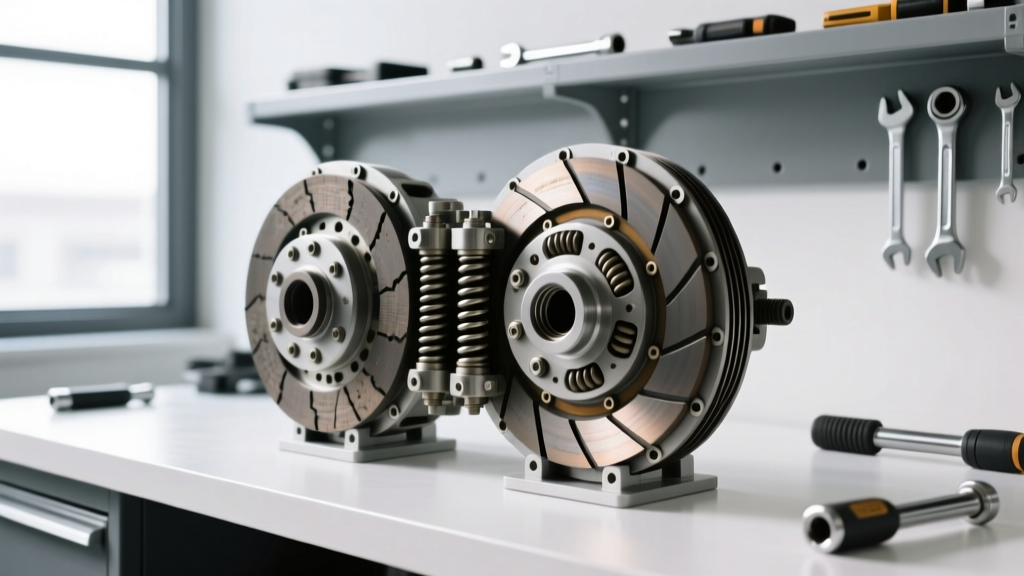
- Pressure Plate to Flywheel: 15 to 22 lb-ft, tightened in a strict crisscross star pattern to prevent warping the diaphragm spring.
- Input Shaft Spline Lubrication: Use a microscopic amount of spline-specific grease. Over-greasing the splines will result in centrifugal slinging onto the clutch friction material, causing immediate, irreversible clutch slip and chatter.
Conclusion
Diagnosing clutch noise requires a systematic approach that separates pedal position, rotational speed, and hydraulic actuation. By adopting the rigorous auditory triage methods championed by industry leaders like Mike's Boise Clutch & Automotive, technicians can confidently differentiate between a simple pivot ball squeal and a catastrophic DMF failure. In an era where manual transmission expertise is becoming a rare commodity, mastering these acoustic diagnostics and assembly best practices is the ultimate hallmark of a true drivetrain specialist.