Introduction: Separating Friction Loss from Mechanical Failure
When a manual transmission vehicle begins acting up, owners and even some general repair techs frequently misdiagnose the symptoms, prematurely blaming clutch slipping. True clutch slipping—a condition where engine RPMs flare without a proportional increase in vehicle speed under load—is strictly a friction or clamping load issue. It is almost entirely silent until the friction material overheats and glazes. If you are hearing grinding, squealing, or chirping, you are not dealing with slipping; you are dealing with mechanical, hydraulic, or alignment failures.
While a severely worn disc or oil contamination can eventually cause both slipping and chatter/noise, diagnosing clutch noise requires an entirely different acoustic and mechanical framework. In this expert guide, we break down the exact pedal-position diagnostics, bearing clearances, and bellhousing alignment specifications required to isolate and fix manual transmission noise in 2026.
The Acoustic Timeline: Pedal-Position Diagnostic Matrix
According to diagnostic frameworks outlined by AA1Car, correlating the noise to the exact position of the clutch pedal is the fastest way to isolate the failing component. Before dropping the transmission, perform this static test with the engine idling in neutral.
| Pedal Position | Acoustic Symptom | Primary Suspect Component |
|---|---|---|
| Fully Released (Foot off pedal) | Grinding or Whirring | Pilot Bearing, Transmission Input Shaft Bearing |
| Slightly Depressed (Taking up slack) | Chirping or Squealing | Release Bearing (Throw-out Bearing), Clutch Fork Pivot |
| Half to Fully Depressed | Grinding or Growling | Release Bearing Cage, Hydraulic Throw-Out Bearing (HTOB) Seal |
| Fully Depressed (Holding pedal down) | High-Pitched Squeal | Pilot Binding, Input Shaft Dragging, Fork Bending |
Chirping and Squealing: Release Bearing & HTOB Clearance Deep Dive
A chirping noise that appears the moment you apply slight pressure to the clutch pedal is the universal signature of a failing release bearing or a dry clutch fork pivot ball. However, in modern hydraulic setups, it often points to an incorrect air gap.
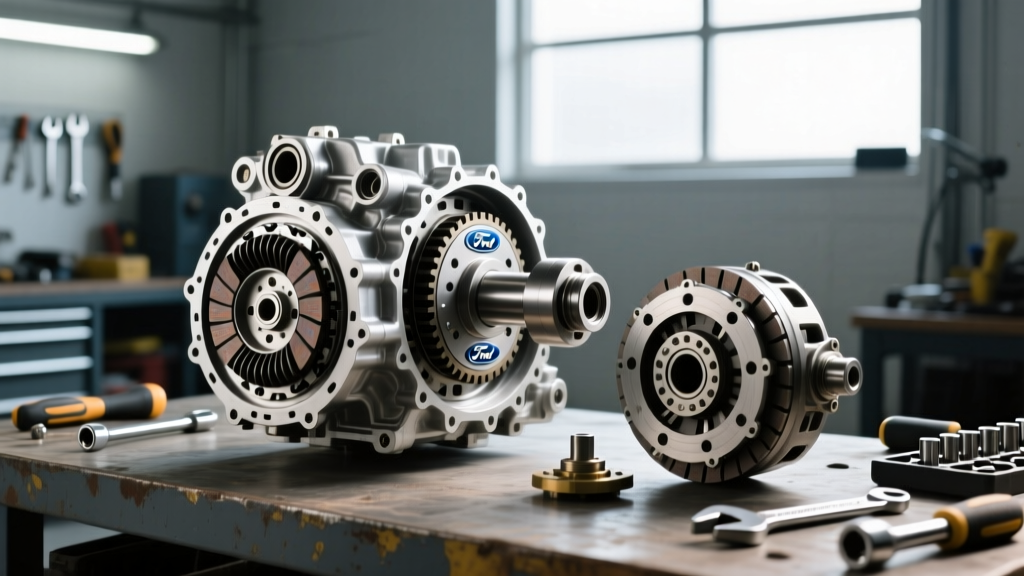
The Ford MT-82 Hydraulic Throw-Out Bearing (HTOB) Issue
If you are working on a 2011-2023 Mustang with the MT-82 transmission, a constant squeal or chirp is frequently caused by the HTOB riding constantly against the pressure plate fingers. The MT-82 requires a precise air gap between the bearing face and the diaphragm spring fingers. The factory specification demands a 0.125-inch to 0.175-inch air gap. If the gap is too tight, the bearing never fully retracts, leading to premature SKF or INA bearing failure and continuous squealing. Techs must use precision feeler gauges and install the correct shims behind the HTOB mounting flange to achieve this clearance.
External Slave & Pivot Ball Wear (Tremec T56 Magnum)
For setups utilizing an external slave cylinder and a mechanical clutch fork (like the Tremec T56 Magnum), the pivot ball stud is a major wear item. The clutch fork pivots on this ball under immense hydraulic pressure. If the factory steel pivot ball wears a groove into the aluminum or stamped steel fork, it will chirp at the top of the pedal travel.
- Fix: Replace the pivot stud and upgrade to a hardened steel or ceramic-coated pivot ball.
- Torque Spec: The pivot stud must be torqued to 28-30 lb-ft using high-temperature threadlocker to prevent it from backing out and destroying the bellhousing.
- Lubrication: Apply a high-molybdenum grease (like Red Line CV-2) to the pivot contact points. Standard lithium grease will melt and cause the chirp to return within 5,000 miles.
Grinding in Neutral: The Pilot Bearing & Input Shaft Threat
If the transmission grinds or whirs while the car is in neutral with the clutch pedal fully released, the issue is isolated to the front of the transmission. The transmission input shaft is spinning at engine speed, supported only by the pilot bearing in the back of the crankshaft.
Bronze Bushing vs. Sealed Needle Roller
Many older vehicles and heavy-duty trucks use a sintered bronze pilot bushing. These require periodic soaking in oil and can squeak or grind when dry. Modern performance vehicles (like the Honda K-Series or GM LS/LT V8s) use sealed needle roller bearings, such as the SKF BHA2212Z. Bearing manufacturers like SKF Automotive emphasize that if a needle roller pilot bearing loses its seal and seizes, it will lock the input shaft to the crankshaft. This results in violent gear grinding when attempting to shift into first or reverse, even with the pedal fully depressed, and can ultimately snap the transmission input shaft.
Expert Tip: Never use a standard grease on a pilot bearing during installation. The heat from the friction disc will melt the grease, causing it to migrate onto the clutch disc and induce severe clutch slipping and chatter. Use a minimal amount of high-temp synthetic assembly lube only on the outer casing press-fit surface.
Bellhousing Misalignment: The Silent Drivetrain Killer
Sometimes, a chirping release bearing or a grinding input shaft is not the fault of the bearing itself, but rather the result of severe bellhousing misalignment. If the transmission bellhousing bore is not perfectly concentric with the engine crankshaft centerline, the transmission input shaft is forced to bend slightly as it rotates. This binds the release bearing on the transmission front bearing retainer collar, causing uneven wear, squealing, and eventual failure.
The Dial Indicator Procedure
For high-performance applications, McLeod Racing and Tremec strictly mandate checking bellhousing runout.
- Mount a magnetic base dial indicator to the engine crankshaft flange or flywheel.
- Position the indicator tip against the inner machined bore of the bellhousing.
- Rotate the crankshaft 360 degrees and record the Total Indicator Runout (TIR).
- The maximum allowable TIR for most OEM and aftermarket clutch systems is 0.005 inches.
When Noise Intersects with Clutch Slipping: Oil Contamination
There is one specific scenario where clutch noise and clutch slipping occur simultaneously: rear main seal (RMS) failure. If the engine RMS or the transmission input shaft seal leaks, gear oil or engine oil will slingshot onto the clutch friction disc.
Initially, the oil causes the clutch to slip under heavy throttle. As the oil bakes into the friction material, it creates a glaze that leads to violent clutch chatter (a low-frequency shuddering noise) upon engagement. If you pull the inspection cover and see black, oily dust rather than dry, reddish-brown friction material, the clutch assembly is ruined. You must replace the RMS (e.g., Fel-Pro BS40630 for GM applications), thoroughly clean the bellhousing with brake cleaner, and replace the entire clutch kit. A new clutch kit (like a Sachs or LuK RepSet) will cost between $250 and $600 in parts, but ignoring the oil leak will destroy the new friction disc in under 500 miles.
2026 Cost Breakdown & Part Sourcing Guide
Diagnosing noise accurately saves hundreds of dollars in unnecessary parts swapping. Below is a realistic cost breakdown for resolving common clutch noise issues in a standard rear-wheel-drive manual vehicle.
| Component / Service | Part Cost Range | Labor Time (Est.) |
|---|---|---|
| Release Bearing (SKF / INA) | $45 - $120 | Included in R&R |
| Pilot Bearing (Needle Roller) | $15 - $40 | Included in R&R |
| Clutch Fork & Pivot Ball Upgrade | $60 - $150 | 0.5 hrs (if trans is out) |
| Bellhousing Alignment (Offset Dowels) | $35 - $80 | 1.5 hrs |
| Full Clutch Kit (Disc, Plate, Bearings) | $250 - $750 | 5.0 - 7.0 hrs |
By utilizing the pedal-position diagnostic matrix and verifying hydraulic clearances and bellhousing runout, you can confidently separate true clutch slipping from mechanical noise, ensuring a permanent fix on the first teardown.