The Hidden Culprit: Clutch Release Bearing Fork Failures
When diagnosing manual transmission clutch issues, enthusiasts and mechanics often rush to blame the throw-out bearing (TOB) or the pressure plate. However, the clutch release bearing fork and its associated pivot hardware are frequently the true root cause of erratic engagement, pedal vibration, and premature bearing death. As we navigate the 2026 aftermarket landscape, understanding the precise failure modes of the release fork is critical for both daily drivers and high-horsepower track builds.
Whether you are wrestling with a Ford MT82 'clutch tick', a Tremec T56 Magnum engagement issue, or a Honda K-Series disintegration problem, the clutch fork acts as the vital mechanical multiplier between your hydraulic slave cylinder and the clutch assembly. This comprehensive guide breaks down the root causes of clutch fork failure, provides a diagnostic matrix, and serves as your ultimate buyer's guide for OEM versus aftermarket upgrades.
Root Cause Analysis: Why Clutch Forks Fail
A clutch release bearing fork operates in a high-stress, high-friction environment. Failure rarely happens in isolation; it is usually a cascading event triggered by one of three primary root causes.
1. Pivot Ball 'Mushrooming' and Wear Pad Disintegration
The fulcrum point of the clutch fork rests on a pivot ball (or pivot stud). In many OEM applications, such as the Honda K20/K24 or early GM LS T56 setups, the fork rides on small plastic or sintered metal wear pads. Over time, heat and friction cause these pads to disintegrate. Once the pad fails, the raw stamped steel or cast aluminum fork grinds directly against the hardened steel pivot ball. This creates a 'mushroom' effect on the pivot, altering the fulcrum height. The result? The throw-out bearing is pushed too far forward, riding constantly against the pressure plate fingers, leading to catastrophic TOB failure and clutch slip.
2. Fork Flex Under High Clamp Loads
Modern performance clutches, particularly twin-disc and triple-disc setups from manufacturers like McLeod or Quartermaster, exert massive clamp loads—often exceeding 2,800 lbs. Standard OEM stamped steel forks are not designed for this stress. Under heavy pedal pressure, the stamped fork physically bends (flexes) at the pivot point. This flex absorbs hydraulic travel, resulting in a spongy pedal feel, incomplete clutch disengagement, and gear grinding during shifts. According to McLeod Racing's technical documentation, upgrading to a rigid billet or forged fork is mandatory when exceeding 1,800 lbs of clutch clamp load.
3. Bellhousing Runout and Geometry Mismatch
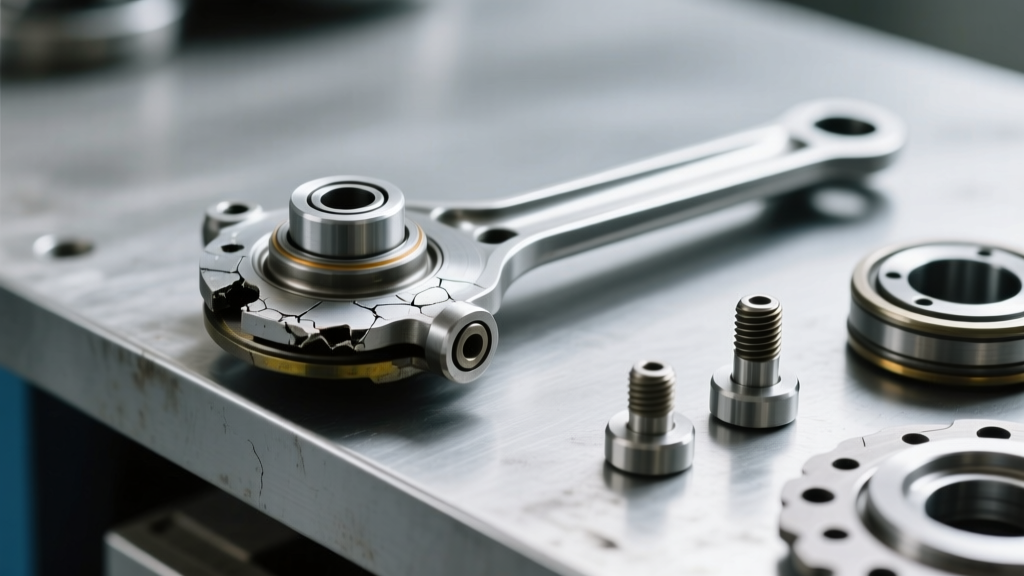
The clutch fork must operate at a specific geometric angle relative to the transmission input shaft. The ideal clutch fork angle is 0 to +2 degrees (leaning slightly toward the engine) when the clutch is fully engaged. If an aftermarket bellhousing is used, or if the engine block and transmission mating surfaces have been machined, the distance between the crankshaft and the bellhousing face changes. This pushes the pivot ball out of its optimal plane. A negative fork angle forces the TOB to bind against the pressure plate diaphragm fingers at an aggressive angle, causing rapid wear, chatter, and eventual fork snapping.
2026 Buyer’s Guide: Fork & Pivot Material Comparison
When replacing a failed clutch release bearing fork, choosing the right material and design is paramount. Below is a comparison of the primary options available in the current market, factoring in yield strength, pricing, and ideal applications.
| Material / Type | Yield Strength & Rigidity | Estimated Price Range (2026) | Best Application |
|---|---|---|---|
| OEM Stamped Steel | Low-Medium (Prone to flex >1,500 lbs) | $45 - $85 | Stock replacements, daily drivers, low-torque builds. |
| CNC Billet Aluminum (e.g., 6061-T6) | High (Excellent rigidity, lightweight) | $160 - $240 | Track cars, high-RPM drag builds, Tremec T56 Magnum upgrades. |
| Forged Steel (Heavy Duty) | Maximum (Virtually zero flex, heavy) | $130 - $190 | Heavy-duty trucks, high-torque diesel applications, MT82 upgrades. |
| Adjustable Pivot Ball Kit | N/A (Corrects geometry for all fork types) | $45 - $85 | Essential for engine swaps, block decking, or multi-disc clutches. |
Diagnostic Matrix: Isolating Fork Wear vs. Bearing Failure
Misdiagnosing a clutch noise can lead to pulling the transmission unnecessarily or replacing the wrong component. Use this diagnostic matrix to isolate the clutch release bearing fork from the throw-out bearing itself.
- Symptom: High-pitched squeal that changes with engine RPM.
Diagnosis: Throw-out bearing failure (lack of lubrication or worn internal race). The fork is likely fine, but inspect the pivot for secondary damage. - Symptom: Metallic 'clunk' or 'tick' specifically when the clutch pedal is depressed or released.
Diagnosis: Worn pivot ball, missing fork wear pads, or a loose pivot stud snap-ring (highly common on Ford MT82 transmissions). The fork is slapping against the pivot or bellhousing. - Symptom: Pedal pulsation or vibration during clutch engagement (Chatter).
Diagnosis: Fork flex or bellhousing runout. The fork is not applying even pressure across the diaphragm fingers. Verify bellhousing runout with a dial indicator (must be under 0.005 inches TIR). - Symptom: Inconsistent bite point or spongy pedal despite bleeding hydraulics.
Diagnosis: Stamped steel fork bending under load, or a worn pivot ball altering the fulcrum ratio. Upgrade to a billet fork and adjustable pivot.
Precision Installation: Torque Specs and Geometry Setup
Installing a new clutch fork and pivot ball requires strict adherence to torque specifications. A loose pivot stud will back out under vibration, destroying the bellhousing and transmission case.
Critical Torque Specifications
- Pivot Ball Stud (1/2"-13 UNC - Common on GM LS/T56): 65 lb-ft. Must use Red Loctite 271 (high-strength, high-temperature threadlocker) on the block threads.
- Pivot Ball Stud (3/8"-16 UNC - Common on Honda/Ford): 35-40 lb-ft with Red Loctite 271.
- Bellhousing to Engine Block (M12 Bolts): 37-50 lb-ft (Verify specific OEM manual, e.g., Tremec Installation Guides recommend 37 lb-ft for T56 Magnum M12 hardware).
- Slave Cylinder Pushrod Nut: 15-20 lb-ft, secured with a cotter pin or jam nut.
Expert Tip: Never use standard blue Loctite on a clutch pivot ball stud. The ambient heat radiating from the exhaust headers and the friction of the clutch fork can exceed 250°F, which breaks down medium-strength threadlockers. Always use Red 271, and if removal is ever required, apply localized heat with a MAP gas torch to break the bond.
Setting the Fork Angle
When installing an adjustable pivot ball (such as the McLeod 1400-series), you must set the clutch fork geometry. With the transmission bolted to the bellhousing and the clutch fully engaged (pedal up), place a digital angle finder on the flat machined surface of the clutch fork. The fork should read between 0 and +2 degrees. If the angle is negative (leaning toward the rear of the car), the TOB will pre-load the pressure plate, causing slip and bearing death. Adjust the pivot ball height until the correct geometry is achieved, then secure the locking jam nut.
Final Verdict: Protecting Your Drivetrain Investment
The clutch release bearing fork is the unsung hero of the manual transmission. While it is tempting to reuse the OEM stamped fork and worn pivot ball during a clutch swap to save a few dollars, doing so is a false economy that risks catastrophic drivetrain failure. For any build exceeding 400 lb-ft of torque, or any vehicle utilizing a multi-disc clutch, investing in a CNC billet aluminum or forged steel fork paired with an adjustable, heat-treated pivot ball is non-negotiable. By understanding the root causes of fork failure and adhering to strict geometric and torque specifications, you ensure crisp, reliable shifts and maximum component longevity in 2026 and beyond.
For further reading on drivetrain alignment and bellhousing tolerances, consult the Exedy Technical Information Portal or your specific transmission manufacturer's service manual.