The Short Answer: Do Automatics Have a Clutch?
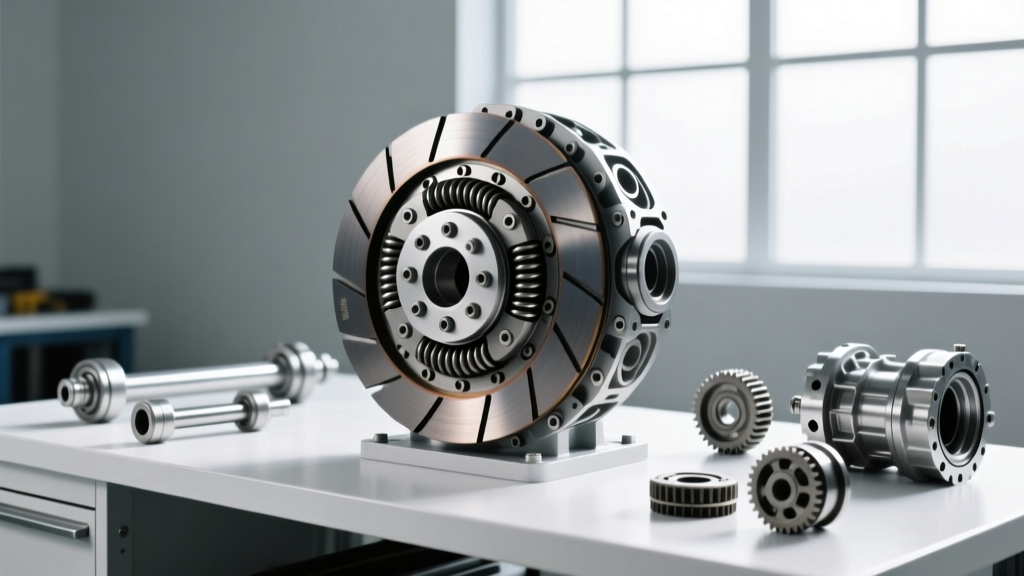
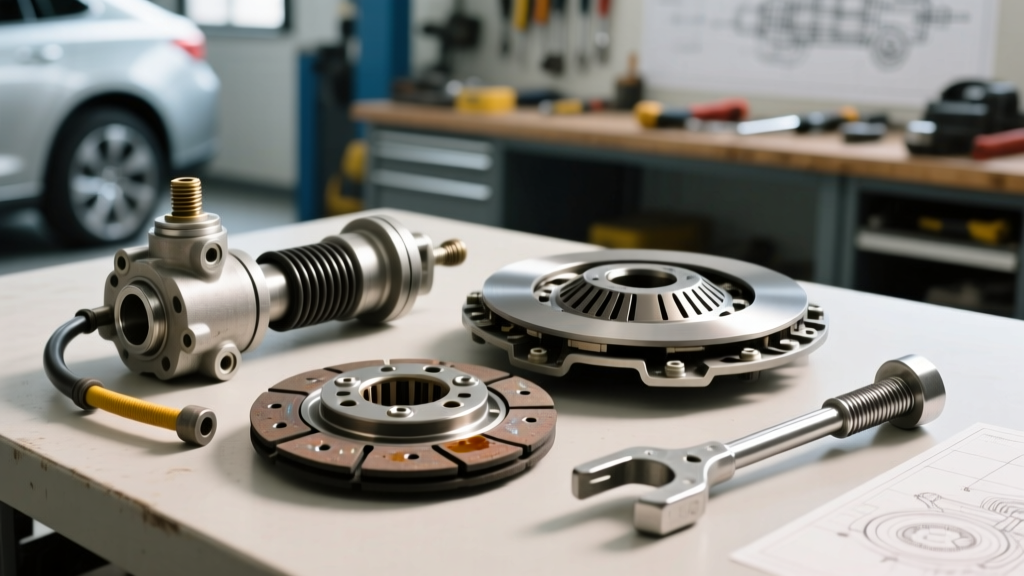
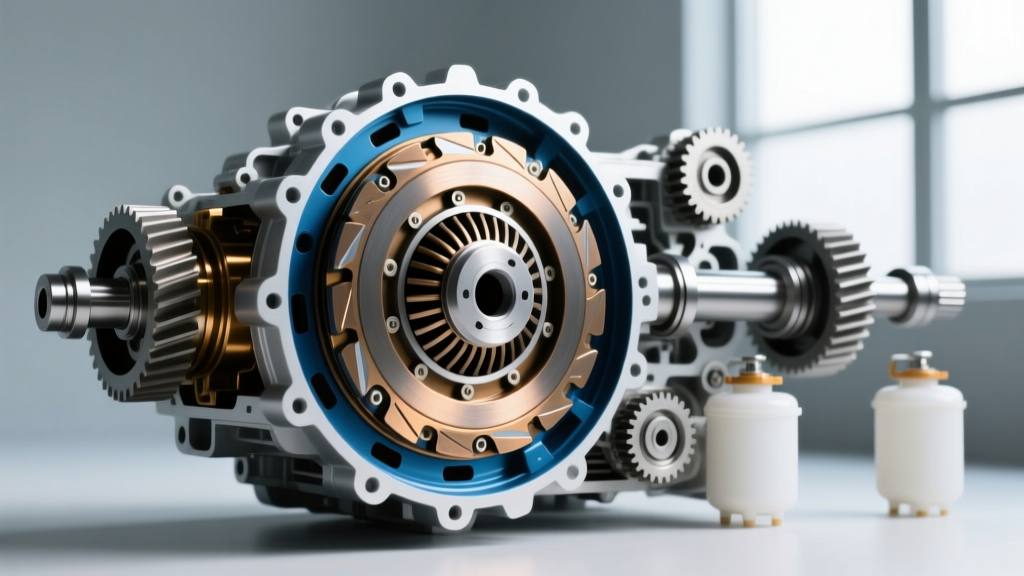
When enthusiasts building high-horsepower street or track cars ask, "do automatics have a clutch," the answer is a resounding yes. However, unlike a manual transmission's single dry-friction disc, modern performance automatics rely on two entirely different clutch systems to manage power delivery. The first consists of the internal multi-disc clutch packs that engage specific planetary gear sets. The second is the Torque Converter Clutch (TCC), a specialized friction assembly inside the torque converter that mechanically locks the engine to the transmission input shaft to eliminate parasitic slip.
In the realm of performance builds—whether you are pushing 700 wheel horsepower through a GM 6L80, upgrading a ZF 8HP70 for a supercharged application, or tuning a Ford 10R80 for drag racing—clutch chatter and vibration are among the most complex diagnostic hurdles. TCC shudder, in particular, mimics driveline harmonics and engine misfires, leading many tuners down the wrong path. This guide provides a comprehensive, data-driven framework for diagnosing automatic clutch chatter and outlines the exact performance upgrades required to eliminate it in 2026.
The Physics of Automatic Clutch Chatter
Clutch chatter in an automatic transmission is fundamentally a stick-slip friction phenomenon. During TCC apply, the transmission control module (TCM) pulses the TCC PWM (Pulse Width Modulation) solenoid to gradually increase apply pressure. If the friction coefficient of the TCC lining drops suddenly, or if the hydraulic apply pressure fluctuates due to a worn valve body bore, the clutch rapidly engages and disengages at a frequency of 30 to 60 Hertz. This translates into a severe, low-frequency vibration felt through the chassis, typically occurring between 1,200 and 2,000 RPM under light-to-moderate throttle load.
In performance applications, this is exacerbated by aggressive tuning. Tuners often command immediate TCC lockup to reduce heat and improve 60-foot times. However, applying a high-torque engine load to a TCC with insufficient hydraulic volume or degraded OEM cellulose friction material guarantees severe chatter and eventual converter failure.
Diagnostic Data Table: Isolating the Vibration Source
Before dropping the transmission pan, you must isolate the vibration using a bi-directional scan tool or tuning software like HP Tuners or FORScan. Use the following matrix to differentiate between TCC shudder, internal clutch pack slip, and mechanical driveline vibration.
| Symptom Profile | Data PID to Monitor | Normal Performance Range | Failure / Chatter Indicator |
|---|---|---|---|
| TCC Shudder (Chatter) | TCC Slip RPM & TCC PWM Duty Cycle | 20 - 40 RPM Slip during apply | Slip oscillates wildly (e.g., 0 to 150 RPM) while PWM is steady. |
| Internal Clutch Pack Slip | Input Shaft Speed vs. Output Shaft Speed | Near 0 RPM difference in gear | RPM flare during WOT shifts; burnt fluid odor. |
| Driveline Harmonic Vibration | Vehicle Speed Sensor (VSS) & Engine RPM | Steady correlation | Vibration persists in Neutral or when TCC is manually disabled via scanner. |
| TCC Solenoid Electrical Fault | TCC Solenoid Resistance (Ohms) | 10.0 - 15.0 Ohms (Typical PWM) | Out of spec resistance; TCM throws P0741 or P2763 codes. |
Step-by-Step TCC Chatter Diagnosis
1. Data Logging the Apply Phase
Connect your diagnostic interface and log a minimum of 15 seconds of driving in 4th gear (or the highest gear available) at 45-55 MPH. Command the TCC on via the scanner if necessary. Monitor the TCC Slip RPM and Line Pressure. In a healthy performance build, line pressure should be stable (typically 180-220 psi in a tuned 6L80 or 10R80). If line pressure is stable but TCC slip RPM bounces erratically, the issue is mechanical (friction material or converter damper). If line pressure fluctuates in tandem with the slip RPM, the issue is hydraulic (valve body wear or failing pump).
2. The Stall-Test Isolation Method
To rule out engine misfires or harmonic balancer degradation, perform a controlled TCC disable test. Using your tuning software, disable the TCC apply tables entirely. If the vibration completely disappears under the exact same load and RPM conditions, the engine and driveline are healthy, and the fault is isolated strictly to the torque converter clutch assembly or its hydraulic control circuit.
3. Fluid and Pan Analysis
Drop the transmission pan and inspect the fluid. OEM TCC linings are often made of paper-based or cellulose materials. When these overheat from performance tuning, they glaze and shed microscopic particles. If the fluid smells burnt and the pan magnets are coated in a fine, dark grey paste (rather than shiny metallic flakes), the TCC friction material has disintegrated. At this stage, a simple fluid flush will not cure the chatter; the converter must be replaced or rebuilt.
Transmission-Specific Chatter Profiles (2026 Update)
Different automatic platforms exhibit unique failure modes when subjected to high horsepower. Understanding these nuances is critical for accurate diagnosis.
GM 6L80 / 6L90 Platforms
The 6L80 and 6L90 are notorious for TCC shudder, especially when tuned for 500+ lb-ft of torque. The OEM TCC regulator valve in the valve body wears the aluminum bore, causing hydraulic cross-leaks and erratic apply pressure. The Fix: Install a Sonnax TCC regulator valve kit (e.g., Sonnax 125740-15K) which utilizes a hardened steel valve and an O-ring to seal the bore. Cost: ~$130. Pair this with a triple-disc billet torque converter from manufacturers like Circle D or Precision Industries ($900-$1,400) to handle the increased torque capacity without slip.
ZF 8HP70 / 8HP90 Platforms
Found in everything from Dodge Hellcats to BMW M-cars, the ZF 8HP uses a highly specialized TCC damper designed to absorb torsional engine vibrations. Chatter in a built ZF 8HP rarely stems from the valve body and almost always points to a failed centrifugal turbine piston seal inside the converter, or degraded fluid. ZF transmissions are hyper-sensitive to fluid viscosity. The Fix: Replace the converter with an upgraded billet unit featuring a heavy-duty damper spring assembly, and strictly use ZF LifeguardFluid 8 or a validated high-performance equivalent like Amsoil Signature Series Fuel-Efficient Synthetic ATF. Torque the ZF mechatronic sleeve bolts to exactly 8 Nm to prevent internal pressure leaks.
Ford 10R80 Platform
The 10R80's aggressive TCC apply strategy often results in harsh lockup and low-speed shudder. When modifying these for towing or drag racing, the OEM TCC control valve struggles to manage the increased line pressure commanded by performance tunes. The Fix: Upgrade to the Sonnax 155740-14K TCC control valve kit to stabilize hydraulic flow. Additionally, inspect the 10R80 internal clutch hubs; the OEM stamped steel hubs can warp under high-torque TCC lockup, transmitting vibration directly into the planetary gear sets.
Performance Upgrades to Eliminate Chatter
If your diagnosis confirms that the OEM clutch components cannot handle your performance targets, the following upgrades are mandatory to eliminate chatter and ensure longevity.
- Friction Material Upgrades: For internal clutch packs and custom converter builds, standard cellulose linings will glaze and chatter under high heat. Upgrade to Raybestos GPZ Friction Plates. GPZ material utilizes a specialized carbon-fiber composite that maintains a stable friction coefficient even at extreme temperatures, virtually eliminating stick-slip chatter during aggressive apply phases.
- Hydraulic Control Stabilization: Worn valve body bores are the silent killer of TCC apply quality. Utilizing the Sonnax Technical Resources database, identify the specific TCC regulator and apply valves for your transmission model. Installing their reamer-and-sleeve kits restores precise hydraulic tolerances, ensuring the TCC PWM solenoid's electrical commands translate into smooth, linear mechanical pressure.
- Billet Torque Converters: OEM converters use stamped steel covers that flex under high line pressure, causing the TCC piston to apply at an angle, resulting in uneven friction and severe chatter. A billet steel converter cover (typically CNC-machined from 1045 or 4140 steel) provides a rigid, perfectly flat apply surface. Expect to invest between $1,100 and $1,800 for a custom-stalled billet converter from a reputable builder.
- Tuning the TCC Apply Tables: In HP Tuners, avoid commanding 100% TCC PWM duty cycle instantly. Create a progressive apply ramp in the TCC Apply Pressure tables. Allow the slip RPM to target 60-80 RPM for the first 0.5 seconds of apply, gradually tapering down to your final 20 RPM target. This softens the initial mechanical engagement, masking minor hydraulic inconsistencies and preventing driveline shock.
Final Torque and Assembly Specifications
When reinstalling the transmission or torque converter after addressing clutch chatter, precision is non-negotiable. Improper seating can cause the TCC hub to bind, leading to immediate pump failure or persistent vibration. Always measure the torque converter seating depth. For a GM 6L80, the converter must sit at least 11/16" to 3/4" below the bellhousing mating surface. Torque the bellhousing-to-engine block bolts to 37 lb-ft in a star pattern. When bolting the torque converter to the flexplate, use Grade 10.9 or ARP fasteners and torque them to 46 lb-ft (or the specific OEM specification), applying a medium-strength threadlocker to prevent backing out under high-RPM harmonics.
Conclusion
So, do automatics have a clutch? Absolutely—and in a performance environment, managing those clutches is the difference between a reliable powerhouse and a vibrating, un-drivable mess. By leveraging data logging to isolate TCC slip oscillations, understanding the unique failure points of modern 6, 8, and 10-speed platforms, and investing in targeted hydraulic and friction upgrades, you can completely eradicate clutch chatter. Treat your automatic's torque converter and internal packs with the same diagnostic rigor you would apply to a manual clutch, and your drivetrain will deliver seamless, violent acceleration without the unwanted harmonics.