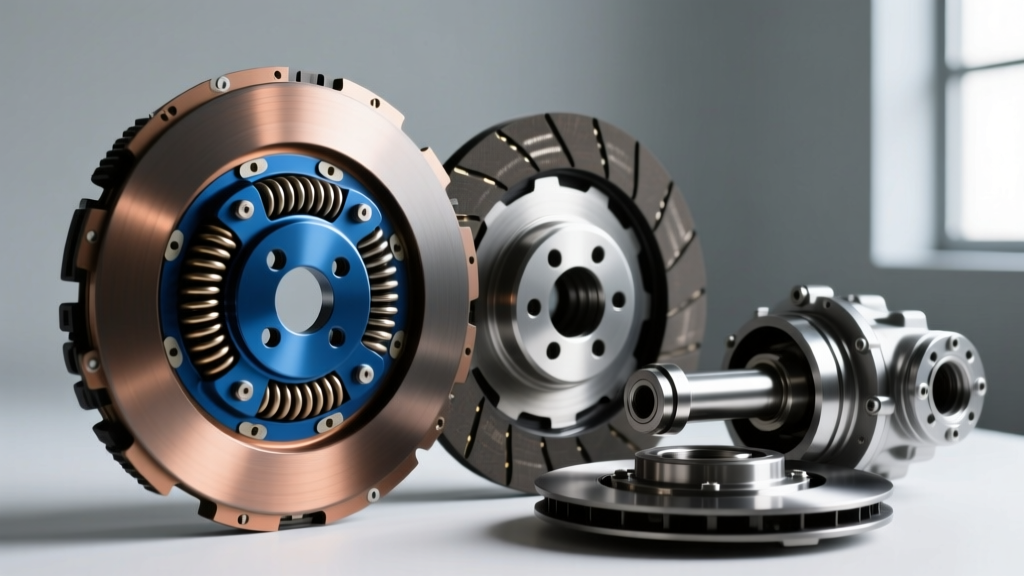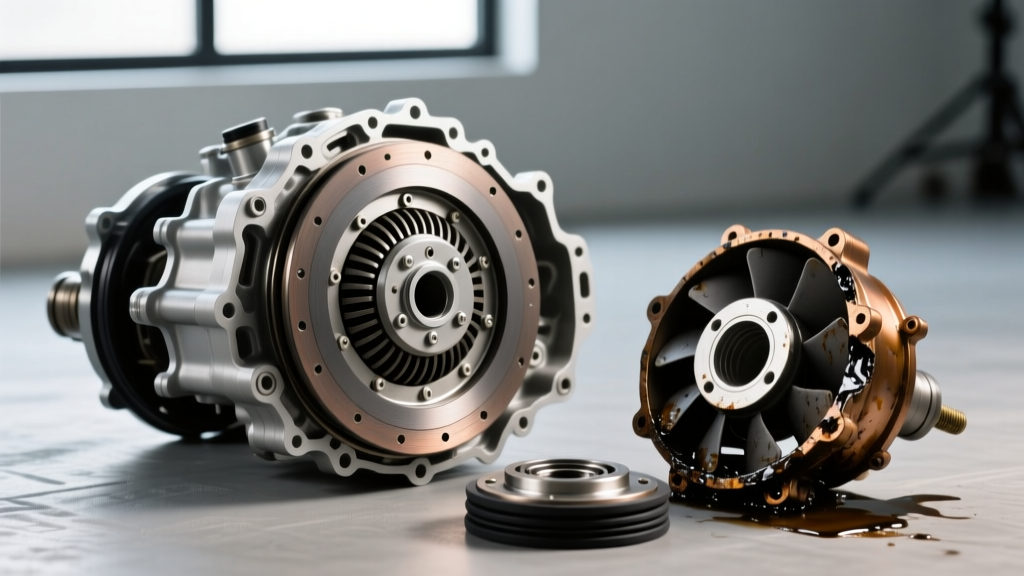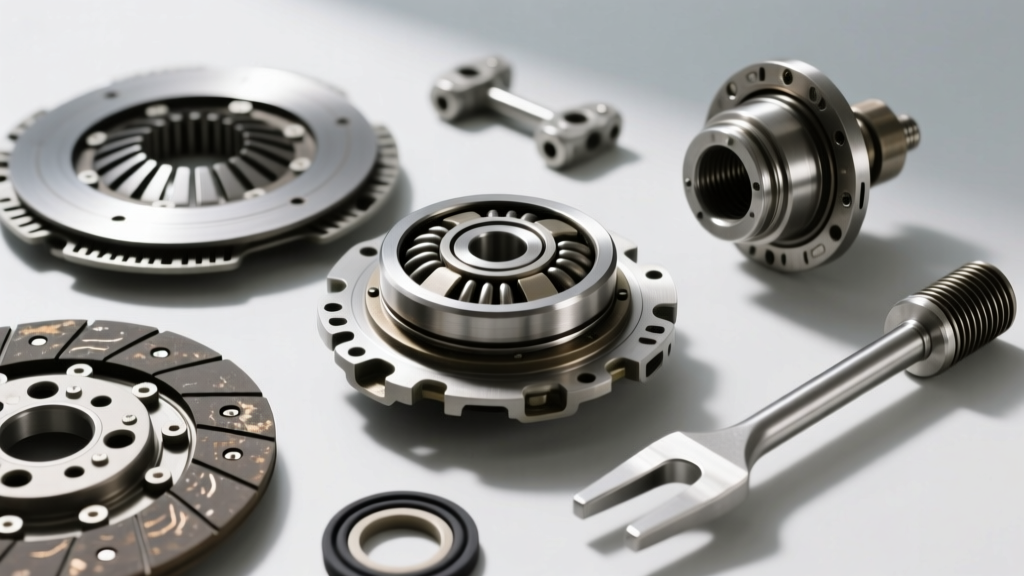
The clutch throw out bearing (often referred to as the release bearing) is the critical bridge between your vehicle's stationary clutch pedal linkage and the high-speed rotating pressure plate assembly. When this component begins to fail, it rarely does so quietly. However, misdiagnosing a failing throw out bearing as a bad pilot bearing, a worn dual-mass flywheel (DMF), or a failing input shaft bearing is a common and costly mistake in modern manual transmission diagnostics.
In this step-by-step guide, we will isolate the exact symptoms of a failing clutch throw out bearing using auditory, tactile, and dynamic testing methods. Whether you are driving a classic GM T56 Magnum setup, a Ford Mustang MT-82, or a modern Subaru 6-speed pull-type system, accurate diagnosis is essential before authorizing a $1,500+ transmission removal job.
Step 1: Isolate the Clutch Throw Out Bearing Noise Profile
Auditory feedback is the most immediate indicator of bearing health, but the timing of the noise relative to pedal position is what separates the throw out bearing from other drivetrain components. The throw out bearing only experiences significant axial load when the clutch pedal is depressed, pressing the bearing face against the spinning pressure plate fingers.
The Driveway Auditory Test
Start the vehicle in neutral with the parking brake engaged. Roll the windows down and listen to the transmission bellhousing area while performing the following pedal movements:
- Clutch Released (Foot off pedal): If you hear a whine or growl that disappears when you press the pedal, you likely have an input shaft bearing issue, not a throw out bearing.
- Clutch Partially Depressed (Taking up slack): A high-pitched squeal, chirp, or metallic grinding that begins the moment the bearing contacts the pressure plate fingers indicates a dry, scored, or failing clutch throw out bearing.
- Clutch Fully Depressed (Pedal to the floor): If a new squealing noise emerges only when the pedal is completely floored and the input shaft stops spinning, you are hearing the pilot bearing, not the throw out bearing.
Drivetrain Noise Diagnostic Matrix
| Component | Pedal Position | Sound Profile | RPM Dependency |
|---|---|---|---|
| Throw Out Bearing | Partially to Fully Depressed | Squeal, chirp, or gritty grind | Changes with engine RPM |
| Pilot Bearing | Fully Depressed | High-pitched metallic squeal | Engine RPM (Input shaft stopped) |
| Input Shaft Bearing | Released (Neutral) | Low-frequency whine or growl | Engine RPM (Disappears on press) |
| Dual-Mass Flywheel | Released / Idle | Clunking, rattling, or knocking | Worsens at low idle RPM |
Step 2: Evaluate Pedal Feel and Vibration Feedback
Modern hydraulic clutch systems, particularly those utilizing a Concentric Slave Cylinder (CSC), transmit high-frequency vibrations directly through the hydraulic fluid to the master cylinder and pedal. According to technical bulletins from REPXPERT, a failing CSC or traditional fork-mounted throw out bearing will often manifest as a 'gritty' or 'notchy' sensation in the pedal.
Hydraulic vs. Mechanical Feedback
If your vehicle uses a traditional cable or mechanical linkage (common in older vehicles or specific aftermarket setups), place your hand lightly on the clutch fork while an assistant slowly depresses the pedal. A healthy throw out bearing will transition smoothly. A failing bearing will transmit a harsh, vibrating 'buzz' through the fork the moment it contacts the diaphragm spring.
For hydraulic CSC systems (standard on most post-2010 manual vehicles, including the GM Camaro ZL1 and Ford Mustang EcoBoost), pay attention to pedal pulsation. If the pedal pulses rhythmically in time with engine RPM during the engagement zone, the bearing's internal races are likely pitted, or the bearing is binding on the transmission input shaft bearing retainer collar.
Step 3: Perform Dynamic Load and Rev-Match Tests
Static tests only tell half the story. A throw out bearing can sound perfectly fine at idle but fail catastrophically under the harmonic vibrations of high-RPM shifts.
- The 3rd Gear Load Test: Drive the vehicle in 3rd gear at roughly 3,000 RPM. Apply moderate throttle to load the drivetrain, then quickly depress the clutch pedal. Listen for a brief 'chirp' or 'squeak' as the bearing takes the full load of the pressure plate. This chirp indicates the bearing's internal grease has depleted, and the metal cage is scoring.
- The High-RPM Shift Test: Safely perform a 2nd-to-3rd gear shift at 5,500 RPM. If you feel a harsh 'grind' or physical resistance at the exact moment the pedal reaches the top of its travel, the throw out bearing may be hanging up on a worn input shaft sleeve, preventing the pressure plate from fully engaging.
Step 4: Visual Inspection and Measurement (Transmission Removed)
Once the symptoms dictate a transmission removal, the diagnostic process shifts to precise measurement. Simply replacing the clutch throw out bearing without inspecting the mating surfaces will lead to premature failure of the new unit.
Inspecting the Fork and Pivot Ball
On traditional fork-actuated systems (like the Ford MT-82 or Tremec T56), the pivot ball and fork pads endure immense friction. Inspect the fork pads where they contact the bearing collar. If wear exceeds 0.030 inches, the fork must be replaced. Furthermore, check the pivot ball for flat-spotting. For MT-82 applications, upgrading to an aftermarket billet pivot ball (torqued to 22 lb-ft) is highly recommended to prevent future binding.
Checking the Input Shaft Bearing Retainer
The throw out bearing slides along the input shaft bearing retainer (the snout of the transmission). Run your fingernail across this surface. If you feel deep grooves or galling where the bearing's inner collar has spun against the retainer, the retainer must be replaced or machined. According to Sachs/ZF Aftermarket guidelines, installing a new bearing on a scored retainer sleeve will cause the new bearing to bind and fail within 5,000 miles.
Common Failure Modes and Replacement Costs
Understanding the financial and mechanical scope of a throw out bearing replacement is vital for accurate customer or personal budgeting in 2026.
Concentric Slave Cylinder (CSC) vs. Traditional Bearing
- Traditional Fork Bearing: Typically costs between $40 and $90 for the part (e.g., SKF or Timken). However, labor is intensive.
- Concentric Slave Cylinder (CSC): The CSC integrates the throw out bearing and hydraulic slave cylinder into a single unit. Parts range from $140 to $280 (e.g., LUK or FTE automotive). Because the hydraulic line must be disconnected, a complete system bleed is mandatory upon reassembly.
The 'While You Are In There' Rule
Because labor to access the throw out bearing typically ranges from 6 to 9 hours (costing $720 to $1,350 at standard independent shop rates), it is universally advised to replace the entire clutch assembly. A complete Tremec-approved LUK RepSet or Sachs clutch kit, including the friction disc, pressure plate, pilot bearing, and throw out bearing, generally costs between $350 and $650. Reusing an old pressure plate with a new throw out bearing risks mismatched wear patterns and immediate clutch chatter.
Final Diagnostic Takeaways
Diagnosing a clutch throw out bearing requires a systematic elimination of pilot bearing, input shaft, and flywheel noises. By correlating the exact pedal position with the onset of noise and vibration, you can confidently confirm the bearing's failure before pulling the transmission. Always remember to inspect the fork, pivot, and input shaft sleeve during teardown to ensure your repair lasts the life of the new clutch assembly.