The F-150 Clutch Conundrum: Drivetrain vs. Cooling System
When F-150 owners experience intermittent shuddering, slipping sensations, or unexplained roaring noises at highway speeds, the immediate assumption is often a failing transmission. However, accurate intermittent clutch problems diagnosis requires a holistic view of the truck's mechanical systems. In many cases, a failing ford f150 fan clutch can perfectly mimic the symptoms of a slipping Torque Converter Clutch (TCC) in Ford's ubiquitous 6R80 and 10R80 automatic transmissions.
As an automotive drivetrain specialist, I frequently see trucks towed into shops for suspected transmission rebuilds, only to discover the root cause is a degraded viscous fan clutch on the 5.0L Coyote V8 or a failing electronic fan module on the 3.5L EcoBoost. Because both systems rely on friction and fluid dynamics to manage rotational slip, their failure modes often overlap in the driver's seat. This guide will break down how to definitively isolate intermittent clutch issues, separating drivetrain TCC shudder from cooling system parasitic drag.
Understanding Intermittent Torque Converter Clutch (TCC) Shudder
The Torque Converter Clutch is a friction-lined piston inside the torque converter that mechanically locks the engine to the transmission input shaft at cruising speeds to eliminate fluid slip and improve fuel economy. When this clutch material degrades, or the apply fluid pressure becomes unstable, the TCC rapidly engages and disengages. This creates a 20-40 Hz vibration that feels exactly like driving over highway rumble strips.
6R80 and 10R80 Transmission Specifics
- 6R80 (2011-2017 F-150): Requires MERCON LV fluid. TCC shudder here is often caused by degraded friction modifiers in the fluid or a worn TCC apply valve in the valve body. The shudder typically occurs between 40-60 mph in 5th or 6th gear under light throttle (approx. 1100-1400 RPM).
- 10R80 (2018+ F-150): Requires the ultra-low viscosity MERCON ULV fluid. The 10R80 is notorious for intermittent TCC shudder due to its aggressive, multi-stage lockup strategy. Ford has issued multiple TSBs regarding the TCC solenoid and torque converter hub wear. If left untreated, the intermittent slip will glaze the clutch disc, leading to permanent transmission damage.
The Decoy: When a Ford F-150 Fan Clutch Mimics Drivetrain Failure
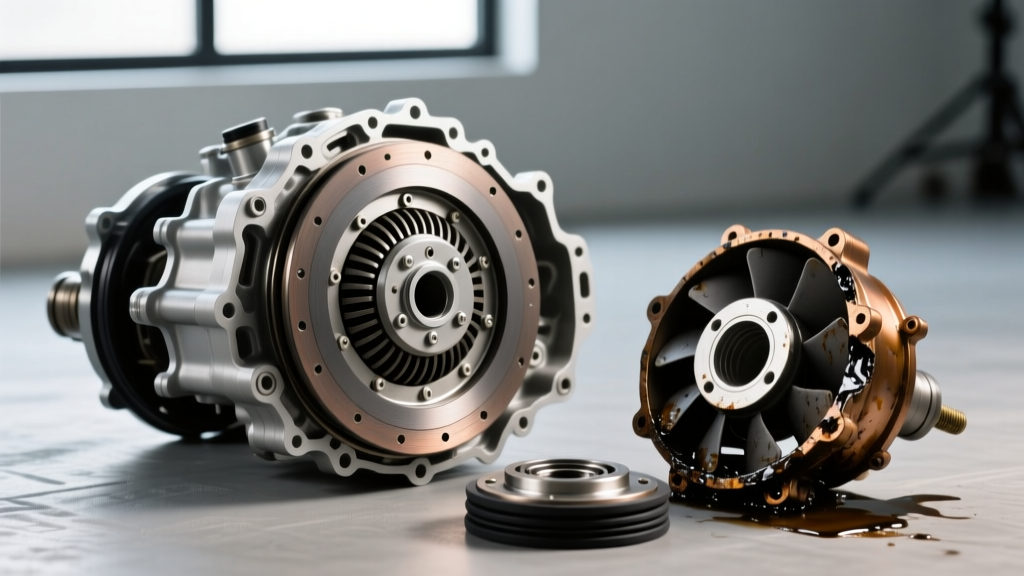
Before tearing into the transmission pan, you must rule out the engine's cooling system. The 5.0L Coyote and older 4.6L/5.4L V8 engines utilize a viscous fan clutch attached to the water pump shaft. This clutch contains a bi-metallic coil and silicone fluid that allows the fan to slip at low temperatures and lock up when the engine bay gets hot.
When the internal silicone fluid breaks down or the bi-metallic coil fatigues, the ford f150 fan clutch can intermittently lock up at highway speeds, regardless of engine temperature. A fully locked engine-driven fan at 70 mph creates massive parasitic drag, robbing the engine of 20 to 30 horsepower. The driver feels this sudden load as a 'slipping' or 'struggling' transmission, accompanied by a violent steering wheel shake and a deafening roar from the engine bay. Because the engine bogs down under the parasitic load, the transmission may simultaneously downshift, further confusing the diagnosis.
Diagnostic Flowchart: Isolating the Intermittent Vibration
Use this comparison chart to quickly differentiate between a drivetrain clutch issue and a cooling system clutch issue during your road test.
| Diagnostic Parameter | Torque Converter Clutch (TCC) Shudder | Viscous Fan Clutch Lockup / Failure |
|---|---|---|
| Vibration Frequency | 20-40 Hz (feels like driving over rumble strips) | Lower frequency, heavy rotational shake in steering wheel |
| Acoustic Signature | Minimal noise, mostly tactile vibration | Loud, jet-engine roaring from the engine bay |
| Throttle Response | Shudder stops immediately when lifting off throttle | Roaring and drag persist or change pitch with RPM |
| Temperature Correlation | Occurs when trans fluid is at full operating temp | Often worse after towing or idling in heavy traffic |
| OBD2 Data (FORScan) | TCC_SLIP PID bounces between 20-60 RPM | TCC_SLIP is 0 RPM, but engine load (LOAD_PCT) spikes |
Step-by-Step Troubleshooting & Data Logging
To perform a professional-grade intermittent clutch problems diagnosis, you need to look beyond basic OBD2 code readers. I highly recommend using FORScan with a compatible OBD2 adapter to monitor live transmission PIDs.
Test 1: Data Logging the TCC
- Connect FORScan and monitor the
TCC_SLIP(Torque Converter Slip Speed) andTCC_CMD(TCC Command) PIDs. - Drive the truck at 55 mph on a flat surface in 6th gear (6R80) or 8th/9th gear (10R80) with the TCC commanded to 'Locked'.
- A healthy TCC will show slip between -5 and +5 RPM. If you feel a shudder and the
TCC_SLIPPID erraticly jumps from 0 to 45 RPM, your torque converter clutch friction material is glazed, or the apply solenoid is failing.
Test 2: The Physical Fan Clutch Inspection
If the TCC data is stable but the truck still shakes and roars, inspect the fan clutch. With the engine completely cold and off, attempt to spin the fan blades by hand. A healthy viscous clutch will offer slight, even resistance. If it spins freely like a bicycle wheel, the internal fluid has leaked out. Conversely, if the engine is hot and you shut it off, the fan should not be able to spin more than a fraction of an inch. If it is locked solid even when the engine is stone cold, the internal valve has seized, confirming the need for a replacement.
Repair Procedures, Torque Specs, and Fluids
Once you have isolated the faulty clutch, proper repair procedures are critical to ensure longevity and prevent collateral damage.
Addressing 10R80 and 6R80 TCC Shudder
If the diagnosis points to the transmission, do not immediately replace the torque converter. In 60% of early-stage intermittent shudder cases, a fluid exchange and friction modifier additive can restore the clutch surface.
- 6R80 Fix: Perform a complete fluid exchange using Motorcraft MERCON LV (XT-10-QLV). Add one tube of Dr. Tranny Instant Shudder Fixx to recondition the friction material.
- 10R80 Fix: Drop the transmission pan, replace the filter (Motorcraft FT-295), and refill with Motorcraft MERCON ULV (XT-12-QULV). Warning: Never mix ULV and LV fluids; doing so will destroy the 10R80 clutch packs within 500 miles.
Replacing the 5.0L Coyote Fan Clutch
If the ford f150 fan clutch is the culprit, replacement requires specific tools. The fan clutch nut on the 5.0L water pump is typically a 36mm thread. Depending on the exact model year, it may be left-hand threaded. Use a dedicated 36mm fan clutch wrench and a water pump pulley holding tool to break it loose.
- Fan Clutch Nut Torque: 41 lb-ft (55 Nm) - Verify thread direction before applying torque.
- Water Pump Pulley Bolts: If removed for clearance, torque the M6 pulley bolts to 18 lb-ft (25 Nm).
- Part Number: Motorcraft YB-3155 (or equivalent Hayes/Motorcraft viscous clutch for your specific VIN).
2026 Market Costs & Final Thoughts
Understanding the overlap between cooling and drivetrain clutches saves F-150 owners thousands of dollars in misdiagnosed repairs. According to current RockAuto parts pricing and dealership labor guides, here is what you can expect to pay for these specific clutch repairs:
- TCC Fluid Flush & Additive (6R80/10R80): $250 - $350 at an independent transmission shop.
- Complete Torque Converter Replacement (10R80): $1,800 - $2,600 (requires transmission removal and bench disassembly).
- Fan Clutch Assembly Replacement (5.0L V8): $280 - $450 (Parts range from $120-$160; labor is roughly 1.2 hours).
Accurate intermittent clutch problems diagnosis relies on data, not guesswork. By monitoring TCC slip PIDs and physically verifying the viscous fan clutch operation, you can confidently target the root cause of your F-150's vibration, ensuring your truck stays on the road and out of the transmission rebuild bay. For more detailed Ford service procedures, always consult Ford Official Support & Service Documentation specific to your vehicle's VIN.