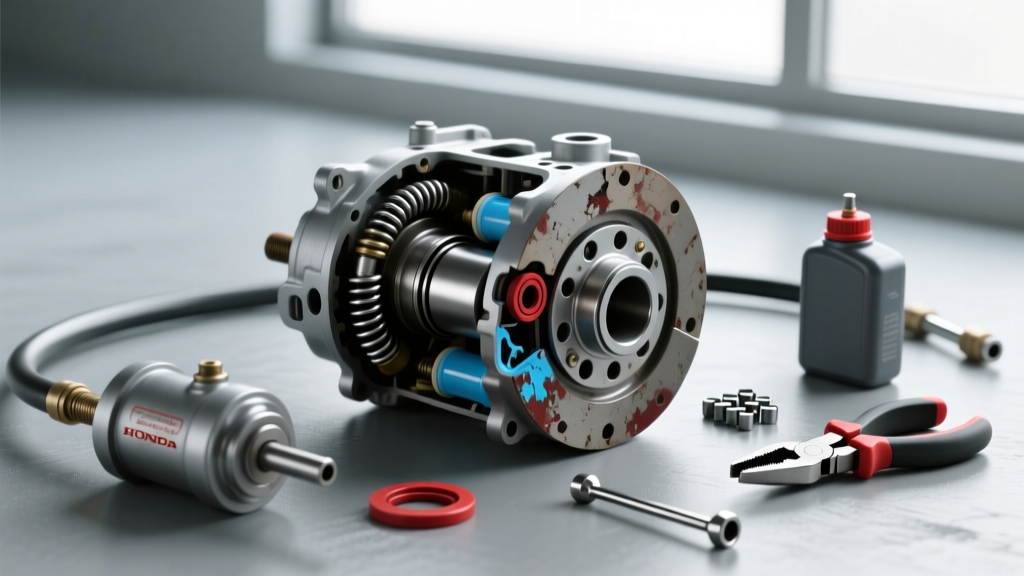
The Hydraulic Clutch Dilemma: Isolating the Leak
When your clutch pedal suddenly drops to the floorboards or develops a spongy, inconsistent feel, the immediate culprit is a loss of hydraulic pressure. In modern manual transmission vehicles, the sealed hydraulic system relies on precise fluid volume displacement to actuate the release bearing. When that pressure escapes, you are left stranded. The two most common failure points in this system are the clutch lines and the slave cylinder.
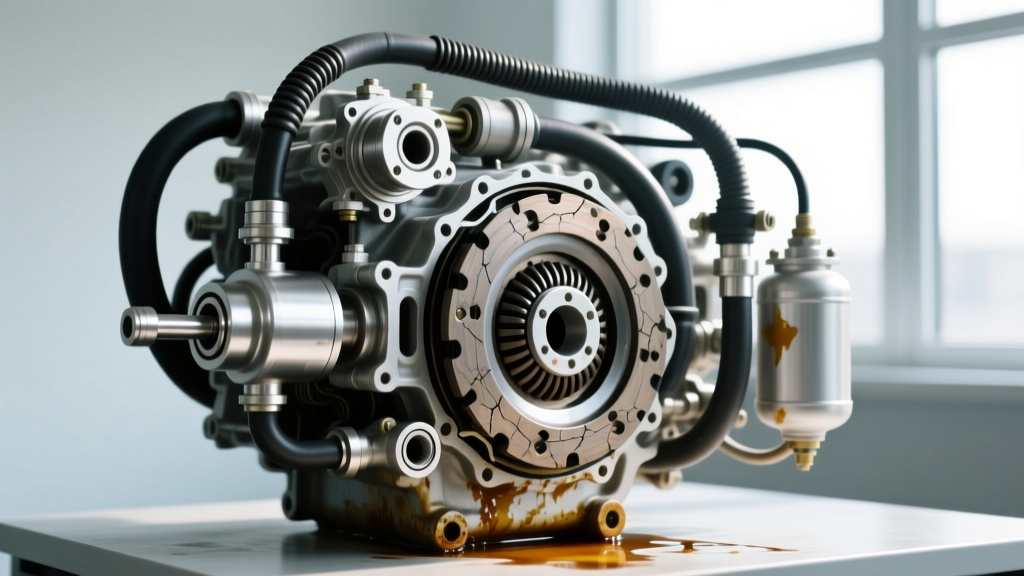
As of 2026, automotive manufacturers have largely abandoned mechanical linkages and cable-driven clutches in favor of hydraulic systems due to their superior pedal feel and packaging efficiency. However, this shift means that diagnosing a fluid leak requires a systematic approach. A puddle of DOT 4 brake fluid on your garage floor could be originating from a degraded flexible hose, a failing quick-connect fitting, or a blown concentric slave cylinder seal buried deep inside the bellhousing. Misdiagnosing the source can lead to unnecessary transmission removals or repeated bleeding attempts. This guide provides a definitive, expert-level framework for isolating hydraulic clutch failures.
Symptom Matrix: Clutch Lines vs. Slave Cylinder Failure
Before turning a single wrench, you must categorize the symptoms. The location of the fluid loss and the behavior of the pedal will immediately point you toward either the external plumbing or the internal actuator.
| Symptom / Observation | Failing Clutch Lines | External Slave Cylinder | Internal CSC (Concentric) |
|---|---|---|---|
| Fluid Location | Along firewall, frame rail, or near transmission bellhousing exterior | Directly on external slave body or pushrod boot | Dripping from bellhousing inspection cover / weep hole |
| Pedal Feel | Spongy (if hose is expanding) or completely on the floor (if ruptured) | Soft, may not return fully; pushrod visible leak | Hard to engage, erratic bite point, or sudden drop |
| Fluid Loss Rate | Fast (ruptured line) to slow (weeping quick-connect) | Slow to moderate (seal degradation) | Slow weep to sudden catastrophic dump |
| Common Vehicles | Jeep Wrangler (JK/JL), Ford F-150, Honda Civic Si | Older Honda, Nissan Frontier, Jeep Wrangler TJ | Chevy Corvette (C5-C8), Ford Mustang GT (Tremec), Ram Cummins (G56) |
Tracing the Clutch Lines: The Vulnerable Plumbing
The clutch lines bridge the gap between the master cylinder (mounted at the firewall) and the slave cylinder. This routing is fraught with environmental hazards. The hard plastic or steel lines must navigate around the exhaust, the engine block, and the transmission crossmember.
Most modern vehicles utilize a hybrid line setup: a hard line transitioning into a flexible rubber or braided stainless steel hose near the transmission to accommodate drivetrain movement. The most frequent failure point on these lines is the quick-connect fitting. These plastic snap-ring fittings rely on internal EPDM O-rings to maintain a seal. Over time, engine bay heat cycles cause the plastic retaining clips to become brittle, and the O-rings to extrude or flatten. If you suspect a clutch line failure, inspect the quick-connects first. A simple test is to wrap the fitting in a clean shop towel, have an assistant depress the clutch pedal, and look for moisture wicking into the towel.
Expert Note: If you are upgrading a high-performance vehicle (like a supercharged C7 Corvette or a boosted Mustang), replace the OEM rubber flex hose with a braided stainless steel line from manufacturers like Russell or Earl's. Rubber hoses expand under the high line pressure generated by heavy-duty pressure plates, causing a delayed or spongy pedal feel even when no leak is present.
Internal vs. External Slave Cylinder Diagnostics
If the clutch lines are dry and the master cylinder reservoir is emptying, the slave cylinder is your prime suspect. Diagnosing this requires understanding which type of slave your vehicle employs.
External Slave Cylinders: Mounted on the outside of the bellhousing, these push a lever to actuate the release bearing. Diagnosis is trivial: if the rubber boot surrounding the pushrod is filled with fluid, the internal piston seal has failed. Replacement is straightforward and rarely requires transmission removal.
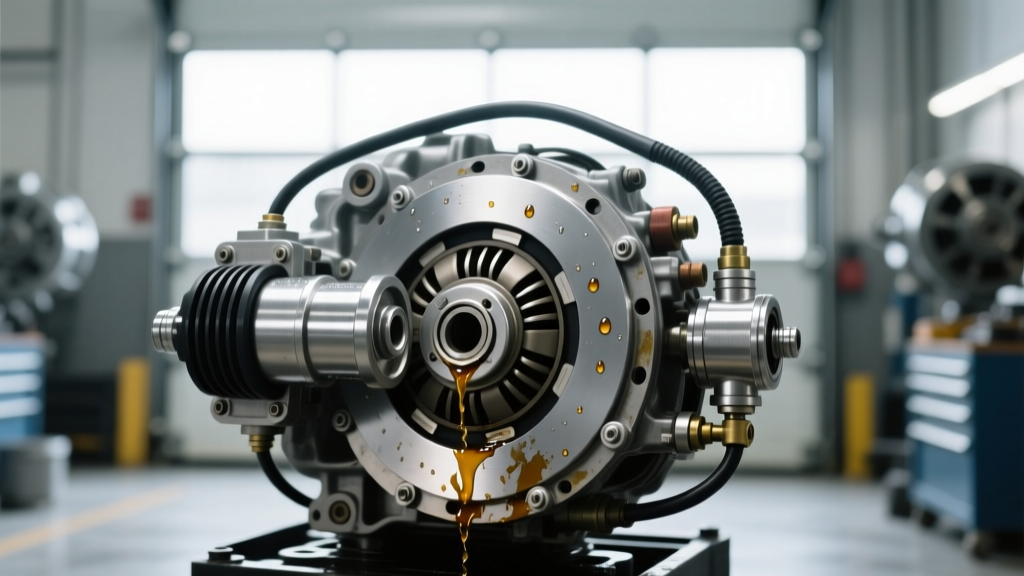
Internal Concentric Slave Cylinders (CSC): Found in transmissions like the Tremec T56 Magnum, ZF S6-650, and Getrag G56, the CSC wraps directly around the transmission input shaft. Because it is enclosed within the bellhousing, a leak will manifest as fluid dripping from the bottom inspection cover or weep hole. Warning: You must differentiate between a leaking CSC and a leaking engine rear main seal. Brake fluid (DOT 4/5.1) has a distinctly acrid, chemical smell and will easily wash off with water. Engine oil is viscous, smells like burnt toast when hot, and will not wash away with water.
Step-by-Step Diagnostic Procedure
Follow this sequence to definitively isolate the leak without guessing:
- Clean the Battlefield: Use brake cleaner and compressed air to thoroughly degrease the clutch lines, quick-connects, master cylinder banjo bolt, and the bellhousing weep hole. You cannot trace a new leak over an old mess.
- Pressurize the System: Attach a motive pressure bleeder to the master cylinder reservoir. Set the pressure to exactly 15-20 PSI. Do not exceed 25 PSI, or you risk blowing out the master cylinder cup seals or rupturing an aging flex hose.
- The UV Dye Trick: If the leak is microscopic (common on porous aluminum master cylinders or hairline cracks in plastic hard lines), add UV-compatible brake fluid dye to the reservoir. Run the system under pressure and use a 395nm UV flashlight in a darkened bay to pinpoint the exact origin.
- Bellhousing Borescope: For internal CSC suspicions, remove the inspection cover and use an endoscope camera to look up at the CSC. If the friction disc is contaminated with fluid, the CSC is definitively dead.
Replacement Realities: Costs, Torque Specs, and Bleeding
Once the culprit is identified, proper repair protocols must be followed. As an automotive transmission specialist, I cannot stress enough that reusing old, heat-cycled O-rings or guessing on torque specs will result in a comeback repair.
Crucial Torque Specifications
- Master Cylinder Banjo Bolt: Typically 18-22 lb-ft (24-30 Nm). Always use two new crush washers. Overtightening will crack the aluminum master cylinder housing.
- Quick-Connect Fittings: Hand-snap until you hear/feel the secondary click, then perform a 'pull test' with 15 lbs of force. No torque wrench applicable.
- Internal CSC Mounting Bolts (e.g., LuK LSC104): 89 lb-in (10 Nm). These are small M6 bolts threading into aluminum; overtightening will strip the transmission case.
- Tremec T56 Magnum Bellhousing to Engine Block: 55 lb-ft (75 Nm) in a star pattern.
The Cost of Labor and Parts
External slave cylinder replacements are budget-friendly. A high-quality FTE or Sachs external slave costs between $60 and $120, and labor is typically 1.5 hours ($250-$400 total). Replacing clutch lines (like a Dorman 780-104 replacement assembly) runs $80-$150 for the part and 1 hour of labor.
However, an internal CSC failure is a major financial event. While the LuK or FTE CSC part itself may only cost $120-$250, the labor requires dropping the transmission, driveshaft, and exhaust. Expect shop bills to range from $1,200 to $2,500 depending on the vehicle's complexity and AWD/RWD configuration.
Expert Warning on Fluid Selection: Never use DOT 5 (Silicone) brake fluid in a hydraulic clutch system. DOT 5 does not absorb moisture, meaning water will pool at the lowest point of the system (the slave cylinder), leading to rapid internal corrosion and seal failure. Always use a high-quality DOT 4 (like Castrol SRF or Motul RBF 600) or DOT 5.1, which are glycol-based and compatible with EPDM clutch system seals. For a comprehensive list of compatible fluids, refer to the Schaeffler LuK Aftermarket technical bulletins.
The Preventative Maintenance Argument
If you are diagnosing a failed internal CSC, the transmission is coming out. At this juncture, it is professional malpractice to reinstall the original clutch lines. The flexible hose and quick-connect fittings have endured years of thermal cycling and vibration. For an additional $100 in parts, you should replace the entire hydraulic line assembly and flush the master cylinder while the system is disconnected.
Furthermore, always replace the clutch fork pivot ball, the release bearing guide tube (if worn), and inspect the flywheel for heat spotting. For deeper technical specifications on drivetrain integration and bellhousing tolerances, consult the engineering resources available directly from Tremec or parts distributors like RockAuto to verify OEM part supersessions.
Diagnosing hydraulic clutch leaks is an exercise in patience and systematic elimination. By understanding the distinct failure modes of clutch lines versus slave cylinders, utilizing pressure testing, and adhering to strict torque and fluid specifications, you can restore your manual transmission's pedal feel to factory perfection and avoid the dreaded 'comeback' repair.