The Thermodynamics of Axle Assemblies
In the realm of drivetrain engineering, the differential is a masterclass in mechanical compromise. It must transmit immense torque while allowing wheels to rotate at varying speeds. However, this process—specifically the hypoid gear meshing of the ring and pinion—generates substantial thermal energy. When evaluating differential types, from standard open units to complex torque-sensing limited slips, thermal management is often the missing link in reliability. As we move through 2026, with vehicles pushing higher horsepower figures and towing heavier loads, understanding the intersection of differential covers, cooling systems, and internal differential mechanics is critical for preventing catastrophic axle failure.
Standard stamped-steel differential covers act as thermal insulators rather than heat sinks. Under sustained highway towing or low-speed rock crawling, gear oil temperatures can easily exceed 250°F (121°C). At this threshold, conventional 75W-90 fluids begin to experience severe viscosity shear, leading to boundary lubrication failure, accelerated gear wear, and bearing degradation.
Thermal Sensitivity Across Differential Types
Not all differentials react to heat in the same way. The internal architecture of your specific unit dictates how desperately it requires auxiliary cooling.
Clutch-Type Limited Slip Differentials (LSD)
Clutch-based LSDs (such as the Ford Traction-Lok, Auburn Pro-Series, or GM G80) are the most thermally sensitive differential types on the market. When torque biasing occurs, the internal clutch packs slip. This friction intentionally generates heat. If the differential housing cannot dissipate this heat, the gear oil degrades and the specialized friction modifiers (FM) burn off. The result is aggressive clutch chatter, glazing of the friction surfaces, and eventual lock-up or total failure. Upgrading to a finned aluminum cover is practically mandatory for heavily loaded clutch-type LSDs.
Helical Gear-Driven LSDs (Torsen, Eaton Truetrac)
These units rely on complex worm-gear and side-gear meshes to bias torque without the use of wearable clutch packs. While they do not generate slip-induced heat like clutch LSDs, the intense gear-meshing friction under high-torque applications (like drag racing or heavy off-road crawling) can cause localized micro-welding and gear scoring if the oil film boils off. Deep-sump covers that increase fluid volume and provide external cooling fins are highly recommended to maintain the structural integrity of the helical gears.
Open Differentials and Locking Differentials
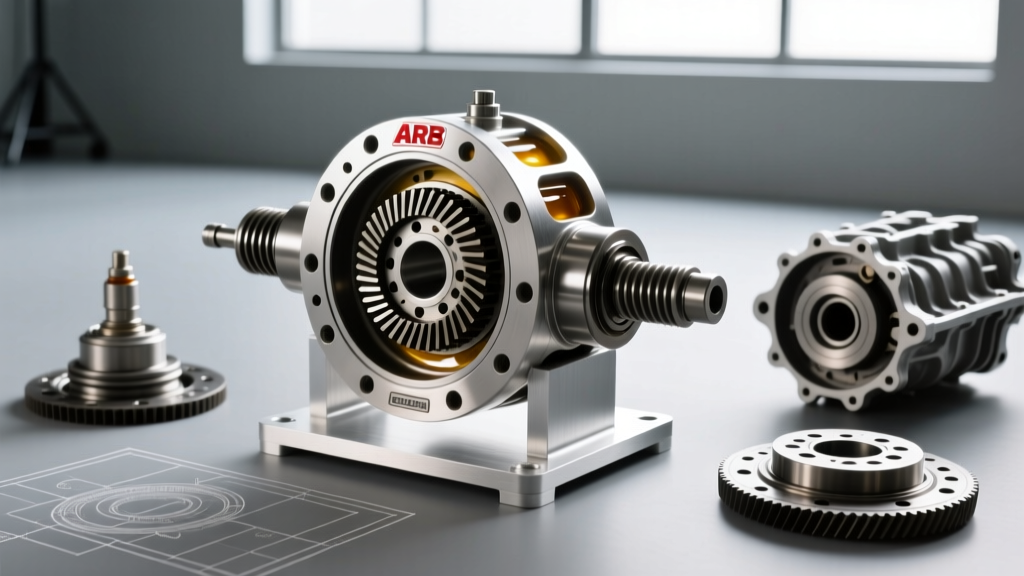
Open differentials and selectable lockers (like the ARB Air Locker or Eaton E-Locker) operate with minimal internal slip when locked. Their primary heat source is strictly the ring and pinion mesh. While they are less sensitive to thermal spikes than clutch LSDs, extreme environments (e.g., Baja 1000 racing or continuous heavy towing) still necessitate upgraded cooling to protect the pinion bearings and prevent ring gear tooth annealing.
Cover Technologies and Thermal Dissipation Data
The aftermarket offers three primary tiers of differential cooling. Below is a comparative analysis of thermal performance, cost, and application suitability based on current 2026 market data.
| Cover Technology | Material & Design | Avg. Temp Drop | Fluid Capacity Increase | Est. Cost (USD) | Best Application |
|---|---|---|---|---|---|
| OEM Stamped Steel | Thin-gauge steel, smooth exterior | Baseline | 0.0 Quarts | $0 (Stock) | Light-duty commuting |
| Cast Aluminum Finned | A356-T6 Aluminum, external fins | -25°F to -40°F | +0.5 to +1.5 Quarts | $80 - $180 | Towing, street performance, trail riding |
| Active Liquid-to-Air | Billet housing, integrated AN-fittings | -60°F to -90°F | +1.5 to +3.0 Quarts | $650 - $1,200 | Trophy trucks, rock crawling, drag racing |
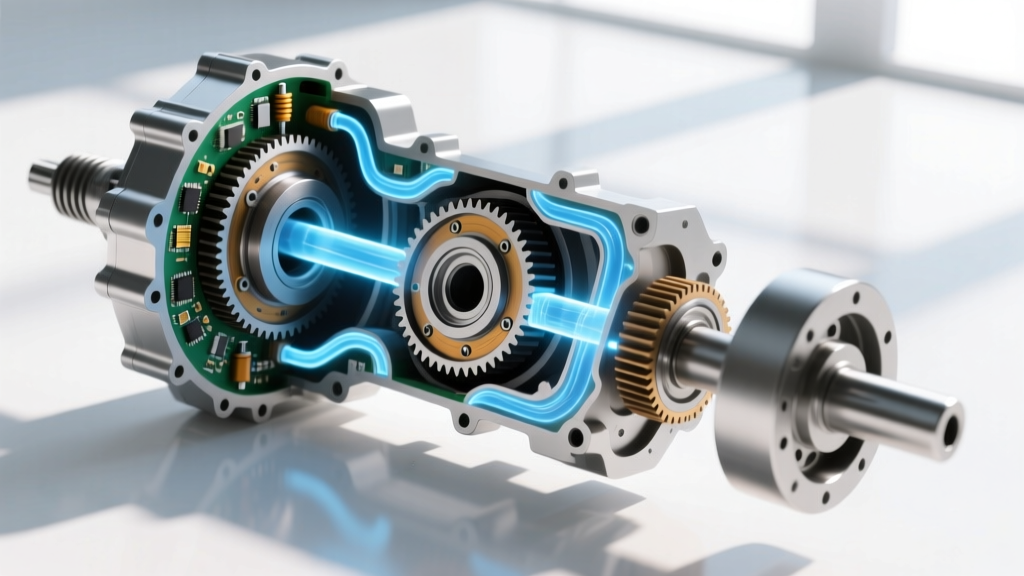
Brands like Mag-Hytec and PML dominate the cast aluminum segment, utilizing internal baffles to direct fluid flow across the cooling fins. For extreme applications, active systems from PWR or Setrab utilize a 12V fluid pump (such as the Rule 180 GPH marine pump adapted for oil) to push gear lube through a remote-mounted heat exchanger, effectively decoupling the cooling capacity from the vehicle's ground speed.
Installation Specifications: Torque, Sealants, and Prep
A high-end differential cover is useless if it leaks or warps the housing face. Proper installation requires strict adherence to torque specifications and surface preparation.
Surface Preparation
Never apply RTV silicone to a dirty or oily surface. Use a non-chlorinated brake cleaner and a green Scotch-Brite pad to remove old gasket material from the axle housing face. For those avoiding the mess of RTV, reusable elastomeric gaskets (like those from Lube-Lock) or cork/rubber composites from Fel-Pro offer excellent sealing properties and allow for easier future fluid services.
RTV Selection
If using RTV, Permatex Ultra Black (Part #85088) is the industry standard for differential applications. It is highly resistant to the extreme pressure (EP) additives and friction modifiers found in modern synthetic gear oils. Apply a continuous 2mm bead, ensuring to circle every bolt hole to prevent oil from migrating through the threads.
Torque Specifications by Axle Model
- Dana 60 / Dana 70: Typically uses 3/8"-16 or 1/2"-13 bolts. Torque to 35-45 lb-ft in a crisscross pattern.
- Ford 8.8 / 9.75: Uses 8mm or 10mm flange bolts. Torque to 20-25 lb-ft. Do not overtighten, as the thin aluminum ears on aftermarket covers can snap.
- GM 14-Bolt (10.5"): Uses 3/8" bolts. Torque to 30 lb-ft. Note that the GM 14-bolt housing face is notoriously prone to warping; ensure the mating surface is perfectly flat before installation.
Always allow RTV to cure for at least 12 to 24 hours before filling with gear oil. Filling immediately can cause the hydraulic pressure of the fluid to blow out the uncured silicone sealant.
Fluid Selection and Additive Protocols
Upgrading your differential cover allows you to maximize the potential of premium synthetic fluids. According to AMSOIL Technical Guides, synthetic 75W-90 or 75W-140 API GL-5 rated fluids (like AMSOIL Severe Gear or Red Line 75W90) maintain their kinematic viscosity far better than conventional petroleum-based oils at temperatures exceeding 275°F.
Critical Warning for Clutch LSDs: If you are running a clutch-type limited slip, the fluid must contain the correct friction modifier. General Motors requires a specific additive (often labeled as G80 additive), while Ford utilizes XL-3. Adding too much FM will cause the LSD to slip excessively and act like an open differential; adding too little will cause violent chatter. Always start with a fluid that has FM pre-mixed, and only add pure FM in 1-ounce increments during the break-in figure-eight testing phase.
Cost vs. Benefit Analysis for 2026 Builds
Is an aftermarket differential cover worth the investment? For a daily-driven commuter car with an open differential, the OEM stamped steel cover is perfectly adequate. However, for a 3/4-ton truck towing a 10,000 lb trailer through mountain passes, or a Jeep Wrangler running 40-inch tires on a Dana 60, the math heavily favors an upgrade.
Rebuilding a ring and pinion set due to heat-induced bearing failure costs between $1,200 and $2,500 in labor and parts. A high-capacity finned aluminum cover costs roughly $150 and takes 45 minutes to install. By dropping operating temperatures by 30°F and increasing fluid volume by a quart, you effectively double the service life of your hypoid gears and carrier bearings. When matched to the correct differential type and application, thermal management via upgraded covers is one of the highest ROI modifications you can make to your vehicle's drivetrain.