The Ford 8.8 Axle: A Benchmark for Drivetrain Performance
When automotive enthusiasts and professional mechanics discuss upgrading the rear axle for improved acceleration or towing capability, the Ford 8.8-inch rear end consistently ranks at the top of the list. Found in everything from the Foxbody and SN95 Mustangs to modern S550 Mustang GTs and heavy-duty F-150 trucks, this axle is renowned for its robust architecture. However, extracting maximum performance from this platform often requires delving into the heart of the axle: the pinion gear differential assembly. Swapping the ring and pinion set is not merely a bolt-on modification; it is a precision-machining exercise that dictates how effectively your engine's torque reaches the pavement.
In this comprehensive model-specific repair guide, we will dissect the process of upgrading your pinion gear differential components to alter your final drive ratio. We will cover the physics of gear selection, model-specific nuances between independent rear suspension (IRS) and solid axle setups, and the exact torque specifications required to ensure your differential survives high-horsepower launches.
Decoding Gear Ratios: How the Pinion Gear Dictates Performance
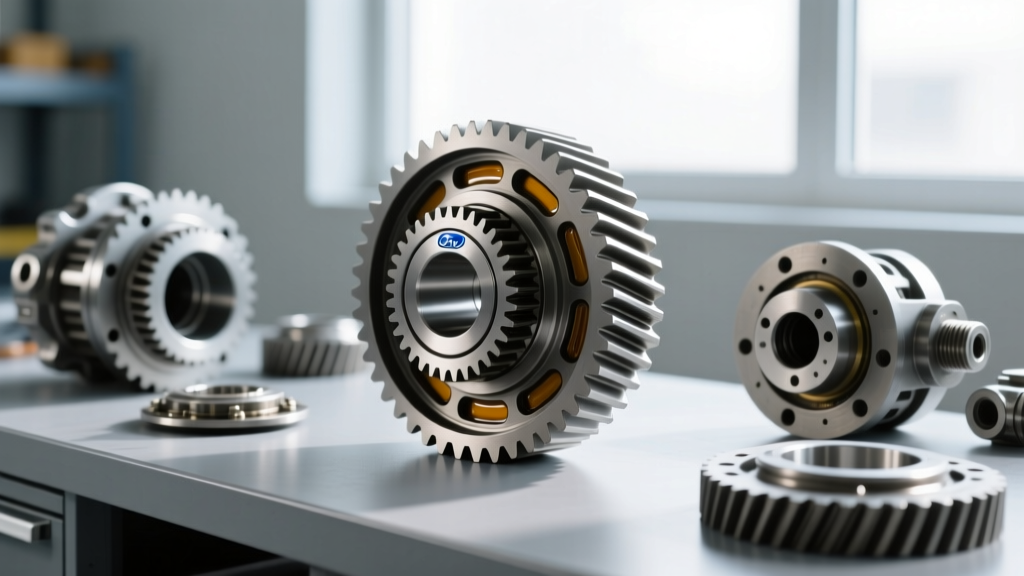
The fundamental physics of a differential relies on the relationship between the small driving pinion gear and the large driven ring gear. The gear ratio is determined by dividing the number of teeth on the ring gear by the number of teeth on the pinion gear. When you install a numerically higher gear set (e.g., moving from a 3.27 to a 4.10 ratio), the pinion gear becomes smaller and features fewer teeth. This forces the driveshaft to rotate more times for every single rotation of the wheels, effectively multiplying torque at the wheels at the expense of top-speed fuel economy.
According to Yukon Gear & Axle Technical Resources, selecting the correct ratio depends heavily on your vehicle's powerband, tire diameter, and intended use case. Below is a breakdown of common Ford 8.8 ratios and their optimal applications.
| Ratio | Ring/Teeth | Pinion/Teeth | Ideal Application |
|---|---|---|---|
| 3.27:1 | 36 | 11 | Highway cruising, stock F-150 towing, fuel economy. |
| 3.55:1 | 39 | 11 | Street/strip Mustangs with mild cams, balanced daily driving. |
| 3.73:1 | 41 | 11 | Aggressive street performance, NA Mustang GTs, autocross. |
| 4.10:1 | 41 | 10 | Dedicated drag racing, supercharged builds, steep off-road crawling. |
| 4.56:1 | 41 | 9 | Pure drag cars with tall slicks, extreme low-speed torque. |
Model-Specific Considerations: Mustang IRS vs. F-150 Solid Axle
The S550 Mustang GT (2015-2023) IRS Challenge
Starting in 2015, Ford transitioned the Mustang to an Independent Rear Suspension (IRS) built around a modified Ford 8.8 differential carrier. Unlike the solid axle predecessors, the IRS differential is mounted via rubber or polyurethane bushings to a subframe. Accessing the pinion gear differential assembly in an S550 requires either dropping the entire IRS subframe or working in extremely confined spaces with specialized pullers. Furthermore, the shock loads generated by modern Mustang GTs (pushing 460+ horsepower and 420 lb-ft of torque) are notorious for destroying factory crush sleeves. When rebuilding an IRS 8.8, replacing the crush sleeve with a solid pinion spacer is non-negotiable for track use.
The F-150 5.0 (2011-2020) Solid Axle Advantage
Conversely, the F-150 utilizes a traditional solid axle housing. The differential cover is easily accessible, and the pinion yoke faces forward, connecting directly to a two-piece driveshaft. For truck owners looking to compensate for oversized 35-inch off-road tires, swapping to a 4.10 or 4.30 pinion gear differential setup restores lost throttle response and keeps the 6R80 or 10R80 transmission out of constant gear-hunting. The solid axle also allows for easier bearing carrier adjustments without the need to remove the entire drivetrain sub-assembly.
Precision Teardown and Pinion Depth Setting
The most critical measurement in any ring and pinion swap is pinion depth. The pinion gear must mesh with the ring gear at a highly specific depth to ensure the load is distributed evenly across the tooth face. If the pinion is set too deep, the gear pattern will shift toward the heel and root, leading to catastrophic tooth shearing under load. If it is too shallow, the pattern moves to the toe and face, causing rapid whining and premature wear.
- Extract the Original Shim: Remove the factory pinion gear and locate the depth shim situated behind the inner pinion bearing race. Measure this shim with a micrometer.
- Read the Etching: Inspect the head of the new pinion gear (such as the Yukon YG F8.8-373). You will find a deviation number etched into the metal (e.g., +2 or -3). This number represents thousandths of an inch.
- Calculate the New Shim: If your original shim was 0.020 inches, and the new pinion is etched with '-2', your new starting shim should be 0.018 inches. Always verify this using a pinion depth gauge tool (like the OTC 7140) to confirm the exact distance from the pinion head to the carrier centerline.
Bearing Preload: Crush Sleeve vs. Solid Spacer
The factory Ford 8.8 utilizes a crush sleeve to set pinion bearing preload. As you torque the pinion nut, the sleeve compresses, squeezing the inner and outer pinion bearings together. The factory specification typically requires between 160 and 225 ft-lbs of torque to crush the sleeve to the correct preload of 15-25 in-lbs of rotational resistance.
Expert Warning: If you over-torque the pinion nut by even a fraction of a turn, you will over-crush the sleeve. The only remedy is to replace the sleeve and start over, which requires removing the pinion yoke and ruining the seal. For high-horsepower applications, always use a solid pinion spacer (e.g., Yukon Part# 10018) paired with precision shims to dial in the exact 15-25 in-lbs of rotational preload without the risk of yielding.
Setting Backlash and Reading the Gear Pattern
Once the pinion depth and preload are locked in, the differential carrier must be installed to set the backlash. Backlash is the amount of rotational 'slop' between the ring gear and the pinion gear. For the Ford 8.8, the target backlash specification is 0.008 to 0.012 inches. This is measured by mounting a dial indicator to the axle housing and rocking the ring gear back and forth while holding the pinion yoke stationary.
- Too Tight (Under 0.006): The gears will bind when they reach operating temperature and expand, leading to seized bearings.
- Too Loose (Over 0.015): You will experience drivetrain clunk, accelerated wear, and potential tooth chipping during sudden load reversals.
After achieving the correct backlash, apply yellow gear marking compound to the ring gear teeth. Rotate the assembly under load in both drive and coast directions. A perfect pattern will sit dead-center on the tooth face, slightly biased toward the toe under drive, and slightly toward the heel under coast. Adjust the carrier shims (left and right) to move the ring gear closer to or further from the pinion until the pattern is flawless.
Final Assembly, Torque Specs, and Fluid Break-In
Reassembling the pinion gear differential requires strict adherence to torque specifications to prevent hardware failure. Always use a high-strength threadlocker on critical fasteners.
- Ring Gear Bolts: 70-85 ft-lbs (Apply Loctite 262 Red Threadlocker to the threads).
- Carrier Bearing Cap Bolts: 70-85 ft-lbs (Ensure cap alignment marks match perfectly).
- Pinion Yoke Nut (Solid Spacer): 150-175 ft-lbs (Use a staked nut or Loctite, as rotational preload is already set by the shims).
- Differential Cover Bolts: 25-30 ft-lbs (Use RTV silicone or a high-quality reusable gasket).
The 500-Mile Break-In Protocol
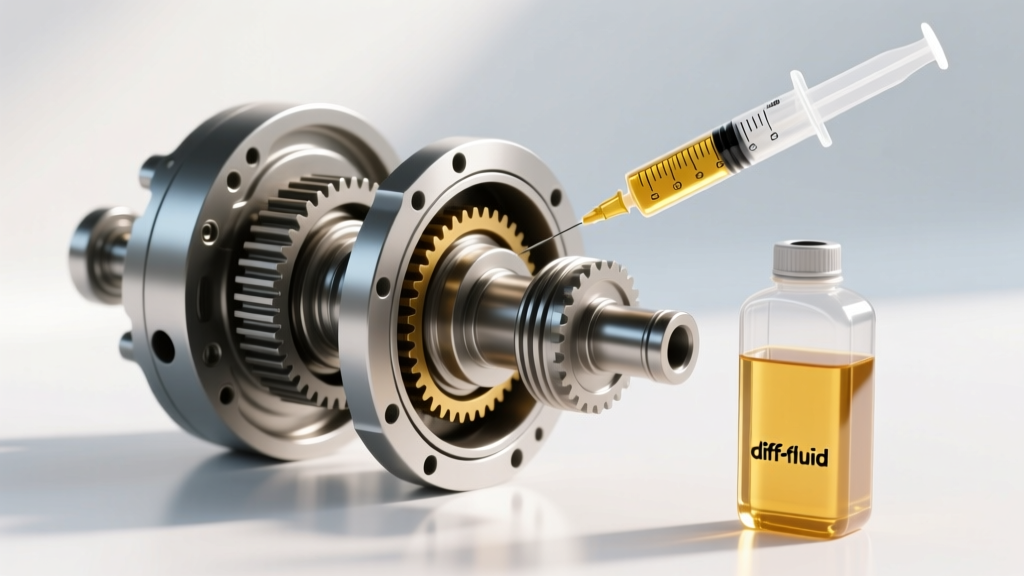
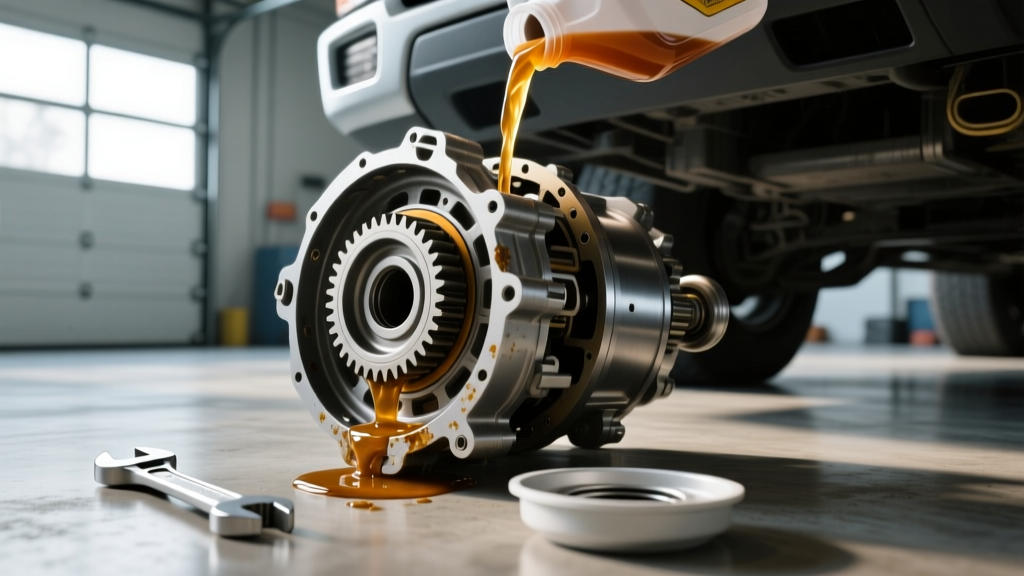
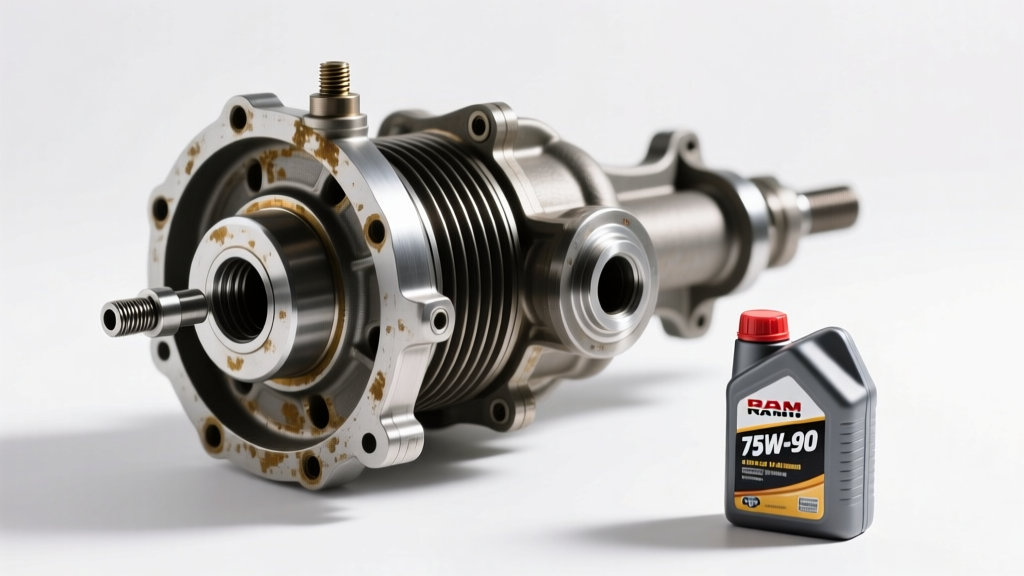
New ring and pinion gears generate immense friction and heat as the machined surfaces mate. According to Ford Performance Parts guidelines and industry consensus, the first 500 miles are critical. Fill the axle with a high-quality 75W-140 Full Synthetic gear oil, such as Motorcraft XL-140-01. If your 8.8 utilizes a Traction-Lok limited-slip carrier, you must add exactly one bottle (4 oz) of XL-3 Friction Modifier to prevent chatter during low-speed cornering.
During the break-in period, avoid sustained highway speeds over 65 mph, and do not subject the axle to heavy towing or drag strip launches. Stop every 150 miles to check the differential cover temperature; it should be warm to the touch, but not hot enough to burn your hand. After 500 miles, drain the fluid to remove the metallic break-in paste from the magnetic drain plug, and refill with fresh synthetic fluid. By following these meticulous steps, your upgraded pinion gear differential will deliver whisper-quiet operation and bulletproof performance for years to come.
For further reading on drivetrain dynamics and aftermarket axle components, consult the MotorTrend How-To Guides for vehicle-specific installation walkthroughs and dyno-tested gear ratio comparisons.