The Check Engine Light Panic: Understanding Your 4L80E
There are few things more frustrating for a vehicle owner than cruising down the highway, only to see the check engine light illuminate. When you plug in an OBD2 scanner and see a P07xx code, it is easy to assume the worst. However, if you are driving a vehicle equipped with the legendary General Motors 4L80E transmission (often searched simply as the 4L80), a torque converter trouble code does not always mean you need a complete transmission rebuild.
As an automotive transmission specialist, I frequently see owners prematurely replace entire units when a simple solenoid, wiring repair, or valve body fix would solve the issue. This beginner-friendly explainer will demystify 4L80 torque converter diagnostic trouble codes (DTCs), explain what they actually mean, and give you a practical roadmap for diagnosis and repair in 2026.
Expert Note: While enthusiasts often refer to it as the "4L80," the electronically controlled version introduced in the early 1990s is officially the 4L80E. The "E" stands for Electronic, which is precisely what allows the Powertrain Control Module (PCM) to monitor the torque converter clutch (TCC) and throw these specific OBD2 codes.
How the 4L80E Torque Converter Lockup Works
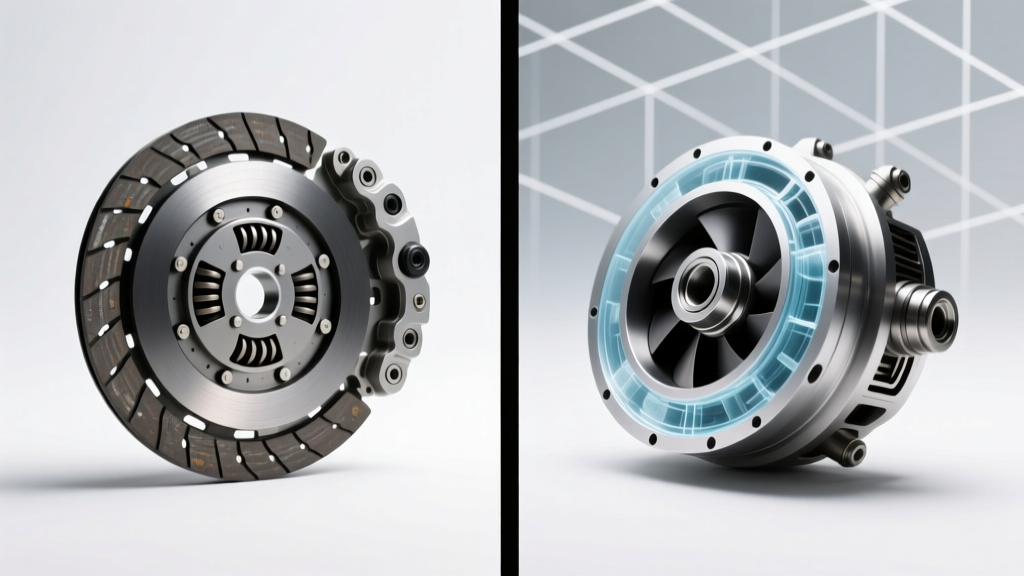
Before diving into the codes, you need a basic understanding of the hardware. The torque converter is a fluid coupling that transfers engine power to the transmission. At low speeds, it allows "slip" (like a manual transmission clutch being slightly depressed) to keep the engine from stalling.
However, slip generates massive amounts of heat and reduces fuel economy. To fix this, the 4L80E uses a Torque Converter Clutch (TCC). When you reach cruising speeds (usually above 45 mph), the PCM commands a Pulse Width Modulated (PWM) solenoid to apply hydraulic pressure to the TCC piston. This physically locks the engine to the transmission input shaft, creating a 1:1 mechanical connection. When this lockup process fails or the electrical circuit drops, the PCM triggers a DTC.
The Core 4L80 Torque Converter Trouble Codes
Below is a quick-reference chart of the most common TCC-related codes you will encounter on a GM 4L80E platform, ranging from heavy-duty trucks like the Chevy Silverado 2500 to classic swapped vehicles.
| OBD2 Code | Definition | Primary Culprit | Severity |
|---|---|---|---|
| P0740 | TCC Circuit Malfunction | Electrical fault, wiring, or failed solenoid | Moderate |
| P0741 | TCC Stuck Off / Performance | Valve body wear, low fluid, or internal seal leak | High |
| P0742 | TCC Stuck On | Mechanically bound valve or collapsed clutch piston | Critical |
| P0743 | TCC Solenoid Circuit Electrical | Short to ground, open circuit, or fried PCM driver | Moderate |
| P1870 | Transmission Component Slipping | Severe TCC slip, worn converter friction material | Critical |
Deep Dive: P0741 and P1870 (The Most Common Offenders)
While electrical codes (P0740/P0743) are straightforward to trace with a multimeter, P0741 and P1870 are the bane of the 4L80E platform.
When the PCM commands TCC lockup, it monitors the Engine RPM and the Transmission Input Shaft Speed (ISS) sensor. If the PCM sees that the engine speed is significantly higher than the input shaft speed (indicating slip) while the TCC is commanded ON, it will log a P0741. If this slip exceeds a specific threshold over a set drive cycle, it escalates to a P1870. According to OBD-Codes.com, a P0741 often triggers a failsafe mode, preventing the torque converter from locking up at all to prevent further friction material degradation.
Beginner’s Diagnostic Checklist: Don't Drop the Transmission Yet!
Many mechanics will immediately quote you for a $2,500 torque converter replacement upon seeing a P1870. Do not let them. Follow this step-by-step diagnostic framework first.
Step 1: Verify Fluid Level and Condition
The 4L80E requires Dexron VI automatic transmission fluid (ATF). Check the fluid with the engine running and the transmission in Park on level ground. If the fluid is low, the TCC apply circuit will not build enough pressure to lock the clutch. Smell the dipstick: if it smells like burnt toast, the TCC friction lining has likely disintegrated, and a converter replacement is imminent.
Step 2: Inspect the Case Connector
The 4L80E uses a 16-pin pass-through connector on the side of the transmission case. These are notorious for two things: pin corrosion and fluid wicking (where ATF travels up the wiring harness into the PCM). Unplug the connector, clean it with electrical contact cleaner, and inspect for green corrosion.
Step 3: Measure TCC Solenoid Resistance
Drop the transmission pan and locate the TCC PWM solenoid. Using a digital multimeter, measure the resistance across the solenoid pins. A healthy GM 4L80E TCC solenoid should read between 10 and 12 ohms at room temperature. If it reads infinite (open) or near zero (shorted), replace the solenoid. The OEM replacement is the AC Delco 214-1892, which typically costs around $55.
Step 4: The Valve Body Bore Wear Test
If the solenoid tests fine and fluid pressure is normal, the issue is almost certainly hydraulic. The aluminum valve body on the 4L80E suffers from wear in the TCC Regulator Valve bore. Over 150,000 miles, the constant oscillation of the steel valve wears out the aluminum bore, allowing apply pressure to bleed off. This results in a P0741 or P1870 code. For a deep dive on hydraulic bleed-off, transmission experts at Sonnax provide extensive documentation on how worn regulator valves destroy torque converter lockup integrity.
Repair Costs and Part Numbers (2026 Pricing)
Understanding the financial impact of these repairs helps you negotiate with your shop or budget for a DIY fix. Below are the average 2026 market rates for parts and labor.
- Basic Fluid & Filter Service: $80 - $120. (Requires ~7 quarts of Dexron VI for a pan drop. Always use an AC Delco TF-106 filter kit).
- TCC Solenoid Replacement: $180 - $275. (Includes the $55 AC Delco solenoid, fluid, filter, and roughly 1.5 hours of shop labor).
- Valve Body TCC Regulator Fix: $350 - $550. (Instead of replacing the whole valve body, a machinist or advanced DIYer can install the Sonnax 34200-01K TCC Regulator Valve Kit, which costs about $45 but permanently fixes the bore wear issue).
- Torque Converter Replacement: $1,100 - $1,800. (Requires removing the transmission. Labor is typically 6.0 to 7.5 hours. A stock replacement stall-speed converter for a 4L80E runs $350 - $500).
Final Thoughts for the DIYer
Diagnosing a 4L80 torque converter trouble code is a process of elimination. Start with the cheap and easy fixes: check your Dexron VI fluid level, clean the case connector, and ohm-test the solenoid. If those pass, you are likely looking at valve body wear or internal converter failure. By understanding the difference between an electrical circuit code (P0743) and a hydraulic performance code (P0741), you can save yourself thousands of dollars in unnecessary transmission replacements.