The 'Reddit Rabbit Hole': Why DCTs Fail Immediately After Repair
If you have ever found yourself typing what's a dual clutch transmission reddit into a search engine at 2 AM, you are likely dealing with post-repair anxiety or considering a used DCT-equipped vehicle. Dual Clutch Transmissions (DCTs) offer lightning-fast shifts and high torque capacity, but they are notoriously unforgiving when repairs are executed improperly. In 2026, as early-generation DCTs from the 2010s cross the 150,000-mile threshold, independent shops and dealerships are seeing a massive influx of vehicles returning with clutch shudder, mechatronic faults, and engagement delays just weeks after a 'complete clutch replacement.'
Unlike traditional torque-converter automatics or simple manual gearboxes, a DCT is essentially two manual transmissions controlled by a single electro-hydraulic brain (the mechatronic unit). When a clutch pack is replaced without adhering to microscopic shim clearances, utilizing the exact specified fluid, or performing a mandatory software adaptation, the new clutch will fail prematurely. This guide breaks down the true cost of DCT post-repair diagnostics, the mechanical realities behind recurring failures, and how to protect your wallet.
Post-Repair Symptom Breakdown & Diagnostic Costs
When a vehicle returns to the shop with a 'new' clutch that behaves poorly, the diagnostic path is highly specific. Here is what you are actually paying for when a technician hooks up an advanced bi-directional scan tool to diagnose a botched DCT repair.
1. Low-Speed Shudder and Chatter (The Dry Clutch Curse)
Common in dry-clutch systems like the Ford PowerShift DPS6 or the Fiat C635 DDCT, post-repair shudder at 10-15 mph usually indicates contaminated friction surfaces or misaligned actuators. If the mechanic replaced the clutch kit (e.g., LUK RepSet 602000800) but failed to replace the clutch actuator motor seals, transmission fluid will continue to weep onto the dry friction plates. According to historical data logged by the National Highway Traffic Safety Administration (NHTSA), seal degradation on these units was a primary cause of clutch slip and shudder, leading to massive recall campaigns. A proper post-repair diagnostic for shudder requires reading live clutch actuator position data (PID) to check for erratic motor draw, costing between $150 and $250 in diagnostic labor.
2. Mechatronic 'Clunking' and Delayed Engagement (Wet DCTs)
Wet clutch systems, such as the VW/Audi DSG (DQ250 6-speed or DL501 7-speed), rely on pressurized fluid to actuate clutch packs. If a vehicle exhibits a harsh 'clunk' when shifting into Drive or Reverse immediately after a clutch replacement, the issue is rarely the clutch itself. It is usually a failing mechatronic accumulator or a stuck solenoid valve. Dealerships will often quote a full mechatronic unit replacement ($2,800 - $4,500), whereas a specialized independent shop might test the hydraulic accumulator pressure and replace just the faulty BorgWarner solenoid for $120 in parts plus 3 hours of labor.
2026 DCT Post-Repair Cost Matrix: OEM vs. Aftermarket
When facing a secondary failure after an initial DCT repair, understanding the parts ecosystem is critical for cost control. The table below outlines real-world 2026 pricing for common DCT post-repair scenarios.
| DCT Model | Post-Repair Failure Point | OEM Part Cost (2026) | Aftermarket / Rebuilt Cost | Indy Labor Hours |
|---|---|---|---|---|
| VW DQ250 (6-Speed Wet) | Clutch Pack Shim / Hub Nut | $850 (OEM VAG Pack) | $550 (LUK 600 0016 00) | 6.5 hrs |
| Ford DPS6 (6-Speed Dry) | Actuator Seals & Forks | $420 (OEM Ford Kit) | $280 (Aftermarket Kit) | 4.0 hrs |
| Porsche PDK (7-Speed Wet) | Clutch Piston Seals / Sensors | $6,500+ (Dealer Exchange) | $2,200 (Specialist Rebuild) | 14.0 hrs |
| Hyundai/Kia D8LF1 (7-Speed Dry) | Clutch Actuator Motor | $950 (OEM Mobis) | $450 (Remanufactured) | 2.5 hrs |
Note: Labor rates in 2026 average $160/hr at dealerships and $125/hr at specialized independent transmission shops.
The Technical Reality: Shim Clearances and Adaptations
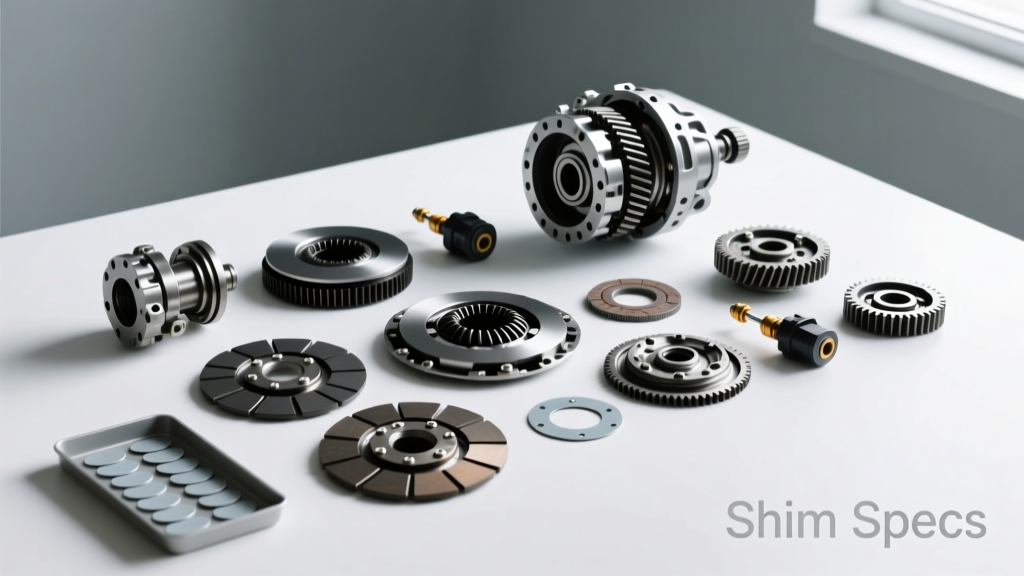
The most common reason a newly installed wet DCT clutch pack fails or slips within the first 1,000 miles is improper shim selection. This is a critical step that generalist mechanics frequently skip or misunderstand.
Expert Mechanic Insight: When installing a new clutch pack in a VW DQ250, you cannot simply bolt it on. You must use a dial indicator to measure the distance from the transmission housing mating surface to the clutch hub. Based on this measurement, and the thickness of the new clutch pack, you must select a specific adjustment shim (ranging from 1.80mm to 3.20mm) to achieve a target clutch clearance of 0.8mm to 1.2mm. If the clearance is too tight, the clutch will drag and overheat the fluid. If it is too loose, the mechatronic unit will over-stroke the clutch piston, triggering a P17BF (Clutch Position Sensor) or P2787 (Clutch Temperature Too High) code.
Furthermore, the mechanical installation requires strict adherence to torque specifications. The dual-mass flywheel to crankshaft bolts must be torqued to 60 Nm plus an additional 90-degree turn. The clutch hub nut requires a specialized tool (e.g., VW T10374) and must be torqued to 20 Nm plus 90 degrees. Failure to use new, single-use stretch bolts here can result in catastrophic hub failure under high torque loads.
Fluid & Calibration: The Hidden Post-Repair Costs
Another massive point of contention on automotive forums revolves around transmission fluid. DCTs do not use standard Automatic Transmission Fluid (ATF). They require highly specific, low-viscosity fluids designed to manage both the friction coefficients of the clutch material and the hydraulic requirements of the mechatronic valve body.
- VW/Audi DSG (Wet): Requires OEM G 052 182 or G 055 529 depending on the exact generation. Using a generic 'multi-vehicle' DCT fluid can alter the friction modifier balance, leading to immediate low-speed shudder. A proper fluid service requires exactly 7.2 liters for a DQ250 pan-drop and filter change, costing around $250 in parts alone from suppliers like FCP Euro.
- Porsche PDK: The PDK utilizes two separate fluid chambers. The hydraulic system uses Pentosin FFL-3 (or OEM equivalent), while the bevel gear set requires a specific 75W-90 gear oil. Cross-contamination during a sloppy post-repair fluid fill will destroy the mechatronic unit.
- Software Adaptation: After any mechanical clutch work or fluid change, the Transmission Control Module (TCM) must undergo a 'Basic Setting' or adaptation procedure. This forces the mechatronic unit to relearn the clutch bite points (kiss points) and hydraulic fill times. If a shop replaces your clutch but clears the battery without performing the software adaptation via VCDS or OEM dealer software, the car will shift violently until the TCM's long-term fuel trims (clutch adaptations) max out, eventually throwing the car into limp mode.
Dealership vs. Independent Specialist: Where Does the Money Go?
When your DCT exhibits problems after an initial repair, you face a fork in the road regarding where to take the vehicle. Major manufacturers like those profiled by ZF Group engineer these transmissions with immense precision, but their dealership networks are often instructed to replace entire assemblies rather than diagnose sub-components.
If your post-repair diagnostic reveals a failed mechatronic clutch pressure solenoid, a dealership will typically refuse to open the sealed mechatronic unit, quoting you $3,500 for a complete remanufactured mechatronic assembly and programming. A dedicated DCT specialist, however, can drop the valve body, test the individual solenoids with a multimeter (checking for 5.0 to 5.6 Ohms of resistance), and replace the single faulty solenoid for under $400 total. The trade-off is that independent specialists are harder to find and may not have access to the highest-level OEM security gateways required for TCM immobilizer matching in late-model vehicles.
Decision Framework: Repair Again, Replace, or Swap?
If you are facing a secondary DCT failure after a recent repair, use this framework to decide your next financial move:
- The Adaptation Check (Cost: $150): Before tearing the transmission out again, pay a specialist to verify the live clutch adaptation values. If the clutch wear index is high but the physical clutch is new, the issue is a software calibration or a failing position sensor, not the friction material.
- The Fluid Audit (Cost: $300): Send a sample of your DCT fluid to a lab like Blackstone Laboratories. If they find high iron or friction material particulate immediately after a 'new' clutch install, the previous shop failed to flush the cooler lines, and your new clutch is already destroyed. You will need to pursue legal or warranty action against the original repair facility.
- The Manual Swap (Cost: $2,500 - $4,000): For older dry-clutch vehicles (like the Ford Focus/Fiesta DPS6 or early Fiat 500s), the cost of continually chasing actuator and seal failures often exceeds the value of the car. Many owners opt for a custom manual transmission swap kit, eliminating the mechatronic unit entirely and permanently solving the post-repair diagnostic nightmare.
Understanding the intricate costs and mechanical requirements of a Dual Clutch Transmission is the only way to avoid becoming another cautionary tale on automotive forums. Always demand itemized receipts showing exact shim measurements, fluid part numbers, and proof of software adaptation when paying for DCT clutch work.