Understanding the Harley-Davidson Clutch Release Mechanism
When automotive enthusiasts and mechanics discuss 'throw-out bearing noise,' they are typically referring to the release bearing found on the transmission input shaft of a car or truck. However, when diagnosing a Barnett clutch Harley setup, we must first correct the terminology to match Milwaukee's engineering. Harley-Davidson Big Twin models (from the Evolution and Twin Cam eras through the modern Milwaukee-Eight 107, 114, and 117 engines) do not use a traditional automotive throw-out bearing. Instead, the clutch disengagement mechanism relies on a clutch release bearing, pushrod thrust washer, and release ramp assembly located inside the primary chaincase.
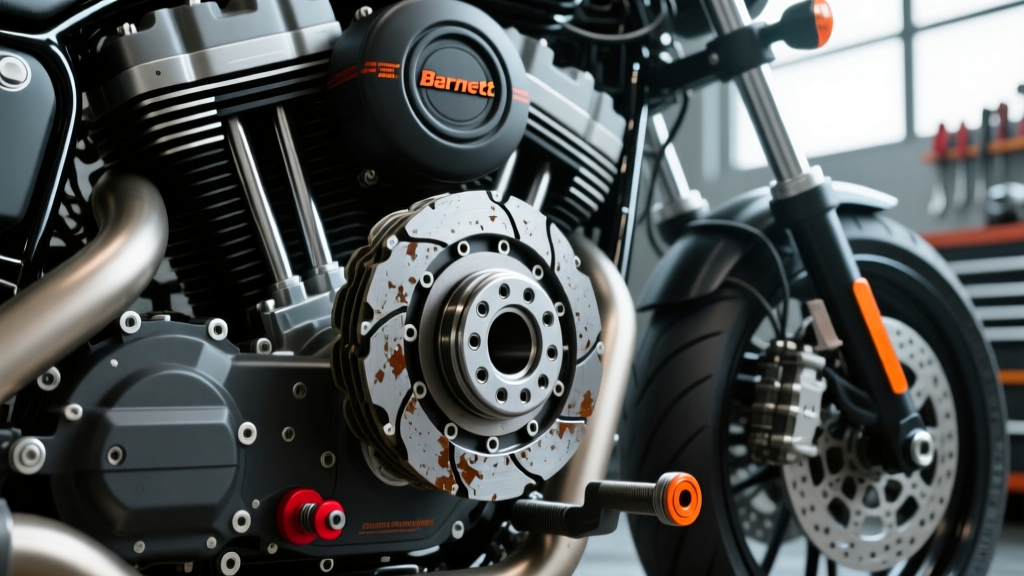
Upgrading to a high-performance Barnett clutch kit—such as their Kevlar Extra Plate or Carbon Fiber Scorpion lock-up systems—is one of the most effective ways to eliminate clutch slip on high-torque Harley engines. However, this upgrade fundamentally alters the lateral load dynamics inside the primary. If the OEM clutch release bearing or thrust washer is marginally worn, the increased clamping force of the Barnett springs will rapidly accelerate its failure, resulting in distinct auditory and tactile symptoms that mimic a failing automotive throw-out bearing.
The Barnett Load Factor: Why Upgrades Stress the Release Bearing
Harley-Davidson's OEM clutch is designed with a specific clamping force, balanced against the mechanical advantage of the clutch hand lever and the lateral load capacity of the mainshaft pushrod bearing. Barnett clutches utilize stiffer pressure springs (often 15% to 30% stiffer than OEM) and, in the case of Extra Plate kits, increased friction surface area. Furthermore, the Barnett Scorpion lock-up clutch utilizes centrifugal weights that engage under RPM, effectively multiplying the clamping force at highway speeds.
When you pull the clutch lever, the release cable actuates the clutch release mechanism (the 'ramp and roller' or hydraulic actuator on newer M8 models). This pushes the clutch pushrod through the center of the transmission mainshaft, pressing against the thrust washer and release bearing to separate the friction plates. The stiffer Barnett springs push back against this mechanism with significantly more force. If the release bearing needle rollers are pitted, or if the thrust washer has worn past its tolerance, this increased lateral load causes the pushrod to deflect, wobble, and score the inner primary bushing, generating severe noise and eventual clutch drag.
Auditory and Tactile Diagnostics: Identifying the Failure
Diagnosing a failing release bearing in a Harley primary requires isolating the noise from other primary drive components, such as the compensator sprocket, primary chain, or alternator rotor. Below is a diagnostic matrix to help you pinpoint throw-out (release) bearing failure specifically related to high-load Barnett clutch installations.
| Symptom / Noise Profile | Operating Condition | Likely Failure Point (Barnett Setup) |
|---|---|---|
| High-pitched metallic squealing | Clutch lever pulled in at idle | Dry or seized release bearing needles; thrust washer scoring the clutch hub. |
| Deep grinding or crunching | Clutch lever pulled, shifting into gear | Pushrod wobble due to worn mainshaft bushing; clutch failing to fully disengage. |
| Chirping or rattling at idle | Clutch lever released (engaged) | Barnett Scorpion lock-up shoes failing to seat; worn release ramp roller. |
| Progressive lever stiffness | Throughout lever pull travel | Binding pushrod; damaged release mechanism ramp; incorrect primary fluid. |
Expert Insight: If the squealing noise completely disappears when you release the clutch lever and apply throttle, the issue is almost certainly isolated to the release bearing and thrust washer assembly. If the noise persists or changes pitch with engine RPM regardless of lever position, you must investigate the compensator or inner primary bearing instead.
Step-by-Step Primary Inspection and Measurement Protocol
To definitively diagnose the health of your release mechanism after experiencing noise with a Barnett clutch, a primary teardown is mandatory. Follow these precise steps to ensure accurate measurement and avoid misdiagnosis.
1. Primary Fluid Drain and Analysis
Drain the primary chaincase fluid. While Harley-Davidson recommends Formula+ or Syn3 20W-50, many riders use dedicated primary fluids or heavy gear oils. Inspect the drained fluid for fine metallic glitter (indicative of needle bearing failure) or brass-colored flakes (indicative of inner primary bushing wear caused by a wobbling pushrod).
2. Pushrod and Thrust Washer Inspection
Remove the clutch spring bolts, pressure plate, and friction/steel plates to access the clutch pushrod. Pull the pushrod out through the primary side. The standard OEM pushrod diameter is typically 0.490 inches. Use a micrometer to check for scoring, galling, or a reduction in diameter. A worn pushrod will destroy a new release bearing in under 500 miles. Next, extract the thrust washer and release bearing from the clutch hub. Inspect the needle rollers for flat spots and ensure the thrust washer shows even, concentric wear patterns.
3. The Lock-Up Interference Factor
If you are running a Barnett Scorpion lock-up clutch, the release bearing travel is incredibly critical. The centrifugal lock-up shoes require a precise amount of pushrod travel to disengage. A worn release bearing introduces 'slop' into the system. When you pull the lever, the initial travel is wasted taking up the slack of the worn bearing, failing to push the pushrod far enough to disengage the lock-up shoes. This results in the bike lurching forward when shifting into first gear, accompanied by a violent chirping noise from the primary.
Critical Torque Specifications and Reassembly Data
If your diagnostic confirms that the release bearing, thrust washer, or pushrod requires replacement, proper reassembly is vital. The high-torque nature of Big Twin engines demands strict adherence to factory torque specifications. Failure to use the correct thread locker on the compensator, for example, will result in catastrophic primary failure.
| Component | Fastener Size / Type | Torque Specification | Fluid / Chemical Requirement |
|---|---|---|---|
| Compensator Sprocket Bolt | 5/8' - 18 UNF | 150-165 ft-lbs (Twin Cam) / 165-180 ft-lbs (M8) | Loctite 262 or 271 (Red) |
| Clutch Hub Nut | 7/8' - 14 UNF | 70-80 ft-lbs | Loctite 243 (Blue) |
| Clutch Spring Bolts | Socket Head Cap Screws | 84-108 in-lbs (7-9 ft-lbs) | Loctite 243 (Blue) |
| Primary Chaincase Cover | Various Allen / Torx | 84-108 in-lbs (7-9 ft-lbs) | RTV Silicone or OEM Gasket |
| Primary Chain Tension | N/A | 3/8' to 1/2' vertical slack | Adjust via tensioner shoe |
When reinstalling the clutch pushrod and release mechanism, apply a generous coat of high-quality assembly lube or primary fluid to the thrust washer and needle bearings. Never install them dry. Furthermore, ensure your primary chain tension is set exactly to specification; an overly tight primary chain pulls the clutch hub forward, pre-loading the release bearing and causing premature squealing, especially when paired with stiff Barnett springs.
Sourcing Parts: OEM vs. Aftermarket and Cost Breakdown
When replacing the release components on a Harley equipped with a Barnett clutch, you must decide between OEM Harley-Davidson parts and aftermarket heavy-duty alternatives. While Barnett manufactures exceptional clutch plates and lock-up mechanisms, the OEM Harley-Davidson release bearing and thrust washer (often part numbers like 38564-94, 37858-94, or M8-specific pushrod bearings) remain the gold standard for dimensional accuracy and metallurgy.
Below is a realistic cost breakdown for addressing throw-out (release) bearing noise on a Big Twin platform:
- OEM Release Bearing & Thrust Washer Kit: $45 - $85
- OEM Clutch Pushrod (if scored): $25 - $40
- Inner Primary Bearing (if damaged by wobble): $60 - $120
- Primary Chaincase Gasket & Fluid (32-38 oz): $35 - $50
- Professional Labor (Dealership or Specialist): $450 - $650
If you are performing the repair yourself, the total parts cost rarely exceeds $150 unless the inner primary bearing or transmission mainshaft bushing has been destroyed by a severely neglected, wobbling pushrod. Always replace the thrust washer and release bearing as a matched set. Mixing a new bearing with a grooved, worn thrust washer will result in immediate noise recurrence once the Barnett clutch springs apply their full clamping load.
Final Thoughts on Maintenance Intervals
A Barnett clutch is a premium, high-performance upgrade designed to handle the massive torque output of modified Harley-Davidson engines. However, it is not a 'set and forget' component. The increased forces demand stricter maintenance intervals. Inspect your primary fluid for metallic debris every 5,000 miles, and verify clutch pushrod travel and release bearing condition every time you perform a primary chain adjustment or replace your clutch friction plates. By understanding the unique load dynamics of your Barnett setup, you can eliminate throw-out bearing noise and ensure flawless, quiet clutch engagement for tens of thousands of miles.