The Misdiagnosis Epidemic: Throw-Out Bearing vs. CVT Start Clutch
Walk into any transmission shop in 2026, and you will inevitably hear a service writer tell a customer, "It sounds like your throw-out bearing is failing." But when the vehicle in question is a 2019 Nissan Rogue or a 2021 Honda Civic, that diagnosis is mechanically impossible. These vehicles are equipped with Continuously Variable Transmissions (CVTs), which do not utilize a traditional manual clutch pedal, pressure plate, or release (throw-out) bearing.
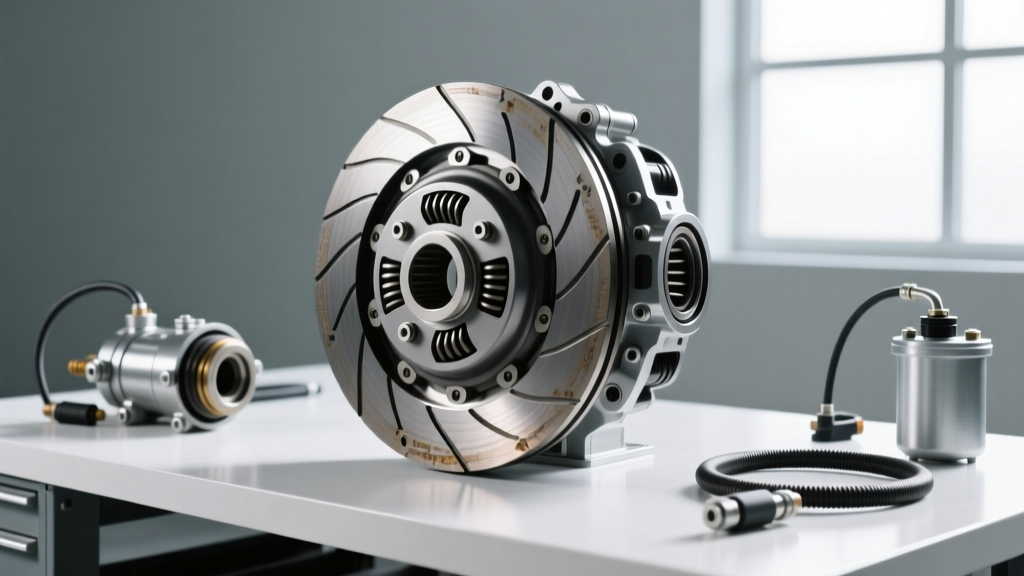
When drivers and novice technicians hear a whining, grinding, or chatter noise at idle or during low-speed acceleration, they often default to the familiar "throw-out bearing" terminology. In reality, this noise is frequently generated by the CVT transmission clutch (specifically the forward/reverse start clutch packs), the input shaft bearings, or the primary pulley assembly. Misdiagnosing a CVT start clutch failure as a simple bearing issue can lead to catastrophic transmission destruction, as the metallic debris from a failing clutch pack will rapidly score the precision-machined variator pulleys. This model-specific repair guide breaks down the exact diagnostic protocols, part numbers, and teardown specifications required to accurately isolate CVT clutch noise from traditional manual release bearing failures.
Anatomy of the Noise: Manual Release Bearings vs. CVT Internals
To accurately diagnose the symptom, we must first understand the mechanical origin of the noise in both platforms. In a traditional manual transmission, the throw-out bearing (release bearing) rides on the transmission input shaft retainer collar. When the clutch pedal is depressed, the bearing presses against the rotating fingers of the diaphragm spring. A failing throw-out bearing will typically squeal or grind only when the pedal is engaged, changing pitch as the RPMs rise.
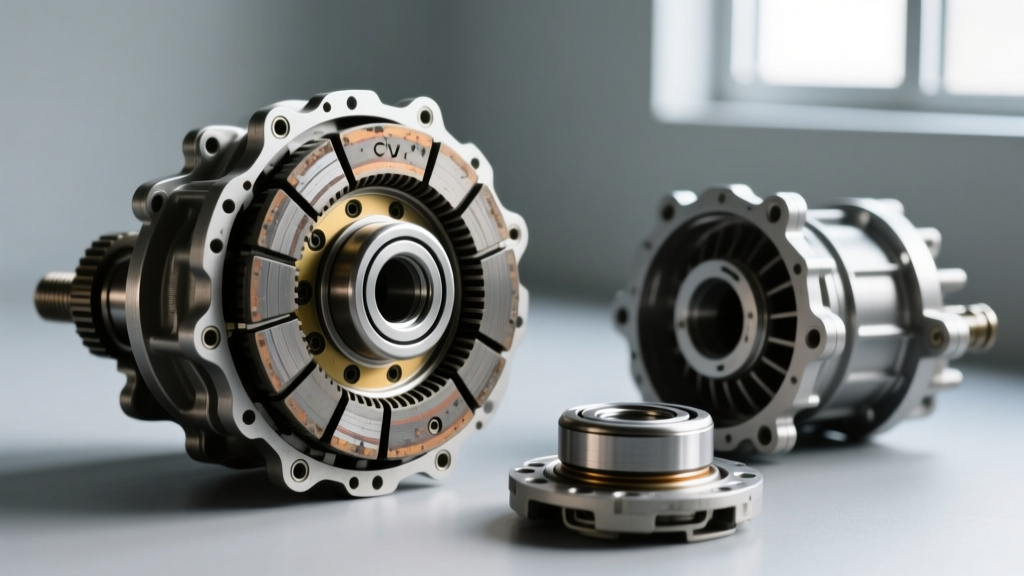
Conversely, a CVT relies on a hydraulic start clutch (forward and reverse clutch packs) to couple the engine's input shaft to the variator pulleys. There is no pedal-operated release bearing. If a CVT exhibits a whining or grinding noise, it is usually caused by one of three factors:
- Input Shaft Bearing Wear: The bearing supporting the torque converter turbine shaft inside the CVT bellhousing degrades, causing a constant whine that correlates with engine RPM, regardless of vehicle speed.
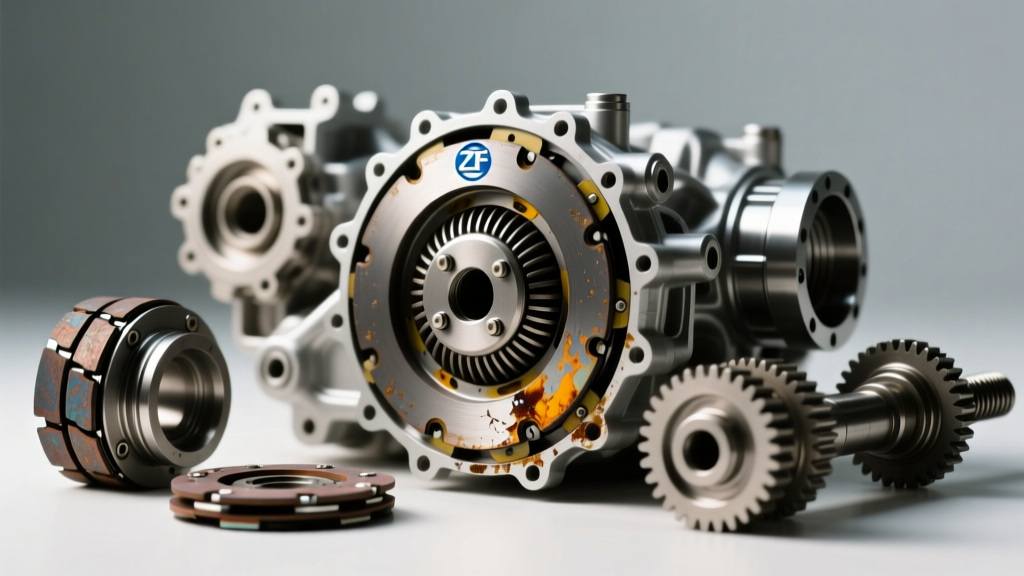
- Start Clutch Pack Degradation: The friction material on the forward clutch drums shears off. This causes a shuddering chatter (often mistaken for clutch pedal vibration) and a metallic rasping sound as the bare steel plates grind against the clutch hub.
- Pulley Bearing Failure: The primary or secondary pulley bearings fail under the extreme clamping forces (often exceeding 1,200 PSI of line pressure), generating a high-frequency whine that shifts pitch as the transmission alters its gear ratio.
Model-Specific Diagnostic Matrix
Use the following diagnostic matrix to quickly differentiate between a traditional manual throw-out bearing and a CVT transmission clutch or internal bearing failure.
| Symptom / Test | Manual Transmission (True Throw-Out Bearing) | CVT (Start Clutch / Input Bearing) |
|---|---|---|
| Noise at Idle (In Gear) | Quiet (bearing not under load) | Whine or rattle (input shaft bearing or loose clutch hub) |
| Noise When Pedal Depressed | Loud squeal or grind (load applied to bearing) | N/A (No clutch pedal) |
| Low-Speed Acceleration | Usually quiet unless clutch is slipping | Chatter, shudder, or metallic rasp (start clutch slip) |
| Fluid Contamination | Gear oil may show metallic flakes if bearing cages fail | CVT fluid turns dark grey/black; heavy friction material in pan |
| RPM Dependency | Changes only when pedal is moved | Tracks engine RPM directly (input shaft) or vehicle speed (pulleys) |
Nissan & Jatco JF011E (RE0F10A): Input Shaft & Clutch Pack Failures
The Jatco JF011E, widely used in the Nissan Altima, Rogue, and Murano, is notorious for input shaft bearing and forward clutch pack failures. When a customer complains of a "throw-out bearing whine" in a JF011E-equipped vehicle, the first step is to drop the CVT fluid pan. If you find a thick layer of grey, magnetic sludge and non-magnetic friction material, the forward start clutch pack is disintegrating.
The forward clutch hub in the JF011E is pressed onto the input shaft. Over time, the splines wear, causing the clutch drum to wobble. This wobble destroys the input shaft bearing, creating a whine that perfectly mimics a manual release bearing. According to teardown data archived by NICOclub's Nissan Service Manuals, ignoring this noise will eventually lead to the clutch hub snapping, resulting in a complete loss of forward motion and catastrophic damage to the valve body and stepper motor.
Repair Specifics: Replacing the input shaft bearing and forward clutch pack requires removing the transmission. The engine-to-transaxle bellhousing bolts on the 2.5L QR25DE engine require a torque spec of 47 Nm (35 ft-lbs) for the upper bolts and 46 Nm for the lower bolts. When reassembling, the forward clutch pack clearance must be measured with a dial indicator; the spec is typically between 0.85mm and 1.10mm. Shimming the clutch pack incorrectly will result in immediate engagement flare or binding.
Honda CVT: Start Clutch Chatter and Bearing Whine
Honda’s CVT architecture, found in the Civic, CR-V, and Accord, utilizes a different start clutch mechanism. Instead of a traditional torque converter, many Honda CVTs use a wet multi-plate start clutch directly coupled to the input shaft. When the Honda CVT fluid (HMMF or CVTF) degrades, the start clutch loses its frictional grip, resulting in a violent shudder between 15 and 30 mph. Drivers often describe this as "clutch chatter," assuming a manual-style release bearing or pressure plate issue.
If the noise is a distinct whine rather than a shudder, the culprit is usually the main shaft bearing or the start clutch drum bearing. Honda CVTs are highly sensitive to fluid chemistry. Using the incorrect universal CVT fluid will cause the start clutch friction linings to glaze, leading to slip and the aforementioned chatter. Always verify the fluid level at operating temperature (140°F - 176°F) using the OEM dipstick or check plug procedure.
Step-by-Step Isolation Protocol
Before authorizing a transmission removal, execute this isolation protocol to confirm the noise origin:
- The Chassis Ear Test: Attach a wireless chassis ear (electronic stethoscope) to the CVT bellhousing and the transmission case. Start the engine. If the whine is loudest at the bellhousing, suspect the input shaft bearing or torque converter pilot bearing. If the noise is centered on the main case, suspect the primary/secondary pulley bearings.
- The Line Pressure Test: Hook up a 0-1000 PSI transmission pressure gauge to the primary line pressure port. Command a stall test (briefly, to avoid overheating). If the pressure drops or fluctuates wildly while the noise increases, the start clutch piston seals are blown, or the clutch pack is slipping.
- The Fluid Autopsy: Drain 100ml of fluid into a clear glass beaker. Hold it to a light source. True bearing failure will show fine, glitter-like metallic particles (micron-level). Clutch pack failure will show dark, cloudy fluid with visible black streaks of degraded friction paper.
The 2026 Diagnostic Reality: Hybrid eCVTs
As we navigate the 2026 automotive landscape, the proliferation of hybrid eCVTs (such as Toyota's planetary gearset transaxles) adds another layer of complexity. eCVTs do not have start clutches, friction bands, or traditional pulleys. They use Motor-Generators (MG1 and MG2) and a planetary gearset. A whining noise in an eCVT is almost never a "clutch" issue; it is typically the MG2 reduction gear bearing or the damper spring assembly located between the engine and the transaxle. Misdiagnosing an eCVT bearing noise as a clutch issue will lead to unnecessary parts ordering and frustrated customers. Always verify the exact transmission code (e.g., P410, P610) before proceeding with diagnostics.
Repair Data: Part Numbers, Torque Specs, and Fluids
When sourcing parts for these repairs, avoid universal rebuild kits that do not include the updated, hardened clutch hubs. Below is a reference table for common replacement components and fluid specifications. Parts pricing reflects early 2026 market averages sourced from major catalogues like RockAuto and OEM dealerships.
| Component / Fluid | OEM / Part Number | Application | Est. Cost (2026) |
|---|---|---|---|
| Forward Clutch Pack Kit | Nissan 31527-1XF0A / Precision 741600 | Jatco JF011E (RE0F10A) | $280 - $350 |
| Input Shaft Bearing | NTN 6205-LLU / SKF 6205-2RS | Jatco JF011E / Honda CVT | $45 - $85 |
| Start Clutch Solenoid | Honda 28250-RP4-A01 | Honda CVT (Civic/CR-V) | $120 - $160 |
| Manual Release Bearing | Sachs 3151234567 / LuK 12-034 | Traditional Manual (e.g., 6-spd) | $35 - $65 |
| Nissan NS-3 CVT Fluid | Nissan 999MP-NS300P | Jatco JF016E / JF017E | $12 / Quart |
| Honda HMMF Fluid | Honda 08200-9006 | Honda Start-Clutch CVTs | $14 / Quart |
Expert Technician Note: Never attempt to 'flush' a CVT that is already exhibiting start clutch chatter or bearing whine. The sudden change in fluid detergency and friction modifiers can cause the remaining friction material on the clutch packs to slip entirely, turning a repairable $400 clutch pack job into a $4,500 complete transmission replacement. Always perform a gentle drain-and-fill, and if the noise persists, proceed with a physical teardown and clutch hub inspection. For Honda models, remember that a start clutch calibration via the Honda Diagnostic System (HDS) is mandatory after any fluid service or internal repair to re-learn the clutch engagement bite point.
Ultimately, the phrase "throw-out bearing" should be entirely banished from the diagnostic vocabulary when working on modern automatic and continuously variable transmissions. By understanding the specific architecture of the CVT transmission clutch, utilizing targeted acoustic and hydraulic testing, and adhering to strict OEM torque and fluid specifications, technicians can accurately pinpoint the root cause of the noise, saving customers from catastrophic drivetrain failures and ensuring a precise, lasting repair.