Introduction to Drivetrain Shock Absorption
In high-performance radio-controlled vehicles, the drivetrain is subjected to immense instantaneous torque loads, particularly in 1/8-scale nitro buggies and high-kV 1/5-scale electric monster trucks. The primary defense mechanism against catastrophic gear stripping and driveshaft failure is the slipper clutch. Unlike full-size automotive clutches designed primarily for power transfer and gear isolation, an RC car slipper clutch is a calibrated friction brake meant to slip under peak shock loads. Diagnosing its symptoms—specifically through feel, noise, and vibration—is a critical skill for any RC technician. Furthermore, the diagnostic logic used for these micro-clutches directly parallels the troubleshooting methodologies applied to full-size automotive torque converter clutches (TCC) and dual-clutch systems.
Step 1: Diagnosing Engagement and Feel
The most common symptom of a failing or improperly tuned slipper clutch is incorrect engagement feel. In the RC world, 'feel' is measured by slip distance and mechanical resistance.
The Thumb Test and Slip Distance
To diagnose engagement by feel, place the vehicle on a high-bite surface. Apply full throttle from a dead stop. A properly adjusted slipper clutch should slip for approximately 18 to 24 inches before fully locking. If the vehicle wheelspins excessively without forward bite, the clutch is too loose. If the vehicle nose-dives aggressively and the rear wheels instantly lock, the clutch is too tight, transferring dangerous harmonic shock to the ring and pinion gears.
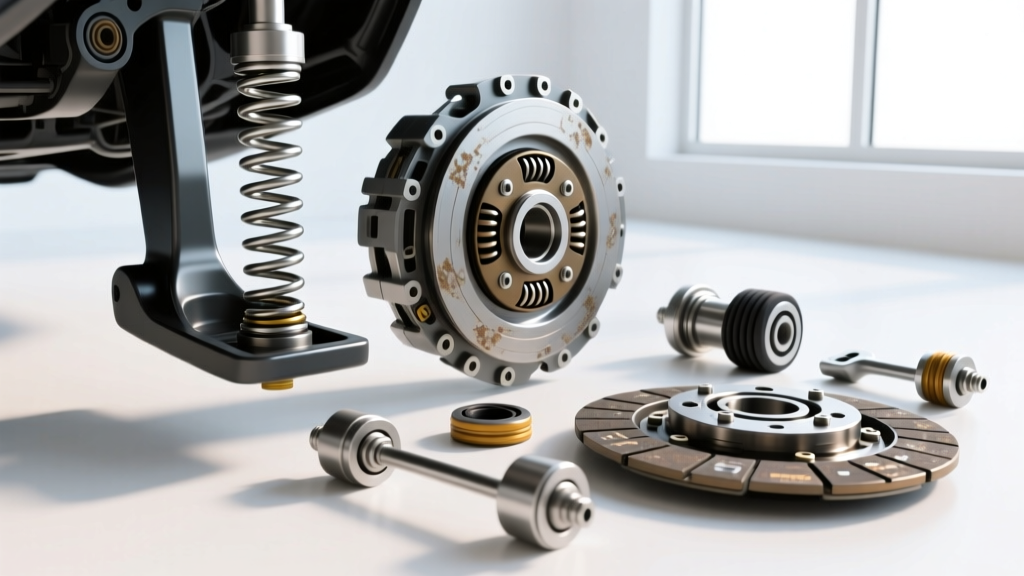
- Too Loose (Over-slipping): Glazed friction pads. Check for heat discoloration on the sintered bronze or Kevlar pads (e.g., Traxxas #5352 or Losi #LOSA6950).
- Too Tight (No slip): Over-compressed spring, seized top shaft bearing, or debris wedged between the pressure plate and spur gear.
Step 2: Auditory Diagnostics (Noise and Chatter)
A healthy slipper clutch operates with a distinct, brief mechanical 'zip' or chirp during initial acceleration. Deviations from this acoustic baseline indicate specific failure modes.
High-Pitched Squealing
Continuous squealing during acceleration indicates that the friction pads are glazed and slipping continuously rather than locking up. This is often caused by running the clutch too loose, generating excessive heat that melts the binding resins in the friction material. The fix requires sanding the pads with 400-grit wet/dry sandpaper or replacing them entirely.
Aggressive Chattering or Grinding
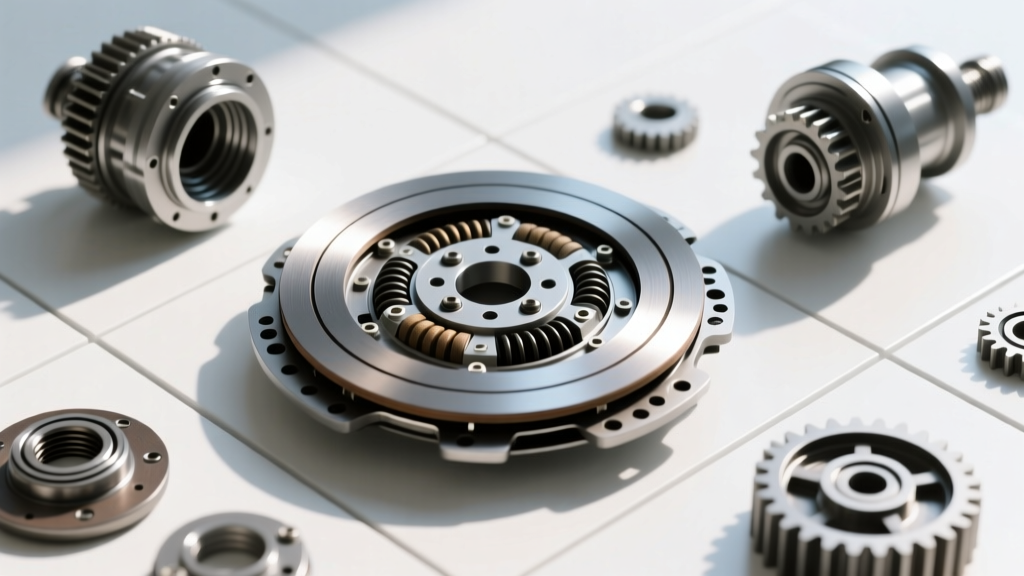
A stuttering, chattering noise usually points to uneven wear on the spur gear mounting surface or a warped top shaft. If the aluminum pressure plate (hub) has developed grooves from the spur gear's drive pins, the clutch will grab and release rapidly, creating a chattering sound. Inspect the drive pins for shear marks and replace the hub if runout exceeds 0.005 inches.
Step 3: Vibration and Harmonic Analysis
Vibration in an RC drivetrain is notoriously difficult to isolate because the motor, top shaft, and slipper assembly all spin at RPMs exceeding 15,000. However, symptom-based vibration diagnosis follows a strict hierarchy.
Isolating the Harmonic Imbalance
If you feel a high-frequency vibration through the chassis tub immediately upon throttle application, perform the 'spin test'. Remove the motor pinion and spin the top shaft assembly by hand. If you feel a gritty notch or wobble, the top shaft bearings are likely brinelled. A bent top shaft will cause the entire slipper assembly to oscillate, creating a severe harmonic vibration that mimics an unbalanced driveshaft. Always check the top shaft for straightness using a V-block and dial indicator before blaming the slipper pads.
Diagnostic Matrix: RC vs. Full-Size Automotive Clutches
While the scale differs, the physics of friction material engagement remain identical. Below is a comparison chart illustrating how RC slipper clutch diagnostics scale up to full-size automotive transmission systems.
| Feature | 1/8 Scale RC Slipper Clutch | GM 4L60E Torque Converter Clutch (TCC) | ZF 8HP Launch/Shift Clutches |
|---|---|---|---|
| Primary Function | Drivetrain shock absorption | Eliminate converter slip at cruise | Torque management during shifts |
| Friction Material | Sintered bronze / Kevlar pads | Woven carbon / Cellulose | Sintered bronze / Paper-based |
| Engagement Control | Mechanical spring tension | Hydraulic PWM solenoid (110-140 psi) | Mechatronic hydraulic valve body |
| Common Symptom | Chatter, glazing, over-slipping | TCC shudder, RPM flutter | Harsh shifts, flare, binding |
| Replacement Cost | $8 - $18 (Pad Kit) | $150 - $350 (TCC Solenoid/Valves) | $800 - $1,500 (Full Clutch Pack Kit) |
Step 4: Precision Shimming and Torque Specifications
Once the symptom has been diagnosed, the repair requires precision. A common novice mistake is using a standard foot-pound torque wrench on an RC slipper nut. The required torque is measured in inch-pounds.
Adjustment Protocol
- Clean the top shaft threads with isopropyl alcohol to remove old threadlocker.
- Apply a single drop of blue Loctite (242) to the slipper nut.
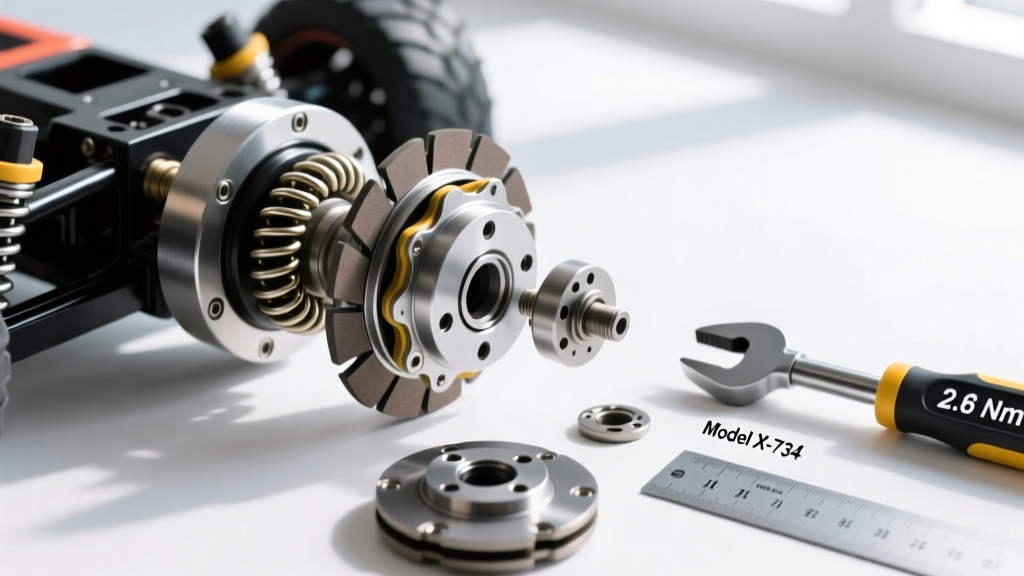
- Using a calibrated inch-pound torque wrench, tighten the slipper nut to 18-22 in-lbs for standard 1/8-scale buggies. (Do not confuse this with ft-lbs; 20 ft-lbs will crush the spur gear).
- Verify the 'thumb test': You should be able to hold the spur gear with your thumb and index finger while applying moderate throttle, allowing the clutch to slip for exactly one second before locking.
Pro-Mechanic Tip: If your slipper clutch requires constant readjustment, the spring is likely suffering from heat fatigue. Upgrade to a multi-plate slipper system (like the Associated #89322 kit) which distributes the friction load across three pads instead of one, drastically reducing operating temperatures and maintaining consistent feel.
Advanced Parallels: Scaling Up to the 4L60E and ZF 8HP
Mastering the diagnosis of an RC car slipper clutch builds a foundational understanding of friction modulation that applies directly to full-size automotive transmission repair. Let us explore how these symptoms translate to modern automotive drivetrains.
The 4L60E TCC Shudder Parallel
In a GM 4L60E transmission, the Torque Converter Clutch (TCC) is designed to lock the engine to the transmission input shaft at cruising speeds, much like an RC slipper clutch locking after the initial launch. When a 4L60E experiences 'TCC shudder'—a violent vibration felt through the chassis at 45-55 mph—it is the full-size equivalent of RC slipper chatter. Instead of a warped aluminum hub, the 4L60E shudder is typically caused by degraded friction modifiers in the Dexron VI fluid or a failing Pulse Width Modulated (PWM) TCC solenoid failing to apply a smooth 110-140 psi apply pressure. Diagnosing this requires monitoring TCC slip RPM via an OBD2 scanner; if the RPM flutters by 20-30 RPM while locked, the hydraulic apply circuit or the friction lining is compromised. Upgrading to a Sonnax Zip Kit often resolves the hydraulic instability causing the shudder.
ZF 8HP Clutch Pack Clearances and Feel
The ZF 8HP transmission (found in BMW, Audi, and modern Stellantis vehicles) utilizes multiple internal wet clutches (Clutches A through E) to execute shifts. When a ZF 8HP exhibits harsh, neck-snapping engagements, it mimics an overtightened RC slipper clutch. However, instead of turning a mechanical nut, the ZF 8HP relies on the Mechatronic unit to adapt clutch fill volumes. If the physical clutch pack clearances deviate from the factory spec (typically 0.8mm to 1.2mm depending on the specific clutch drum), the mechatronic adaptations will max out, resulting in harsh shifts or 'flares' (the equivalent of an RC clutch slipping too long). Proper diagnosis requires performing a factory adaptation reset via a bidirectional scan tool, followed by a physical measurement of the snap-ring thickness to adjust the clutch pack end-play.
Conclusion
Whether you are tuning a 1/8-scale nitro buggy for a national championship or rebuilding a ZF 8HP for a daily driver, the core principles of clutch diagnostics remain unchanged. By systematically evaluating feel, noise, and vibration, and applying the correct torque specifications and clearances, you ensure optimal power transfer and drivetrain longevity. For further technical documentation on full-size hydraulic clutch circuits, refer to Sonnax Tech Resources, and for RC-specific exploded diagrams, consult Traxxas Support or your respective manufacturer's manual.