The Core Question: What Cars Don't Have CVT Transmissions in 2026?
When automotive shoppers ask what cars don't have CVT transmissions, they are usually reacting to the well-documented reliability fears surrounding early-2010s continuously variable transmissions. In the 2026 automotive landscape, the divide between CVT-equipped vehicles and traditional automatics is starker than ever, driven largely by maintenance philosophies and long-term drivetrain costs.
If you are actively avoiding CVTs, your primary safe havens in the new car market are Mazda (which exclusively uses Skyactiv-Drive torque-converter automatics), BMW (relying on the ZF 8-speed), and most domestic American trucks and SUVs from GM and Ford, which utilize 10-speed planetary automatics (like the 10R80 or 10L90). However, avoiding a CVT does not mean avoiding transmission maintenance. To make an informed buyer's decision, we must compare the actual maintenance realities, fluid specifications, and failure modes of modern CVTs against their traditional automatic counterparts.
CVT Maintenance vs. Traditional Automatics: The Engineering Reality
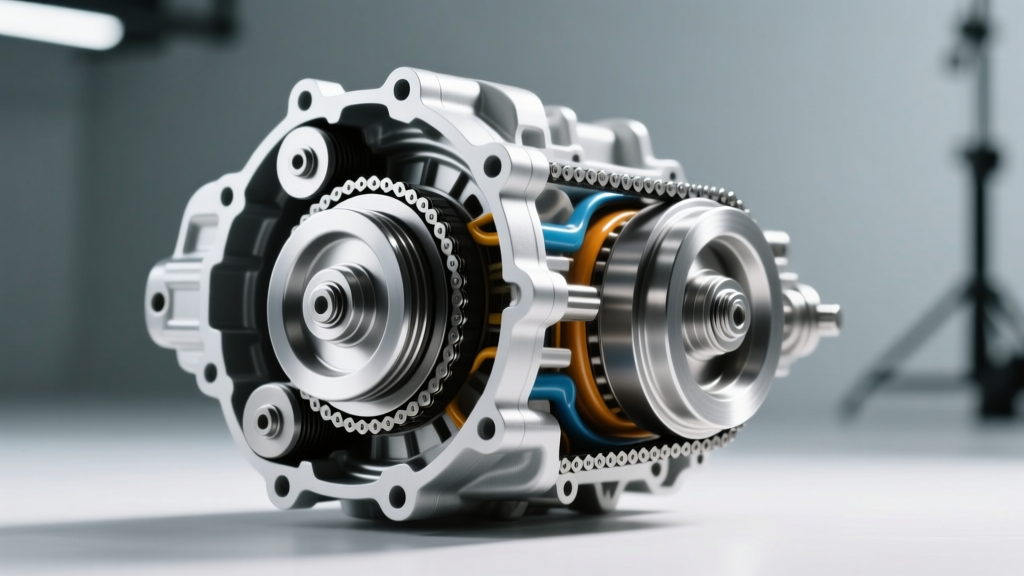
The fundamental difference in maintenance stems from how these transmissions generate friction and manage heat. A traditional automatic uses clutch packs and a torque converter, requiring fluids with high friction modifiers and shear stability. A CVT relies on a steel push-belt or chain running between variable-diameter pulleys, requiring fluids with extremely high metal-to-metal friction coefficients to prevent belt slip.
Subaru Lineartronic (TR690) vs. ZF 8HP (BMW/Stellantis)
Subaru’s chain-driven Lineartronic CVT is often cited as one of the most robust CVTs on the market. Unlike belt-driven units, it uses a Luk chain, which handles higher torque loads. However, maintaining the TR690 requires strict adherence to fluid specifications. Subaru mandates CVTF-II fluid. The total system capacity is roughly 13.5 liters, but a standard drain-and-fill only yields about 4 to 5 liters. The transmission pan must be dropped to clean the internal magnets, which capture microscopic chain wear debris. The pan bolts are small and easily stripped; the factory torque specification is a mere 6 Nm (4.4 lb-ft).
Conversely, the ZF 8HP 8-speed automatic, found in everything from the BMW 3-Series to the Dodge Charger, uses a traditional Lepelletier planetary gearset. ZF famously declared their LifeguardFluid 8 as a 'lifetime' fluid. Yet, independent transmission shops and the ZF Aftermarket division now strongly recommend servicing the fluid every 60,000 to 80,000 miles. The ZF 8HP uses a plastic oil pan with an integrated filter. Because the pan cannot be reused once the seal is compressed, a fluid service requires purchasing an entire new pan assembly, driving up the maintenance cost compared to older transmissions with reusable metal pans and separate filters.
Nissan Jatco CVT8 (JF016E) and the Scan Tool Requirement
Nissan’s Jatco CVT8 is the transmission most responsible for the search query 'what cars don't have cvt transmissions.' Early models suffered from stepper motor failures and valve body wear due to inadequate cooling and degraded fluid. Modern maintenance of the JF016E requires Nissan NS-3 fluid. The critical E-E-A-T detail here is the software requirement: after performing a fluid drain-and-fill (capacity roughly 8.5 liters), a technician must use a bi-directional OBD2 scan tool (like the Nissan Consult-III+ or an advanced Autel/Snap-On tablet) to reset the 'CVT Fluid Deterioration Date' counter in the TCM. Failing to reset this counter causes the transmission computer to assume the fluid is still degraded, leading to restricted line pressure, sluggish acceleration, and premature belt wear.
2026 Fluid Specifications and Service Cost Comparison
To illustrate the financial reality of ownership, below is a comparison of OEM fluid requirements, capacities, and estimated independent shop service costs for popular 2026-era transmissions.
| Transmission Model | Type | OEM Fluid Spec | Service Capacity | Pan Torque Spec | Est. Service Cost |
|---|---|---|---|---|---|
| Subaru TR690 (Lineartronic) | Chain CVT | Subaru CVTF-II | ~5.0 Liters | 6 Nm (4.4 lb-ft) | $280 - $350 |
| Nissan JF016E (CVT8) | Belt CVT | Nissan NS-3 | ~4.5 Liters | 7.9 Nm (5.8 lb-ft) | $250 - $320 |
| Toyota K120 (Direct Shift) | Gear/Belt CVT | Toyota CVTF FE | ~4.0 Liters | N/A (Sealed) | $200 - $275 |
| ZF 8HP45/70 | 8-Speed Auto | ZF LifeguardFluid 8 | ~5.5 Liters | 10 Nm (7.4 lb-ft) | $450 - $600 |
| GM 10L90 | 10-Speed Auto | ACDelco ULV | ~6.5 Liters | 9 Nm (6.6 lb-ft) | $300 - $400 |
*Note: Service capacities reflect a standard drain-and-fill. Dry fill capacities are significantly higher. Costs reflect 2026 national averages at independent specialized drivetrain shops.
The 'Lifetime Fluid' Myth and Thermal Breakdown
Whether you end up in a CVT-equipped Subaru or a traditional automatic-equipped BMW, the concept of 'lifetime transmission fluid' is a marketing construct designed to lower the advertised cost of ownership during the warranty period. In reality, 'lifetime' usually means the lifetime of the warranty (roughly 60,000 to 100,000 miles).
In CVTs, thermal breakdown is the enemy. The friction modifiers in NS-3 or CVTF-II fluids are engineered to allow the steel belt to grip the pulleys without slipping, while still providing a hydrodynamic lubricating film for the bearings and chains. When the fluid is subjected to repeated high-heat cycles (such as towing, mountain driving, or sitting in stop-and-go traffic without an auxiliary CVT cooler), the fluid shears. Once the viscosity drops, the pulleys clamp down harder to compensate, generating more heat and accelerating fluid death. According to data from the Subaru Technical Information System, severe driving conditions dictate CVT fluid inspections every 30,000 miles.
Traditional automatics like the GM 10-speed or Ford 10R80 face a different issue: clutch pack material shedding. As the microscopic friction material wears off the clutch discs, it circulates through the valve body. If the fluid is never changed, this debris clogs the intricate solenoid screens in the mechatronic unit, leading to harsh shifts, flaring between gears, and eventual clutch pack burnout.
Toyota’s Direct-Shift CVT: The Bridge Between Worlds
For buyers torn between the efficiency of a CVT and the durability of a traditional automatic, Toyota’s K120 Direct-Shift CVT offers a compelling middle ground. This transmission features a physical 'launch gear' (a traditional first gear) that handles the high-torque, high-heat scenario of accelerating from a dead stop. Once the vehicle is rolling, it seamlessly transitions to the CVT belt-and-pulley system for cruising efficiency.
From a maintenance perspective, this is a massive advantage. The #1 killer of traditional CVTs is the extreme heat and friction generated during initial acceleration from a stop. By offloading this mechanical stress to a physical steel gear, the CVT belt and fluid in the K120 experience significantly less thermal degradation. Maintenance requires Toyota CVTF FE fluid, and while the system is more complex mechanically, its long-term fluid stability is superior to older, purely belt-driven designs.
Cost of Neglect: Replacement vs. Maintenance
The ultimate reason buyers research what cars don't have CVT transmissions is the fear of catastrophic replacement costs. Let's look at the financial penalty for neglecting maintenance in 2026:
- CVT Replacement (Nissan JF016E / Subaru TR690): $5,500 to $8,500. Remanufactured units are common, but core charges and programming fees add up quickly.
- Traditional Auto Replacement (ZF 8HP / GM 10L90): $4,500 to $7,500. While slightly cheaper on average, mechatronic unit replacements alone on a ZF 8HP can cost upwards of $2,800 without even removing the transmission from the car.
- CVT Valve Body / Stepper Motor Repair: $1,200 to $2,000. Often fixable without removing the transmission by dropping the pan.
- Traditional Auto Torque Converter / Solenoid Repair: $1,500 to $3,000. Usually requires transmission removal to access the bellhousing or internal valve body.
The Buyer's Verdict
If your primary goal is to minimize long-term maintenance complexity and avoid specialized scan-tool resets, traditional automatics from Mazda (Skyactiv) or GM (8L/10L series) remain excellent choices. However, if you are buying a modern Subaru, Honda, or Toyota, the CVT is not the liability it was in 2014. By treating the CVT fluid as a wearable component—changing it every 45,000 to 60,000 miles using strictly OEM fluid, and verifying the shop has the software to reset the TCM degradation counters—a modern CVT will easily surpass 200,000 miles. The key to longevity isn't necessarily avoiding CVTs; it's avoiding the 'lifetime fluid' myth, regardless of what transmission is bolted to your engine.