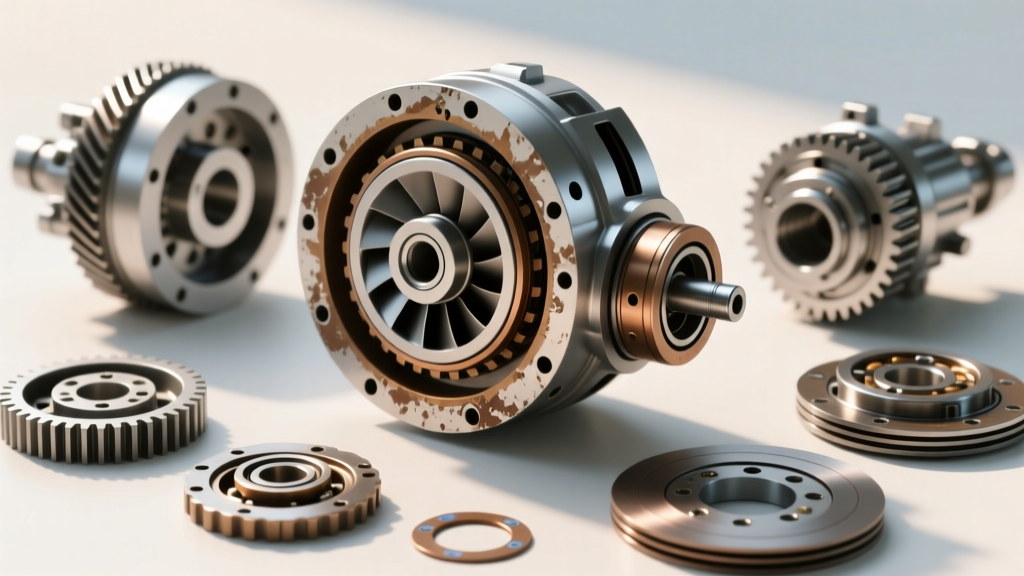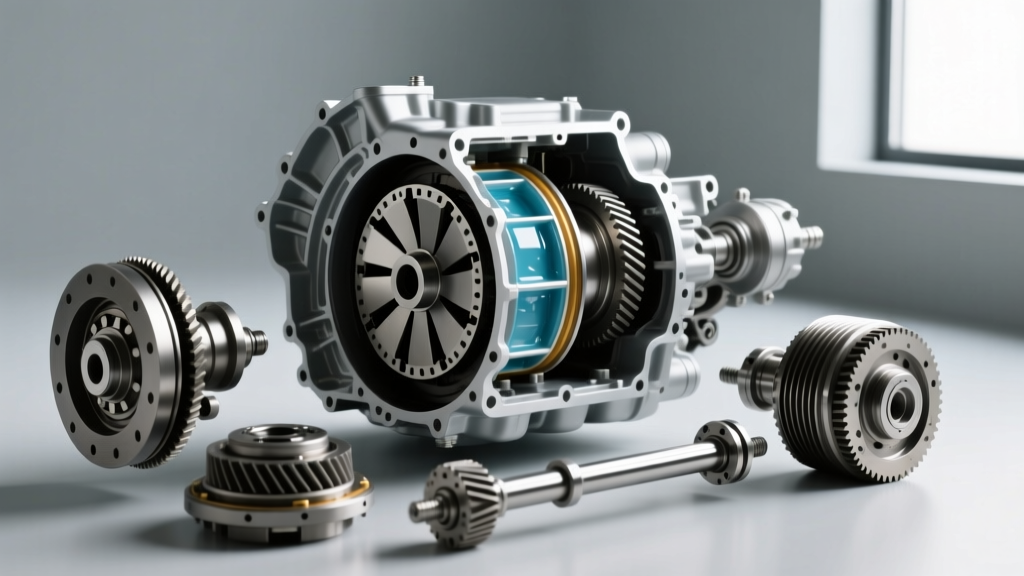
Many drivers and even some general mechanics operate under the false assumption that Continuously Variable Transmissions (CVTs) rely solely on belts, pulleys, and wet multi-plate start clutches. However, modern CVTs—such as the JATCO CVT8 found in Nissan and Infiniti vehicles, Subaru’s Lineartronic TR580, and Toyota’s Direct Shift-CVT—utilize a traditional hydrokinetic torque converter to manage engine power transfer, low-speed creep, and torsional dampening. When this component fails, diagnosing the issue and understanding the cost to fix torque converter assemblies in these specialized gearboxes requires a specific, methodical approach.
In this step-by-step guide, we will break down exactly how to diagnose a failing torque converter in a CVT, how to determine if the damage is isolated or catastrophic, and the real-world 2026 pricing for parts, labor, and specialized CVT fluids.
Step 1: Identify Your CVT Architecture
Before estimating repair costs, you must confirm that your vehicle's CVT actually uses a torque converter. Not all CVTs are created equal. Early Honda CVTs and some older Ford designs utilized a wet multi-plate start clutch instead of a torque converter. If your vehicle has a start clutch, there is no torque converter to replace, and your diagnosis must shift to clutch pack clearances and solenoid pressures.
Common Torque Converter-Equipped CVTs:
- Nissan/Infiniti (JATCO CVT7 & CVT8): Models like the Altima, Rogue, and Pathfinder (RE0F10A, RE0F10D, RE0F11A) use a torque converter with an integrated lock-up clutch to prevent belt slip during high-torque launches.
- Subaru (Lineartronic TR580/TR690): Subaru uses a torque converter to provide smooth creep and multiply torque before it reaches the variator pulleys. Learn more about Subaru Lineartronic CVT Technology and how it manages power delivery.
- Toyota (K120 Direct Shift-CVT): Features a torque converter for low-speed operation before mechanically locking out to a physical launch gear.
Step 2: Isolate Torque Converter Clutch (TCC) Symptoms
A failing torque converter in a CVT rarely presents the same way it does in a traditional planetary automatic. Because the CVT is constantly adjusting gear ratios, a slipping torque converter lock-up clutch (TCC) often mimics a failing drive belt or a bad ignition coil.
Key Symptoms to Look For:
- Highway Shudder (35-55 MPH): This is the hallmark of a failing TCC friction lining. As the TCM commands the torque converter to lock up for fuel efficiency, the worn friction material slips, causing a rhythmic vibration that feels like driving over rumble strips.
- Fluctuating RPMs at Steady Throttle: If the tachometer bounces by 100-200 RPMs while cruising, the TCC is failing to maintain hydraulic lock.
- Whining Noise at Idle in Gear: A damaged torque converter stator or failing internal needle bearing will produce a distinct whine that changes pitch with engine RPM, not vehicle speed.
Connect an advanced bi-directional OBD2 scanner and look for codes P0741 (Torque Converter Clutch Circuit Performance or Stuck Off) or P0744 (Torque Converter Clutch Circuit Intermittent). You can reference the P0741 OBD-II Code Guide for generic troubleshooting, but you will need manufacturer-specific software (like Nissan Consult-III or Subaru SSM4) to view the TCC duty cycle and slip RPM data.
Step 3: Perform the CVT Pan Drop Inspection
This is the most critical step in determining the true cost to fix torque converter problems. You must drop the CVT fluid pan and inspect the magnets and filter. Do not skip this step.
Expert Warning: CVT fluid pans are sealed with RTV silicone or specialized gaskets and torqued to very low specifications (e.g., 7.9 Nm / 69 in-lbs for many Nissan CVT pans). Over-torquing the pan bolts will warp the thin aluminum valve body casting, leading to internal pressure leaks and immediate CVT failure.
Analyzing the Debris:
- Dark, Fibrous, or Paper-Like Material: This is the friction material from the torque converter lock-up clutch. If the pan only contains this, the damage is likely isolated to the torque converter.
- Fine Metallic Glitter (Silver Paste): Normal wear from the thrust bearings and chain links. A light coating on the magnets is acceptable.
- Large Metal Chunks or Steel Shavings: This indicates the torque converter failure has sent debris into the CVT variator pulleys, the chain, or the oil pump. If you see this, the CVT is terminally damaged.
Step 4: Evaluate the Cost to Fix Torque Converter in a CVT
If your pan inspection reveals only TCC friction material and the CVT pulleys are undamaged, you can proceed with a torque converter replacement. This requires removing the entire CVT assembly from the vehicle, draining the fluid, and separating the torque converter from the flex plate and CVT input shaft.
Below is a breakdown of the estimated 2026 costs to fix torque converter issues across the most common CVT platforms. Note that CVT fluid is highly specialized and expensive, significantly impacting the final bill.
| Vehicle Platform (CVT Model) | Torque Converter Part Cost | Specialized CVT Fluid (Dry Fill) | Labor (R&R CVT & TC) | Estimated Total Cost |
|---|---|---|---|---|
| Nissan/Infiniti (JATCO CVT8) | $350 - $550 | $120 - $160 (NS-3, ~8.6L) | $900 - $1,300 | $1,370 - $2,010 |
| Subaru (Lineartronic TR580) | $400 - $650 | $150 - $200 (CVTF, ~12L) | $1,000 - $1,500 | $1,550 - $2,350 |
| Toyota (K120 Direct Shift) | $300 - $450 | $110 - $140 (CVTF FE, ~7.5L) | $800 - $1,200 | $1,210 - $1,790 |
Hidden Costs to Consider
When calculating the cost to fix torque converter assemblies, shops will often mandate the replacement of the CVT cooler and cooler lines. Because the torque converter lock-up clutch sheds friction material directly into the transmission cooler circuit, reusing the old cooler will instantly contaminate the new torque converter. Expect to add $250-$450 for a standalone auxiliary CVT cooler and line flush.
Step 5: The 'Point of No Return' Decision Framework
There is a harsh reality in CVT repair: the torque converter and the variator pulleys share the same fluid sump. Unlike a traditional automatic transmission where a heavy inline filter might catch some debris, CVTs rely on a coarse mesh strainer in the pan and a fine paper cartridge filter hidden deep inside the transmission case or cooler circuit.
If your TCC failed catastrophically and the friction material bypassed the strainer, it has embedded itself into the porous surfaces of the CVT's steel drive belt and the hydraulic valves in the valve body. If you install a new torque converter without replacing or professionally remanufacturing the valve body and variator, the embedded debris will act like sandpaper, destroying the new TCC friction lining within 1,000 miles.
When to Replace the Entire CVT Assembly
You must pivot from a torque converter repair to a full CVT replacement if:
- The CVT fluid smells severely burnt (indicating the drive belt has slipped due to low line pressure caused by a stuck TCC valve).
- The CVT exhibits a whining noise that correlates with vehicle speed, not engine speed.
- Codes for pulley position sensors (e.g., P0715, P0720) accompany the TCC codes.
- Large metal fragments are found on the pan magnets.
In these scenarios, a remanufactured CVT assembly (from suppliers like JATCO or Certified Transmission) will cost between $3,500 and $6,500 installed. For more information on how these units are engineered, you can review JATCO's official CVT lineup and their internal hydraulic schematics.
Summary: Protecting Your CVT Investment
Diagnosing and repairing a torque converter in a CVT requires a nuanced understanding of hydraulic lock-up clutches and continuously variable belt drives. By following this step-by-step guide, scanning for precise TCC duty cycle faults, and rigorously inspecting the CVT pan for debris, you can accurately determine the true cost to fix torque converter issues. Always use the exact OEM-specified CVT fluid (NS-3, CVTF, etc.), torque all pan and bellhousing bolts to manufacturer specifications, and never ignore the condition of the auxiliary transmission cooler.