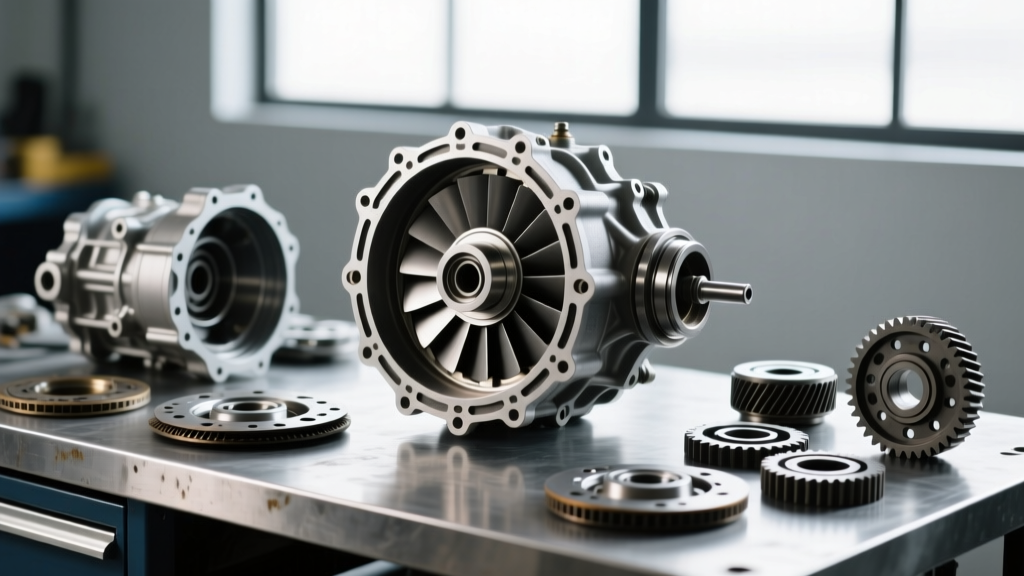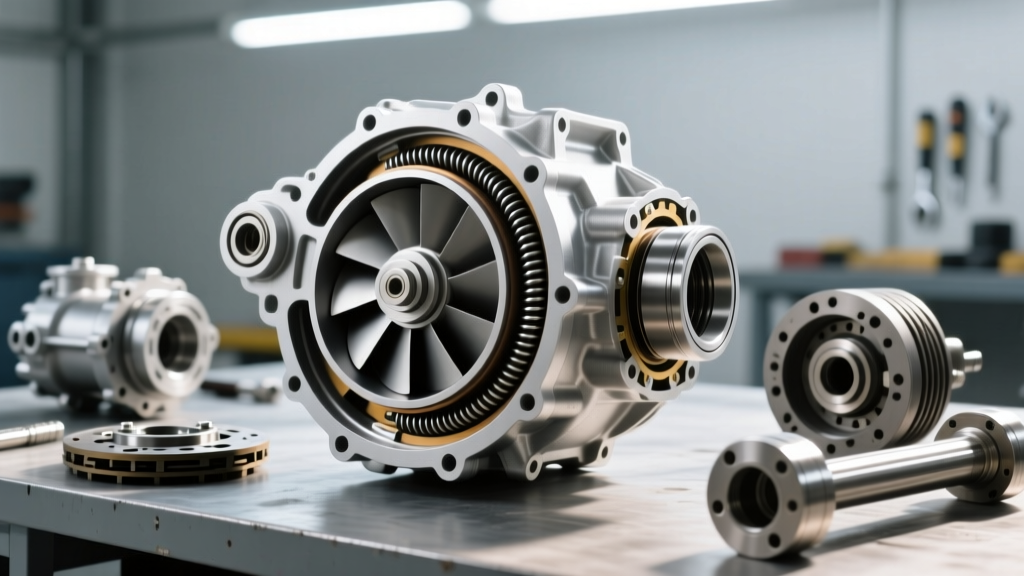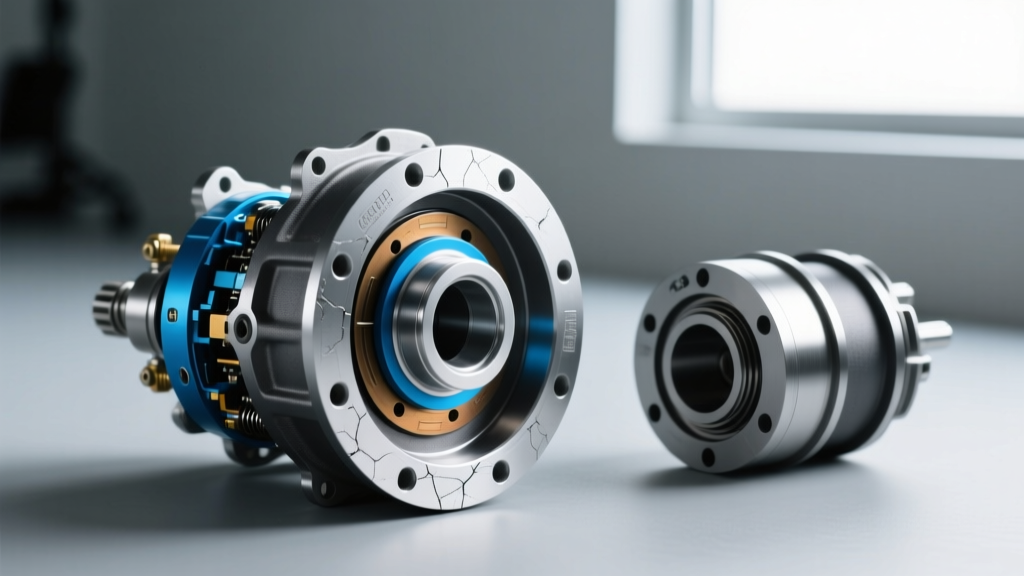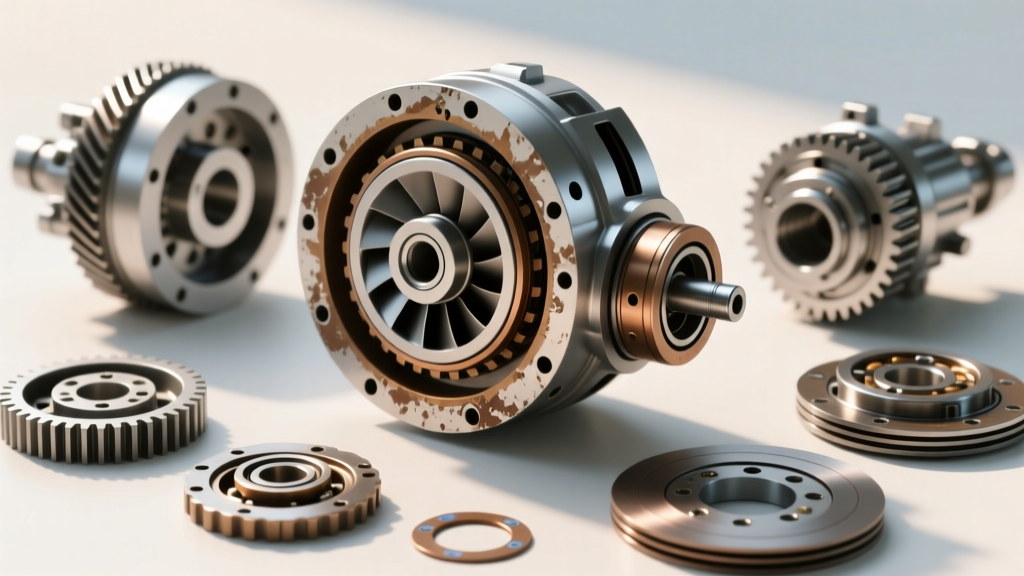
When a vehicle leaves a puddle of red fluid on the driveway or emits a high-pitched whine from the bellhousing, frustrated owners often turn to search engines asking, 'whats a torque converter' and why is it failing? While the torque converter is a marvel of fluid dynamics—multiplying engine torque via an impeller, stator, and turbine—its physical integration with the transmission and engine block makes it highly susceptible to bearing and seal degradation. In 2026, as vehicles age and labor rates continue to climb, understanding the cost analysis behind torque converter hub seals, stator support O-rings, and internal thrust bearings is critical for both DIYers and professional transmission shops.
The Anatomy of Torque Converter Bearing and Seal Failures
Before breaking down the financial impact, it is essential to isolate the exact failure point. Torque converter seal and bearing issues generally fall into two distinct categories: external hydraulic seals and internal mechanical bearings.
External Hub and Pump Seals
The front pump seal (often called the hub seal) rides directly on the machined outer surface of the torque converter's front cover hub. In high-mileage units like the GM 6L80 or the Ford 10R80, the constant friction and thermal cycling can score the converter hub. If the hub develops a microscopic groove, replacing the $20 rubber seal is futile; the new seal will immediately leak because it cannot mate against the damaged metal. Furthermore, the stator support tube utilizes multiple Teflon or Viton O-rings that degrade over time, allowing pressurized transmission fluid to bypass the clutch apply circuits and leak into the bellhousing.
Internal Thrust and Needle Bearings
Inside the converter, Torrington thrust bearings and needle washers separate the impeller, turbine, and stator. When these bearings fail due to fluid starvation or extreme heat, the internal components physically grind against one another. This manifests as a metallic whine that correlates directly with engine RPM, not vehicle speed. Left unchecked, internal bearing disintegration will send steel shrapnel through the transmission's front pump and valve body, escalating a $400 repair into a $4,500 complete transmission overhaul.
2026 Cost Breakdown: Parts vs. Labor Matrix
The most shocking aspect of torque converter seal and bearing repairs is the labor-to-parts ratio. Because the torque converter is sandwiched between the engine flexplate and the transmission input shaft, accessing it requires complete transmission removal (R&R). Below is the 2026 national average cost matrix for addressing these specific failures.
| Repair Scenario | Parts Cost (2026) | Labor Hours | Total Estimated Cost |
|---|---|---|---|
| Front Hub Seal & O-Rings Only | $35 - $85 | 7.0 - 9.5 hrs | $1,150 - $1,600 |
| TC Hub Resurfacing (Speedi-Sleeve) | $120 - $180 | 7.0 - 9.5 hrs | $1,300 - $1,750 |
| Remanufactured TC (Internal Bearings) | $280 - $450 | 7.0 - 9.5 hrs | $1,450 - $2,100 |
| OEM Dealer Replacement TC | $850 - $1,400 | 7.0 - 9.5 hrs | $2,100 - $3,100 |
| Aftermarket Billet TC (Performance) | $900 - $1,600 | 7.0 - 9.5 hrs | $2,200 - $3,400 |
The 'Financial Trap' of Seal-Only Repairs
A common mistake made by budget-conscious drivers and inexperienced mechanics is attempting to replace only the front pump seal to save money. As the table illustrates, the seal itself costs less than $40. However, the labor to drop the transmission, support the engine with a cradle, disconnect the driveshaft, axles, and cooling lines, and then reinstall the unit remains identical whether you are replacing a $40 seal or a $1,200 torque converter.
Expert Insight: Never authorize a seal-only repair on a torque converter with over 120,000 miles. The internal thrust bearings are likely nearing the end of their service life, and the hub surface is almost certainly scored. Always opt for a professionally remanufactured unit with upgraded internal bearings and a machined hub when the transmission is already out of the vehicle.
Diagnostic Steps Before Authorizing Repairs
Before tearing down the drivetrain, accurate diagnosis is required to ensure the leak or noise is actually originating from the torque converter and not a cheaper, more accessible component.
- The UV Dye Test: Add a petroleum-compatible UV dye to the transmission fluid. Run the vehicle for 50 miles. Inspect the bellhousing inspection cover with a UV flashlight. If the dye is slung radially from the center of the flexplate, the front hub seal or stator O-ring is the culprit. If the dye is dripping from the engine block mating surface, suspect a rear main engine seal (engine oil) or a cracked block.
- Stethoscope Frequency Analysis: To diagnose internal bearing whine, use an automotive stethoscope on the bellhousing. Rev the engine in Park. If the whine pitch rises and falls exactly with engine RPM, the internal torque converter bearings (or the front pump gears) are failing. If the noise only occurs when the vehicle is in gear and under load, suspect differential or axle bearings instead.
- Fluid Level and Condition Check: Internal bearing failure often generates excessive heat, turning the ATF a burnt, dark brown color with a distinct acrid odor. A magnetized dipstick or pan drop revealing fine glitter (needle bearing material) confirms internal converter destruction.
For deeper diagnostic flowcharts and visual guides on identifying hub scoring, Sonnax technical resources provide excellent metallurgical breakdowns of stator support wear patterns. Additionally, the Automatic Transmission Rebuilders Association (ATRA) regularly publishes service bulletins regarding front pump seal leak comebacks related to improper hub finishes.
OEM vs. Aftermarket Torque Converter Components
When internal bearings or external seals fail, the market offers diverging paths for replacement. OEM units from manufacturers like GM, Ford, or ZF are engineered to exact factory tolerances. For a standard daily driver, an OEM remanufactured unit (typically $300-$450) is the most logical choice.
However, for vehicles used in towing, off-roading, or modified applications, the aftermarket offers superior solutions. Companies like Precision Industries and Circle D Specialties manufacture billet steel front covers. These billet covers eliminate the flex found in stamped steel OEM covers, ensuring the front hub seal maintains perfect concentricity even under extreme torque loads. Furthermore, aftermarket rebuilders frequently utilize upgraded Kevlar-lined stator O-rings and heavy-duty Torrington bearings that vastly outlast factory components.
Reassembly Best Practices and Torque Specifications
If you are performing the R&R procedure, proper reassembly is just as critical as the parts you install. A poorly seated torque converter will destroy the front transmission pump within the first 10 miles of driving.
- The 'Three Clunks' Rule: When sliding the torque converter onto the transmission input shaft, you must feel three distinct 'clunks' or drops. The first is the turbine engaging the input shaft splines, the second is the stator engaging the one-way clutch and stator support, and the third is the transmission oil pump drive gear engaging the converter hub. If you only feel one or two, the converter is not fully seated.
- Measuring Seat Depth: Use a straight edge across the bellhousing mating surface and measure the gap to the converter's mounting pads. This gap should typically be between 1/8' and 3/16' (approx. 3mm to 5mm). If the converter is flush with the bellhousing, it is not fully seated.
- Flexplate Torque Specs: Never use an impact wrench to tighten the flexplate-to-converter bolts. For the ubiquitous GM 6L80 and 8L90 transmissions, the M10 flexplate bolts require exactly 33 lb-ft (45 Nm) of torque. Over-torquing these bolts can warp the converter's front cover, leading to immediate internal clutch drag and premature front seal failure.
- Fluid Capacity and Priming: A completely dry torque converter holds between 3 to 5 quarts of fluid on its own. When refilling a transmission after a converter replacement (e.g., 11.5 quarts total for a 6L80 pan drop), pour at least 2 quarts directly into the converter hub before starting the engine to prevent immediate pump cavitation and dry-bearing startup wear.
Final Verdict on Seal and Bearing Economics
Ultimately, answering the question 'whats a torque converter' involves understanding that it is the critical, fluid-coupled bridge between your engine and transmission. When its bearings fail or its seals degrade, the repair cost is dictated not by the price of the rubber or steel, but by the intensive labor required to access it. By accurately diagnosing the failure via UV dye and RPM-matching, and by opting for a complete remanufactured unit rather than a temporary seal swap, vehicle owners can ensure their drivetrain remains reliable for another 150,000 miles without falling victim to the hidden labor traps of modern automotive repair.