The Financial Reality of Continuously Variable Transmissions
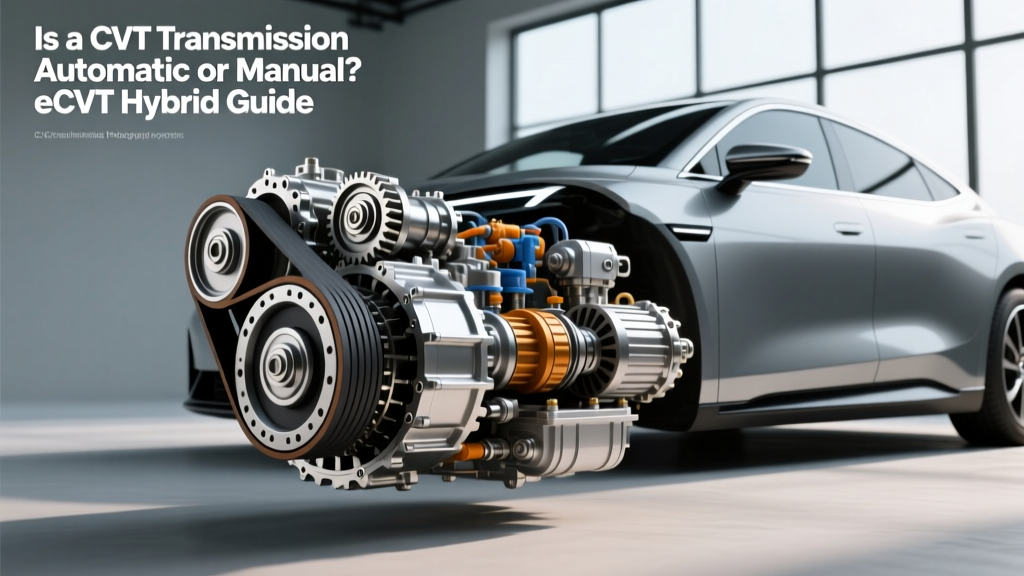
When automotive shoppers ask what cars use CVT transmission systems, the answer spans nearly every major non-luxury automaker on the market today. From the Nissan Rogue to the Subaru Outback and the Toyota Corolla, Continuously Variable Transmissions (CVTs) are the industry standard for maximizing fuel economy. However, as these vehicles age past the 100,000-mile mark in 2026, owners are confronting a harsh financial reality: CVT reliability is inextricably linked to steep, specialized repair costs.
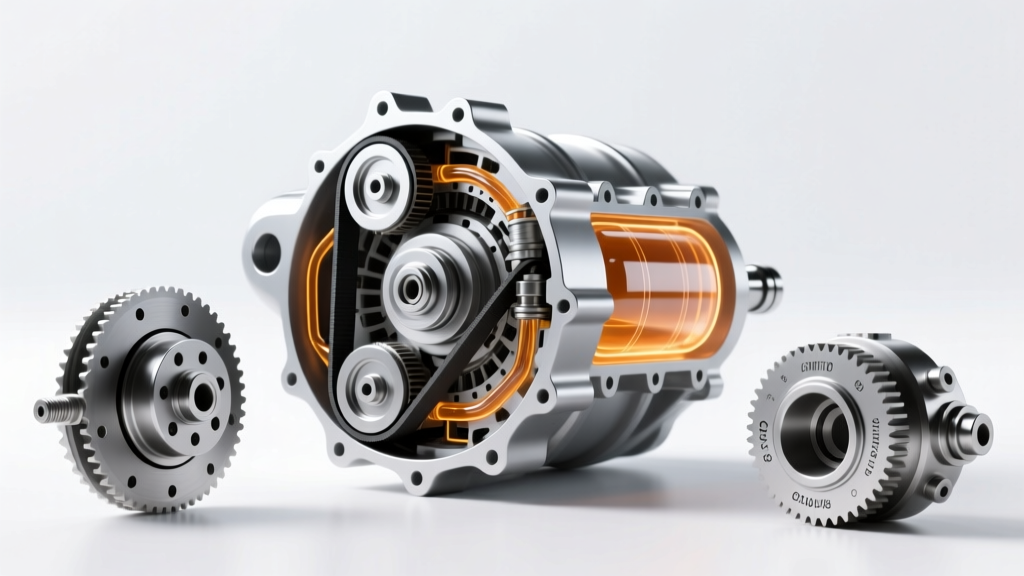
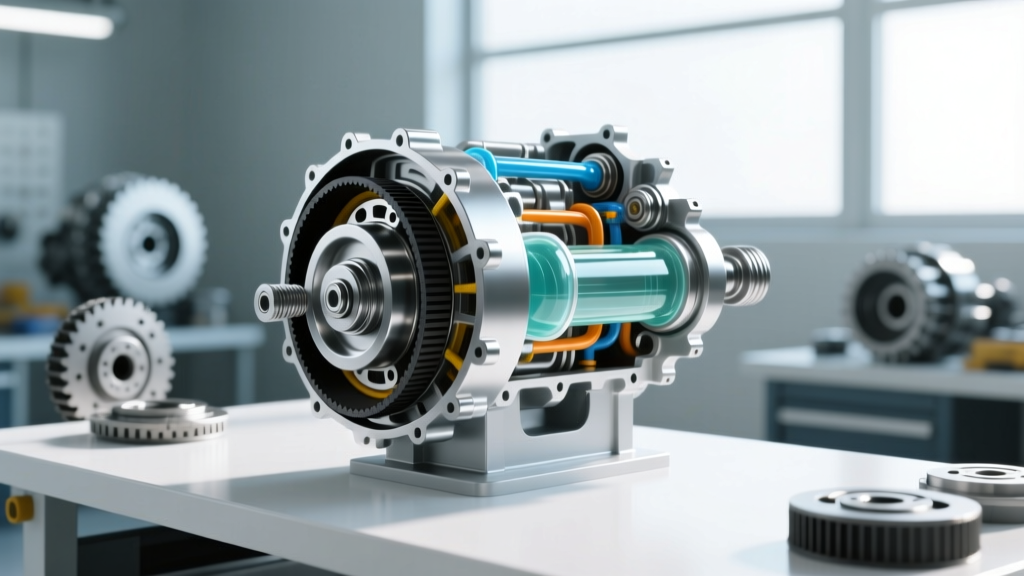
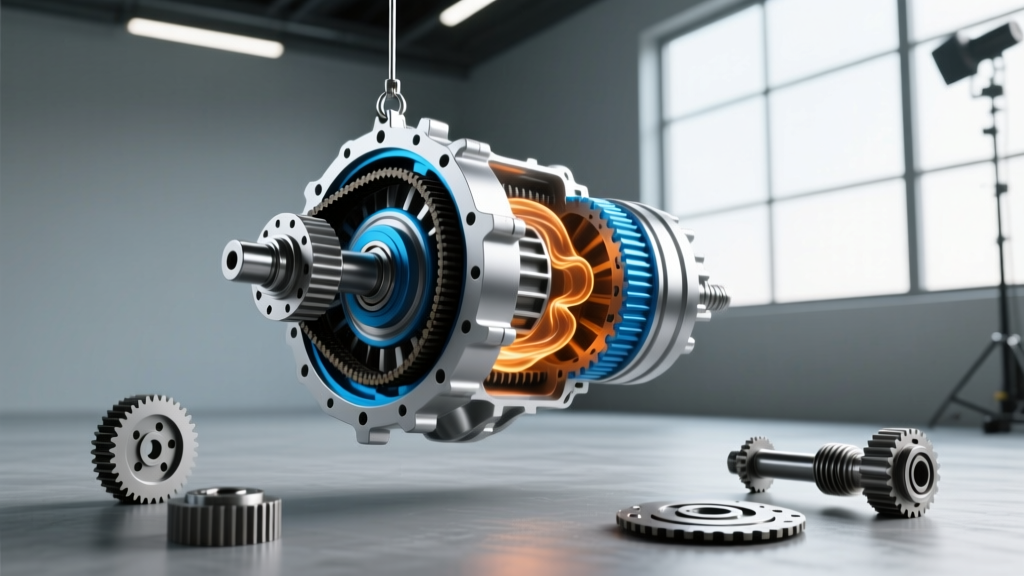
Unlike traditional planetary automatic transmissions (like the ZF 8HP or GM 6L80) which can often be rebuilt by independent mechanics using widely available hard parts, CVTs rely on high-tension steel push-belts or chains clamped between variable-diameter pulleys. When internal failure occurs, the repair calculus shifts dramatically. This guide provides a deep-dive cost analysis and reliability breakdown of the most common CVT platforms on the road today.
Expert Insight: The most common cause of catastrophic CVT failure is not manufacturing defect, but deferred fluid maintenance. CVT fluid does not just lubricate; it provides the critical friction coefficient required for the pulleys to grip the steel belt. When fluid degrades, micro-slip occurs, generating metallic debris that destroys the valve body solenoids.
Market Overview: What Cars Use CVT Transmission Platforms?
To understand the cost of ownership, we must first categorize the primary CVT architectures currently dominating the global fleet. The market is largely split between three major suppliers and their respective OEM partners:
- Jatco (Japan Automatic Transmission Co.): Supplies Nissan, Mitsubishi, Infiniti, and historically Subaru. Key models include the JF011E (CVT7) and JF016E (CVT8).
- Aisin (Toyota Group): Supplies Toyota and Lexus. Key models include the K114 and the revolutionary K120 Direct Shift-CVT.
- In-House OEM Designs: Subaru's Lineartronic (TR-580/TR-690) and Honda's Earth Dreams CVT.
Reliability vs. Repair Costs: A Deep Dive by Manufacturer
1. Nissan & Jatco (JF016E / CVT8)
Nissan has been the most aggressive adopter of CVT technology, placing the Jatco JF016E in millions of vehicles including the Altima, Rogue, and Murano. While early models (2013-2018) suffered from catastrophic belt slip and stepper motor failures, the updated CVT8 platforms have improved reliability—provided they are maintained.
Common Failure Mode: Valve body solenoid wear and stepper motor degradation. This typically triggers OBD-II codes P0746 (Pressure Control Solenoid Performance) or P17F0 (CVT Judder).
2026 Cost Breakdown:
- Diagnostic Fee: $150 - $220 (Requires Nissan Consult-III Plus or advanced bidirectional scanner to read CVT-specific data PIDs).
- Stepper Motor Replacement: $180 (Part) + $450 (Labor). Requires dropping the transmission pan and valve body.
- Valve Body Assembly: $950 - $1,300 (OEM Part # 31020-1XF0A) + $600 (Labor).
- Complete Remanufactured Unit: $4,800 - $6,500 installed. Rebuilding a Jatco CVT in-house is rarely cost-effective due to the proprietary belt tensioning tools and clearance calibration software required.
2. Subaru Lineartronic (TR-580 / TR-690)
Subaru's Lineartronic system is unique because it pairs the CVT with a symmetrical all-wheel-drive system and utilizes a heavy-duty Luk chain rather than a push-belt. According to the Subaru Technical Information System, the TR-580 (used in 4-cylinder models like the Forester and Outback) is highly robust, but its external solenoid block is a known vulnerability.
Common Failure Mode: Solenoid block wiring harness chafing and internal solenoid clogging from chain wear debris, often throwing code P2764 (Lock-Up Duty Solenoid Circuit Low).
2026 Cost Breakdown:
- Solenoid Block Replacement: $750 (Part) + $400 (Labor). Unlike Nissan, this can sometimes be accessed without dropping the entire transmission, depending on the chassis.
- Chain and Pulley Set: If the chain stretches or snaps, internal case damage is guaranteed. Parts alone exceed $3,200.
- Complete Remanufactured Unit: $5,500 - $7,800 installed. Subaru CVTs are heavily integrated with the AWD transfer case, driving up remanufacturing and shipping costs.
3. Toyota K120 Direct Shift-CVT
When analyzing what cars use CVT transmission technology with the highest reliability ratings, Toyota's K120 Direct Shift-CVT stands out. Introduced to mitigate the 'rubber-band' effect and reduce belt stress, the K120 features a physical first-gear (launch gear) that handles heavy loads from a standstill. Once the vehicle is moving, the system seamlessly transitions to the pulley-and-belt mechanism.
Reliability & Cost Profile: Because the launch gear absorbs the highest torque loads (where belt slip is most likely), internal CVT failure rates are exceptionally low. Most 'failures' are actually related to the traditional gear-train bearings or shift linkage.
- Valve Body / Solenoid Issues: Rare before 150,000 miles.
- Complete Replacement: $4,200 - $5,500. Lower than Subaru due to FWD-only architecture and higher aftermarket availability.
4. Honda Earth Dreams CVT
Honda utilizes a proprietary CVT design featuring a start clutch rather than a traditional torque converter. This improves low-speed efficiency but introduces a unique calibration requirement.
Common Failure Mode: Start clutch judder and bearing wear. If the transmission is rebuilt or the battery is disconnected, the start clutch requires a specific calibration routine via the Honda Diagnostic System (HDS).
- Start Clutch Calibration: $120 - $180 (Labor only, requires dealer-level software).
- Complete Remanufactured Unit: $4,500 - $6,000 installed.
2026 CVT Maintenance & Fluid Cost Matrix
Preventative maintenance is the single most effective way to avoid a $6,000 replacement bill. Below is a comparative matrix of OEM fluid specifications, capacities, and service costs. Note: Torque specs refer to the transmission fluid pan bolts, which are notoriously easy to strip due to thin aluminum casing.
| Manufacturer / CVT Model | OEM Fluid Spec | Capacity (Drain & Fill) | Fluid Cost (Per Qt) | Pan Bolt Torque Spec | Filter Service Cost |
|---|---|---|---|---|---|
| Nissan (JF016E) | Nissan NS-3 | 7.8 Quarts (7.4L) | $14.50 | 8 Nm (71 in-lbs) | $280 (Pan drop & clean) |
| Subaru (TR-580) | Subaru CVTF | 12.8 Quarts (12.2L) | $16.00 | 6 Nm (53 in-lbs) | $350 (Dual filter replace) |
| Toyota (K120) | Toyota CVTF FE | 7.6 Quarts (7.2L) | $12.00 | 10 Nm (89 in-lbs) | $220 (Strainer clean) |
| Honda (Earth Dreams) | Honda HCF-2 | 7.4 Quarts (7.0L) | $13.50 | 12 Nm (106 in-lbs) | $250 (External inline filter) |
As highlighted by automotive analysts at Car and Driver, the misconception that CVT fluid is a 'lifetime' fluid has led to millions of dollars in premature transmission failures across all brands. We recommend a drain-and-fill every 30,000 to 45,000 miles, strictly avoiding high-pressure flushing machines which can force debris into the delicate valve body channels.
Rebuild vs. Replace: The Financial Tipping Point
When a CVT suffers a catastrophic internal failure (e.g., snapped belt, shattered pulley cones, or severe case scoring), owners face a critical financial decision. Unlike a traditional 6-speed automatic where a master rebuild kit costs $400 and a weekend of labor yields a functional unit, CVTs are hostile to independent rebuilds.
Why In-House Rebuilds Are Fading
- Proprietary Tooling: Compressing the pulley springs to install a new belt requires specialized hydraulic presses and OEM-specific jigs.
- Calibration Software: Modern CVTs require 'clearance learning' and 'adaptive pressure mapping' post-rebuild. Without dealer-level bidirectional control, the new belt will slip and destroy itself within 50 miles.
- Part Availability: OEMs rarely sell internal hard parts (belts, pulleys) directly to consumers or independent shops; they only sell complete valve bodies or crate assemblies.
The 2026 Replacement Strategy
For vehicles with a market value under $15,000, a $6,000 CVT replacement often triggers a total-loss scenario from insurance and financial perspectives. The most cost-effective route for out-of-warranty vehicles is sourcing a remanufactured unit from a certified drivetrain supplier (such as Jasper or Powertrain Products). These units typically cost between $3,500 and $4,500 for the assembly, come with a 3-year/100,000-mile warranty, and include updated valve bodies that address factory engineering flaws.
Expert Verdict: Maximizing Your CVT Investment
The answer to what cars use CVT transmission technology is essentially 'most of the non-luxury market.' However, reliability is not a matter of luck; it is a matter of fluid dynamics and thermal management. If you own a Nissan, Subaru, Honda, or Toyota equipped with a CVT, adhere strictly to the 30,000-mile fluid drain-and-fill intervals outlined above. Ensure your mechanic uses a torque wrench on the aluminum pan bolts and exclusively utilizes OEM-certified fluids. By investing $250 in preventative fluid services today, you effectively hedge against a $6,500 remanufactured replacement tomorrow.
For further safety and defect tracking regarding specific model years, owners should regularly consult the National Highway Traffic Safety Administration (NHTSA) database to monitor active recalls and technical service bulletins (TSBs) related to their specific CVT platform.