The Core Question: Is a CVT Transmission Automatic or Manual?
As we navigate the 2026 automotive landscape, hybrid vehicle market share has surged, bringing a wave of new owners into the electrified ecosystem. A common question that arises on forums and in service bays is: is a CVT transmission automatic or manual? When discussing traditional belt-and-pulley Continuously Variable Transmissions (like the Jatco JF011E or Subaru Lineartronic), the answer is that they function as automatics from the driver's perspective, despite lacking fixed gear ratios. However, when we shift the focus to the eCVT (Electronic Continuously Variable Transmission) found in hybrid vehicles like the Toyota Prius, RAV4 Hybrid, and Ford Escape Hybrid, the answer changes entirely.
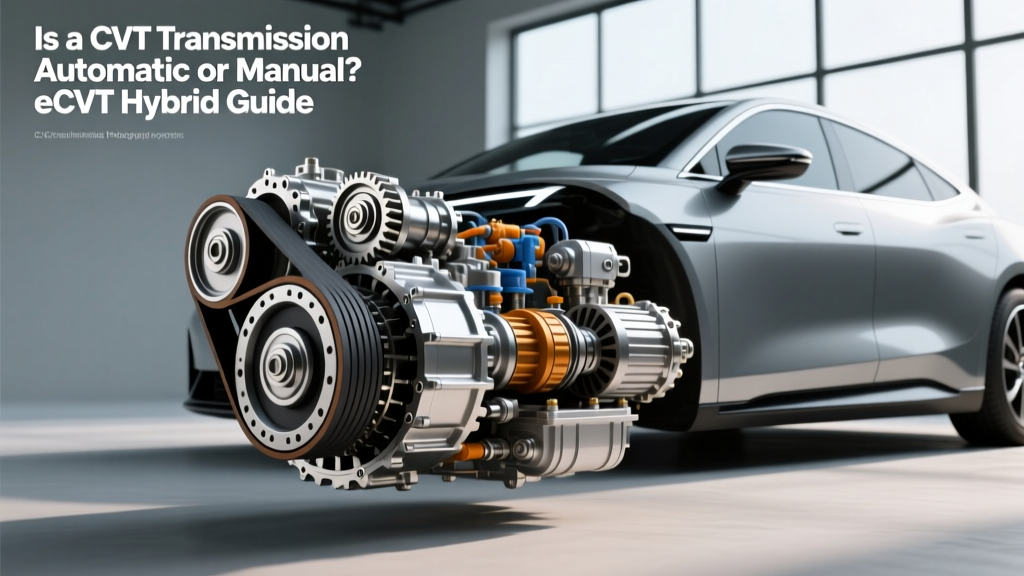
An eCVT is technically neither a traditional automatic nor a manual. It does not use friction clutches, torque converters, or steel push-belts. Instead, it relies on a brilliantly engineered power-split device utilizing planetary gearsets and motor-generators. Because the mechanical layout is vastly different, the preventive maintenance requirements, fluid chemistries, and failure points are entirely unique. This guide will serve as your definitive preventive maintenance manual for hybrid eCVTs, ensuring your power-split device survives well past the 200,000-mile mark.
The Anatomy of an eCVT: Why It Defies Traditional Categories
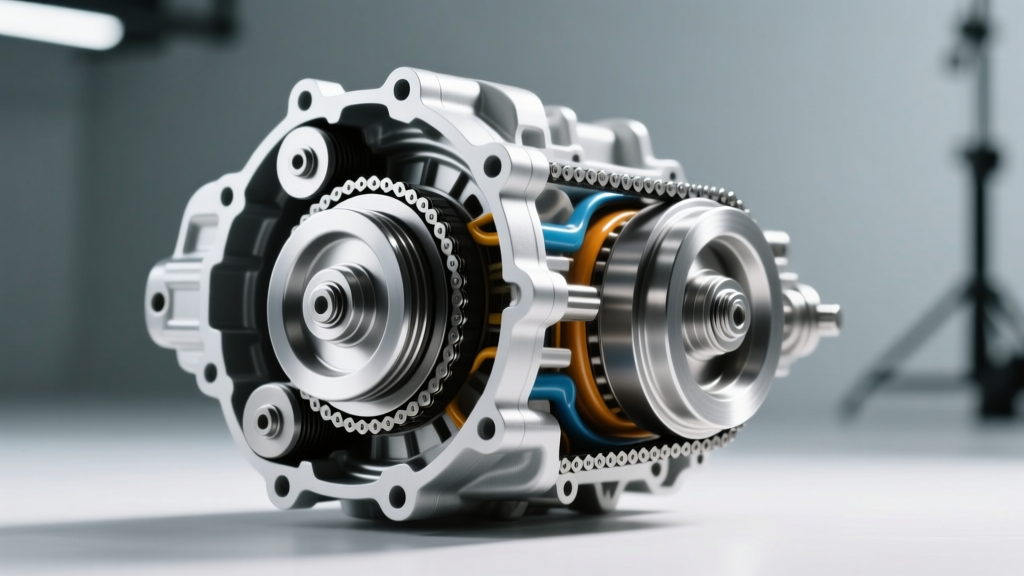
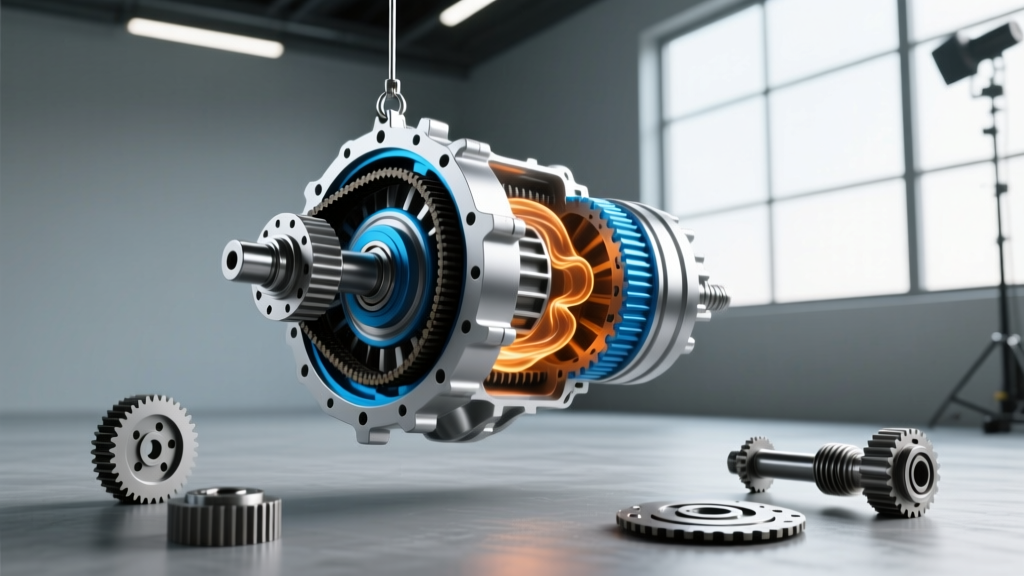
To understand how to maintain an eCVT, you must first understand what is actually inside the transaxle housing. Unlike a conventional stepped automatic transmission (such as the ZF 8HP or GM 6L80) that uses complex valve bodies and clutch packs to shift between discrete gears, an eCVT uses a planetary gearset to seamlessly blend power from the internal combustion engine (ICE) and the electric motors.
Take the ubiquitous Toyota P610 and P810 transaxles as prime examples. Inside the aluminum casing, you will find:
- MG1 (Motor Generator 1): Primarily acts as a starter for the ICE and controls the gear ratio by varying its rotational speed, effectively acting as the 'variator' in the system.
- MG2 (Motor Generator 2): The primary traction motor that drives the wheels and captures regenerative braking energy.
- Planetary Gearset: The mechanical heart that links the ICE, MG1, and MG2, allowing for infinite ratio variations without the friction wear associated with belts or chains.
Because there are no friction materials constantly slipping to manage gear changes, eCVTs are widely considered the most reliable transmission type on the road today. However, 'reliable' does not mean 'maintenance-free.' The fluid inside an eCVT serves a dual purpose that traditional automatic fluids do not: it must lubricate mechanical gears while simultaneously acting as a dielectric coolant for high-voltage electric motor windings.
The Chemistry of eCVT Fluids: Dielectric Properties vs. Friction Modifiers
One of the most catastrophic mistakes a DIY mechanic or inexperienced lube technician can make is confusing eCVT fluid with standard CVT fluid. If you search for an answer to 'is a CVT transmission automatic or manual' and mistakenly treat an eCVT like a Nissan Altima's belt-driven CVT, you risk destroying the hybrid system.
Standard CVT fluids (like Nissan NS-3 or Honda HMMF) are packed with extreme friction modifiers designed to prevent a steel chain or belt from slipping on pulley cones. If you put high-friction CVT fluid into a Toyota eCVT, the fluid's dielectric properties are compromised. Because the ATF bathes the copper windings of MG1 and MG2, a loss of dielectric resistance can lead to high-voltage short circuits, triggering a 'Check Hybrid System' warning and potentially frying the inverter assembly.
eCVTs require highly specialized, low-viscosity, high-dielectric Automatic Transmission Fluid. For Toyota and Lexus hybrids, this is Toyota ATF WS (World Standard). For Ford hybrids utilizing the HF35 transaxle, it requires Motorcraft MERCON LV. These fluids are engineered to transfer heat away from the stator windings while maintaining optimal viscosity for the planetary gear bearings.
Preventive Maintenance: eCVT Fluid Drain & Fill Specifications
While many manufacturers claim their eCVT fluid is a 'lifetime' fill, independent transmission specialists and hybrid taxi fleets universally recommend a drain-and-fill interval between 60,000 and 100,000 miles. Over time, the fluid shears, loses its dielectric strength, and accumulates microscopic metallic particulates from the planetary gears.
Below is a reference table for the most common hybrid eCVT transaxles on the road in 2026:
| Transaxle Model | Common Vehicles | Fluid Specification | Drain & Fill Capacity | Drain/Fill Torque Spec |
|---|---|---|---|---|
| Toyota P410 | Gen 3 Prius (2010-2015) | Toyota ATF WS (00289-ATPWS) | 3.8 Quarts (3.6L) | 29 ft-lbs (39 Nm) |
| Toyota P610 | Gen 4 Prius (2016-2022) | Toyota ATF WS (00289-ATPWS) | 3.4 Quarts (3.2L) | 29 ft-lbs (39 Nm) |
| Toyota P810 | RAV4 Hybrid / Highlander | Toyota ATF WS (00289-ATPWS) | 3.6 Quarts (3.4L) | 29 ft-lbs (39 Nm) |
| Ford HF35 | Escape Hybrid / Fusion Hybrid | Motorcraft MERCON LV | 5.0 Quarts (4.7L) | 33 ft-lbs (45 Nm) |
Note: Always replace the aluminum crush washer on the drain plug (Toyota Part # 90430-18008) to prevent seepage.
Step-by-Step P610/P810 Transaxle Service Procedure
Servicing a Toyota eCVT requires precision regarding fluid temperature and leveling. Unlike a traditional automatic with a dipstick, the eCVT uses an overflow leveling plug.
- Preparation: Ensure the vehicle is perfectly level on a lift or jack stands. The transaxle fluid must be between 104°F and 113°F (40°C - 45°C) for an accurate level check. Use an OBD2 bidirectional scanner to monitor the 'A/T Fluid Temp' data PID.
- Draining: Remove the 24mm fill plug first (located on the side of the transaxle). Never remove the drain plug before confirming the fill plug is loose. Next, remove the 24mm drain plug and allow the fluid to evacuate into a calibrated catch pan. Measure the exact volume removed.
- Filling: Reinstall the drain plug with a new crush washer and torque to 29 ft-lbs. Using a fluid transfer pump, pump the exact amount of new Toyota ATF WS into the fill hole until it begins to trickle out.
- Leveling: With the fluid temp in the 104°F-113°F window, the fluid should be exactly level with the bottom lip of the fill hole. If it overflows, let it drain until it stops. Reinstall the fill plug with a new washer and torque to 29 ft-lbs.
The Hidden Culprit: Inverter Cooling Loop Maintenance
When discussing eCVT preventive maintenance, you cannot ignore the inverter cooling loop. The eCVT's motor-generators (MG1 and MG2) are powered by the inverter, which converts DC battery power to AC power. This process generates immense heat. The inverter is cooled by a dedicated electric water pump circulating Toyota SLLC (Super Long Life Coolant) or Ford Orange Coolant, depending on the make.
If the inverter coolant is neglected, or if air pockets become trapped in the system after a service, the inverter will overheat. The vehicle's ECU will respond by aggressively derating the eCVT's power output to protect the silicon IGBTs inside the inverter. You will experience severe sluggishness and a 'Check Hybrid System' warning.
Maintenance Interval: Flush the inverter cooling loop every 100,000 miles.
Bleeding Procedure: Toyota hybrids utilize a self-bleeding electric water pump. To bleed the system, you must use a Techstream or advanced bidirectional scanner to activate the inverter water pump at maximum RPM while the vehicle is in 'Ready' mode with the coolant reservoir cap off. This forces trapped air out of the eCVT cooling jackets. According to Toyota's Official Maintenance Portal, verifying the absence of air bubbles in the inverter reservoir is a mandatory post-service step.
Cost Breakdown: DIY vs. Dealership eCVT Service
Because an eCVT lacks a traditional transmission filter that requires pan removal (the internal strainer is generally considered lifetime unless the transaxle has suffered catastrophic mechanical failure), a preventive drain-and-fill is highly accessible for DIY mechanics.
- Dealership Cost: Expect to pay between $180 and $280 for an eCVT fluid exchange. Dealerships often use fluid exchange machines, though a simple gravity drain-and-fill is preferred by hybrid specialists to avoid cross-contamination.
- Independent Hybrid Specialist: Typically ranges from $140 to $190.
- DIY Cost: A case of Toyota ATF WS (6 quarts) costs roughly $55 to $70 online. Add $5 for two aluminum crush washers, bringing your total out-of-pocket cost to under $80.
For a deeper understanding of how these power-split devices manage torque without traditional clutch packs, Car and Driver's technical breakdown of hybrid transmissions provides excellent engineering schematics that highlight why clean, low-viscosity fluid is critical for the planetary gearset's longevity.
Warning Signs of eCVT Neglect
While eCVTs rarely suffer the sudden, catastrophic belt-snapping failures of their belt-driven counterparts, neglect will manifest in specific ways. If you hear a high-pitched whining noise emanating from the transaxle during regenerative braking, it is often a sign of fluid cavitation or bearing wear due to degraded ATF. Additionally, if the vehicle shudders specifically during the transition from EV mode to ICE mode, the engine damper (which sits between the engine and the eCVT input shaft) may be failing, often exacerbated by poor fluid cooling properties.
Ultimately, answering the question 'is a CVT transmission automatic or manual' is just the beginning of hybrid ownership. Recognizing that your eCVT is a sophisticated, electrically integrated planetary gearbox empowers you to maintain it correctly. By adhering to strict 60,000-mile fluid intervals, utilizing only OEM-specified dielectric fluids, and maintaining the inverter cooling loop, your hybrid drivetrain will easily outlast the vehicle's chassis.