When shopping for a modern commuter or crossover, a common question arises among buyers: is CVT transmission automatic? The short answer is yes. A Continuously Variable Transmission (CVT) operates without a clutch pedal and shifts gears autonomously, placing it firmly in the automatic category from a driver's perspective. However, beneath the bell housing, a CVT shares almost no mechanical DNA with a traditional planetary-gear automatic transmission. This fundamental difference dictates a radically different maintenance schedule, fluid chemistry, and long-term ownership cost.
In this 2026 buyer's guide, we dissect the mechanical realities of CVTs, compare their maintenance requirements against traditional torque-converter automatics, and provide exact OEM specifications to help you evaluate long-term reliability before signing the purchase agreement.
The Core Question: Is CVT Transmission Automatic?
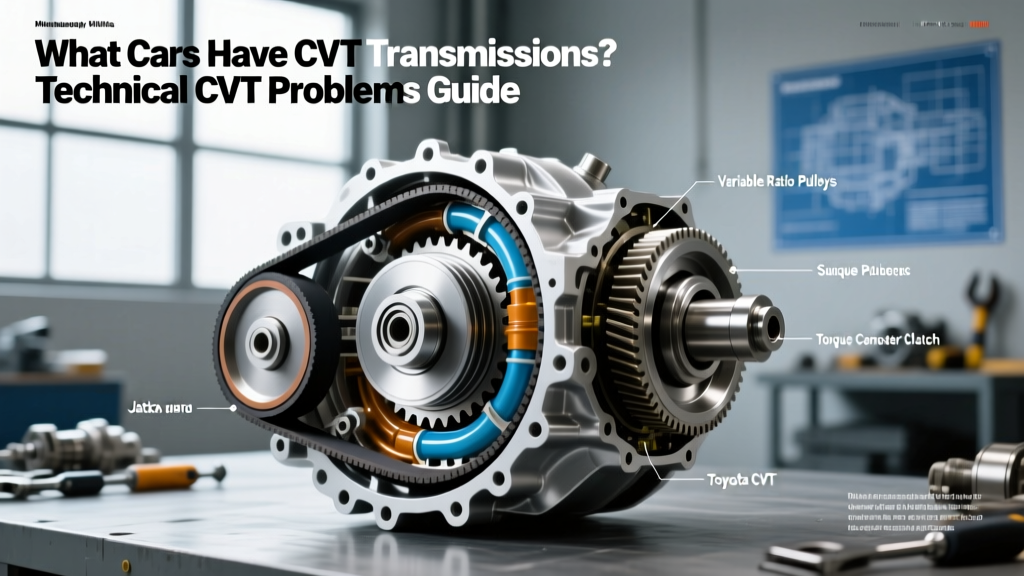
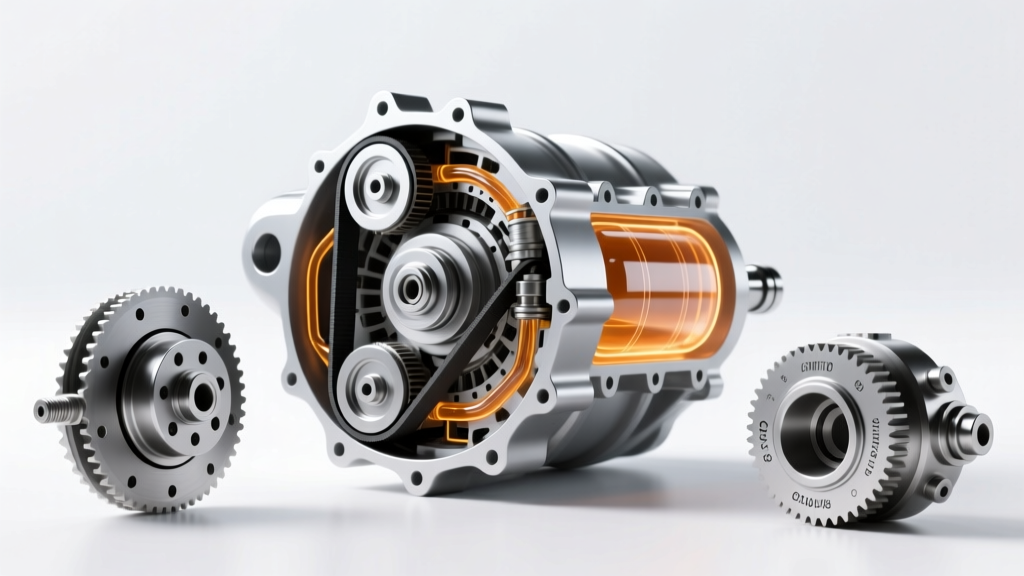
From a regulatory and operational standpoint, a CVT is an automatic transmission. It utilizes a torque converter (or in Toyota's case, a physical launch gear and multi-plate clutch) to connect the engine to the driveline, and it relies on a Transmission Control Module (TCM) to manage ratio changes without driver intervention. As Car and Driver explains, instead of fixed gear sets, a CVT uses a pair of variable-width pulleys connected by a steel push-belt or chain. This allows for an infinite number of ratios, keeping the engine in its optimal power band.
However, because power is transferred via friction between the pulleys and the belt rather than the mechanical locking of gear teeth, CVTs are highly sensitive to fluid degradation and thermal stress. This is why treating a CVT like a traditional automatic when it comes to maintenance is a guaranteed path to catastrophic failure.
CVT vs. Traditional Automatic: Maintenance Showdown
Buyers often assume that because a CVT has fewer moving parts than an 8-speed or 10-speed traditional automatic, it requires less maintenance. The opposite is true. Traditional automatics use dedicated planetary gearsets and clutch packs that are relatively tolerant of minor fluid degradation. CVTs rely entirely on the shear stability and friction modifiers of their specialized fluid to prevent the steel belt from slipping against the pulleys.
| Feature | Traditional Automatic (e.g., ZF 8HP) | CVT (e.g., Jatco JF016E / CVT8) |
|---|---|---|
| Fluid Type | Low-viscosity ATF (e.g., ZF Lifeguard 8) | High-friction CVTF (e.g., Nissan NS-3) |
| Service Interval | 60,000 - 100,000 miles | 30,000 - 60,000 miles |
| Filter Location | Deep pan (requires pan removal) | Inline cartridge or side-pan strainer |
| Average Service Cost | $350 - $600 | $200 - $400 |
| Primary Failure Cause | Clutch pack wear, solenoid failure | Belt slip, stepper motor failure, overheating |
Critical CVT Maintenance Specs by Manufacturer
If you are buying a used or new vehicle equipped with a CVT, you must adhere to strict OEM maintenance protocols. Below are the exact specifications for the three most prevalent CVT architectures on the road today.
1. Nissan / Jatco (JF011E, JF016E, JF017E)
Nissan's Xtronic CVTs, manufactured by Jatco, are infamous for premature failures when neglected. The JF016E (CVT8) requires Nissan NS-3 fluid. Using older NS-2 or generic multi-vehicle CVT fluids will alter the friction coefficient, leading to immediate belt slip and stepper motor burnout.
- Fluid Capacity (Dry): 7.4 Liters
- Drain and Fill Volume: ~4.5 Liters
- Drain Plug Torque: 31 Nm (23 ft-lb)
- Strainer Filter Part #: 31728-1XF03 (Requires pan drop to access)
- Expert Tip: Always reset the CVT fluid deterioration data counter via an OBD2 bi-directional scanner after a fluid change. The TCM uses this counter to adjust line pressure; failing to reset it will cause harsh engagements.
2. Subaru Lineartronic (TR690, TR580)
Subaru utilizes a chain-driven CVT design (the TR690 for turbo/high-torque applications, TR580 for naturally aspirated). Chain-driven CVTs require immense clamping pressure, necessitating highly specialized fluids. According to Subaru TechInfo, using the correct fluid is non-negotiable.
- Fluid Type: Subaru CVT Fluid High Torque (for TR690) or Lineartronic CVTF-II (for TR580).
- Drain Plug Torque: 42 Nm (31 ft-lb) with a new crush washer.
- Temperature Check: Fluid level must be verified via the overflow plug while the fluid temperature is exactly between 95°F and 113°F (35°C - 45°C), monitored via the TCM PID.
3. Toyota Direct Shift-CVT (K120)
Toyota's K120 revolutionized the segment by incorporating a physical launch gear to eliminate the sluggish, rubber-band feel of traditional CVTs from a dead stop. Once moving, it transitions to the belt-and-pulley system. Because of this mechanical complexity, maintenance is slightly more involved.
- Fluid Type: Toyota Genuine CVTF-TC or CVTF-FE (Verify by VIN; they are not interchangeable).
- Service Interval: 60,000 miles for severe driving, 100,000 miles for normal.
- Inspection Point: The K120 requires inspection of the launch gear clutch pack wear index via Toyota's Techstream software during every major service.
Buyer’s Guide: Evaluating CVT Maintenance Costs Before Purchase
When evaluating a vehicle with a CVT, factor the cost of a severe duty maintenance schedule into your total cost of ownership. While a traditional automatic might survive 150,000 miles on lifetime fluid (a myth we strongly advise against), a CVT will likely suffer catastrophic pulley scoring by 90,000 miles if the fluid is never changed.
The 30,000-Mile Rule: For buyers in stop-and-go traffic, mountainous regions, or hot climates, we recommend a CVT drain-and-fill every 30,000 miles. A standard drain-and-fill at an independent shop using OEM fluid typically costs between $200 and $350. Over 150,000 miles, you will spend roughly $1,200 on CVT fluid maintenance.
Compare this to a CVT replacement. A remanufactured Jatco JF016E or Subaru Lineartronic TR690 installed at a dealership routinely exceeds $4,500 to $6,500 in 2026. The ROI on strict CVT maintenance is undeniable.
Red Flags for Used CVT Buyers
If you are buying a used vehicle equipped with a CVT, perform these specific checks to avoid inheriting a neglected transmission:
- The Fluid Smell Test: Pull the dipstick or have a mechanic crack the drain plug. CVT fluid should be translucent green, amber, or red. If it smells burnt or contains metallic glitter (from the thrust bearings or belt), walk away. The TCM cannot compensate for physical scoring.
- Cold Start Whine: Start the car cold and put it in reverse. A high-pitched whine that fades as the car warms up indicates a failing CVT oil pump or clogged suction screen.
- Highway RPM Fluctuations: During a steady-state highway cruise (e.g., 70 MPH), watch the tachometer. If the RPMs surge and drop without a change in throttle input or road grade, the belt is slipping due to degraded fluid or worn pulley cones.
Final Verdict: Is a CVT Right for Your Garage?
So, is CVT transmission automatic? Yes, but it is a highly specialized subset of automatics that demands respect and rigorous maintenance. CVTs offer unparalleled fuel efficiency and smooth city driving dynamics, making them ideal for commuters. However, they are not suited for heavy towing or aggressive track driving.
As a buyer, if you are willing to commit to 30,000-mile drain-and-fill intervals using strictly OEM fluids (NS-3, CVTF-II, etc.), a modern CVT can easily surpass 200,000 miles. If you prefer a fill it and forget it maintenance philosophy, you are better off seeking out a vehicle with a traditional torque-converter automatic or a dual-clutch transmission. For more insights on drivetrain longevity and safety recalls, consult the NHTSA databases and your specific owner's manual before finalizing your next purchase.