The True Cost of CV Axle and Joint Failures in 2026
Constant Velocity (CV) axles are the critical link between your transmission or differential and the drive wheels. Whether you are maintaining a front-wheel-drive commuter car or servicing an off-road UTV, CV joint failures are among the most common drivetrain issues encountered in the garage. As of 2026, supply chain stabilization has brought aftermarket pricing down by roughly 8-12% compared to the inflation peaks of 2023, but OEM dealership prices continue to climb.
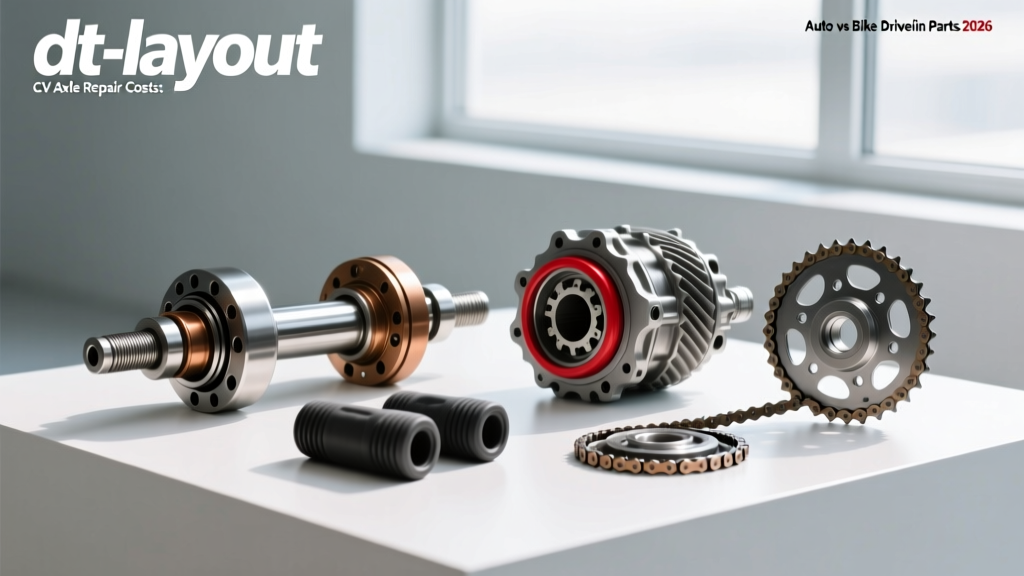
Interestingly, when enthusiasts and off-road mechanics search for bike drivetrain parts, they are frequently referring to the heavy-duty CV half-shafts found on powersports vehicles like UTVs, ATVs, and quad bikes. These machines endure extreme articulation and torque loads, making their CV axles a frequent failure point. In this comprehensive cost analysis, we will break down the exact pricing, part numbers, and labor costs for both standard automotive CV axles and their powersports counterparts.
Anatomy of a Failure: Why CV Joints Break
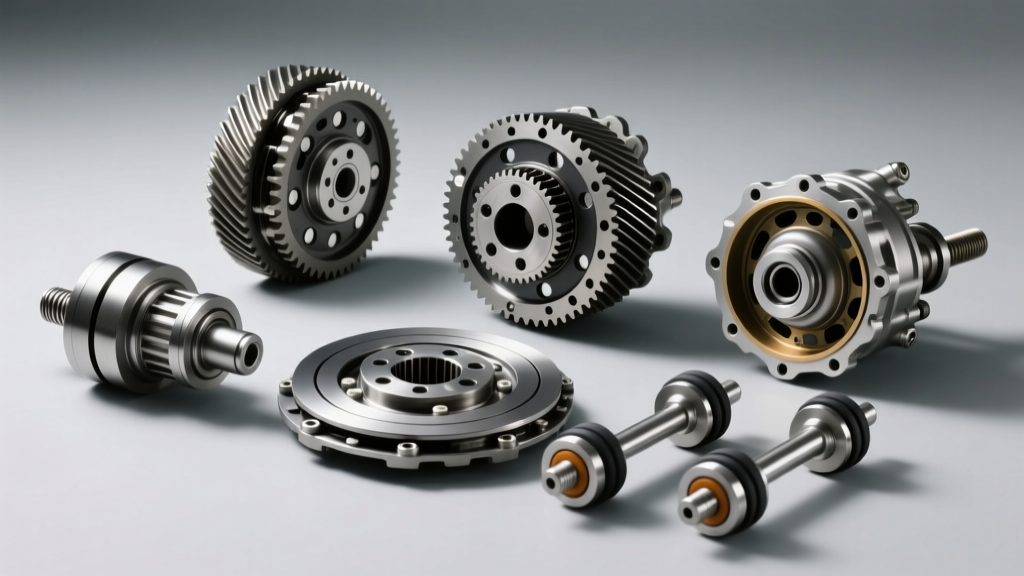
Before throwing money at a replacement, it is vital to understand the failure modes of CV axles. A standard half-shaft consists of an inner joint (typically a tripod or ball-type design for plunge and lateral movement) and an outer joint (a Rzeppa or Birfield design for high-angle steering articulation).
Common Failure Points
- Boot Degradation: The most common point of failure. Modern boots are made from TPE (Thermoplastic Elastomer) or Neoprene. TPE offers superior puncture resistance but can become brittle in sub-zero temperatures. Once torn, moisture and silica enter the joint, destroying the molybdenum grease.
- Outer Joint Pitting & Cage Fracture: Characterized by a rhythmic 'clicking' noise during tight, low-speed turns. This occurs when the ball bearings wear grooves into the raceway or the cage windows fracture under high-torque steering loads.
- Inner Tripod Wear: Manifests as a severe shudder or vibration under hard acceleration. The tripod roller bearings develop flat spots, causing binding during suspension compression and rebound.
- Torsional Bar Fatigue: The central shaft connecting the inner and outer joints can twist or snap under extreme torque spikes, particularly in modified off-road applications.
Cost Breakdown: Automotive vs. Powersports (UTV/ATV)
To provide a realistic 2026 perspective, we have compared a high-volume automotive application (10th Generation Honda Civic) with a high-stress powersports application (Polaris RZR XP 1000), which represents the pinnacle of the 'bike drivetrain parts' aftermarket sector.
| Vehicle Application | Component | OEM Part Number | OEM Price (2026) | Aftermarket Brand | Aftermarket Price |
|---|---|---|---|---|---|
| Honda Civic (FWD Front) | Right CV Axle Assembly | 44300-TBA-A51 | $380 - $450 | GSP NCV36005 | $85 - $110 |
| Honda Civic (FWD Front) | Left CV Axle Assembly | 44300-TBC-A51 | $380 - $450 | Moog CV Axle | $120 - $145 |
| Polaris RZR XP 1000 (Front) | Front CV Half-Shaft | 1332453 | $260 - $295 | TrakMotive POL-8004 | $110 - $135 |
| Polaris RZR XP 1000 (Rear) | Rear CV Half-Shaft | 1332454 | $260 - $295 | All Balls 8-501 | $95 - $120 |
Expert Insight: While sourcing RockAuto or similar catalogues for automotive parts yields massive savings, powersports buyers should be wary of ultra-cheap, unbranded UTV axles on Amazon. The torsional stress of a 110-horsepower UTV jumping a dune will instantly snap a low-carbon steel aftermarket shaft. Stick to proven brands like TrakMotive or All Balls Racing.
Labor Costs and Dealership vs. Independent Shop Rates
The physical replacement of a CV axle is generally a straightforward mechanical procedure, but labor rates in 2026 dictate the final bill. The national average for independent shop labor has climbed to $130–$175 per hour, while dealership rates frequently exceed $195 per hour.
Standard Book Times
- FWD Front Axle (Automotive): 1.0 to 1.4 hours. (Requires removing the wheel, axle nut, lower ball joint pinch bolt, and prying the inner tripod joint from the transaxle).
- AWD Rear Axle (Automotive): 1.2 to 1.8 hours. (Often requires dropping the rear subframe or removing the rear hub bearing assembly to extract the stub shaft).
- UTV/ATV Front Axle (Powersports): 0.8 to 1.2 hours. (Generally easier to access, but seized splines in the front differential can add significant diagnostic and extraction time).
Expect to pay between $250 and $400 in total labor and aftermarket parts at an independent shop for a standard automotive CV axle replacement. Dealerships will easily quote $700 to $950 per side using OEM components.
DIY Replacement: Torque Specs and Critical Procedures
For the DIY mechanic, replacing CV axles is highly achievable with standard hand tools, an impact wrench, and a high-quality torque wrench. However, improper torque on the axle nut is the leading cause of premature wheel bearing failure and CV joint wear.
Essential Torque Specifications
Always consult the specific factory service manual for your vehicle, but here are the baseline specifications for our benchmark vehicles:
- Honda Civic (10th Gen) Axle Nut: 134 lb-ft (182 Nm). Note: Honda uses a staked axle nut. Never reuse a staked nut; always install a new OEM or high-grade aftermarket flange nut and stake it into the spindle groove using a blunt punch.
- Polaris RZR XP 1000 Axle Nut: 80 lb-ft (108 Nm) + align castled nut with cotter pin hole. Note: Do not loosen the nut to align the cotter pin; only tighten further to the next slot.
- Lower Ball Joint Pinch Bolt (Honda): 47 lb-ft (64 Nm). Ensure the slit in the knuckle is clean and the bolt passes through the groove in the ball joint stud freely before torquing.
The Rebuilding Debate: Grease, Boots, and Labor
Can you just replace the CV boot and repack the joint? In 2026, the industry consensus heavily favors complete half-shaft replacement over rebuilding, primarily due to labor costs and the difficulty of sourcing high-quality individual joint components.
If you catch a torn boot early (within 500 miles) and the joint shows zero pitting or clicking, a rebuild is viable. You must thoroughly flush the joint with mineral spirits, inspect the cage and ball bearings for spalling, and repack it with the correct lubricant.
The Importance of Moly Grease
Standard multi-purpose chassis grease will destroy a CV joint. CV joints require a specialized NLGI Grade 1 or 2 Molybdenum Disulfide (Moly) grease. The moly content (typically 3% to 5%) provides a solid-film lubricant that prevents metal-on-metal welding under the extreme sliding friction and high G-forces experienced inside the Rzeppa joint cage. A standard 90-gram packet of CV grease is usually included with premium aftermarket axles and boot kits.
Sourcing Strategy: Where to Buy in 2026
When shopping for automotive or powersports bike drivetrain parts, your sourcing strategy should depend on the vehicle's intended use:
- Daily Driver Commuter Cars: Premium aftermarket brands (Moog, GSP, Surtrack) sourced via online catalogs offer the best ROI. They typically feature induction-hardened shafts and neoprene boots that rival OEM longevity at 25% of the dealership cost.
- High-Performance / Track Cars: Stick to OEM or specialized aftermarket builders (like The Driveshaft Shop). Standard aftermarket axles often use smaller cage windows and lower-grade steel that cannot handle the shock load of drag radials or slicks.
- Off-Road UTVs / ATVs: If you ride aggressively, bypass standard replacements and invest in heavy-duty aftermarket axles featuring chromoly (4340) steel shafts and high-articulation CV cages designed for lifted suspensions and oversized tires.
Final Verdict on Drivetrain Maintenance
Whether you are wrenching on a front-wheel-drive hatchback or tearing through the desert in a side-by-side, ignoring a torn CV boot will rapidly escalate a $15 rubber part into a $400 half-shaft replacement. By understanding the cost disparities between OEM and aftermarket suppliers, adhering to strict torque specifications, and utilizing the correct Moly-based lubricants, you can ensure your drivetrain survives the torque load for years to come. For further technical diagrams and OEM cross-references, always consult your manufacturer's official parts portal, such as Honda Parts Now or your local powersports dealer network.