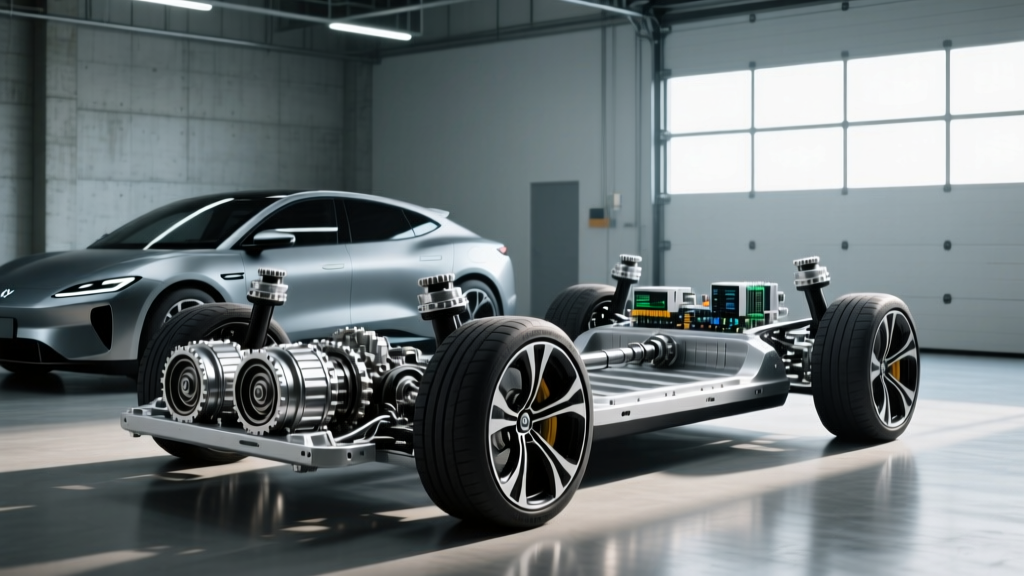
As we navigate the 2026 automotive landscape, the Chevrolet Equinox remains one of the most popular compact crossovers on the road. However, as these vehicles accumulate mileage, owners and technicians frequently encounter a specific, highly disruptive issue: high-speed NVH (Noise, Vibration, and Harshness). Diagnosing a Chevrolet Equinox drivetrain vibration requires a methodical approach, separating tire imbalances from propeller shaft faults, and understanding the distinct differences between the older Theta-platform (2010-2017) and the newer D2XX/NGC platforms (2018-2026).
This comprehensive buyer’s guide and diagnostic manual will walk you through frequency analysis, component comparison, and exact installation specifications to resolve Equinox driveline shudders permanently.
Platform Architecture: FWD Half-Shafts vs. AWD Propeller Shafts
Before ordering parts, it is critical to identify your specific drivetrain layout. The term "driveshaft" is often misused by consumers. On Front-Wheel Drive (FWD) Equinox models, there is no longitudinal driveshaft. Power is sent to the front wheels via CV half-shafts. If a FWD Equinox vibrates specifically under acceleration (typically between 30-50 mph), the culprit is almost always a worn inner CV joint (tripod bearing) on the half-shaft, causing a lateral 3-5 Hz shake.
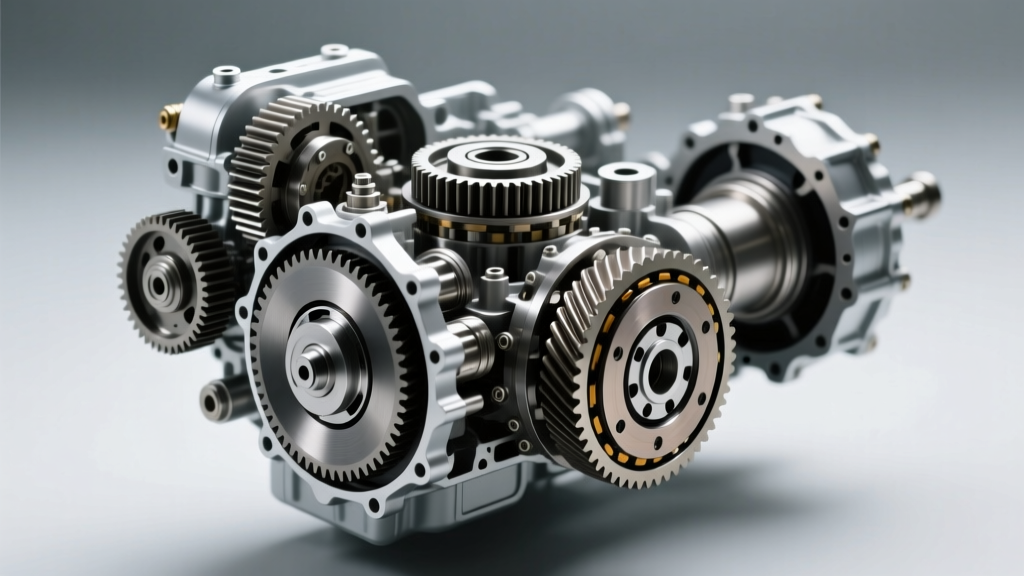
For All-Wheel Drive (AWD) Equinox models, the drivetrain utilizes a Power Transfer Unit (PTU) bolted to the transaxle. The PTU routes torque rearward through a multi-piece aluminum or steel propeller shaft (the true driveshaft), supported by a center bearing, and terminating at the rear differential via a pinion flange or flex coupler. Vibrations in the AWD system typically manifest as a high-frequency hum or shudder through the floorpan and seats at highway speeds (55-75 mph).
Scientific NVH Diagnosis: Calculating Driveline Frequencies
Professional drivetrain technicians do not guess; they measure. Using an Electronic Vibration Analyzer (EVA) or a smartphone-based NVH accelerometer app, you can pinpoint the exact failing component by calculating rotational frequencies. Let us break down the math for a standard 2018-2024 AWD Equinox equipped with 225/60R18 tires and a 3.36 rear axle ratio.
The NVH Frequency Formula
- Tire Diameter: 28.6 inches
- Revolutions Per Mile: ~705
- Wheel RPM at 60 MPH: 705 RPM
- Tire Frequency (1st Order): 705 / 60 = 11.75 Hz
If your vibration analyzer registers a dominant peak at 11-15 Hz, the issue is tire/wheel related (balance, out-of-round, or radial runout). The drivetrain is not at fault.
Now, let us calculate the propeller shaft speed. The driveshaft spins at the wheel RPM multiplied by the final drive ratio (3.36).
- Driveshaft RPM at 60 MPH: 705 * 3.36 = 2,368 RPM
- Driveshaft 1st Order Frequency: 2,368 / 60 = 39.4 Hz
- Driveshaft 2nd Order Frequency: 39.4 * 2 = 78.8 Hz
Interpreting the Data
If the EVA tool registers a dominant vibration at ~39 Hz, you have a 1st-order driveshaft vibration. This indicates a physical imbalance, a bent shaft tube, or missing balance weights. If the dominant peak is at ~79 Hz (2nd-order), the issue is almost certainly a failing U-joint, a worn center support bearing allowing orbital whirling, or an incorrect pinion/PTU operating angle caused by sagging rear subframe bushings.
Buyer’s Guide: OEM vs. Aftermarket Driveshaft Replacements
When diagnosis confirms a failed propeller shaft or non-serviceable center bearing, replacement is required. The AWD Equinox driveshaft is generally sold as a complete balanced assembly. Below is a 2026 market comparison for replacement options.
| Option | Typical Part Number | Est. Price (2026) | Warranty | Pros & Cons |
|---|---|---|---|---|
| GM Genuine OEM | 84286474 (18-21 AWD) | $850 - $1,150 | 2-Year / Unlimited Miles | Pros: Perfect fitment, OE balance. Cons: High cost, dealer-only availability. |
| Dorman Aftermarket | 936-061 / 936-Series | $450 - $650 | Limited Lifetime | Pros: Readily available, cost-effective. Cons: U-joint quality can vary; may require re-balancing. |
| Local Driveline Rebuild | Custom (Spicer/Dana parts) | $350 - $500 | 1-Year Shop Warranty | Pros: Heavy-duty U-joints, local support. Cons: Requires dropping the shaft and waiting 2-4 days. |
Expert Tip: If opting for an aftermarket unit from suppliers like Dorman Products, inspect the included U-joints immediately. Many high-end driveline shops prefer to press out the import U-joints and install premium Dana Spicer greasable or heavy-duty synthetic-lubricated joints before installation to ensure longevity beyond the 100,000-mile mark.
Step-by-Step Installation & Critical Torque Specifications
Improper installation of a propeller shaft will induce immediate NVH complaints, regardless of the part's quality. The operating angles at the PTU and the rear differential must be kept within 1 to 3 degrees of each other to cancel out 2nd-order velocity fluctuations inherent in Cardan U-joints.
Preparation and Removal
- Secure the vehicle on a symmetric two-post lift. Ensure the rear suspension is loaded (or use an alignment rack) when taking final measurements or tightening flex couplers, as tightening bushings or couplers in the "drooped" position causes pre-load binding and severe vibration.
- Mark the relationship of the driveshaft to the rear differential pinion flange. While modern replacement shafts are balanced as a unit, maintaining phase alignment is a best practice if separating a two-piece shaft.
- Support the shaft with a strap before unbolting the center support bearing to prevent it from dropping and damaging the PTU output seal.
Critical Torque Specifications (GM AWD Platforms)
Adhering to exact torque specs is non-negotiable to prevent fastener fatigue and harmonic resonance. Always use a calibrated torque wrench.
- PTU Flex Coupler / Flex Disc Bolts (M10x1.5): 48 lb-ft (65 Nm). Note: Inspect the rubber flex disc for micro-cracking. If replacing the shaft, replace the flex disc if it shows any sign of dry rot.
- Center Support Bearing Bolts: 37 lb-ft (50 Nm). Ensure the mounting bracket is perfectly aligned laterally; do not force the shaft side-to-side to thread the bolts, as this pre-loads the bearing and causes a 40 Hz whine.
- Rear Differential Pinion Flange Nut: 160 lb-ft (217 Nm). Warning: This is a prevailing-torque (crush) nut. If you are swapping a flange or performing a pinion seal leak repair, GM mandates the use of a brand-new nut. Reusing the old nut will result in it backing off under load, destroying the pinion bearings.
Addressing the Root Cause: Subframe and PTU Mounts
A common mistake in Chevrolet Equinox drivetrain repair is replacing a perfectly good driveshaft because the actual root cause was ignored. If the rear subframe bushings are collapsed, or if the PTU (Power Transfer Unit) engine/trans mounts are torn, the operating angles of the driveline will shift drastically under load.
Before condemning the driveshaft, use an angle finder (inclinometer) on the PTU output flange and the rear differential pinion flange. With the vehicle resting on its wheels at ride height, the angles should be within 1.5 degrees of each other, pointing in opposite directions (e.g., PTU pointing down 2 degrees, pinion pointing up 2 degrees). If the variance exceeds 3 degrees, no amount of driveshaft balancing will cure the vibration. You must address the degraded chassis and powertrain mounts first.
Final Verification and Road Testing
Post-installation, perform a coast-down test. Accelerate to 70 mph, shift to neutral, and let the vehicle coast. If the vibration disappears entirely in neutral, the issue was likely engine/transmission related or a load-bearing U-joint. If the vibration persists identically in neutral, you are dealing with a rotational mass issue (tires, wheels, or the physical balance of the new driveshaft assembly).
By combining precise NVH frequency math, high-quality replacement components, and strict adherence to GM torque specifications, you can permanently eliminate Chevrolet Equinox drivetrain vibrations and restore the crossover to factory-smooth operation.