The Economics of Axle Maintenance: Front vs. Rear Differential
When budgeting for drivetrain maintenance, most vehicle owners lump all axle services together, assuming the cost to service the front differential is identical to the rear differential. In 2026, with dealership and independent shop labor rates averaging between $140 and $185 per hour, this assumption can lead to severe sticker shock. The reality of modern 4WD and AWD engineering is that a front differential fluid and service procedure is almost universally more labor-intensive, complex, and expensive than its rear counterpart.
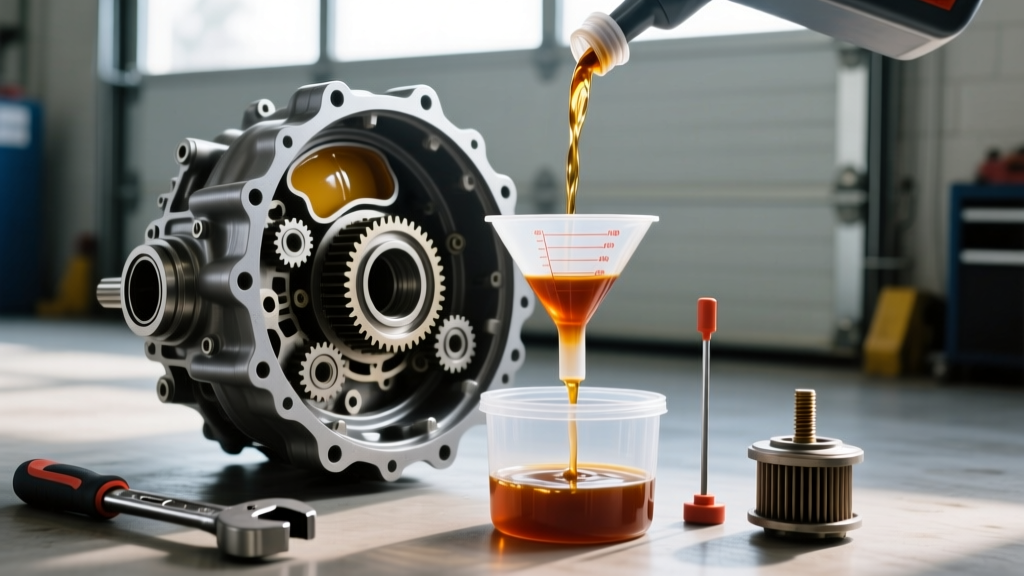
While the rear differential on a solid-axle truck or SUV is typically a highly accessible, standalone pumpkin bolted to the rear axle tubes, the front differential is a tightly packaged component. It must coexist with steering racks, CV axles, sway bars, and extensive underbody skid plating. This structural complexity directly inflates the book time and, consequently, the final invoice. Below, we break down the exact cost variables, material requirements, and mechanical nuances that dictate what you will actually pay for front differential service this year.
Labor Discrepancy: Why the Front Costs More
The primary driver of cost in any automotive service is billed labor time. According to industry standard estimators like RepairPal, swapping gear oil in a rear differential typically carries a book time of 0.4 to 0.6 hours. The front differential, however, frequently demands 0.8 to 1.4 hours of labor. Why the massive discrepancy?
- Skid Plate Removal: Most modern off-road and AWD vehicles require the removal of 4 to 8 heavy-duty bolts just to access the front diff drain and fill plugs. These bolts are often exposed to road salt, water, and extreme heat, leading to corrosion and seized hardware that adds billable minutes to the clock.
- Clearance Issues: Front differential fill plugs are notoriously difficult to reach. Mechanics often have to maneuver fluid pumps around steering tie rods, control arms, and CV axle boots. In some Independent Front Suspension (IFS) setups, the fill plug is angled upward, requiring specialized flexible hoses or vacuum extraction tools.
- Integrated Housings: On certain crossovers and SUVs, the front differential is bolted directly to the transmission bell housing or engine block, requiring the removal of secondary heat shields or crossmembers just to verify the fluid level.
2026 Average Shop Cost Comparison
| Service Component | Avg. Labor Time | Est. Labor Cost (@ $160/hr) | Est. Fluid & Parts Cost | Total Avg. Cost |
|---|---|---|---|---|
| Front Differential Service | 0.9 - 1.2 Hours | $144 - $192 | $45 - $85 | $189 - $277 |
| Rear Differential Service | 0.4 - 0.6 Hours | $64 - $96 | $40 - $75 | $104 - $171 |
Material Costs: Fluid Specifications and Hardware
The gear oil itself represents a significant portion of the non-labor cost. Most modern front differentials require API GL-5 certified synthetic gear oil. The viscosity usually falls into two categories: 75W-90 for standard duty and light trucks, and 75W-140 for heavy-duty towing, off-road use, or high-horsepower applications.
Premium synthetics from brands like AMSOIL, Red Line, and Mobil 1 have seen price adjustments in 2026 due to base oil and additive package supply chains. Expect to pay between $22 and $32 per quart for top-tier synthetic gear oil. Because front differentials usually hold between 1.2 and 1.8 liters, you will need to purchase two or three quarts, pushing the fluid cost to $50–$80.
The Friction Modifier Variable
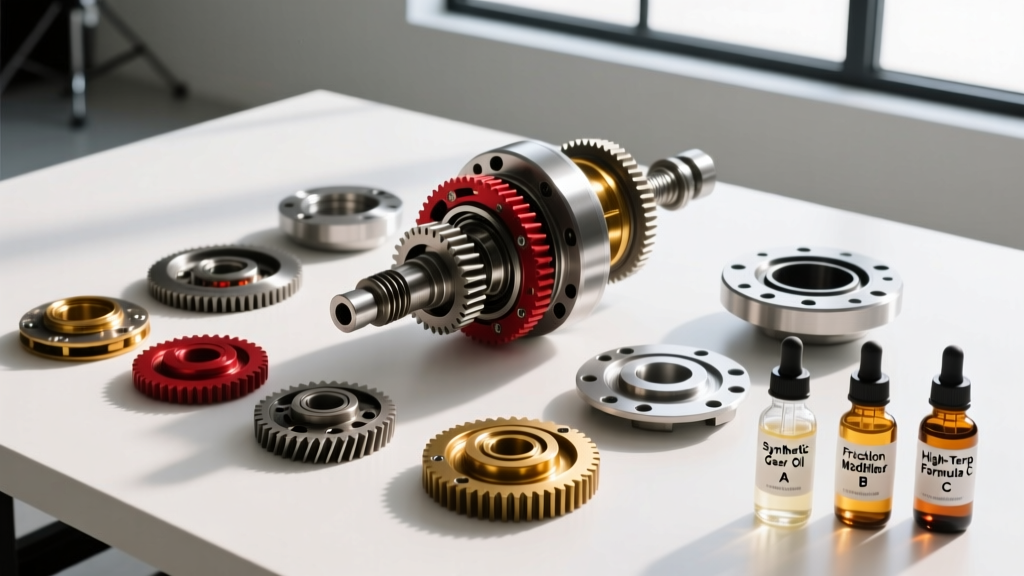
If your front axle is equipped with a Limited Slip Differential (LSD)—such as a Detroit Truetrac, Eaton Posi, or factory clutch-type LSD—you must add a friction modifier. Without it, the clutch packs will chatter during tight turns, causing premature wear and an unnerving groaning noise. A 4 oz bottle of OEM or high-quality aftermarket friction modifier (like Motorcraft XL-3 or Red Line Limited Slip Friction Modifier) adds $8 to $15 to the total material cost.
Expert Insight: Never use a 'universal' gear oil that claims to have friction modifiers already built-in if you have a highly sensitive clutch-type LSD. The factory service manuals almost universally dictate adding a specific dose of pure modifier to baseline GL-5 fluid to achieve the exact coefficient of friction required for your specific clutch pack.
Real-World Vehicle Breakdown: Front Diff Service Data
To understand the true scope of front differential fluid and service, let us examine two of the most popular platforms on the road and the specific technical data required to service them correctly.
Toyota Tacoma (8-Inch Front Clamshell)
The 3rd and 4th generation Toyota Tacoma utilizes a reverse-rotation 8-inch front clamshell differential. Unlike older solid axles, this IFS unit is sealed with O-rings and relies on specific crush washers to prevent leaks.
- Fluid Capacity: 1.6 Liters (1.7 Quarts)
- Specification: SAE 75W-90 API GL-5
- Drain Plug Torque: 29 lb-ft (39 Nm)
- Fill Plug Torque: 29 lb-ft (39 Nm)
- Crucial Hardware: You must replace the aluminum crush washers. Toyota Part Number 90430-18008 is required for both the drain and fill plugs. Reusing old washers is the leading cause of front diff weeping on Tacomas. These cost roughly $2.50 each at dealerships or RockAuto.
Ford F-150 (8.8-Inch and 9.75-Inch IFS Front)
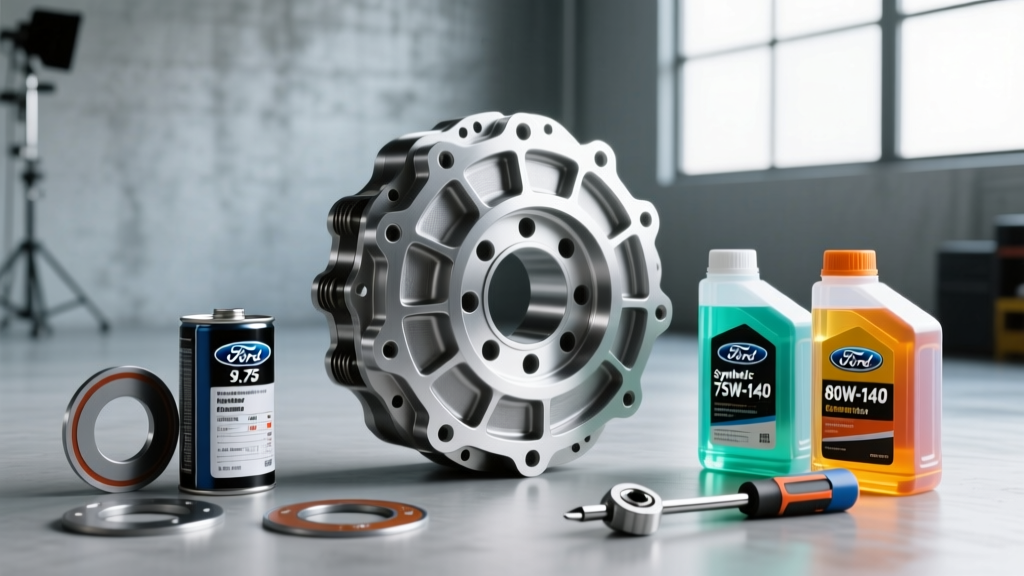
Modern Ford F-150s feature an Independent Front Suspension setup that complicates the service interval. Many front IFS differentials on these trucks do not feature a traditional bottom drain plug. Instead, they rely on a fill plug located on the side or top of the housing.
- Fluid Capacity: ~1.5 to 1.8 Liters (varies by exact axle code)
- Specification: SAE 75W-140 Synthetic API GL-5
- Service Method: Because there is often no drain plug, shops must use a pneumatic or manual fluid extraction pump inserted through the fill hole to suck out the old, contaminated oil. This adds time and requires specialized shop equipment.
- Friction Modifier: Requires Motorcraft XL-3 (or equivalent) if equipped with an electronic locking differential or LSD setup.
Hidden Costs: Stripped Plugs, RTV, and Breather Tubes
When analyzing the cost of front differential service, you must account for edge cases and potential failures that can turn a $200 routine maintenance item into a $600 repair.
Stripped Aluminum Fill Plugs
Many modern front differentials use steel bolts threaded into soft aluminum housings. If a previous technician over-torqued the fill plug (exceeding the standard 25-35 lb-ft spec), the threads will strip. Repairing this requires drilling out the hole and installing a Time-Sert or Helicoil thread repair kit. This machine shop-level repair adds $75 to $150 in labor and parts to your bill.
Gaskets vs. RTV Silicone
If your front differential requires a cover removal rather than utilizing a drain plug (common on older Dana 30/44 solid front axles), you must factor in the sealing method. A pre-cut rubber or cork gasket costs $8 to $15. However, many modern applications require High-Temp RTV Silicone (like Permatex Ultra Black or The Right Stuff). A tube of premium RTV costs $12 to $25 and requires a 12-to-24-hour cure time before the differential can be filled and driven, potentially resulting in overnight shop storage fees.
The Neglected Breather Tube
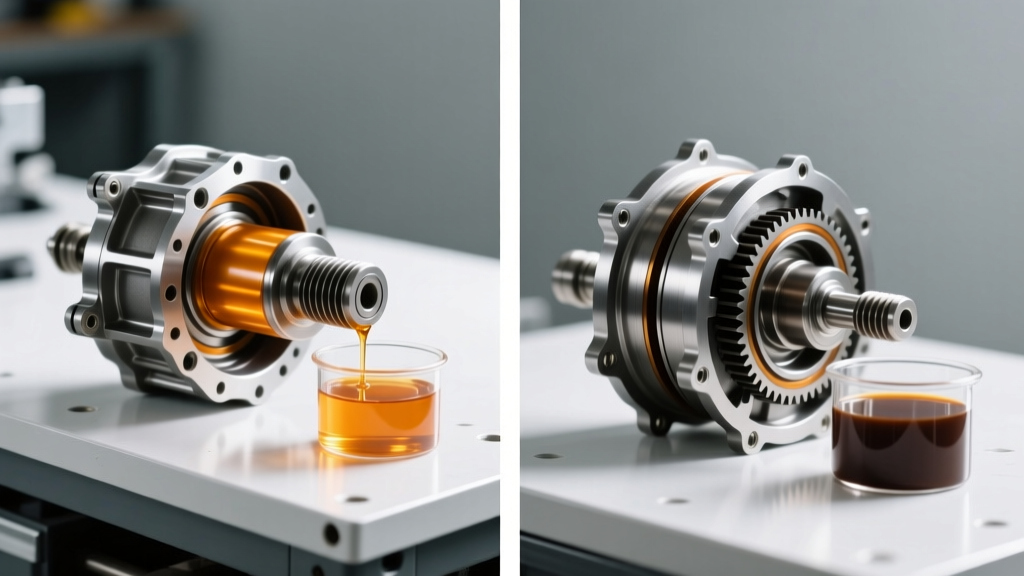
Axle differentials heat up during operation and cool down when parked. This thermal cycling creates pressure differentials. A clogged or submerged breather tube will cause the differential to suck in water from puddles or snow, turning your expensive synthetic gear oil into a milky, destructive emulsion. A comprehensive front diff service should include inspecting and clearing the breather valve—a $0 part, but shops may charge 0.2 hours ($30+) to trace the tube up into the engine bay.
DIY vs. Professional Service: The Financial Verdict
Given the labor premium associated with front differential access, the DIY route offers massive financial incentives. A professional front differential service will cost between $189 and $277 in 2026. By contrast, a DIY service requires:
- 2-3 Quarts of 75W-90 or 75W-140 Synthetic ($50 - $75)
- Friction Modifier if applicable ($10)
- Crush Washers or RTV ($5 - $15)
- A manual fluid transfer pump ($12 - $20)
Total DIY cost hovers around $77 to $120. Furthermore, performing the service yourself allows you to inspect the drain plug for metallic glitter—a critical early warning sign of ring and pinion gear failure that a quick-lube technician might miss or ignore. For authoritative data on synthetic gear oil drain intervals and extreme pressure (EP) additive longevity, refer to the technical whitepapers provided by AMSOIL.
Ultimately, while the rear differential remains a straightforward, low-cost maintenance item, the front differential demands a higher budget, specialized hardware, and a meticulous approach to torque specifications. Understanding these costs upfront ensures you can properly maintain your 4WD or AWD system without falling victim to unnecessary dealership upcharges or catastrophic axle failures.