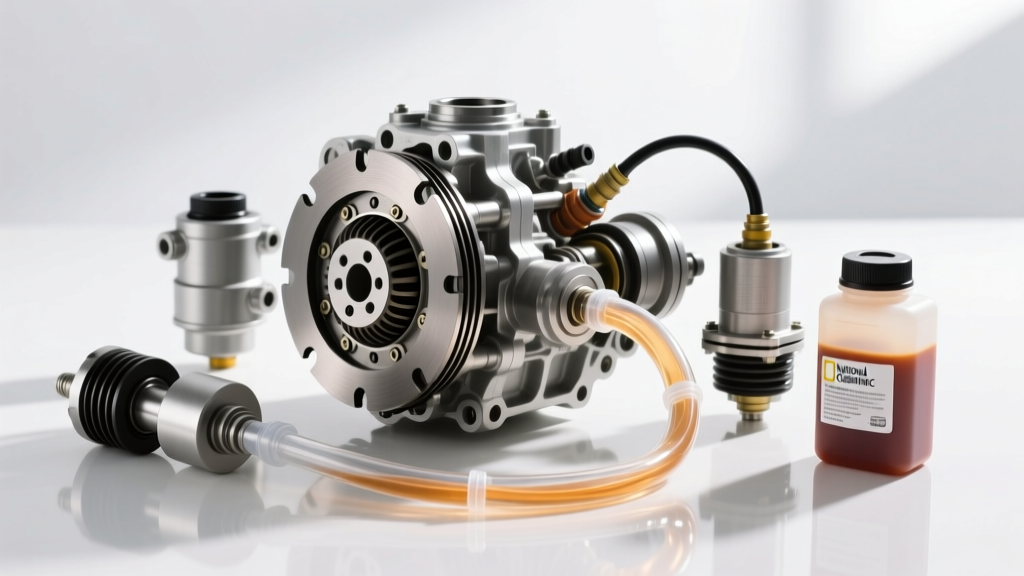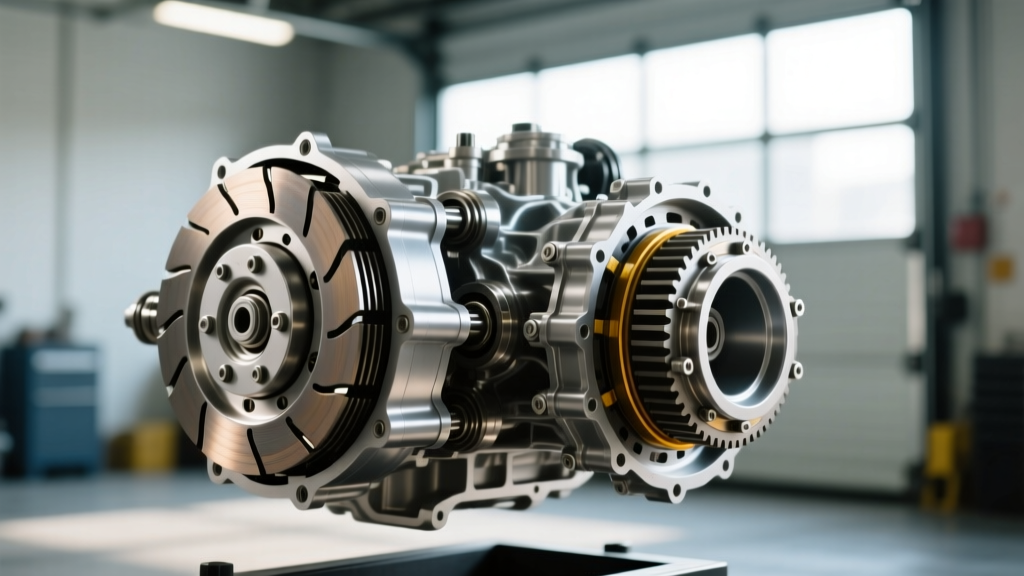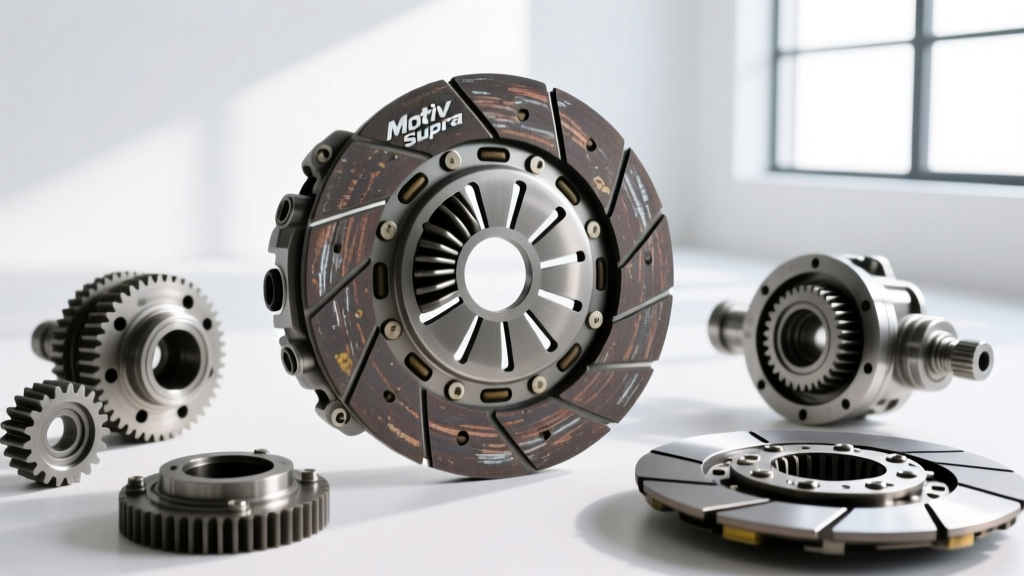
While a Motiv Supra Clutch bowling ball utilizes a specialized reactive resin coverstock engineered to absorb lane oil and create aggressive friction on a polyurethane surface, an automotive drivetrain relies on equally precise friction dynamics to transfer hundreds of pound-feet of torque. The physics of surface mating, thermal degradation, and the coefficient of friction (μ) are universal. However, when your vehicle’s friction materials begin to fail, the symptoms manifest not as a hook in the gutter, but as catastrophic drivetrain slip, chatter, and eventual mechanical failure.
In this 2026 technical deep-dive, we bridge the gap between high-friction material science and real-world automotive diagnostics. We will dissect manual clutch wear indicators, automatic torque converter lock-up clutch (TCC) degradation, and the exact measurement specifications required to determine if your friction components have reached the end of their service life.
The Physics of Friction: Reactive Resin vs. Sintered Iron
To understand clutch wear, we must first look at the friction coefficient (μ). A high-performance bowling ball coverstock operates in a fluid-dynamic environment where friction increases as the ball encounters dry boards. Conversely, an automotive clutch disc operates in a dry or semi-dry environment where thermal expansion and material glazing actively reduce friction over time.
According to engineering standards published by SAE International, organic clutch facings typically maintain a μ of 0.25 to 0.35 up to 250°C (482°F). Beyond this threshold, the phenolic resins binding the organic material begin to outgas and glaze. Sintered iron and ceramic materials, however, maintain a μ of 0.40 to 0.55 at temperatures exceeding 450°C (842°F), but they require aggressive flywheel mating surfaces and exhibit severe engagement chatter when cold.
Manual Transmission: Quantifying Clutch Disc Wear
Diagnosing manual clutch wear requires moving beyond the subjective "slipping under heavy throttle" test. True lifespan indicators are rooted in dimensional metrology and hydraulic free-play measurements.
1. Rivet Clearance and Facing Thickness
A standard OEM organic clutch disc (such as those found in LuK RepSets for the Mazda Miata or Honda Civic Si) features a new facing thickness of approximately 8.0mm. The wear limit is dictated by the rivet heads. Once the friction material wears down to within 0.030 inches (0.75mm) of the rivet head, the disc is condemned. Continuing to drive risks scoring the flywheel and pressure plate, turning a $300 component replacement into a $1,200 drivetrain overhaul.
2. Marcel Spring and Torsional Damper Degradation
Often overlooked is the marcel spring (the wavy cushion plate between the friction facings). Its purpose is to provide progressive engagement. When subjected to repeated high-heat slip events, the marcel spring loses its temper and collapses flat. The result? An on/off, light-switch engagement that causes severe driveline shock. Furthermore, the torsional damper springs located in the hub can suffer from fatigue cracking. If you hear a distinct metallic "clack" upon engine shutdown or aggressive tip-in, the hub dampers have failed, regardless of remaining facing thickness.
3. Clutch Pedal Free-Play Diagnostics
Hydraulic self-adjusting systems (common in modern Ford and GM manual applications) mask traditional wear signs by continuously taking up slack. However, for cable-driven or manually adjusted pushrod systems, measuring free-play is critical.
- Target Free-Play: 15mm to 25mm (0.6" to 1.0") at the pedal pad.
- Zero Free-Play Symptom: The throwout bearing remains in constant contact with the diaphragm spring fingers. This causes premature bearing failure and slip, as the pressure plate cannot apply 100% of its clamping load.
- Excessive Free-Play Symptom: Incomplete disengagement, leading to gear clash (grinding) when shifting into 1st or Reverse, even with the pedal fully depressed.
Friction Material Lifespan and Torque Matrix
Below is a comparative matrix of common automotive friction materials, their torque capacities, and expected lifespan under mixed street/track conditions.
| Friction Material | Friction Coefficient (μ) | Max Torque Capacity | Engagement Feel | Expected Lifespan |
|---|---|---|---|---|
| Organic (OEM) | 0.25 - 0.35 | 250 - 350 lb-ft | Smooth, Progressive | 60k - 100k miles |
| Kevlar / Aramid | 0.35 - 0.45 | 400 - 550 lb-ft | Firm, Requires Break-in | 40k - 70k miles |
| Sintered Iron | 0.45 - 0.55 | 600 - 900+ lb-ft | Abrupt, High Chatter | 20k - 40k miles |
| Carbon-Ceramic | 0.40 - 0.50 | 700 - 1200 lb-ft | Aggressive, Track-Focused | 15k - 30k miles |
Automatic Transmission TCC Wear: ZF 8HP and GM 6L80
Modern automatic transmissions utilize a Torque Converter Lock-Up Clutch (TCC) to eliminate parasitic fluid slip and improve fuel economy. Unlike the dry manual clutch, the TCC operates bathed in transmission fluid. However, it is still a friction interface subject to severe wear.
Diagnosing TCC Slip and Degradation
In the ubiquitous ZF 8HP (found in BMW, Audi, and Dodge/Chrysler applications) and the GM 6L80, the TCC is a multi-plate or single-plate wet clutch lined with specialized paper/carbon friction material. As this material wears, the TCC apply piston must stroke further, increasing the volume of fluid required and altering the adaptive pressure tables in the Transmission Control Module (TCM).
Diagnostic Data Points (via OBD-II Live Data):
- Commanded Slip vs. Actual Slip: In a healthy GM 6L80, the TCM commands a micro-slip of 20 to 40 RPM to dampen engine harmonics. If live data shows actual slip consistently exceeding 80 to 100 RPM during steady-state highway cruising (55-70 MPH), the friction material is severely degraded.
- TCC Apply Pressure: Normal apply pressure at 180°F fluid temperature should be between 110 and 130 PSI. If the TCM is commanding 145+ PSI just to maintain a 20 RPM slip target, the clutch pack is worn, or the converter hub is scored.
- Fluid Contamination: A dark, burnt-smelling fluid with heavy metallic glitter on the dipstick or pan magnet indicates the TCC friction lining has delaminated. According to ZF Group service guidelines, TCC friction debris will migrate to the mechatronic unit's solenoid screens, causing catastrophic valve body failure if not addressed immediately.
Flywheel Runout and Pressure Plate Specifications
You cannot accurately assess clutch lifespan without evaluating the mating surfaces. A worn clutch disc is often a symptom of a failing dual-mass flywheel (DMF) or a warped pressure plate.
Metrology Specs for Re-machining
- Flywheel Runout (TIR): Total Indicator Runout must not exceed 0.005 inches (0.12mm). Excessive runout causes localized hot spots on the friction material, leading to uneven wear and severe engagement chatter.
- Flywheel Resurfacing Limit: Most OEM cast-iron flywheels can safely be machined down by a maximum of 0.020 inches (0.50mm). Removing more material alters the geometry of the pressure plate fingers, reducing clamping force and causing premature release bearing wear.
- Pressure Plate Bolt Torque: When installing a new assembly, M8 flywheel-to-pressure plate bolts must be torqued to 22-25 Nm (16-18 lb-ft), and M10 bolts to 45-50 Nm (33-37 lb-ft), strictly following a star-pattern sequence to prevent diaphragm spring distortion. Data sourced from Schaeffler / LuK technical bulletins confirms that improper torque sequencing is the #1 cause of premature clutch chatter on new installations.
2026 Replacement Cost Matrix and Decision Framework
When diagnostic data confirms that your friction materials have reached the end of their lifecycle, replacement costs vary wildly based on the drivetrain architecture and material choice.
| Service Type | Parts Cost (OEM/Aftermarket) | Labor Time (Book Hours) | Estimated Total (2026 Rates) |
|---|---|---|---|
| FWD Manual (Organic RepSet) | $250 - $450 | 4.5 - 6.0 hrs | $750 - $1,200 |
| RWD Manual (Twin-Disc Ceramic) | $1,200 - $2,500 | 5.0 - 7.5 hrs | $1,800 - $3,500 |
| Automatic TCC Rebuild (Converter R&R) | $350 - $600 (Reman) | 6.0 - 8.0 hrs | $1,100 - $1,800 |
| Dual-Mass Flywheel (DMF) + Clutch | $800 - $1,400 | 5.5 - 7.0 hrs | $1,500 - $2,400 |
Conclusion: Respecting the Friction Interface
Whether you are analyzing the urethane dynamics of a Motiv Supra Clutch bowling ball or measuring the sintered iron wear limits of a high-horsepower manual transmission, the laws of thermodynamics and friction remain absolute. Clutch wear is not a mystery; it is a measurable, quantifiable degradation of material science. By relying on precise pedal free-play measurements, OBD-II TCC slip data, and strict flywheel runout tolerances, you can accurately predict drivetrain failure before it leaves you stranded. Respect the friction interface, adhere to OEM torque specifications, and your drivetrain will deliver power efficiently for its entire engineered lifespan.