The True Cost of Manual Clutch Cable Maintenance in 2026
Despite the rapid industry shift toward electrification and automated gearboxes, millions of traditional manual transmission vehicles remain on the road in 2026. For these vehicles, the clutch cable is the critical mechanical link between the driver's left foot and the transmission's release fork. When this cable stretches, frays, or binds, it leads to erratic engagement, slipping, and eventual clutch failure. Understanding the diagnostic steps, adjustment procedures, and exact repair costs is essential for any manual transmission owner or independent shop.
Mechanic's Diagnostic Note: A stiff clutch pedal is rarely a failing pressure plate if the vehicle uses a cable-actuated system. In 85% of cases we see at the shop, the culprit is a binding clutch cable conduit or a dried-out firewall adjuster quadrant. Always diagnose the cable before authorizing a $1,500 transmission drop.
Diagnostic Flowchart: Identifying Clutch Cable Problems
Before replacing parts, you must isolate whether the issue stems from the cable, the pedal quadrant, or the internal clutch hydraulics/mechanics. Follow this diagnostic sequence to avoid unnecessary parts swapping:
- Symptom 1: High Pedal Engagement Point
- Cause: Cable stretching over time (mechanical hysteresis) or the self-adjusting quadrant gear skipping teeth.
- Test: Measure free play at the pedal pad. If it exceeds 25mm (1.0 inch), adjustment or replacement is required.
- Symptom 2: Stiff or Notchy Pedal Feel
- Cause: Fraying of the inner steel wire inside the Teflon-lined conduit, or corrosion at the firewall routing grommet.
- Test: Disconnect the cable from the release fork. If the pedal remains stiff, the issue is in the pedal box pivot or upper cable routing. If it moves freely, the binding is inside the conduit or at the fork.
- Symptom 3: Clutch Slipping Under Load
- Cause: Over-tightened adjustment nut preventing the release bearing from fully retracting, keeping constant pressure on the diaphragm spring.
- Test: Check for free play at the release fork. There must be a minimum of 3mm to 5mm of dead travel before the cable pulls the fork.
2026 Price Breakdown: Clutch Cable Replacement & Adjustment
The cost to replace and adjust a clutch cable is remarkably low compared to internal transmission work. However, pricing varies based on whether you choose OEM, premium aftermarket, or economy parts. Below is the current 2026 market breakdown based on data aggregated from RockAuto and national labor averages from RepairPal.
| Component / Service | Economy (Dorman/Universal) | OEM / Premium (ACDelco, Mopar, Honda) |
|---|---|---|
| Clutch Cable Assembly | $22 - $45 | $55 - $115 | Firewall Adjuster / Quadrant Gear | $15 - $30 (Billet Aluminum Upgrade) | $40 - $85 (OEM Plastic) |
| Labor Time (Book) | 0.7 - 1.2 Hours | |
| Labor Cost (@ $135/hr avg) | $94 - $162 | |
| Total Estimated Cost (Parts + Labor) | $131 - $237 | $189 - $362 |
Pro-Tip for Cost Savings: If your vehicle utilizes a self-adjusting plastic quadrant gear (common in 1990s-2010s Ford and Mazda manuals), upgrade to a billet aluminum adjustable quadrant and firewall adjuster. This $35 modification eliminates the need for future under-hood cable adjustments and prevents the plastic teeth from stripping under heavy clutch springs.
Precision Adjustment: Torque Specs and Measurements
Improper clutch cable adjustment is a leading cause of premature throw-out bearing failure and clutch slip. When performing the adjustment, precision is mandatory.
Step-by-Step Adjustment Protocol
- Locate the Adjustment Point: Depending on the vehicle, this is either a threaded barrel nut at the firewall (e.g., Honda Civic D-Series, Subaru WRX) or a ratcheting quadrant at the pedal assembly (e.g., Ford Mustang T5/T45).
- Measure Pedal Free Play: Use a steel ruler to measure the distance the pedal moves before you feel resistance from the clutch fork. The universal specification for most manual transmissions is 15mm to 25mm (0.6" - 1.0") of free play.
- Adjust the Tension: Loosen the 10mm or 12mm locknut on the firewall adjuster. Turn the barrel nut clockwise to increase tension (raise engagement) or counter-clockwise to decrease tension (lower engagement).
- Verify Fork Clearance: Crawl under the vehicle or reach behind the engine block to physically verify that the release fork has 3mm-5mm of free play. Zero free play will destroy your release bearing in under 1,000 miles.
- Torque the Locknut: Once adjusted, secure the locknut. The standard torque specification for most M8 and M10 clutch cable locknuts is 12 Nm (106 lb-in). Do not over-torque, as this will strip the soft threads on the cable housing.
Manual Cables vs. DCT: Answering the Modern Drivetrain Questions
When new enthusiasts enter the manual swap community or browse modern automotive tech, a frequent search query we encounter is: whats a dual clutch transmission, and how does its maintenance compare to a traditional manual?
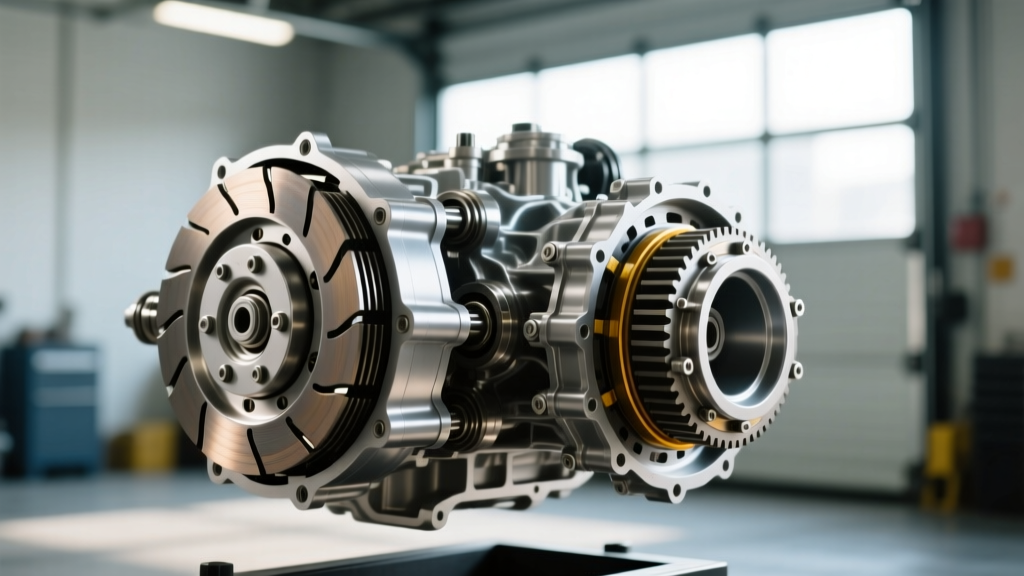
A Dual Clutch Transmission (DCT) is essentially two manual transmissions housed in a single casing, controlled by an electro-hydraulic mechatronic unit. One clutch handles the odd gears (1, 3, 5, 7) and the other handles the even gears (2, 4, 6, R). Because the shifting and clutch actuation are managed by high-pressure hydraulic solenoids and electronic actuators, a DCT does not use a clutch cable.
The Cost Reality: Cable vs. Mechatronic Actuator
Understanding the financial implications of these two systems highlights why manual transmissions remain the king of budget-friendly maintenance. Let's compare the worst-case scenario costs for both systems in 2026:
- Manual Clutch Cable Failure: The cable snaps at the firewall. The vehicle is stranded, but the repair requires a $45 Dorman replacement cable and 30 minutes of DIY labor. Total cost: $45.
- Dual Clutch Actuator Failure: The mechatronic unit (the brain and hydraulic pump of the DCT) fails due to degraded fluid or solenoid burnout—a common issue in VW DSG (DQ250/DQ381) and Ford PowerShift transmissions. The vehicle defaults to "limp mode." The repair requires specialized VCDS programming, a new mechatronic unit, and a fluid flush. Total cost: $1,800 to $3,500.
Furthermore, replacing the actual clutch packs in a DCT requires specialized alignment tools (like the VW T10403 or equivalent aftermarket kits) to set the clutch pack clearance to within 0.1mm. A manual clutch replacement, by contrast, requires only a standard alignment dowel and basic hand tools.
Final Verdict on Clutch Cable Diagnostics
Clutch cable problems are among the most straightforward and cost-effective drivetrain issues to diagnose and resolve. By adhering to the 15-25mm free play specification, utilizing billet adjusters where applicable, and understanding the mechanical limits of the conduit, you can easily extend the life of your manual transmission's friction materials. While the automotive world continues to debate the merits of automated gearboxes, the simplicity, low maintenance cost, and direct mechanical feedback of a properly adjusted manual clutch cable remain unmatched for the driving purist.