The Hydraulic Clutch Ecosystem: Master vs. Slave Dynamics
Modern manual transmission vehicles rely on a closed-loop hydraulic system to translate foot-pedal force into mechanical clutch disengagement. When this system degrades, drivers often misdiagnose the root cause, leading to unnecessary parts replacement and wasted labor. Understanding precise clutch master cylinder symptoms is the first step in accurate drivetrain diagnostics. However, because the master cylinder and the clutch slave cylinder operate in a shared hydraulic continuum, a failure in one component frequently mimics a fault in the other.
In this technical deep-dive, we will dissect the exact failure modes of the clutch master cylinder, provide a definitive diagnostic matrix to isolate the fault, and outline the specific torque specifications and replacement economics for common platforms like the Tremec T56 Magnum and Ford MT-82. As of 2026, with the widespread adoption of low-viscosity DOT 4 and DOT 5.1 fluids in OEM applications, internal seal degradation has become a more prevalent failure mode than external fluid leaks.
Definitive Clutch Master Cylinder Symptoms
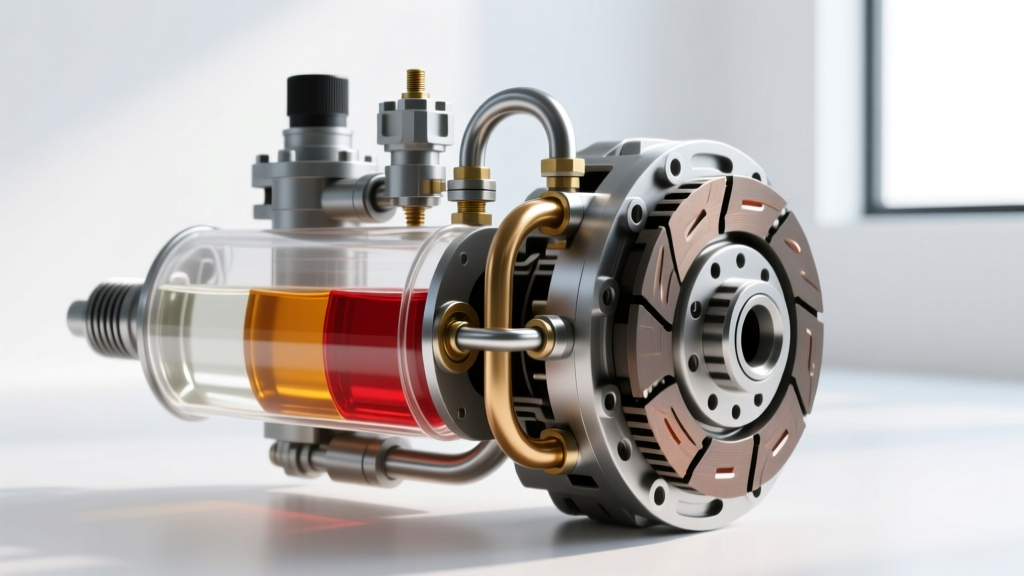
The clutch master cylinder is mounted directly to the firewall, actuated by the pedal pushrod. It contains a primary piston, a secondary return spring, and critical elastomeric cup seals. When these components fail, they present a specific constellation of symptoms that trained technicians use to isolate the fault.
1. Spongy Pedal and Inconsistent Engagement Points
A spongy or 'mushy' pedal feel is the most common indicator of hydraulic compromise. While air in the system is a primary suspect, a failing master cylinder will exhibit a spongy feel even immediately after a thorough bleed. This occurs when the primary cup seal begins to bypass fluid internally under high load. Instead of pushing fluid down the hard line toward the clutch slave cylinder, the fluid escapes past the piston seal and recirculates within the master cylinder bore. The pedal will often sink slowly to the floor when constant pressure is applied at a stoplight.
2. External Leaks at the Firewall and Pushrod
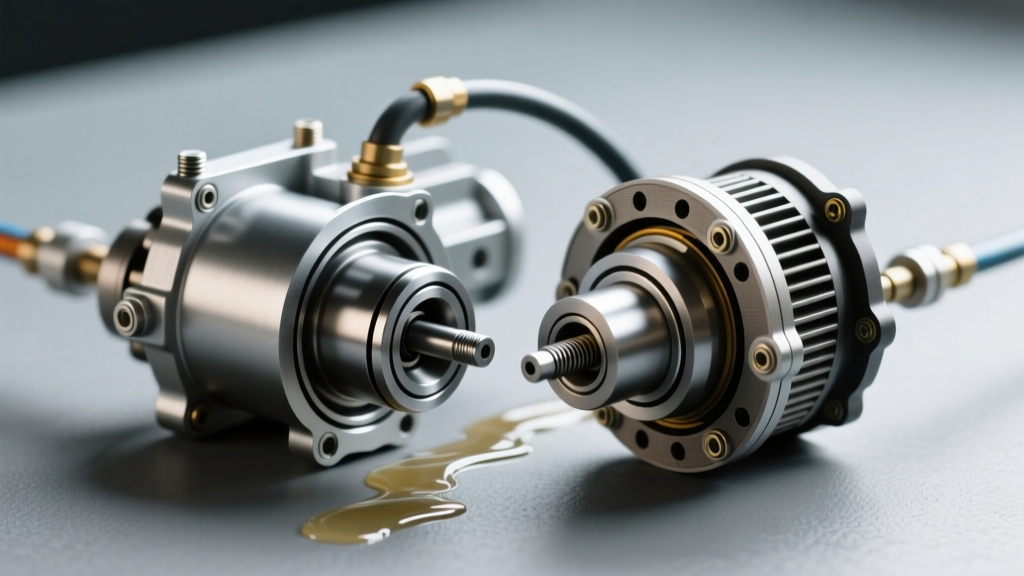
External fluid leaks are easily identifiable but require careful tracing. A leak originating from the rear of the master cylinder (where the pushrod enters the bore) indicates a failed rear dust boot and wiper seal. Fluid will typically run down the firewall and pool on the driver-side floorboard, saturating the carpet and dead pedal. Conversely, a leak at the front of the master cylinder, near the hard-line flare nut, usually points to a degraded brass crush washer, a stripped flare seat, or improper torque application during previous servicing.
3. Internal Bypass (The Silent Killer)
Internal bypass is the most insidious master cylinder failure mode. There are no external leaks, and the fluid level in the reservoir remains perfectly full. However, the clutch fails to disengage fully, resulting in grinding gears during 1st or Reverse engagement. This happens when the internal piston bore becomes scored or pitted due to hygroscopic fluid degradation and microscopic corrosion. The elastomeric seals cannot maintain a high-pressure boundary against the scored aluminum or cast-iron bore, allowing fluid to bypass internally.
4. Pedal Sticking to the Floorboard
If the clutch pedal remains depressed after actuation and requires manual retrieval with your toe, the master cylinder's internal return spring has likely fractured, or the compensating port is blocked by degraded seal debris. When the compensating port is obstructed, the system cannot draw fresh fluid back into the bore to reset the piston, leaving the pedal stranded on the floor.
Isolating the Fault: Master vs. Clutch Slave Cylinder
Because the master cylinder and the clutch slave cylinder share the same hydraulic fluid volume, a pressure drop can originate from either end. Differentiating between the two requires systematic isolation testing. Below is a diagnostic matrix used by transmission specialists to pinpoint the exact failing component.
| Symptom / Observation | Master Cylinder Probability | Slave Cylinder Probability | Definitive Verification Test |
|---|---|---|---|
| Fluid pooling on interior carpet | High (95%) | Zero | Inspect firewall pushrod seal and pedal assembly. |
| Fluid dripping from bellhousing weep hole | Zero | High (90%) | Verify fluid type matches clutch reservoir; check slave boot. |
| Pedal sinks under constant static pressure | High (Internal Bypass) | Moderate (External/Internal leak) | Clamp soft hydraulic line near master; if pedal holds, master is good. |
| Grinding into gear, pedal feels firm | Moderate (Bypass) | High (Seized or blown seal) | Measure fork travel at bellhousing; spec is usually 0.450' - 0.550'. |
| Pedal fails to return upward | High (Return spring/port) | Low (Mechanical binding) | Disconnect pushrod; if pedal still binds, check pivot bushings. |
Pro-Tip for Technicians: To definitively rule out the clutch slave cylinder during a master cylinder diagnostic, use a line-clamping tool specifically designed for soft hydraulic hoses. Clamp the flexible hose connecting the master cylinder hard line to the transmission. If the pedal remains rock-solid and the spongy symptom disappears, the master cylinder is functioning correctly, and the fault lies downstream at the clutch slave cylinder or the flexible hose itself.
Platform-Specific Technical Data and Torque Specifications
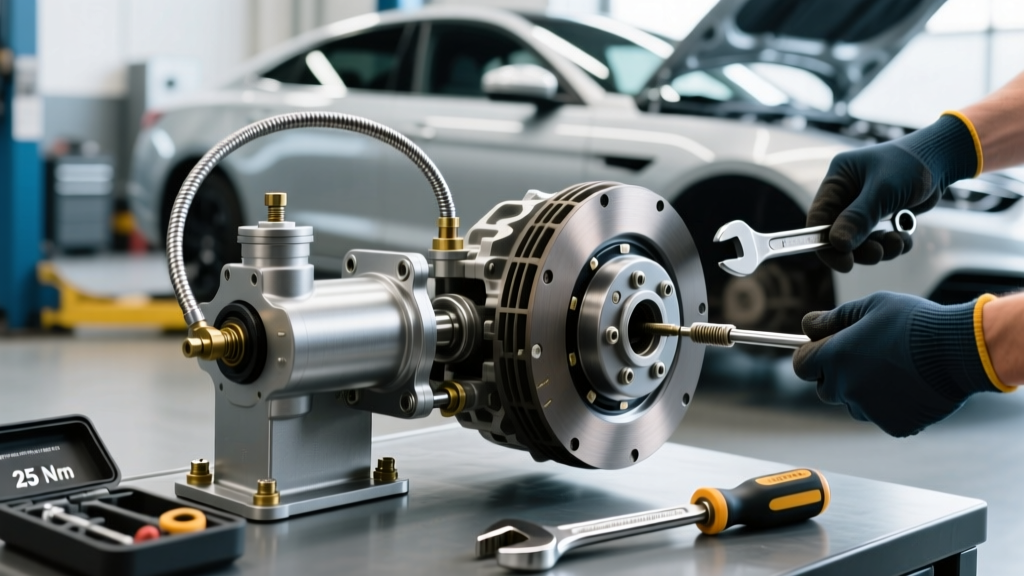
When replacing hydraulic components, adhering to OEM torque specifications is critical. Over-torquing the delicate brass flare nuts or the aluminum mounting ears of the master cylinder will result in immediate micro-fractures and subsequent fluid loss. Below are benchmark specifications for two of the most prevalent manual transmission platforms in the performance and commuter segments.
Tremec T56 Magnum / GM F-Body Applications
- Master Cylinder Mounting Nuts (Firewall): 15 Nm (11 lb-ft). These are typically M8 studs embedded in the firewall; excessive torque will strip the captive nuts inside the dash cavity.
- Hard Line Flare Nut (M12x1.0): 14 Nm (10 lb-ft). Always use a crowfoot or flare-nut wrench to prevent rounding the soft brass hex.
- Internal Clutch Slave Cylinder (Concentric): The T56 Magnum utilizes an internal concentric slave cylinder. Mounting bolts to the bearing retainer plate require 25 Nm (18 lb-ft) with a medium-strength threadlocker.
- Fork Travel Specification: 0.450 to 0.500 inches for proper diaphragm spring disengagement.
Ford MT-82 (Mustang GT 5.0L)
- Master Cylinder Assembly: Ford frequently utilizes a plastic-bodied master cylinder (e.g., Motorcraft CM-xxxx series). The firewall nuts should be torqued to 17 Nm (13 lb-ft).
- External Slave Cylinder Mounting: The MT-82 uses an external slave cylinder mounted to the side of the bellhousing. The two M8 mounting bolts require 23 Nm (17 lb-ft).
- Hydraulic Line Quick-Disconnect: Late-model MT-82s use a plastic quick-connect fitting rather than a threaded flare nut. Ensure the retaining clip is fully seated; a 'double-click' verification is mandatory to prevent catastrophic fluid loss under pedal actuation.
Fluid Dynamics and Hygroscopic Degradation
The longevity of both the master cylinder and the clutch slave cylinder is directly tied to fluid maintenance. Most OEMs specify DOT 3 or DOT 4 glycol-based brake fluid for clutch hydraulics. According to SAE International standards, DOT 4 fluid has a minimum dry boiling point of 230°C (446°F) and a wet boiling point of 155°C (311°F).
Glycol-based fluids are highly hygroscopic, meaning they actively absorb moisture from the atmosphere through the porous plastic of the clutch reservoir and the microscopic breathing holes in the master cylinder cap. As water content increases, the fluid's boiling point drops, but more importantly, the water induces internal galvanic corrosion within the aluminum master cylinder bore. This corrosion creates microscopic scoring, which shreds the elastomeric cup seals over time, leading to the internal bypass symptoms detailed earlier. Flushing the clutch hydraulic system every 24 months is mandatory to preserve seal integrity.
Replacement Economics and Part Sourcing (2026 Market Data)
When a master cylinder fails, the decision to replace just the master or the entire hydraulic assembly depends on the vehicle architecture and labor economics.
Component Pricing and OEM Equivalents
- OEM / Tier-1 Master Cylinders: Brands like FTE (e.g., part number KG15004.1.1 for European applications) or Sachs typically range from $90 to $160. These feature high-grade phenolic or anodized aluminum bores.
- Aftermarket / Economy Master Cylinders: Brands like Dorman or generic imports range from $45 to $75. These often suffer from premature bore scoring and are not recommended for high-mileage or performance vehicles.
- Internal Concentric Slave Cylinders: Because replacing an internal clutch slave cylinder requires dropping the transmission (6 to 9 hours of labor), it is standard industry practice to replace the slave cylinder, pivot ball, and release bearing whenever the transmission is removed, regardless of whether the slave has failed.
Bench Bleeding the Master Cylinder
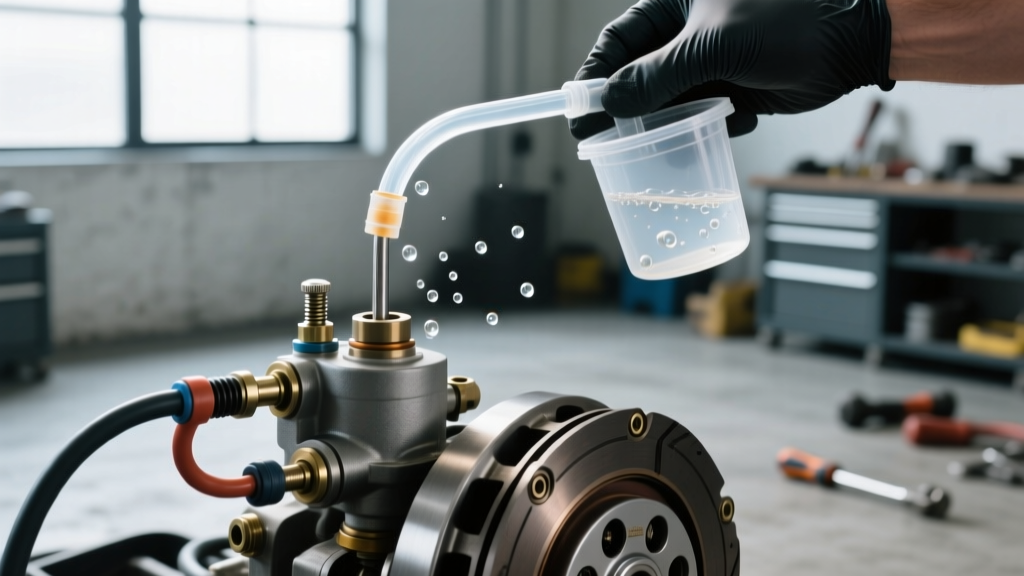
Installing a new master cylinder without bench bleeding will trap air in the primary piston cavity, making system bleeding nearly impossible. 1. Secure the master cylinder in a vise. 2. Fill the reservoir with fresh DOT 4 fluid. 3. Attach a clear recirculation tube from the outlet port back into the reservoir, ensuring the tube end is submerged in fluid. 4. Use a brass drift to slowly stroke the pushrod through its full travel 15 to 20 times until no micro-bubbles are visible in the clear tube. 5. Cap the outlet port immediately to prevent fluid drainage before connecting the hard line.
Conclusion
Accurately identifying clutch master cylinder symptoms requires a methodical approach that rules out downstream components. By understanding the mechanics of internal bypass, utilizing line-clamping isolation tests, and adhering to precise torque specifications, technicians and DIY enthusiasts can avoid the costly mistake of misdiagnosing a master cylinder fault as a failing clutch slave cylinder. Regular fluid maintenance remains the single most effective preventative measure against hydraulic system degradation. For further technical documentation on drivetrain integration, consult the engineering resources available at Tremec or the clutch system schematics provided by FCS Automotive.