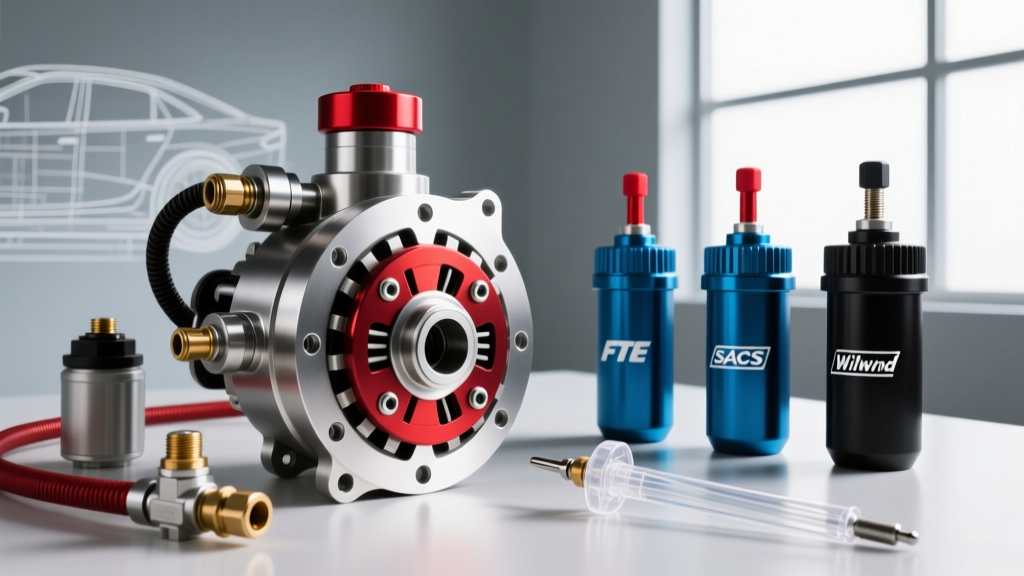
The Hydraulic Bottleneck: Master Cylinders and the Clutch Bleeder Challenge
Upgrading or replacing a clutch master cylinder is rarely a simple plug-and-play affair. Whether you are restoring a classic muscle car with a swapped Tremec T56 Magnum or diagnosing a spongy pedal on a modern BMW equipped with a ZF S6-650 transmission, the master cylinder dictates the hydraulic volume and pedal feel. However, as any seasoned drivetrain technician knows, the true test of a hydraulic setup isn't just the component itself—it is how effectively you can purge air using a clutch bleeder. In 2026, with manufacturers increasingly adopting low-viscosity DOT 4 and DOT 5.1 fluids to accommodate advanced driver-assistance systems (ADAS) and automated manual transmissions, understanding the intersection of master cylinder brands and bleeding methodologies is critical.
Tier 1: OEM & Direct Replacement Giants
Sachs / ZF Aftermarket
ZF Group (the parent company of Sachs) remains the gold standard for European and domestic OEM replacements. For applications like the Ford Mustang GT utilizing the MT-82 or Tremec T56, the Sachs SH5111 (0.700" bore) is a direct-fit solution. Priced between $65 and $95 on platforms like RockAuto, Sachs cylinders feature robust internal bypass ports that make standard vacuum-assisted clutch bleeder tools highly effective. The primary failure mode on older Sachs units is the degradation of the internal EPDM rubber seals when exposed to contaminated, moisture-heavy DOT 3 fluid.
FTE Automotive
FTE dominates the European market, supplying OEM hydraulics for BMW, Porsche, and Audi. The FTE KG19012.4.1, commonly found in BMW E90 chassis mated to the GS6-37BZ manual transmission, is a prime example. While FTE's polymer bodies reduce weight and cost (typically $80-$130), their plastic pushrod assemblies are notorious for snapping under aggressive track use. When bleeding an FTE system, technicians must be cautious: the restrictive factory quick-connect fittings often require specialized adapter caps for a pressure clutch bleeder to function without introducing micro-bubbles into the line.
LuK (Schaeffler Group)
LuK is heavily integrated into GM and Chrysler platforms. The LuK LMC458 master cylinder is a staple for GM LS-swapped vehicles utilizing the T56. Known for its integrated reservoir designs, LuK units are highly resistant to the thermal degradation seen in tight engine bays. Priced around $55-$85, they are a budget-friendly OEM choice. However, the proprietary GM quick-connect fittings require a specific 5/8" to M10x1.0 adapter hose if you plan to use an aftermarket AN-3 stainless steel braided line and a high-flow clutch bleeder valve.
Tier 2: High-Performance & Billet Upgrades
Wilwood Engineering
For custom fabrications and track cars, Wilwood Engineering offers billet aluminum master cylinders that are virtually indestructible. The popular 260-1304 (0.750" bore) and 260-8794 (0.625" bore) allow tuners to dial in exact pedal ratios. However, Wilwood cylinders lack the internal residual pressure valves found in OEM units. This necessitates the installation of an inline 2 lb. residual valve in the hard line. This modification fundamentally changes how you approach the clutch bleeder process; reverse bleeding (pushing fluid from the slave cylinder up to the master) is almost mandatory to prevent air from becoming trapped behind the check valve.
Tilton Engineering
Tilton’s 78-Series floor-mount masters are the pinnacle of motorsport hydraulics, often paired with carbon-clutch setups in Trans-Am and GT3 racing. Priced upwards of $280, these units demand absolute precision. Tilton recommends a specific bench-bleeding procedure before firewall installation, as the steep angle of floor-mounted pedals creates a natural air trap at the master's output port.
Brand Comparison & Clutch Bleeder Compatibility Matrix
| Brand | Model / Part Number | Bore Size | Avg. Price (2026) | Best Clutch Bleeder Method |
|---|---|---|---|---|
| Sachs / ZF | SH5111 | 0.700" | $65 - $95 | Motive Pressure Bleeder (15 PSI) |
| FTE | KG19012.4.1 | 0.708" | $80 - $130 | Speed Bleeders with Quick-Connect Adapter |
| LuK | LMC458 | 0.750" | $55 - $85 | Standard Manual Pump & Hold |
| Wilwood | 260-1304 | 0.750" | $160 - $210 | Reverse Syringe Bleeder (Inline Residual Valve) |
| Tilton | 78-Series Floor | 0.625" | $280 - $350 | Bench Bleed + Pressure Bleeder |
Fluid Viscosity Shifts & The Bleeding Process
In 2026, the industry standard has heavily pivoted toward low-viscosity DOT 4 LV and DOT 5.1 fluids. While these fluids improve cold-weather actuation and ABS integration, their thinner molecular structure makes them highly susceptible to micro-aeration. When using a vacuum clutch bleeder on thin DOT 5.1, pulling more than 20 inHg of vacuum can actually boil the fluid at room temperature, introducing false air bubbles into the system. Technicians must limit vacuum bleeders to 10-15 inHg and rely on slower, steady pressure bleeders for modern hydraulic systems to ensure a rock-hard pedal.
Diagnosing Master Cylinder Failure vs. Air in the System
A common misdiagnosis in the garage is pumping a clutch bleeder endlessly when the actual issue is internal bypassing. If the pedal slowly sinks to the floor while holding it depressed at a stoplight, but firms up immediately after pumping, the master cylinder's primary cup seal is bypassing fluid internally. No clutch bleeder tool or vacuum pump will fix this; the cylinder must be rebuilt or replaced. Conversely, if the pedal feels spongy and inconsistent regardless of pumping, you have an air trap, likely at the slave cylinder high-point or the master cylinder output port.
Matching the Right Clutch Bleeder to Your Setup
The effectiveness of your purge depends heavily on the master cylinder's internal architecture and the slave cylinder's orientation. Here is how to match the tool to the brand:
- Motive Pressure Bleeder (15-20 PSI): Ideal for Sachs and LuK OEM setups. The steady pressure forces fluid through the restrictive factory quick-connects without aerating the DOT 4 fluid.
- Reverse Syringe Bleeder: Mandatory for Wilwood and Tilton setups with inline residual valves. Pushing fluid upward from the ZF S6-650 slave cylinder ensures the check valve is forced open, carrying trapped air back to the master reservoir.
- Speed Bleeders (e.g., M10x1.0 with internal check valve): Excellent for FTE and Brembo aftermarket slaves. The built-in one-way valve allows a single technician to pump the pedal 4-5 times without closing the nipple, drastically reducing the time required to achieve a solid pedal.
Firewall Mounting & Torque Specifications
A master cylinder is only as good as its mounting point. Firewall flex absorbs hydraulic pressure, resulting in a spongy pedal that no clutch bleeder tool can fix. When mounting a Sachs or Wilwood master to a stamped steel firewall, use M8 x 1.25 flange nuts with large AN-8 washers to distribute the load. Torque the mounting hardware to exactly 18-22 lb-ft (24-30 Nm). Over-torquing to 30+ lb-ft will warp the firewall sheet metal, altering the pushrod geometry and causing premature internal seal wear.
For the hydraulic line fittings—typically a 3/8"-24 inverted flare on domestic applications or an M12x1.0 bubble flare on Euro models—torque the hard line nut to 11-14 lb-ft. Always use a crowfoot wrench to avoid rounding the soft OEM line nuts, which will instantly ruin the hard line and require a complete replacement.
Final Verdict: Which Brand Should You Buy?
If you are maintaining a daily driver or restoring a classic to factory specifications, stick with Sachs or FTE. They offer predictable pedal travel, internal bypass valves that make standard clutch bleeder procedures straightforward, and OEM-level longevity when paired with fresh DOT 4 fluid. However, if you are building a track car, performing an engine swap, or upgrading to a high-clamp-load twin-disc clutch, invest in a Wilwood billet master. Just be prepared to adopt a reverse-bleeding strategy and install an inline residual valve to perfect your hydraulic engagement.