The Physics of Clutch Pack Sizing and Diameter Limits
When building or rebuilding a transmission, the selection of clutch packs and friction disc diameters dictates the ultimate torque capacity, shift feel, and longevity of the drivetrain. Whether you are upgrading the internal wet clutch packs of an automatic transmission or selecting a multi-plate manual clutch pack for a high-horsepower track build, diameter and surface area are your primary mechanical levers.
The fundamental torque capacity equation for any clutch system is T = μ × F × R × N, where T is torque capacity, μ is the coefficient of friction, F is the clamping force (apply pressure), R is the mean radius of the friction disc, and N is the number of friction surfaces. Because apply pressure (F) is limited by hydraulic line pressure or pedal effort, and the friction material (μ) has physical thermal limits, increasing the mean radius (R) via larger disc diameters or increasing the number of surfaces (N) via thicker clutch packs are the most effective ways to raise torque thresholds.
Defining the "Clutch Pack" Across Platforms
In automotive terminology, a "clutch pack" refers to two distinct assemblies depending on the transmission type:
- Automatic Transmission Clutch Packs: A cylindrical drum containing alternating friction discs (splined to the hub) and steel separator plates (splined to the drum). These are engaged hydraulically by a piston to lock planetary gearset members.
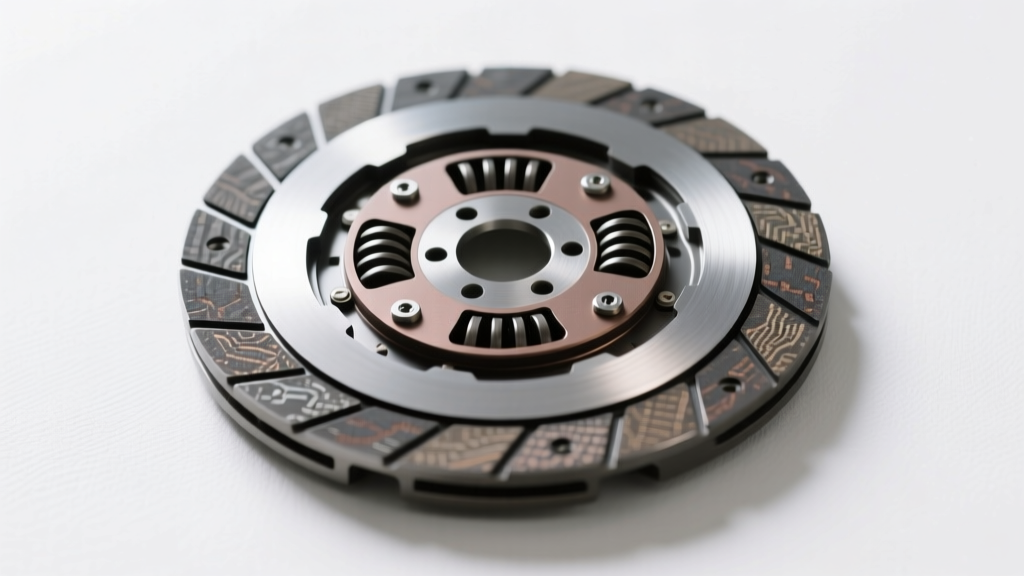
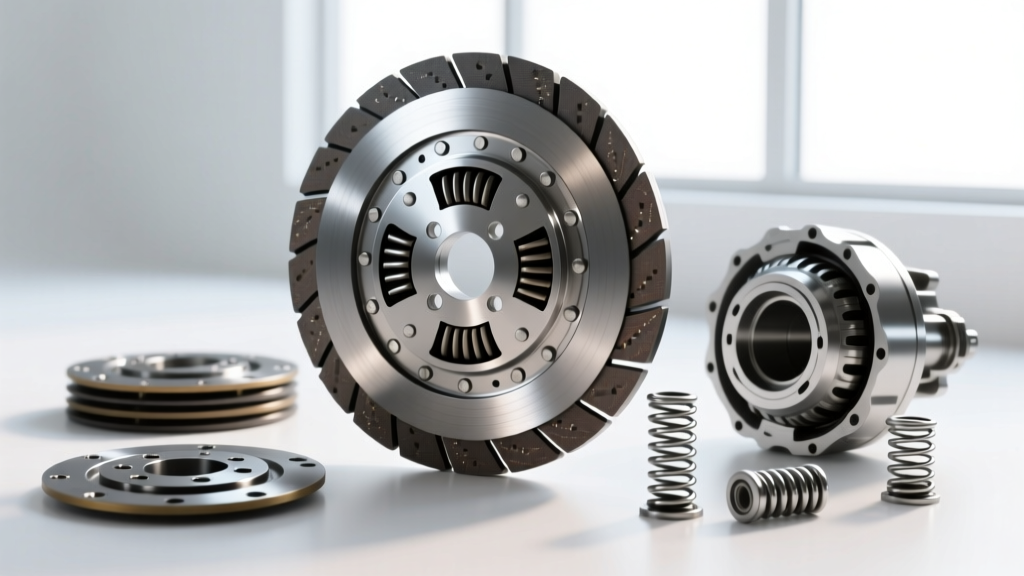
- Performance Manual Clutch Packs: Multi-plate (twin-disc or triple-disc) assemblies squeezed between a flywheel and pressure plate, utilizing intermediate floater plates to multiply the friction surface area without requiring massive single-disc diameters.
Automatic Transmission Clutch Packs: Friction Disc Sizing
In automatic transmissions, the outer diameter (OD) of the clutch pack friction discs is strictly limited by the internal diameter of the aluminum or steel drum. Therefore, "sizing" an automatic clutch pack usually refers to maximizing the number of friction discs within the fixed diameter constraints, and selecting the correct friction material thickness to achieve optimal hydraulic clearance.
Case Study: The GM 4L60E 3-4 Clutch Pack
The 3-4 clutch pack in the GM 4L60E is notorious for premature failure in high-torque applications. The stock drum limits the friction disc OD to approximately 5.25 inches. To increase the torque capacity without machining the drum, transmission builders utilize high-energy friction materials from Raybestos Powertrain (such as the GPZ line) or Alto Red Eagle frictions. By stepping down from the OEM 0.076-inch steel separator plates to 0.061-inch or 0.050-inch steels, builders can fit an extra friction disc into the pack, increasing the friction surface count from 6 to 7 or even 8. This effectively boosts the torque capacity by 15% to 25% within the exact same spatial diameter.
Case Study: ZF 8HP and GM 6L80 Wet Clutch Packs
Modern 8-speed and 10-speed automatics, like the ZF 8HP and GM 6L80/10L80, utilize highly engineered, low-clearance wet clutch packs. The ZF 8HP relies on BorgWarner HTS (High Torque Static) friction materials. The disc diameters in these units are precisely matched to the mechatronic unit's solenoid flow rates. Oversizing the friction material thickness or altering the clutch pack stack-up diameter changes the hydraulic volume required to fill the piston chamber, resulting in delayed shift times, harsh engagements, and adaptive learning faults in the TCM (Transmission Control Module).
| Transmission | Clutch Pack | Disc OD (Approx) | Target Clearance | Preferred Friction Material |
|---|---|---|---|---|
| GM 4L60E | 3-4 (Overrun) | 5.25" | 0.040" - 0.060" | Raybestos GPZ / Alto Red Eagle |
| GM 6L80 | 3-5-7 (Clutch C) | 6.10" | 0.050" - 0.070" | OEM BorgWarner / Raybestos |
| ZF 8HP45/70 | Pack A (1st/2nd) | 4.80" | 0.020" - 0.035" | BorgWarner HTS |
| Ford 10R80 | Clutch D | 5.90" | 0.035" - 0.055" | Alto High-Energy |
Expert Builder Tip: Never measure automatic clutch pack clearance by simply stacking parts on a bench. You must use a dial indicator mounted to the drum, applying compressed air (usually 30-50 PSI via a custom adapter) to the piston apply hole to seat the frictions, then measure the travel between the apply plate and the snap ring groove.
Multi-Plate Manual Clutch Packs: Diameter Selection
When transitioning to manual transmissions, particularly in motorsport and high-performance street applications, the term "clutch pack" refers to the twin-disc or triple-disc friction assembly. Here, the diameter of the clutch disc is a selectable variable that profoundly impacts vehicle dynamics, rotational mass, and drivability.
The 240mm vs. 260mm vs. 273mm Dilemma
According to engineering data from Tilton Engineering, selecting the correct multi-plate clutch pack diameter requires balancing torque capacity against the Moment of Inertia (MOI).
- 240mm (9.45-inch) Clutch Packs: The gold standard for road racing, time attack, and high-revving naturally aspirated engines. A 240mm twin-disc pack significantly reduces the MOI compared to larger diameters. This allows the engine to rev and drop RPMs much faster, reducing synchro wear during aggressive downshifts and enabling lightning-fast rev-matching. While the smaller mean radius reduces inherent torque capacity, the use of aggressive sintered iron or carbon-carbon friction materials easily compensates, supporting up to 900 lb-ft of torque.
- 260mm (10.25-inch) Clutch Packs: The premier choice for high-horsepower street/strip cars and drag racing. The larger diameter increases the mean radius (R), providing massive torque multiplication without requiring excessive pedal pressure. Brands like McLeod and Exedy utilize 260mm packs for vehicles producing 1,000 to 1,500 lb-ft of torque. The trade-off is higher rotational mass, which can make the engine feel slightly more sluggish to rev and place higher stress on transmission synchronizers.
- 273mm+ (10.75-inch+) Clutch Packs: Reserved for extreme diesel towing, tractor pulling, or unrestricted drag classes where pedal effort is secondary to absolute holding power and thermal mass.
2026 Buyer’s Matrix: Matching Diameter to Application
Use the following matrix to select the correct clutch pack diameter and friction material for your specific build parameters.
| Application Profile | Recommended Diameter | Friction Material | Estimated Torque Capacity | Rotational Mass Impact |
|---|---|---|---|---|
| Road Race / Time Attack | 240mm Twin-Disc | Sintered Iron / Carbon | 750 - 950 lb-ft | Low (Fastest revs) |
| Aggressive Street / Track Day | 250mm Twin-Disc | Ceramic / Organic Mix | 850 - 1,100 lb-ft | Medium |
| Dedicated Drag / Street Strip | 260mm Twin/Triple | Sintered Iron / Kevlar | 1,200 - 1,600+ lb-ft | High (Slower revs) |
| Heavy Duty Diesel Towing | 273mm+ Single/Twin | Organic / High-Temp | 1,000 - 1,400 lb-ft | Very High |
Assembly Guidelines: Clearances, Snap Rings, and Torque Specs
Proper sizing is useless without precision assembly. Whether installing an automatic clutch pack or a manual multi-plate setup, strict adherence to measurement and torque specifications is mandatory.
Automatic Snap Ring Selection
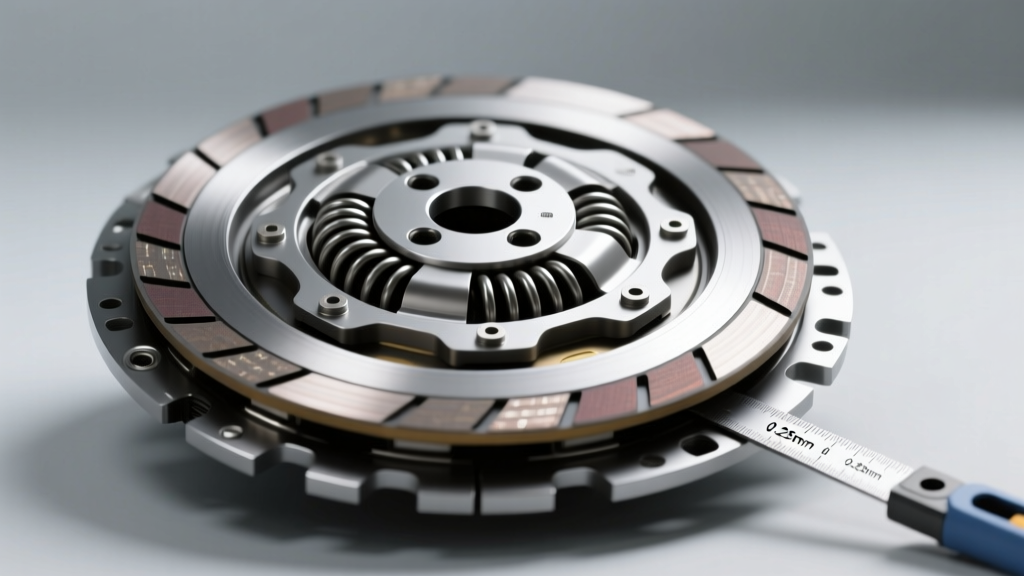
Automatic transmission clutch packs rely on selective snap rings to set the final piston clearance. Manufacturers like Sonnax Industries and OEM suppliers provide snap rings in increments as fine as 0.010 inches (e.g., 0.070", 0.080", 0.090"). If your 4L60E 3-4 clutch pack measures 0.085" of clearance with the thickest available snap ring, the pack is too loose, leading to delayed shifts and friction material glazing. If clearance is below 0.030", the pack will drag when disengaged, burning out the frictions in under 100 miles.
Manual Flywheel and Pressure Plate Torque Specs
When bolting a multi-plate manual clutch pack to the flywheel, uneven clamping force will warp the floater plates, ruining the diameter tolerance and causing severe chatter. Always use a calibrated torque wrench and follow the star pattern.
- GM LS/LT V8 Flywheel Bolts (M10x1.5): Torque to 25 lb-ft, then turn an additional 50 degrees. (Do not reuse TTY bolts).
- GM LS/LT Pressure Plate to Flywheel (3/8"-16): 35 lb-ft in a crisscross pattern.
- Ford Coyote 5.0L Flywheel Bolts (M12x1.0): Torque to 59 lb-ft.
- Tilton / McLeod Multi-Plate Floater Plate Straps: Ensure the intermediate floater plates have a minimum of 0.015" to 0.025" of axial float on the drive straps to allow for thermal expansion and clean disengagement.
Final Thoughts on Drivetrain Integration
Selecting the right clutch packs and disc diameters is an exercise in system-level engineering. In automatics, you are bound by the drum diameter and must manipulate friction count, material coefficients, and hydraulic clearances to achieve your torque goals. In manual applications, you have the freedom to alter the physical diameter of the clutch pack, but you must weigh the benefits of increased torque capacity against the penalties of rotational inertia and drivability. By utilizing the sizing matrices and clearance specs outlined above, you can confidently spec a clutch package that survives the torque while preserving the driving dynamics of your vehicle.