The Architecture of Clutch-Type Limited Slip Differential Gears
When analyzing the drivetrain of a performance vehicle or a heavy-duty truck, the transition from an open differential to a limited slip differential (LSD) fundamentally alters how torque reaches the pavement. While open differential gears allow the outside wheel to spin freely during a turn, they fail catastrophically when one wheel loses traction, sending 100% of the torque to the path of least resistance. A clutch-type LSD solves this by integrating a series of friction clutches behind the side gears, effectively coupling the axles together when slip occurs.
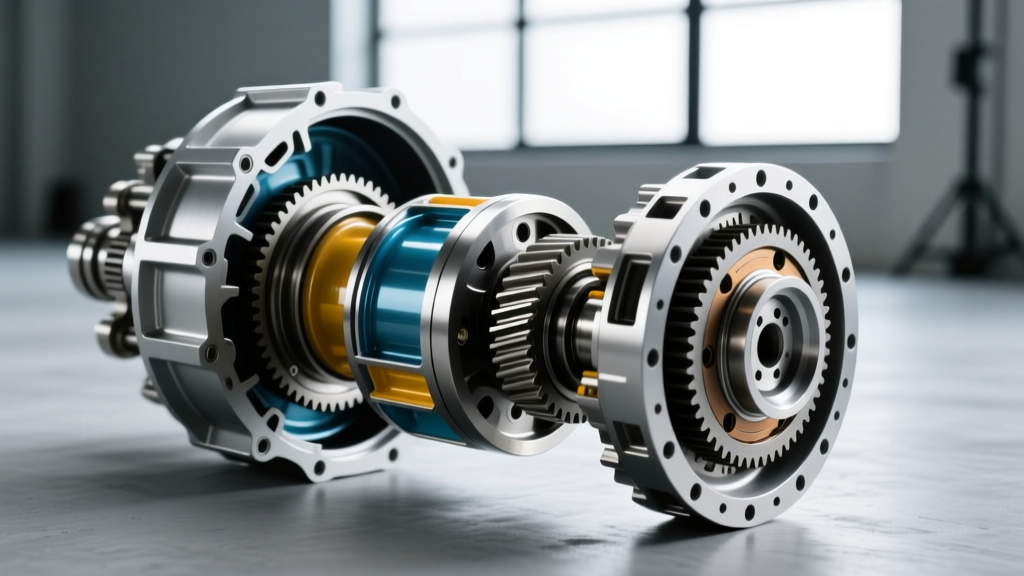
Understanding the internal operation of these differential gears is critical for proper maintenance. Unlike an open carrier where the spider gears (pinion mates) simply transfer torque to the side gears, a clutch-type LSD utilizes a preload mechanism—typically an S-spring or heavy coil springs—located between the side gears. This preload forces the side gears outward against their respective clutch packs, which are sandwiched between the gear and the carrier housing.
Side Gears, Pinion Mates, and the S-Spring
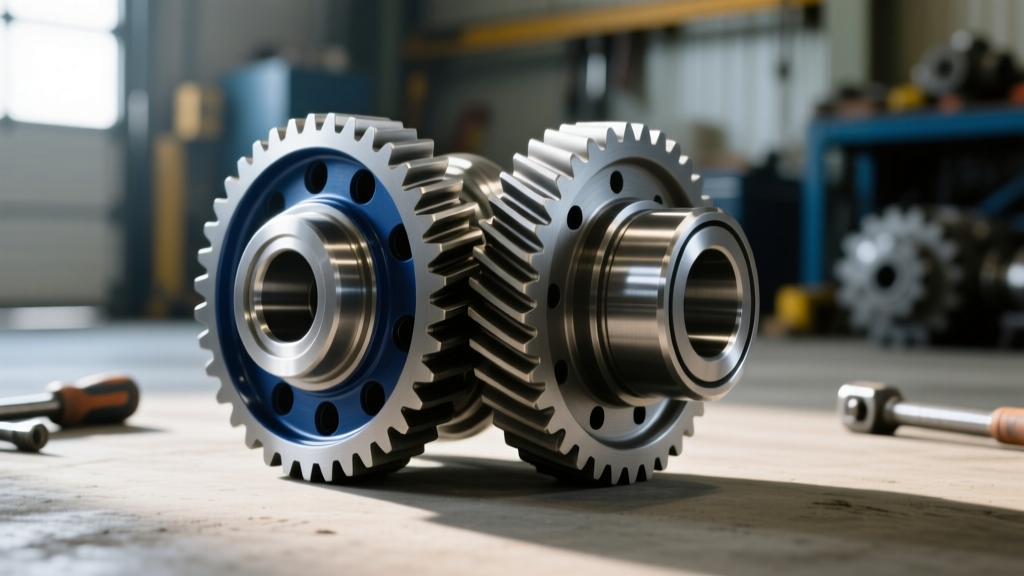
The core gear set in a standard clutch-type LSD (such as the legendary Eaton Positraction) consists of two side gears and two or four pinion mate gears. The side gears feature internal splines that mate with the axle shafts, while their outer faces are machined to act as the inner friction surface of the clutch pack. The S-spring, positioned in the cross-shaft cavity, applies a constant baseline clamping force. When one wheel begins to spin faster than the other, the spider gears rotate on the cross-shaft, causing the side gear thrust loads to increase dramatically. This axial thrust compresses the clutch packs, locking the axles together proportionally to the torque input.
Torque Biasing and Gear Interaction Under Load
The effectiveness of limited slip differential gears is measured by their Torque Bias Ratio (TBR). A TBR of 2.5:1 means the differential can transfer up to 2.5 times more torque to the wheel with traction compared to the wheel that is slipping. The interaction between the gear helix angles and the clutch friction materials dictates this ratio.
| LSD Type | Internal Mechanism | Torque Bias Ratio (TBR) | Maintenance Requirement |
|---|---|---|---|
| Clutch-Type (Eaton Posi) | Carbon/Paper clutches + Side Gears | 2.0:1 to 3.5:1 | High (Requires FM additive) |
| Helical Gear (Torsen) | Worm/Helical Gear sets | 2.5:1 to 5.0:1 | Low (Standard GL-5 only) |
| Viscous Coupling | Silicone fluid + Perforated plates | Variable (Speed dependent) | Sealed (Non-serviceable) |
As noted in Eaton's automotive differential catalog, the mechanical clamping force generated by the gear thrust angles is what allows the clutch packs to handle immense torque loads without immediate slippage. However, this mechanical advantage comes at the cost of increased friction and heat generation, necessitating rigorous fluid maintenance protocols.
Fluid Dynamics and the Friction Modifier Balancing Act
The most common failure point in limited slip differential gears is not the metal itself, but the degradation of the friction material and the breakdown of the gear oil's additive package. Clutch-type LSDs require a specific balance of friction to operate smoothly. If the friction is too high, the clutches grab and release rapidly during low-speed cornering, resulting in a phenomenon known as 'chatter.' If the friction is too low, the clutches slip continuously under load, leading to rapid wear and eventual failure of the differential gears.
Selecting the Right Gear Oil and Additives
For modern 2026 applications, full synthetic API GL-5 gear oils in 75W-90 or 75W-140 viscosities are the standard. The GL-5 designation is non-negotiable, as it contains the extreme pressure (EP) additives required to protect the hypoid ring and pinion gears. However, GL-5 oil alone is insufficient for clutch-type LSDs. You must introduce a Friction Modifier (FM).
- OEM Additives: GM LSD Additive (P/N 88900338) and Ford XL-3 (P/N C8AZ-19B546-A) are industry benchmarks. Typically, 4 to 6 ounces are required per 2.5-quart differential capacity.
- Pre-Blended Synthetics: Oils like Amsoil Severe Gear or Red Line 75W90 already contain friction modifiers. However, aftermarket rebuilds with aggressive carbon-fiber clutches (like those from Auburn Gear) may still require a supplemental 2-ounce dose of FM to eliminate chatter.
Expert Tip: After performing a fluid and friction modifier change, the vehicle must undergo a 'Figure-8' break-in procedure. Drive the vehicle in a series of tight figure-8 patterns in a dry parking lot for 10-15 minutes. This forces the differential gears and clutches to slip slightly, burnishing the new friction material and evenly distributing the additive into the porous clutch surfaces.
Precision Teardown and Rebuild Specifications
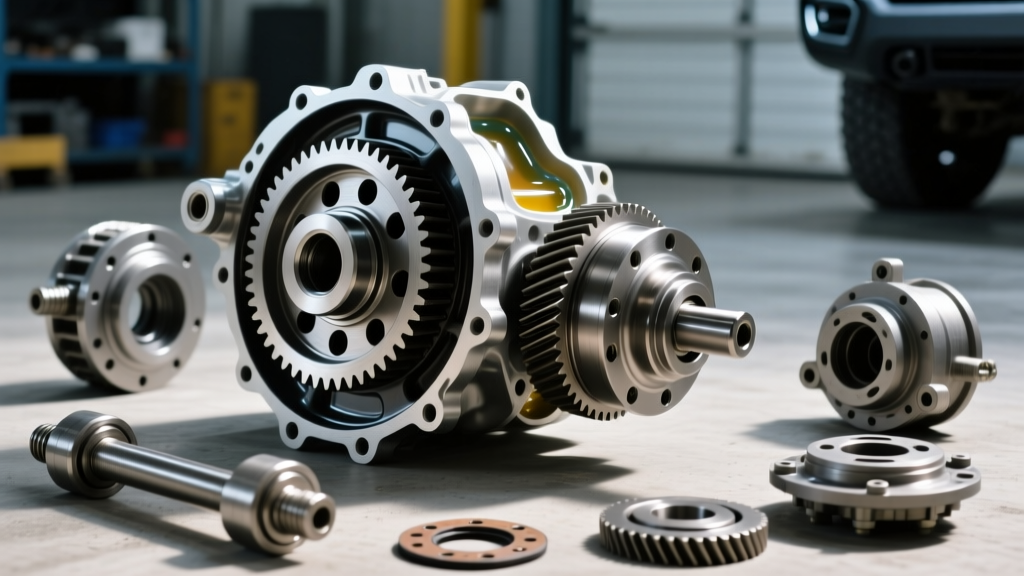
When diagnosing whining, clunking, or persistent chatter that survives a fluid change, a teardown is required. Rebuilding limited slip differential gears demands precision measuring tools and strict adherence to torque specifications. The clearances between the side gears, the clutch packs, and the carrier housing are measured in thousandths of an inch.
Critical Torque Specs and Clearances
Improper assembly will destroy the ring and pinion or the clutch packs within the first 1,000 miles. When servicing the LSD carrier, adhere to the following baseline specifications (always verify with your specific OEM service manual):
- Ring Gear Bolts: 70-85 lb-ft. Must be cleaned with brake cleaner and secured with Red Loctite 272. Never reuse stretched bolts.
- Bearing Cap Bolts: 60-75 lb-ft. These dictate carrier bearing preload and gear alignment.
- Pinion Nut (Crush Sleeve): 200-250 lb-ft. Torque must be applied incrementally while checking rotational preload (typically 15-25 in-lbs for new bearings).
- Ring and Pinion Backlash: 0.006" to 0.010". Measured at three distinct points around the ring gear using a dial indicator. Variance between points must not exceed 0.002".
- Clutch Pack Clearance: 0.015" to 0.025" (before S-spring compression). Measured using a feeler gauge between the clutch pack and the side gear hub. If clearance exceeds 0.030", the clutches are worn and must be replaced.
Diagnosing Wear in Limited Slip Differential Gears
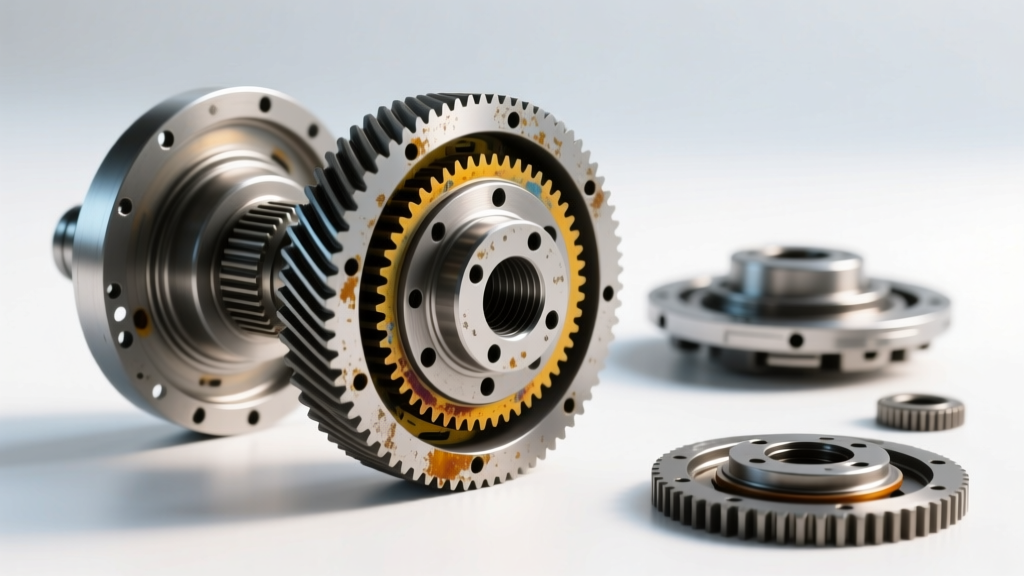
Failure modes in an LSD present differently than in an open differential. Because the side gears are under constant axial load from the preload springs, wear patterns on the gear teeth and the thrust washers are accelerated if the fluid is neglected.
- Low-Speed Chatter: Usually indicates depleted friction modifier or glazed clutch discs. If a fluid change fails to resolve it, the clutch discs are likely heat-glazed and require replacement.
- Highway Whine (Deceleration): Points to pinion bearing failure or incorrect ring gear backlash, often caused by worn carrier side bearings allowing the entire LSD assembly to shift under load.
- Clunk on Engagement: Excessive clearance between the spider gears and the side gears. In high-mileage units, the cross-shaft bore in the carrier can become oval-shaped, requiring a complete carrier replacement rather than just a gear swap.
2026 Market Pricing and Component Sourcing
Sourcing high-quality replacement components is vital. The market for aftermarket differential gears and LSD rebuild kits has stabilized, but pricing varies based on material quality. According to Auburn Gear's lubricant and rebuild specifications, utilizing matched sets of clutches and steels is mandatory for maintaining the engineered bias ratio.
- OEM Replacement Carrier (e.g., Eaton Posi for GM 8.5" 10-bolt): $450 - $650.
- Aftermarket Rebuild Kit (Clutches, S-Spring, Shims): $80 - $150.
- Ring and Pinion Gear Set (4.10 Ratio, 8620 Steel): $250 - $400.
- Professional Labor (R&R, Setup, and Fluid): $600 - $1,000 depending on regional shop rates.
Maintaining limited slip differential gears is an exercise in precision and chemistry. By understanding the mechanical interplay between the side gears, the clutch packs, and the fluid additives, technicians and enthusiasts can ensure maximum traction and extend the service life of the drivetrain well past the 150,000-mile mark.