The Diagnostic Crossroads: Mechanical Bind vs. Hydraulic Shudder
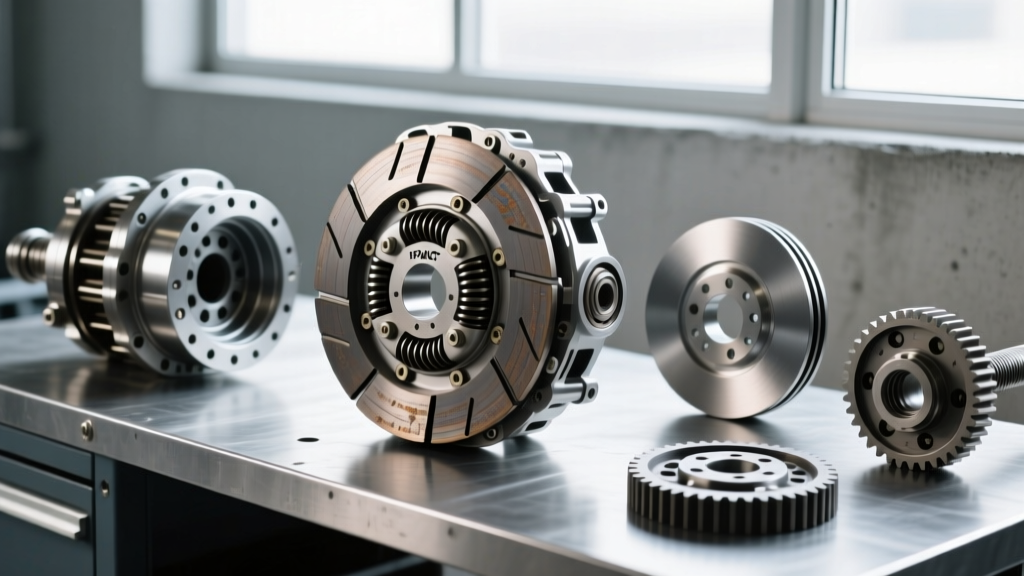
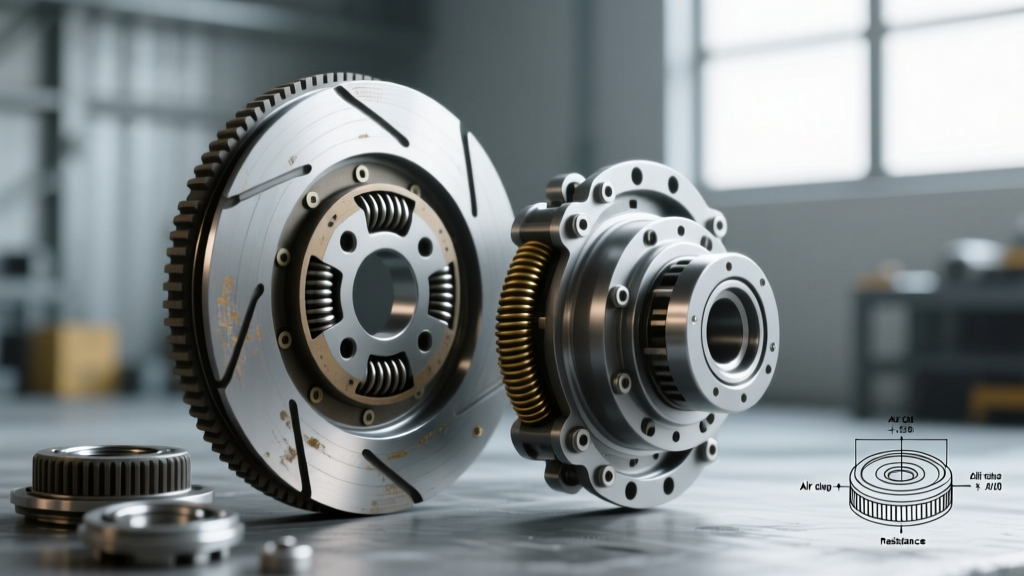
As we navigate the 2026 automotive service landscape, drivetrain diagnostics require a nuanced understanding of both legacy mechanical systems and modern computer-controlled actuation. When a driver reports low-speed shudder, notchy engagement, or pedal vibration, novice technicians often jump to conclusions. In automatic vehicles, they might immediately suspect a failing transmission converter clutch (TCC). In manual or automated-manual applications, they might condemn the friction disc or pressure plate.
However, a highly prevalent yet frequently misdiagnosed root cause lies in the mechanical fulcrum of the release system: clutch fork and pivot binding. Misidentifying mechanical pivot wear as a hydraulic issue or a transmission converter clutch failure leads to unnecessary valve body replacements, unwarranted torque converter teardowns, and frustrated customers. This expert guide provides a definitive framework for isolating clutch fork and pivot issues, complete with exact torque specifications, wear limits, and modern Dual-Clutch Transmission (DCT) considerations.
Anatomy of Clutch Fork and Pivot Failure
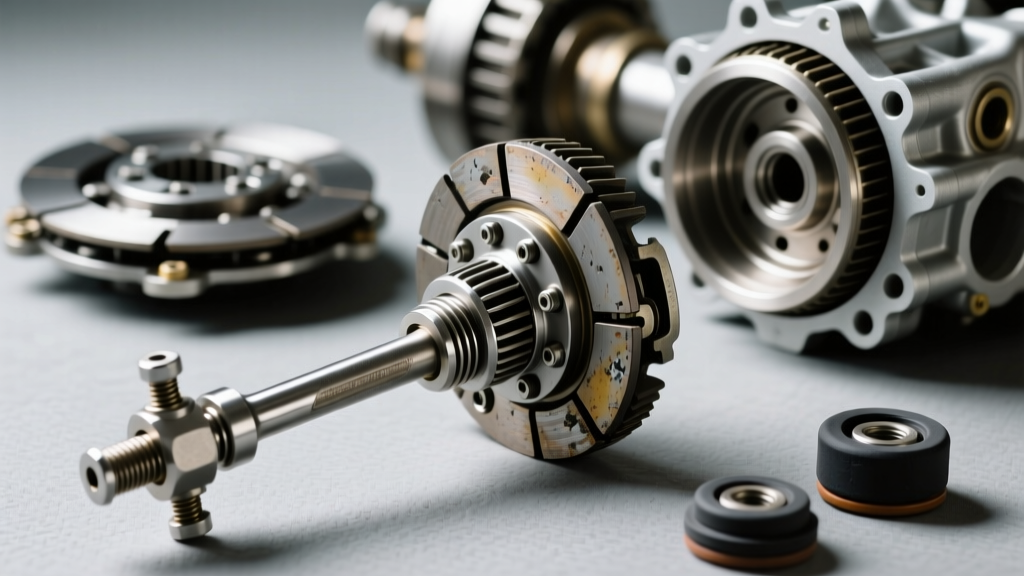
The clutch fork acts as a lever, multiplying the force from the hydraulic slave cylinder or electromechanical actuator to push the release bearing against the pressure plate diaphragm spring. This lever pivots on a spherical stud (the pivot ball) or a cylindrical shaft. Over time, the interface between the fork's internal pads and the pivot ball degrades.
Material Degradation and Wear Patterns
- Cast Iron Forks on Steel Pivot Balls: Common in heavy-duty applications (e.g., GM Tremec T56 Magnum). These develop deep, galled grooves due to high clamping loads and insufficient high-temperature lubrication.
- Stamped Steel Forks with Nylon/Bronze Bushings: Found in lighter passenger vehicles. The nylon pads wear down, creating a "dead zone" in pedal travel, while bronze bushings can gall and seize if contaminated by clutch dust.
- DCT Electromechanical Forks: Modern automated manuals (like the Ford DPS6 or ZF 7-speed PDK) utilize complex shift forks and clutch actuation forks. Wear on these pivot points causes the Transmission Control Module (TCM) to miscalculate the clutch bite point, often mimicking the highway shudder of a slipping automatic transmission converter clutch.
"According to diagnostic bulletins published by Transmission Digest, over 30% of manual transmission engagement complaints labeled as 'warped flywheels' are actually traced back to excessive clearance at the clutch fork pivot ball."
The 2026 Diagnostic Protocol: Isolating the Pivot
To accurately differentiate between a mechanical fork bind, a worn friction disc, and a failing transmission converter clutch, technicians must follow a structured diagnostic path.
Step 1: Pedal Hysteresis and Feel Mapping
A failing transmission converter clutch typically shudders at 40-55 mph under light throttle when the torque converter attempts to lock up. Conversely, clutch fork binding manifests at takeoff (0-15 mph). Press the clutch pedal by hand. If you feel a "gritty" or "notchy" resistance precisely at the midpoint of travel—where the fork pivots under maximum load—you have mechanical binding. If the pedal feels smooth but engagement is harsh, suspect hydraulic air or a warped disc.
Step 2: Borescope Inspection Through the Bellhousing
Remove the inspection cover or slave cylinder. Insert an articulated borescope to visually inspect the fork pads. Expert Rule of Thumb: If the groove worn into the fork pad exceeds 0.030 inches (0.76 mm) in depth, or if the pivot ball exhibits visible galling (material transfer), the assembly must be replaced. Attempting to lubricate a severely grooved pivot ball will only provide a temporary fix before catastrophic binding occurs.
Step 3: Bellhousing Runout Verification
Clutch fork binding is frequently a secondary symptom of bellhousing misalignment. If the bellhousing bore is not perfectly concentric with the crankshaft, the transmission input shaft sits at an angle. This forces the release bearing to cock on its retainer, applying uneven, lateral stress to the clutch fork pivot. Use a dial indicator to measure bellhousing runout. As outlined in Tremec's official service guidelines, runout must not exceed 0.005 inches (0.127 mm) total indicated runout (TIR). Anything beyond this will destroy new fork pads within 5,000 miles.
Expert Repair Practices: Lubrication and Torque Specs
When replacing the clutch fork and pivot assembly, the choice of lubricant and adherence to torque specifications are where amateur repairs fail and expert repairs endure.
The Lubrication Trap
Never use standard white lithium grease or multi-purpose chassis lube on a clutch pivot ball. Bellhousing temperatures routinely exceed 200°F (93°C) in stop-and-go traffic. Standard greases melt, liquefy, and fling onto the friction disc via centrifugal force, causing catastrophic clutch slip. Only use a high-temperature Molybdenum Disulfide (Moly) grease or a specific PTFE dry-film lubricant designed for clutch release systems.
critical Torque Specifications
Overtorquing a pivot stud can distort the bellhousing or strip the aluminum threads, while undertorquing leads to stud backing-out and sudden clutch disengagement failure. Always use fresh medium-strength threadlocker (e.g., Loctite 243).
| Application / Transmission | Pivot Stud Part Number | Torque Specification | Special Notes |
|---|---|---|---|
| GM Gen III/IV LS (T56 / T56 Magnum) | GM 12558184 | 20 lb-ft (27 Nm) | Apply threadlocker to block threads only. |
| Ford Tremec MT-82 (Mustang GT) | Ford 9R3Z-7A548-A | 18-22 lb-ft (24-30 Nm) | Verify fork pad orientation before seating. |
| Nissan CD009 (350Z / 370Z) | Nissan 30532-18000 | 12-15 lb-ft (16-20 Nm) | Prone to pivot ball shear; inspect block threads. |
| Porsche PDK (ZF 7-Speed DCT) | ZF Internal Actuator | N/A (Electromechanical) | Requires TCM adaptation reset after fork R&R. |
Cost and Symptom Matrix: Guiding the Customer
Transparent communication is vital for shop trust. Use the following matrix to explain to customers why a mechanical pivot repair differs vastly from an automatic transmission converter clutch repair or a full manual clutch overhaul.
| Component / System | Symptom Profile | Avg. Parts Cost (2026) | Labor Hours |
|---|---|---|---|
| Clutch Fork & Pivot Stud | Takeoff shudder, gritty pedal feel, notchy engagement. | $45 - $120 | 3.5 - 5.0 (Requires Trans R&R) |
| Transmission Converter Clutch (TCC) | 40-55 mph highway shudder, DTC P0741 or P0742. | $150 - $350 (Solenoid/Valve) | 4.0 - 6.0 (Pan/Valve Body Drop) |
| Full Manual Clutch Kit (Disc/PP/Flywheel) | High RPM slipping, loss of top-end acceleration. | $350 - $850 | 4.5 - 7.0 |
Edge Cases: Fluid Contamination and Aftermarket Pitfalls
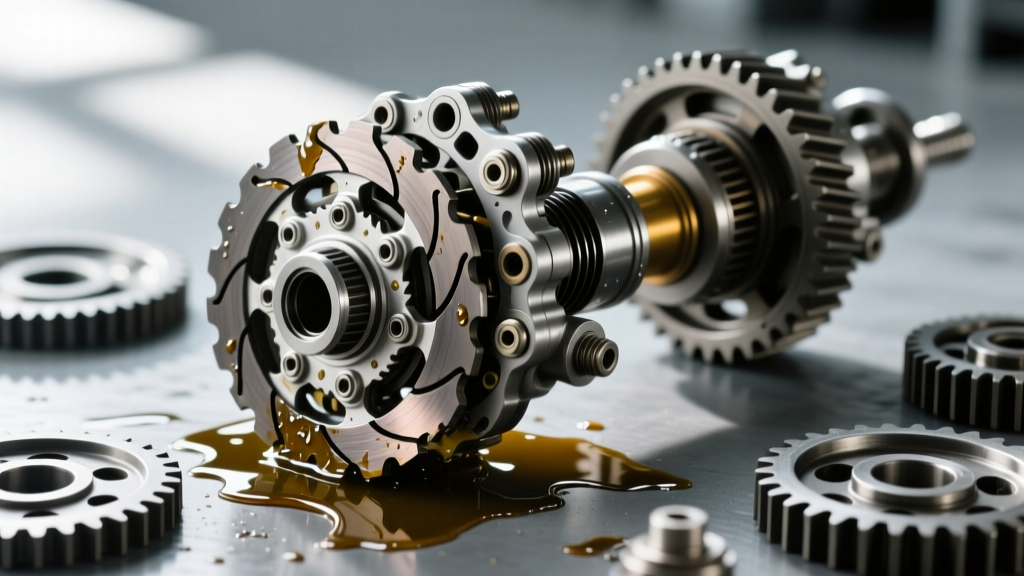
Before installing the new fork and pivot, always inspect the input shaft seal and the transmission front case for weeping gear oil or ATF. A leaking input shaft seal will coat the pivot ball in a mixture of gear oil and clutch dust, creating an abrasive grinding paste that accelerates fork wear by up to 400%. Always replace the input shaft seal and pilot bearing whenever the transmission is removed for a pivot service.
Furthermore, beware of cheap aftermarket clutch forks. According to metallurgical testing referenced by SAE International, substandard stamped-steel forks often lack proper induction hardening at the pivot contact points. Investing in OEM or premium aftermarket forgings (such as those from Sachs, LuK, or McLeod) ensures the pivot pads can withstand the 2,500+ lbs of clamping force exerted by modern high-torque pressure plates.
Final Thoughts on Drivetrain Diagnostics
While the industry continues to innovate with advanced automatics and EVs, the mechanical realities of clutch actuation remain grounded in physics. By understanding the distinct mechanical signature of clutch fork and pivot binding, and knowing how to confidently rule out a transmission converter clutch failure, you elevate your shop's diagnostic accuracy. Rely on precise measurements, correct high-temp lubricants, and strict torque protocols to ensure every clutch job you perform stands the test of time.