The Anatomy of Push-Type Clutch Forks and Pivot Balls
When automotive enthusiasts and sim-racers discuss the infamous my summer car clutch assembly, they are usually referring to the notoriously finicky clutch alignment required in the cult-classic vehicle simulation game. However, the game's fictional Satsuma AMP is heavily modeled after 1970s and 1980s rear-wheel-drive Japanese platforms, specifically utilizing a push-type diaphragm clutch system identical to the Toyota K40/K50 and Nissan FS5R71B manual transmissions. In the real world, diagnosing clutch fork and pivot ball issues on these legacy RWD transmissions requires a deep understanding of lever geometry, metallurgy, and precise bellhousing clearances.
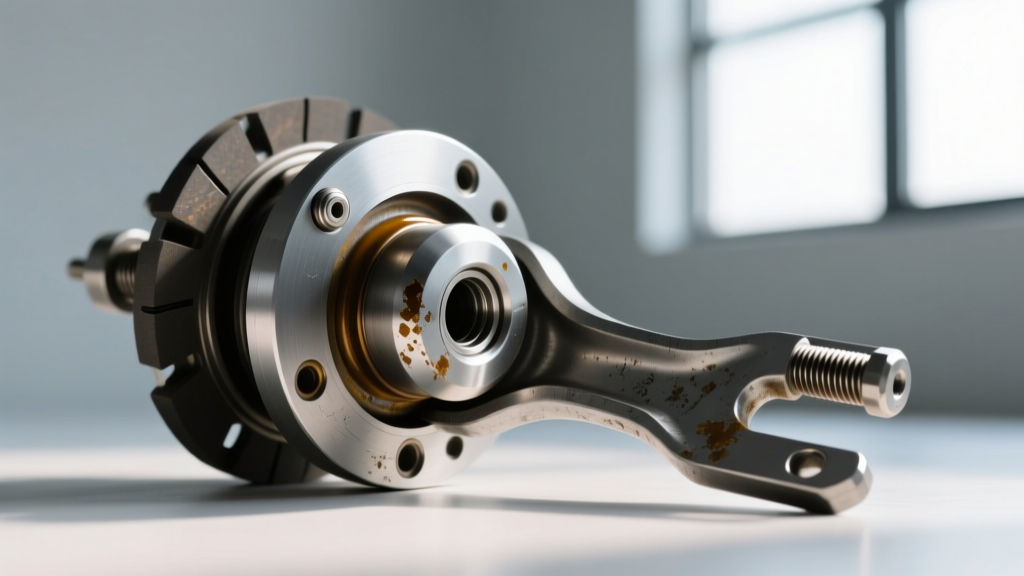
The push-type clutch release mechanism relies on a stamped steel or cast iron clutch fork that pivots on a spherical stud (the pivot ball). When the clutch pedal is depressed, the slave cylinder or cable pushes the fork pad. The fork pivots on the ball, forcing the throwout bearing (release bearing) against the diaphragm spring fingers. If the pivot ball is worn, or the fork is bent, the mechanical advantage is lost, resulting in incomplete disengagement, severe chatter, or premature bearing failure. As of 2026, with the resurgence of restomodding classic RWD coupes, understanding these specific failure modes is more critical than ever for drivetrain specialists.
Why the 'My Summer Car Clutch' Fails: Sim vs. Reality
In the game, players frequently experience a 'mushy' pedal or a clutch that refuses to disengage because the release bearing is installed backward or the fork is misaligned on the pivot ball. In a real-world garage, this exact scenario happens when mechanics fail to verify the pivot ball height relative to the bellhousing face, or when they reuse a fatigued stamped-steel fork behind a high-clamp-load aftermarket pressure plate. The physics remain the same: if the pivot point shifts under load, the 1.5:1 or 1.8:1 leverage ratio of the fork is compromised, transferring lateral stress to the transmission input shaft bearing retainer.
Diagnostic Matrix: Fork & Pivot Failure Modes
Before tearing down the bellhousing, use this diagnostic matrix to correlate pedal feel and auditory symptoms with specific mechanical faults within the fork and pivot assembly.
| Symptom | Probable Fork/Pivot Cause | Expert Verification Method |
|---|---|---|
| Pedal pulsation or chatter upon engagement | Pivot ball wear creating a flat spot; fork rocking laterally | Measure pivot sphere with digital calipers; check for >0.015-inch variance |
| Clutch fails to fully disengage (grinding into gear) | Stamped steel fork flexing under high diaphragm spring pressure | Perform static load test on fork; inspect for micro-fractures at the pivot dimple |
| Squealing or scraping noise at rest (pedal released) | Fork return spring weak; fork resting against the pivot collar | Check return spring tension; verify fork pad clearance to slave cylinder pushrod |
| Over-center binding (pedal stays on the floor) | Pivot ball height incorrect; throwout bearing collar too long | Measure pivot ball height from bellhousing face; verify over-center geometry |
Pivot Ball Wear and the 'Mushy' Pedal Syndrome
The pivot ball is typically a hardened steel sphere threaded onto a stud, or an integrated cast boss on the transmission casing. Over 80,000 to 100,000 miles, the constant articulation and high clamping forces (often exceeding 2,400 lbs of force at the pressure plate, translating to roughly 1,300 lbs of force at the fork tip) will wear a flat spot into the ball or the mating dimple on the clutch fork. According to technical bulletins from Exedy USA, a pivot ball that is out-of-round by more than 0.015 inches will cause the fork to 'cam' or twist laterally during engagement. This lateral twist translates directly into pedal pulsation and uneven pressure plate finger wear. Always measure the pivot ball with a micrometer across three different axes before reusing it during a clutch replacement.
Clutch Fork Flex and Ratio Loss
Many OE clutch forks from the 1970s and 80s are manufactured from stamped, welded steel. While adequate for stock 130-horsepower engines and 1800-lb clamping forces, upgrading to a performance ceramic or heavy-duty organic disc (which can require up to 3,200 lbs of clamping force) will cause a stock stamped fork to physically bow. This flex absorbs pedal travel. You might push the slave cylinder 0.75 inches, but due to fork flex, the throwout bearing only moves 0.40 inches. If you are upgrading the pressure plate on a legacy RWD transmission, you must upgrade to a forged steel or ductile iron aftermarket clutch fork to maintain rigid mechanical leverage.
Expert Best Practices for Measurement and Assembly
Proper assembly of the clutch fork, pivot ball, and release bearing is where most amateur builds fail. Follow these strict metrology and assembly protocols to ensure a factory-perfect pedal feel.
Checking Pivot Ball Height and Throwout Bearing Clearance
The distance from the bellhousing mating surface to the center of the pivot ball sphere is a critical dimension. For example, on many Toyota K-series transmissions, this distance is approximately 1.65 inches. If you install an aftermarket block plate or resurface the flywheel significantly, the relationship between the flywheel, the pressure plate fingers, and the pivot ball changes. If the pivot ball is too far back, the clutch fork will push the throwout bearing at a severe downward angle, snapping the bearing collar or gouging the transmission input shaft bearing retainer. Use a straight edge and a digital depth gauge to verify that the pivot ball centerline perfectly intersects with the centerline of the diaphragm spring fingers when the clutch is fully engaged.
Torque Specs and Lubrication Rules
Lubricating the clutch fork pivot is a highly debated topic, but drivetrain experts universally agree on one rule: never use standard lithium wheel bearing grease. Standard grease has a low melting point and will eventually liquefy, dripping onto the clutch friction disc and causing catastrophic slip. Furthermore, standard grease attracts clutch dust, forming an abrasive grinding paste that accelerates pivot ball wear.
- Correct Lubricant: Use a high-temperature Molybdenum Disulfide (Moly) grease, such as Toyota Part No. 08887-80406 or Honda Part No. 08798-9010. Apply a thin, translucent film only to the pivot ball sphere and the fork's internal dimple.
- Fork Pad Lubrication: The point where the slave cylinder pushrod contacts the fork pad should receive a small dab of anti-seize or dry moly paste to prevent squeaks during high-frequency pedal actuation.
- Pivot Ball Stud Torque: If your transmission uses a threaded pivot ball stud, torque it to the manufacturer specification. For most M10x1.25 pivot studs in aluminum or cast-iron bellhousings, the spec is 25 to 30 lb-ft. Apply medium-strength threadlocker (Loctite 243) to prevent vibration-induced backing out.
- Bellhousing Alignment: Ensure the bellhousing to engine block bolts are torqued to 55-65 lb-ft. A misaligned bellhousing will force the clutch fork to operate at an offset angle, destroying the pivot ball in under 5,000 miles.
Sourcing the Right Replacement Hardware (2026 Market)
As the classic car market continues to evolve in 2026, sourcing high-quality OE replacement clutch forks and pivot balls has become slightly more challenging due to the discontinuation of certain legacy part numbers. However, specialized aftermarket manufacturers have stepped in. When sourcing parts, look for forged pivot studs (often upgraded from the OE cast versions) and CNC-machined pivot balls that guarantee perfect sphericity. According to the Schaeffler/LuK technical documentation, ensuring the release bearing collar length matches the fork ratio is vital for preventing over-center lockout. A complete OE-style pivot and fork hardware kit for a typical 70s/80s RWD Japanese transmission currently ranges from $45 to $110, a minor investment that prevents a $2,000 bellhousing teardown.
Whether you are troubleshooting a real-world vintage coupe or trying to understand the underlying mechanical logic behind the my summer car clutch simulation, respecting the geometry of the clutch fork and pivot ball is non-negotiable. Precision measurement, correct high-temp lubrication, and rigid hardware selection are the hallmarks of a professional drivetrain build.