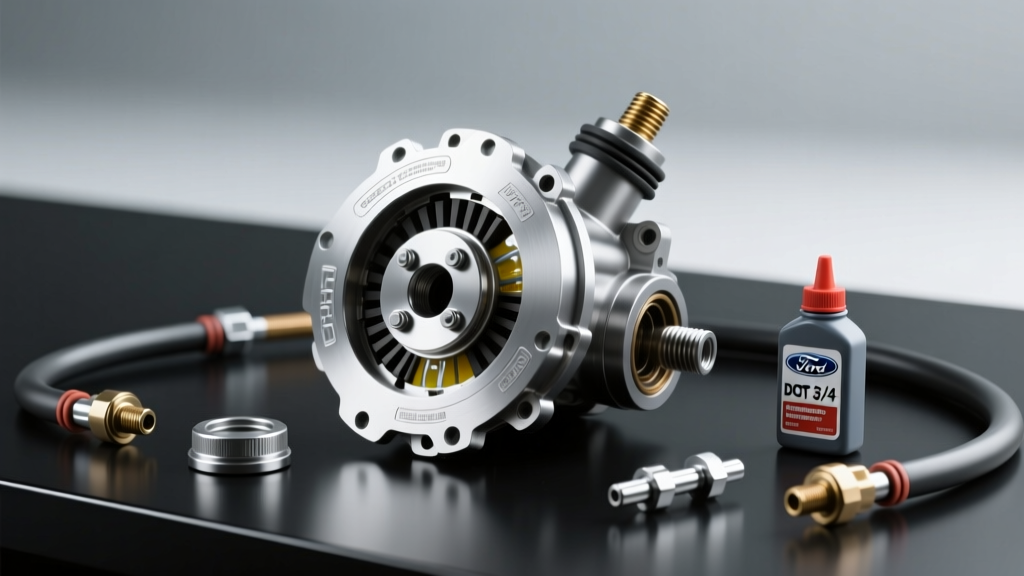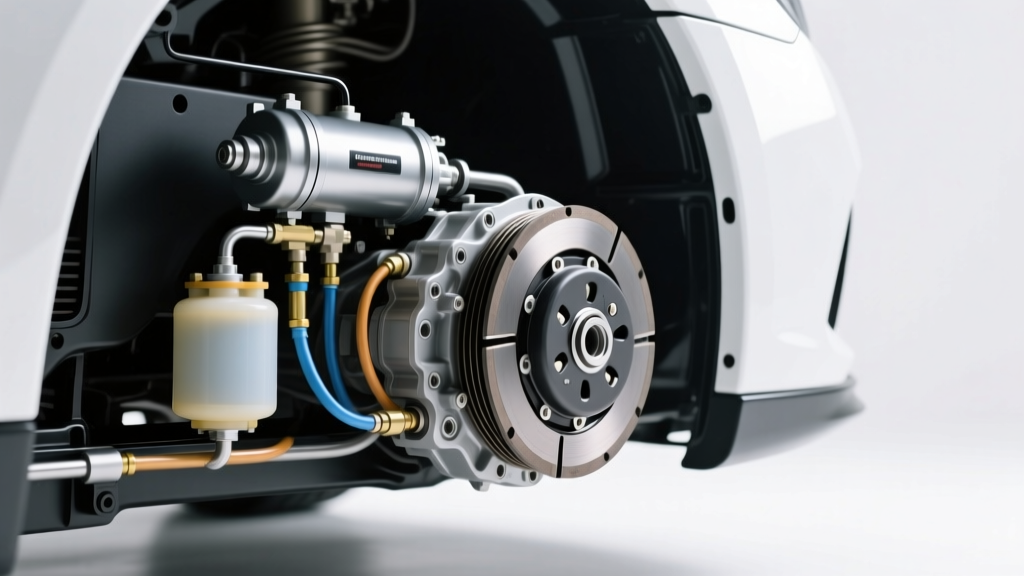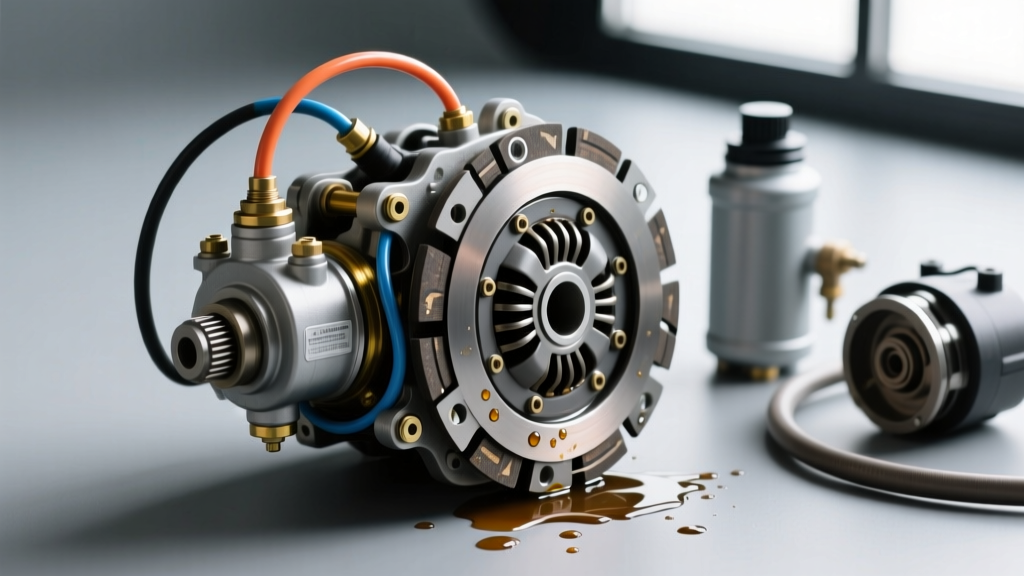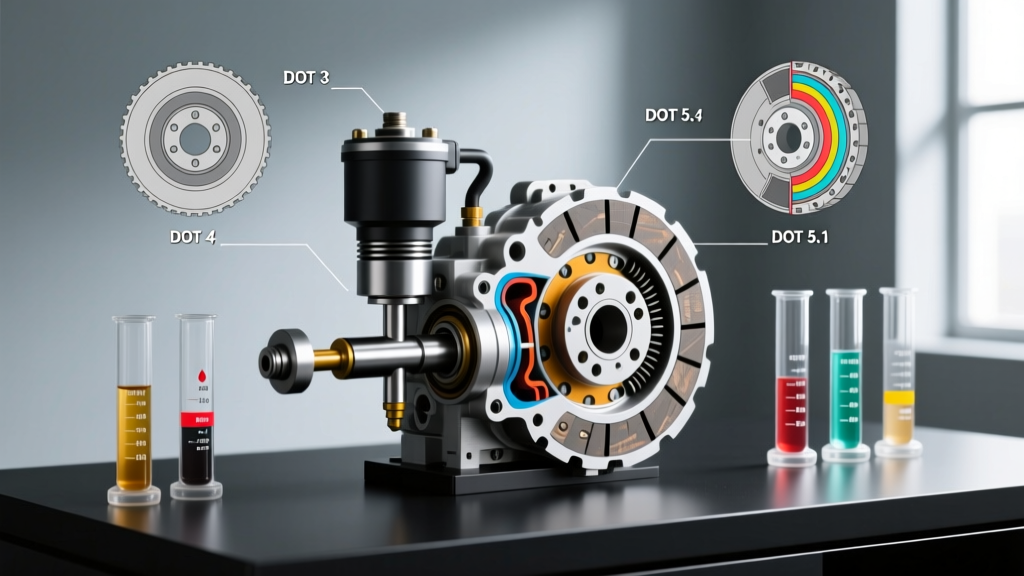
The hydraulic clutch system is a high-pressure, closed-loop environment where fluid chemistry directly dictates the lifespan of internal seals, release bearings, and synchronizers. While enthusiasts often obsess over transmission gear ratios or limited-slip differentials, the hydraulic fluid acting as the force multiplier is frequently neglected until a catastrophic failure occurs. Understanding the exact specifications of clutch hydraulic fluid types is not merely a matter of topping off a reservoir; it requires a fundamental grasp of fluid dynamics, hygroscopy, and seal metallurgy.
The Anatomy of Hydraulics: Reading a Clutch Master Cylinder Diagram
To understand why fluid chemistry matters, we must first visualize the internal environment. When reviewing a standard clutch master cylinder diagram, you will identify the pushrod, primary piston, return spring, and the critical EPDM (Ethylene Propylene Diene Monomer) primary and secondary cup seals. The most vital feature on any clutch master cylinder diagram is the compensating port (or feed hole). This microscopic orifice connects the fluid reservoir to the high-pressure bore, allowing fluid to expand and contract with temperature fluctuations while the clutch is engaged.
If the wrong fluid type is introduced—such as mineral oil into a glycol-based system—the EPDM seals absorb the incompatible hydrocarbons and swell by up to 30% within 48 hours. This swelling physically blocks the compensating port shown in the diagram. The result is a hydraulically locked system: the clutch cannot disengage, the release bearing is subjected to constant rotational friction, and the pressure plate fingers suffer premature fatigue. Preventive maintenance begins with matching the fluid to the seal material engineered into your specific master cylinder.
FMVSS 116 & SAE J1703: Decoding Clutch Hydraulic Fluid Types
In the United States, clutch and brake fluids are governed by the Department of Transportation's FMVSS 116 via eCFR standards, while the SAE International J1703 standard dictates the chemical and physical testing parameters. These standards classify fluids primarily by their base chemistry and boiling points.
DOT 3, DOT 4, and DOT 5.1 (Glycol-Ether Base)
The vast majority of manual transmission vehicles—from a standard Honda Civic to a heavy-duty Ford F-250 with a ZF S6-650 transmission—utilize glycol-ether-based fluids. These fluids are hygroscopic, meaning they actively absorb moisture from the atmosphere through the microscopic pores of the reservoir cap diaphragm and rubber flex lines.
- DOT 3: The baseline standard. It has a lower wet boiling point and degrades faster under high-thermal loads (e.g., stop-and-go traffic with a heavy ceramic clutch).
- DOT 4: Formulated with borate esters to increase the boiling point and buffer against acid formation as the fluid absorbs water. This is the OEM standard for 90% of modern passenger vehicles.
- DOT 5.1: A high-performance glycol blend designed for extreme thermal environments, often used in motorsport or heavy towing applications. It maintains a higher wet boiling point but requires more frequent flushing due to its aggressive moisture absorption rate.
DOT 5 (Silicone Base)
DOT 5 is a polydimethylsiloxane (silicone) fluid. Unlike glycol fluids, it is hydrophobic (does not absorb water). While this sounds ideal for classic car restorations that sit in garages for months, it is generally contraindicated for modern clutch systems. Silicone fluid is highly compressible under rapid pressure changes, leading to a 'spongy' clutch pedal feel. Furthermore, it does not lubricate EPDM seals as effectively as glycol, leading to accelerated bore scoring in aluminum master cylinders.
LHM & Mineral Oil
Mineral oil-based fluids, such as Pentosin LHM+ (Part #122309), are strictly reserved for specific European applications (e.g., Citroën hydropneumatic systems, certain Rolls-Royce models, and Magura motorcycle hydraulic clutches). These systems utilize specialized synthetic rubber seals designed to operate in petroleum-based environments.
Fluid Compatibility & Boiling Point Matrix
The table below outlines the critical thresholds defined by FMVSS 116. The 'Wet' boiling point is measured after the fluid has absorbed 3.7% water by volume—a realistic scenario for a neglected system after two years of service.
| Fluid Type | Base Chemistry | Dry Boiling Point | Wet Boiling Point | Seal Compatibility |
|---|---|---|---|---|
| DOT 3 | Glycol-Ether | 401°F (205°C) | 284°F (140°C) | EPDM Rubber |
| DOT 4 | Borate-Ester / Glycol | 446°F (230°C) | 311°F (155°C) | EPDM Rubber |
| DOT 5.1 | Borate-Ester / Glycol | 500°F (260°C) | 356°F (180°C) | EPDM Rubber |
| DOT 5 | Silicone | 500°F (260°C) | 356°F (180°C) | Silicone-Specific |
| LHM+ | Mineral Oil | N/A (Non-Hygroscopic) | N/A | Synthetic / Nitrile |
The Catastrophic Cost of Cross-Contamination
Warning: Never mix DOT 5 (Silicone) with DOT 3, 4, or 5.1. The resulting chemical reaction creates a coagulated, gelatinous sludge that will instantly destroy the internal valving of a hydraulic concentric slave cylinder (CSC) and ruin the master cylinder bore.
Cross-contamination is a leading cause of premature clutch hydraulic failure. If a mechanic accidentally tops off a DOT 4 system with mineral oil (LHM) or power steering fluid, the EPDM seals will absorb the petroleum distillates. As noted when analyzing the clutch master cylinder diagram, this swelling restricts the compensating port. The driver will experience a clutch that fails to return to the top of the pedal stroke, eventually leading to a complete inability to shift gears while the engine is running. The only remedy for petroleum contamination is a complete replacement of the master cylinder, slave cylinder, and all rubber flex lines, followed by a rigorous flushing of the hard lines.
Preventive Maintenance: Flushing & Moisture Testing Protocols
Because glycol-based fluids are hygroscopic, preventive maintenance relies on monitoring moisture content rather than just mileage. A fluid that looks dark but tests at 1% moisture is safer than clear fluid that has absorbed 4% water.
Diagnostic Tools & Thresholds
- Electronic Moisture Pens: Measure the dielectric constant of the fluid. A reading of >3% moisture dictates an immediate flush. At 3.7%, the fluid's boiling point drops to its FMVSS 'Wet' rating, increasing the risk of vapor lock during aggressive driving.
- Test Strips: Chemical dip strips (e.g., FTE Automotive test strips) measure the copper corrosion inhibitor depletion level. If the strip turns dark purple, the fluid's anti-corrosion additives are exhausted, putting the internal steel bore of the slave cylinder at risk of pitting.
The Gravity & Pressure Flush Procedure
When performing a 2-year or 30,000-mile preventive flush, follow these precision steps to avoid introducing air into the complex routing of modern hydraulic lines:
- Reservoir Prep: Extract old fluid using a syringe. Do not let the reservoir run dry, or you will introduce air into the master cylinder primary port.
- Pressure Bleeding: Attach a pneumatic pressure bleeder to the reservoir cap at 15-20 PSI. This forces fresh fluid through the system without requiring a helper to pump the pedal (which can over-travel the piston and score the bore on worn cylinders).
- Bleeder Valve Torque: Most clutch slave cylinder bleeder valves (M8x1.0 or M10x1.25 threads) are made of soft brass or aluminum. Over-torquing will strip the threads. Use a torque wrench set to 8-12 Nm (70-105 lb-in). If the valve is seized, apply penetrating fluid and use a 6-point box wrench to avoid rounding the hex head.
- Pedal Cycling: After the fluid runs clear and bubble-free, slowly cycle the clutch pedal 20 times to seat the internal cups and verify the compensating port is clear.
Sourcing & Cost Guide for Modern Applications
Investing in high-quality fluid prevents thousands of dollars in transmission-out repair bills. Based on current market data and OEM technical service bulletins, here are the top-tier fluid recommendations:
- ATE Type 200 (DOT 4): Part #03.9901-5802.2. A premium low-viscosity fluid ideal for modern vehicles with integrated cruise control and ABS/ESC clutch-interlock systems. Cost: $18 - $24 per liter.
- Castrol SRF (DOT 4 Racing): Part #15036C. A silicone-ester blend that resists hygroscopy better than standard DOT 4. Ideal for track-day vehicles with heavy aftermarket clutches (e.g., twin-disc setups). Cost: $75 - $90 per liter.
- Pentosin Super DOT 4: Part #122389. Excellent for European applications (BMW, VW, Audi) requiring specific viscosity parameters for hydraulic concentric slave cylinders. Cost: $15 - $20 per liter.
Professional clutch hydraulic flush services typically range from $80 to $150 at independent transmission shops. However, because the clutch system holds relatively little fluid (usually 250ml to 500ml total capacity), a DIY preventive flush takes less than 30 minutes and costs under $25, making it one of the highest-ROI maintenance tasks you can perform on a manual transmission vehicle.
For further technical specifications on fluid testing and hydraulic system architecture, refer to the ATE Brake & Clutch Fluid Technical Data repository. By respecting the chemistry outlined in your vehicle's service manual and understanding the mechanical realities depicted in the clutch master cylinder diagram, you ensure crisp, reliable disengagement for the life of your drivetrain.