The Hidden Link: How a Clutch Fluid Leak Causes Slipping
When drivers experience clutch slipping, the immediate assumption is often a worn friction disc or a fatigued pressure plate. However, in modern hydraulic manual transmissions, a clutch fluid leak is a frequent, severely misunderstood culprit. As of 2026, with the final generations of internal combustion manual transmissions operating under higher torque loads and tighter bellhousing tolerances, the hydraulic actuation system is under more stress than ever. Understanding the intersection between hydraulic pressure loss, fluid contamination, and clutch slipping symptoms is critical for accurate diagnosis and long-term preventive maintenance.
A manual clutch requires absolute zero residual hydraulic pressure to allow the release bearing to retract and the diaphragm spring to apply full clamping force (often exceeding 2,500 lbs of pressure on the friction disc). When a hydraulic leak occurs, it doesn't just cause disengagement issues; it fundamentally alters the clamping geometry, leading to catastrophic micro-slipping that mimics a worn-out clutch.
Internal vs. External Master Cylinder Bypass
Not all leaks are visible. An external clutch fluid leak at the slave cylinder or hard line will eventually drop the reservoir level, introducing air into the system and causing a spongy pedal. However, an internal leak inside the master cylinder is far more insidious. If the internal cup seals degrade or the cylinder bore becomes scored due to moisture-contaminated fluid, the master cylinder can bypass fluid internally. Worse, if the rubber seals swell from old, degraded DOT fluid, the master cylinder piston may fail to fully retract. This blocks the compensation port, trapping residual hydraulic pressure in the line. The release bearing remains slightly engaged against the diaphragm spring, causing continuous slipping under load that rapidly glazes the friction material.
Friction Contamination: The Glycol-Ether Threat
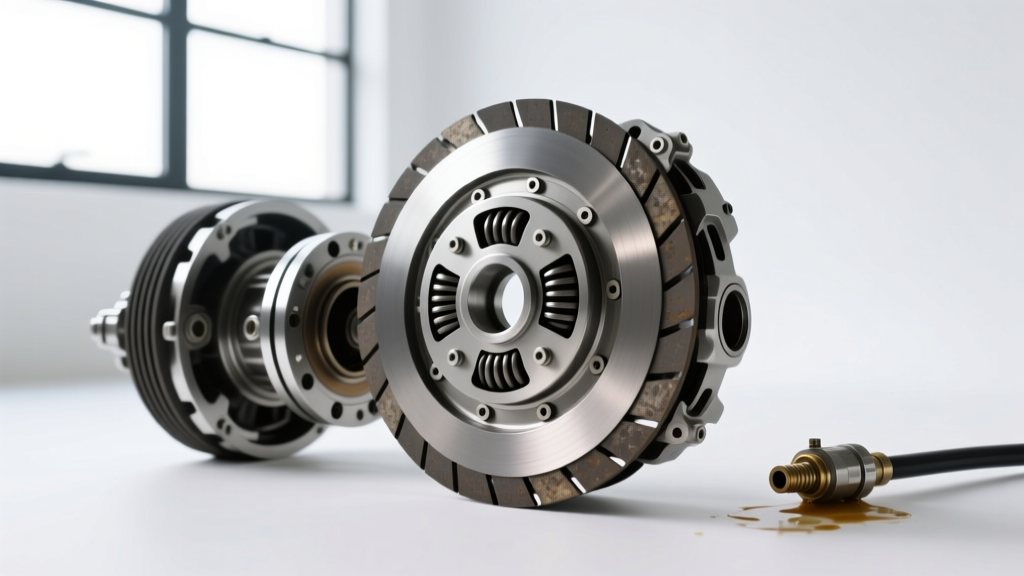
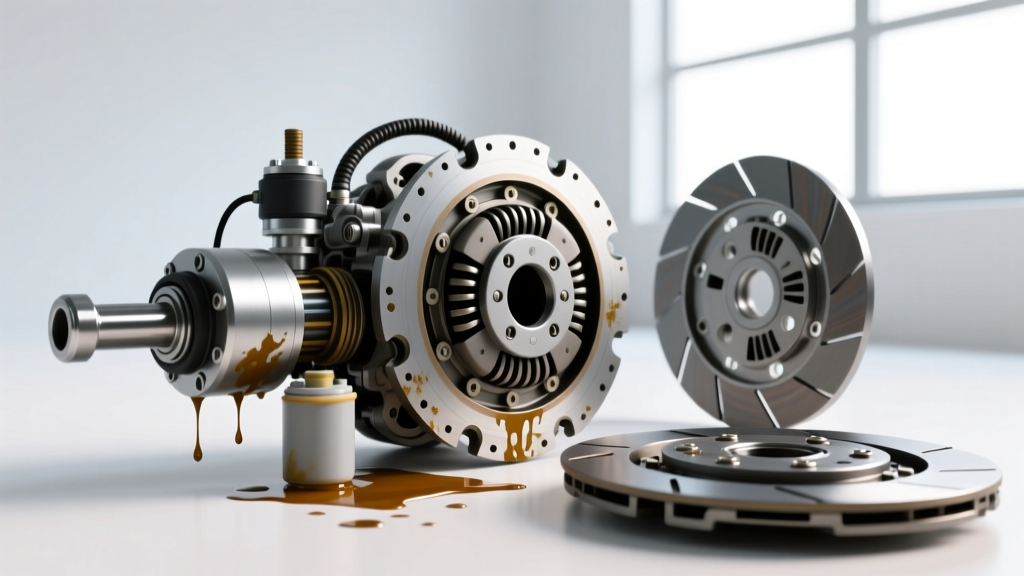
In applications utilizing an internal Concentric Slave Cylinder (CSC)—such as the GM Tremec T56 Magnum or Ford MT-82—a rear seal leak on the slave cylinder boot sprays DOT fluid directly onto the friction disc. DOT 3, DOT 4, and DOT 5.1 fluids are glycol-ether based. Unlike petroleum-based oils which might cause localized slipping, glycol-ether fluids act as aggressive chemical solvents and severe lubricants. Organic, ceramic, and Kevlar friction materials will absorb the glycol, destroying the coefficient of friction across the entire disc surface. If you diagnose slipping accompanied by a sweet, acrid burning smell during heavy acceleration, hydraulic contamination is your primary suspect.
Symptom Matrix: Hydraulic Leak vs. Friction Disc Wear
Differentiating between a mechanical wear issue and a hydraulic fault prevents unnecessary transmission removal. Use the following diagnostic matrix to isolate the root cause of your slipping symptoms.
| Diagnostic Symptom | Hydraulic Leak / Contamination | Normal Friction Disc Wear |
|---|---|---|
| Pedal Freeplay | Often reduced or entirely absent (residual pressure) | Normal or slightly increased |
| RPM Flare Point | Flares inconsistently; worsens when fluid is hot | Flares consistently at high RPM / high gear |
| Fluid Level | Dropping, or fluid level rises as brake fluid migrates | Remains static |
| Odor | Sweet, chemical burning (glycol) at the bellhousing | Dry, abrasive friction smell (like burnt brakes) |
| Engagement Bite Point | Bite point wanders or moves very close to the floor | Bite point gradually moves higher over time |
Step-by-Step Diagnostic Protocol
To accurately diagnose clutch slipping symptoms rooted in a hydraulic fault, follow this systematic preventive maintenance and diagnostic protocol.
1. The Paint and Pedal Test
Inspect the firewall directly beneath the clutch master cylinder reservoir. DOT fluid is highly corrosive to automotive paint. If you see bubbling, peeling, or stripped paint, you have an external master cylinder weep. Next, perform the pedal depression test: press the clutch pedal to the floor and hold it for 60 seconds. If the pedal slowly creeps upward or the transmission begins to grind when shifting into reverse, the internal master cylinder seals are bypassing.
2. Bellhousing Weep Hole Inspection
For internal CSC setups, locate the inspection cover or the bottom bellhousing weep hole. Use a borescope to inspect the slave cylinder boot. According to Schaeffler (LuK), a common failure mode of plastic-bodied CSCs is the weeping of the primary seal, which pools fluid inside the bellhousing boot. If you see amber or dark brown residue, the CSC is leaking onto the disc, necessitating a full clutch and slave cylinder replacement.
3. Braided Line Expansion Check
OEM rubber hydraulic lines degrade internally over time, creating micro-flaps that act as one-way check valves, or they expand under pressure, robbing the slave cylinder of travel. Have an assistant depress the clutch while you squeeze the rubber line. Excessive bulging indicates a failing line that contributes to incomplete disengagement and subsequent slipping.
Preventive Maintenance: Protecting the Hydraulic Circuit
Preventing a clutch fluid leak and the resulting slipping requires a strict maintenance schedule focused on fluid chemistry and hardware upgrades.
- Hygroscopic Fluid Flushing: DOT 4 fluid absorbs up to 2% of its volume in moisture annually. This water lowers the boiling point and causes internal aluminum bore corrosion in the master cylinder. Flush the clutch hydraulic system every 24 months or 30,000 miles using a high-quality synthetic DOT 4 or DOT 5.1 fluid (e.g., Castrol SRF or Motul RBF 600).
- Reservoir Cap Diaphragm Inspection: The rubber diaphragm under the master cylinder cap degrades and can collapse into the fluid, blocking the compensation port. Inspect and replace this diaphragm during every fluid flush.
- Upgrade to Braided Stainless Lines: Replace OEM rubber soft-lines with PTFE-lined, stainless steel braided clutch lines. This eliminates volumetric expansion and prevents micro-weeping at the crimped fittings.
OEM vs. Aftermarket: Repair Costs and Torque Specifications
When a hydraulic leak has contaminated the friction surfaces, a simple fluid top-off will not resolve the slipping. The entire friction assembly and hydraulic actuator must be replaced. Below is real-world repair data for common performance applications, referencing Tremec service guidelines for the T56 Magnum platform.
| Component | OEM / Standard Replacement | Aftermarket Upgrade | Torque Specification |
|---|---|---|---|
| Concentric Slave Cylinder (GM LS) | LuK 510 0085 10 (~$180) | Tick Performance CSC (~$350) | 18-22 Nm (13-16 lb-ft) |
| External Slave (Honda K-Series) | Sachs SH5005 (~$95) | Clutch Masters Alloy (~$210) | 12 Nm (9 lb-ft) |
| Master Cylinder (Universal) | FTE / OEM Plastic (~$60) | Tilton 7/8" Bore Alloy (~$160) | 25 Nm (18 lb-ft) to firewall |
| Bellhousing to Engine Block | N/A | ARP Fasteners Recommended | 50 Nm (37 lb-ft) |
Expert Warning: Never use DOT 5 (silicone-based) fluid in a modern hydraulic clutch system. While it does not absorb water or eat paint, its high compressibility results in a severely spongy pedal feel and poor modulation, which can indirectly cause clutch slipping due to imprecise release bearing control during aggressive launches.
Conclusion
Diagnosing clutch slipping symptoms requires looking beyond the friction disc. A clutch fluid leak, whether an external weep, an internal master cylinder bypass, or a catastrophic CSC seal failure, will rapidly destroy a clutch assembly through residual pressure or chemical contamination. By implementing a rigorous preventive maintenance schedule—centered on bi-annual DOT fluid flushes, compensation port inspections, and braided line upgrades—you can maintain absolute hydraulic integrity, ensuring your manual transmission shifts flawlessly and clamps with maximum force for years to come.