The Hidden Link Between Hydraulics and Clutch Engagement
For beginner and intermediate drivers of manual transmission vehicles, few things are as alarming as clutch engagement issues. You press the pedal to the floor, attempt to slide the shifter into first gear, and are met with a violent grinding noise or a stubborn refusal to enter the gear gate. While the immediate instinct is to blame the transmission synchronizers or the pressure plate, the root cause is frequently hiding in plain sight: the hydraulic system. Specifically, the condition and specification of your brake and clutch fluid dot 4.
In roughly 85% of modern manual vehicles—from the Honda Civic Si to the Ford Mustang and Subaru WRX—the clutch operates on a shared hydraulic circuit with the braking system. When this fluid degrades, absorbs moisture, or boils, the clutch fails to disengage fully. This comprehensive guide breaks down the science of hydraulic clutch systems, how fluid degradation causes engagement failures, and the exact diagnostic steps required to fix the issue.
How Hydraulic Clutch Disengagement Works
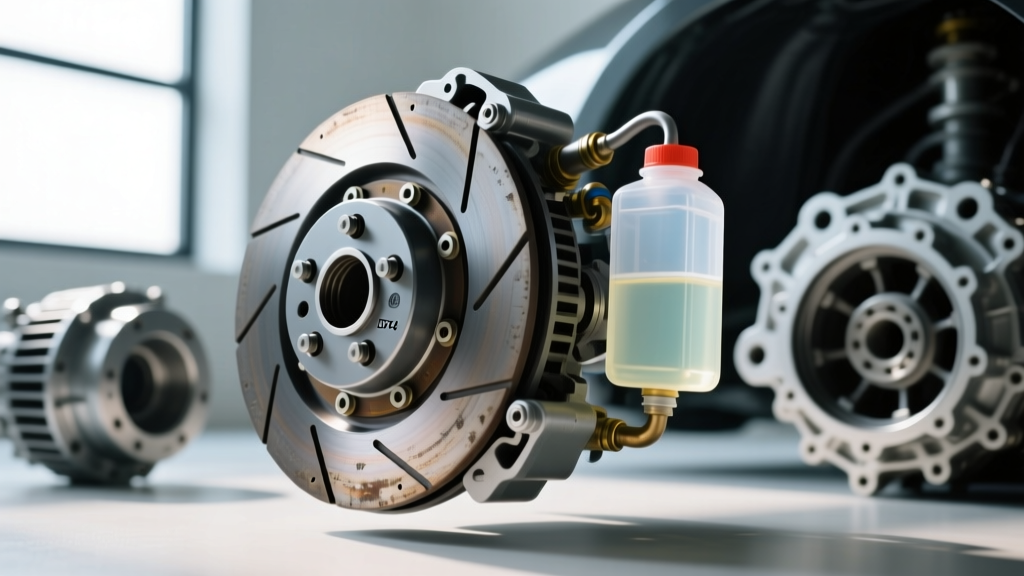
To understand why fluid causes engagement issues, you must first understand the mechanical pathway of your left foot. When you depress the clutch pedal, you are pushing a pushrod into the Clutch Master Cylinder (CMC). This cylinder forces hydraulic fluid through a high-pressure line (often a combination of hard steel lines and flexible rubber hoses) down to the Clutch Slave Cylinder (CSC), which is mounted on or inside the transmission bell housing.
The slave cylinder then pushes a release fork, which pivots on a ball stud and forces the throwout bearing against the fingers of the clutch pressure plate. This action lifts the pressure plate away from the friction disc, disconnecting the engine's rotational force from the transmission input shaft. If the hydraulic fluid is compromised, the physical force of your foot is absorbed by compressible gases (air or boiled fluid vapor) rather than being transferred to the slave cylinder. The result is a 'dragging' clutch that refuses to disengage.
The Chemistry and Specifications of DOT 4 Fluid
Why do automakers specify DOT 4 for these shared systems? The answer lies in boiling points and hygroscopic properties. According to the Federal Motor Vehicle Safety Standard (FMVSS) 116 and SAE J1704 specifications, brake and clutch fluid dot 4 must meet strict thermal thresholds to prevent vapor lock under extreme duress.
Unlike engine oil, glycol-based hydraulic fluids are hygroscopic, meaning they actively absorb moisture from the atmosphere through microscopic pores in rubber hoses and the reservoir cap vent. As water content increases, the fluid's boiling point plummets.
| Fluid Type | Dry Boiling Point (Min) | Wet Boiling Point (Min) | Chemical Base | Primary Application |
|---|---|---|---|---|
| DOT 3 | 205°C (401°F) | 140°C (284°F) | Glycol Ether | Older economy vehicles, light-duty brakes |
| DOT 4 | 230°C (446°F) | 155°C (311°F) | Glycol Ether / Borate Ester | Modern performance cars, shared clutch/brake systems |
| DOT 5.1 | 260°C (500°F) | 180°C (356°F) | Glycol Ether / Borate Ester | Heavy-duty, ABS-heavy, and track-focused vehicles |
| DOT 5 | 260°C (500°F) | 180°C (356°F) | Silicone | Classic cars, military (DO NOT mix with DOT 4) |
Because the slave cylinder sits inches away from the exhaust downpipe and the friction-heavy clutch disc, it is subjected to immense radiant heat. If your fluid has absorbed 3-4% water by volume (common after 3 years of neglect), the wet boiling point drops dangerously close to ambient bell-housing temperatures. The fluid boils, creates a vapor pocket, and your clutch pedal suddenly feels like stepping on a wet sponge.
Step-by-Step Diagnosis of Engagement Issues
Before ordering a new clutch kit or dropping the transmission, perform these beginner-friendly diagnostic tests to isolate the hydraulic system.
1. The Pedal Sponginess and Bypass Test
Pump the clutch pedal three times rapidly. On the third pump, press the pedal to the floor and hold steady pressure. If the pedal slowly rises back toward your foot, or if you feel it 'squirm' under constant pressure, the internal seals inside the Clutch Master Cylinder are bypassing fluid. The CMC is failing internally and must be replaced.
2. Visual Fluid Inspection
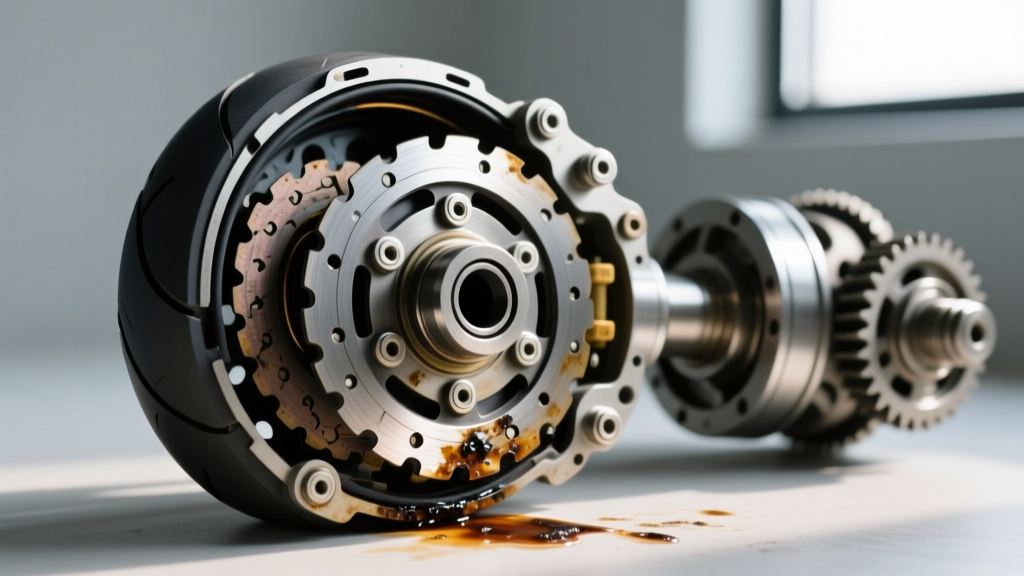
Open the shared brake/clutch reservoir. Fresh DOT 4 fluid is nearly clear with a slight amber tint. If the fluid looks like dark cola or contains black particulate matter, the rubber seals in the slave cylinder or master cylinder are disintegrating. This contamination will score the cylinder walls, leading to external leaks and engagement failure.
3. Slave Cylinder Stroke Measurement
Have an assistant press the clutch pedal while you observe the slave cylinder pushrod (if externally mounted). Measure the travel distance. For most FTE or Sachs external slave cylinders, the stroke should be between 12mm and 15mm. If travel is less than 10mm, you have air in the lines, a restriction in the hard line, or a failing master cylinder that cannot displace adequate volume.
Bleeding the System: Torque Specs and Procedures
If you have identified air in the system, a proper bleed is required. According to the experts at Schaeffler's REPxPERT portal, gravity bleeding is often insufficient for clutch systems due to the routing of the hydraulic lines, which frequently trap air in high loops near the firewall.
Recommended Procedure (Pressure or Reverse Bleeding):
- Use a motive power bleeder set to 15-20 PSI. Do not exceed 25 PSI, or you risk blowing out the master cylinder reservoir cap seal.
- Use a high-quality brake and clutch fluid dot 4 (e.g., Motul RBF 600 or Castrol SRF for track use, or standard Bosch ESI6 for street use).
- Torque Specifications: When reinstalling the bleeder screw, torque to 6-8 Nm (4.5-6 lb-ft). Over-torquing will snap the soft brass or steel screw inside the slave cylinder casting, requiring a complete slave replacement.
- Master Cylinder Mounting: Torque the firewall mounting nuts to 12-15 Nm (9-11 lb-ft).
When Hydraulics Aren't the Problem: Mechanical Failures
If your fluid is pristine, the system is perfectly bled, and the slave cylinder is achieving full stroke, your engagement issues are mechanical. Here are the most common culprits:
The Worn Pivot Ball (Common on GM LS Engines)
In vehicles like the Chevrolet Camaro or Corvette, the clutch fork rides on an aluminum pivot ball. Over 60,000 miles, the steel fork wears a crater into the soft aluminum ball. This changes the geometry of the throwout bearing, preventing it from traveling far enough to disengage the clutch. The fix is upgrading to a hardened steel pivot ball (Part numbers like Tick Performance or B&M Racing, typically costing $30-$50).
Bent Clutch Fork or Worn Throwout Bearing
If you hear a distinct metallic 'scraping' or 'chirping' noise that changes pitch exactly when the clutch pedal crosses the engagement point, the throwout bearing is likely failing. If the bearing seizes, it can melt the plastic carrier or bend the stamped steel fork. Replacing an internal Concentric Slave Cylinder (CSC) like the LuK 510007510 (common in VW/Audi applications) requires transmission removal. Expect parts to cost between $80 and $150, with labor ranging from $600 to $900 depending on the shop rate.
Maintenance Schedule for Longevity
To prevent catastrophic engagement failures and protect your investment in high-quality clutch components, adhere to a strict hydraulic maintenance schedule. Flush the shared brake and clutch system every 2 years or 30,000 miles, whichever comes first. Because the clutch line holds a very small volume of fluid (often less than 100ml), it is highly susceptible to localized boiling and moisture saturation. Regularly flushing with fresh DOT 4 fluid ensures that the hydraulic pressure remains instantaneous, keeping your shifts crisp and your transmission synchronizers safe from the damage caused by a dragging clutch.