The Parasitic Drag Dilemma: Drivetrain vs. HVAC
When a driver experiences severe engine bogging, RPM drops at idle, or a manual transmission that refuses to disengage smoothly, the immediate assumption is often a failing drivetrain component. However, in modern automotive diagnostics, "clutch drag and release problems" encompass two entirely different systems: the manual transmission clutch assembly and the electromagnetic AC compressor clutch. A sticking AC relay can keep the compressor engaged continuously, creating massive parasitic drag that perfectly mimics a seized throwout bearing or a dragging transmission friction disc.
In this comprehensive diagnostic guide, we will break down how to isolate manual transmission clutch drag from HVAC-induced parasitic load. Crucially, we will answer a frequent diagnostic question from DIYers and junior techs: where is the ac clutch relay located, and how do you test it to rule out electrical gremlins?
Where is the AC Clutch Relay Located? (Vehicle Guide)
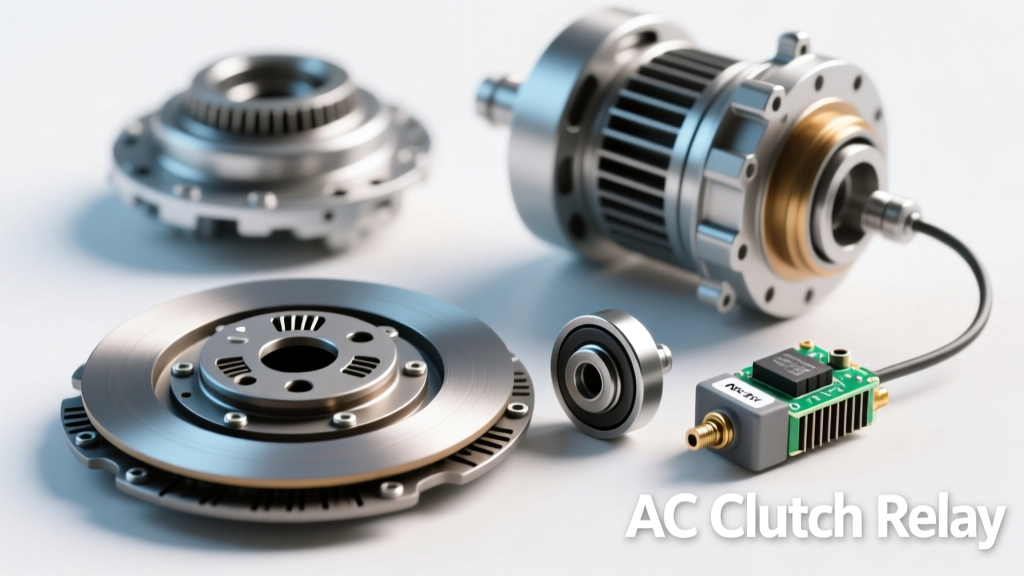
Before tearing into a manual transmission bellhousing, you must eliminate the AC compressor as the source of engine drag. When the AC clutch relay sticks in the closed position, the compressor clutch coil receives constant 12V power, locking the compressor pulley to the input shaft even when the cabin climate control is off. This causes severe RPM droop and feels exactly like a transmission clutch that won't release.
So, where is the ac clutch relay located? In 90% of modern vehicles, it resides in the underhood Power Distribution Center (PDC) or fuse box. Below is a quick-reference table for common platforms.
| Vehicle Platform | Relay Location | OEM / Aftermarket Part Number | Typical Cost (2026) |
|---|---|---|---|
| Ford F-150 (3.5L EcoBoost) | Underhood BJB (Battery Junction Box), Position 51 | Motorcraft BRPA-175 / SMP R3146 | $12 - $18 |
| Chevy Silverado 1500 (5.3L V8) | Underhood Fuse Block, Relay 42 (A/C COMP) | ACDelco 13577844 / Standard RY-116 | $14 - $22 |
| Honda Civic (1.5T / 2.0L) | Underhood Fuse Box, MG CLUTCH Relay | Denso 567-0002 / Omron G8HL-H71 | $15 - $25 |
| Toyota Tacoma (3.5L V6) | Engine Compartment Relay Block (MG CLT) | Toyota 90987-02028 | $18 - $30 |
Pro Tip: Always consult the specific year's service manual or the diagram printed on the underside of the fuse box cover, as automakers frequently update PDC layouts mid-generation.
Step 1: Eliminating AC Compressor Clutch Drag
Before diagnosing the manual transmission, perform this 5-minute electrical test to ensure the AC system isn't the culprit.
1.1 The Relay Swap and Multimeter Test
Locate the relay using the chart above. Pull the AC clutch relay and inspect the pins for heat damage or carbon tracking. Using a digital multimeter (DMM), test the relay's internal coil and switching circuit:
- Coil Resistance: Set DMM to Ohms. Probe pins 85 and 86. A healthy relay coil should read between 60 and 120 ohms. If it reads OL (Open Loop) or near zero (short), the relay is dead.
- Switching Circuit: Probe pins 30 and 87. It should read OL. Apply 12V to pin 86 and ground to pin 85. You should hear a distinct click, and the DMM should now read less than 0.5 ohms across 30 and 87.
If the relay tests fine but the compressor is still dragging, the issue may be a short to power in the wiring harness between the PDC and the compressor clutch coil, or a failed PCM driver transistor.
1.2 Checking the AC Clutch Air Gap
If the electrical side checks out, mechanical drag within the AC compressor clutch itself can cause release problems. Over time, the clutch friction face wears, widening the air gap. Conversely, if the clutch bearing seizes, it will drag the engine. Use a feeler gauge to measure the air gap between the clutch plate and the pulley rotor. The specification for most Denso and Sanden compressors is 0.4mm to 0.6mm (0.015" - 0.025"). If the gap is out of spec, remove the center bolt (typically 8mm or 10mm) and add or remove shims to adjust.
Step 2: Diagnosing Manual Transmission Clutch Drag
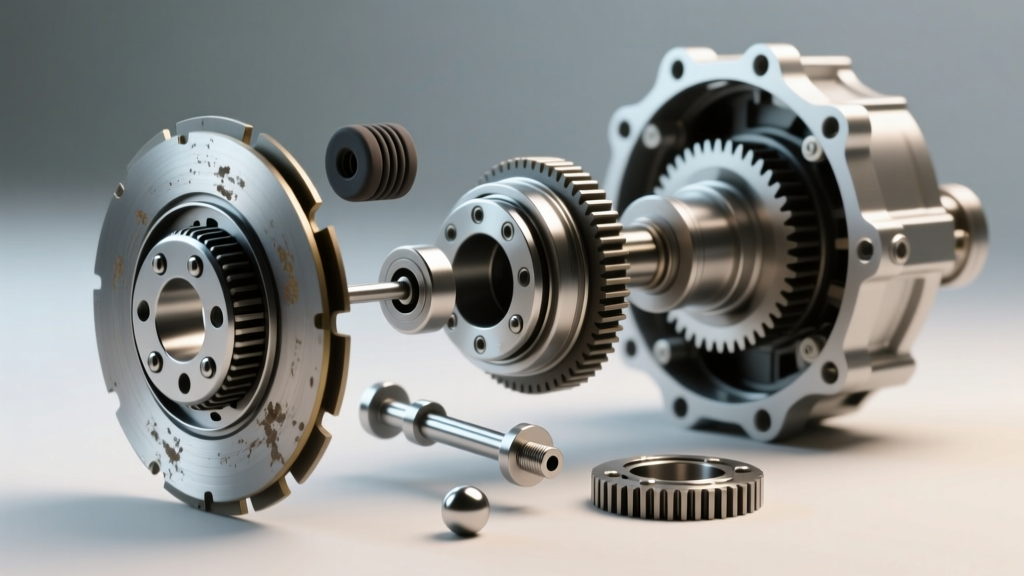
With the AC system ruled out, we move to the drivetrain. Manual transmission clutch drag occurs when the friction disc fails to fully disengage from the flywheel despite the pedal being fully depressed. This causes grinding during gear engagement, creeping at stoplights, and excessive wear on the transmission synchronizers.
2.1 Hydraulic System & Pushrod Free-Play
The most common cause of clutch release problems is a lack of hydraulic free-play. Modern manual transmissions use a Concentric Slave Cylinder (CSC) or an external slave cylinder actuating a release fork.
- Check Pedal Free-Play: Press the clutch pedal by hand. You should feel 0.5 to 1.0 inches of free movement before hydraulic resistance begins.
- Adjust the Master Cylinder Pushrod: If the pushrod connecting the pedal to the Clutch Master Cylinder (CMC) is adjusted too long, it holds the internal CMC valve open. This prevents hydraulic fluid from returning to the reservoir, keeping the slave cylinder partially engaged and causing the transmission clutch to drag.
- Bleed the System: Air in the hydraulic lines causes a spongy pedal and incomplete clutch release. Use a pressure bleeder set to 15-20 PSI and flush with fresh DOT 4 fluid (which has a higher dry boiling point of 446°F compared to DOT 3's 401°F). For vehicles with a CSC inside the bellhousing (like the GM Tremec T-56 Magnum or Ford MT-82), a vacuum bleeder at the slave cylinder bleed screw is often required to pull trapped air upward.
2.2 Mechanical Inspection: Flywheel Runout & Splines
If the hydraulics are perfect, the drag is mechanical. This requires dropping the transmission. According to data from AutoZone Repair Help, improper flywheel resurfacing is a leading cause of aftermarket clutch drag.
- Flywheel Runout: Mount a dial indicator on the engine block and measure the flywheel face. Maximum allowable runout is typically 0.005 inches (0.12mm). Excessive runout causes the friction disc to wobble, preventing the pressure plate from fully releasing it.
- Input Shaft Spline Binding: If the friction disc hub splines are dry, rusted, or lack the correct high-temperature molybdenum grease, the disc will bind on the transmission input shaft and refuse to slide back during release. Apply a microscopic layer of spline grease—over-greasing will sling onto the friction material and cause slipping.
- Pressure Plate Torque: When reinstalling, torque the pressure plate bolts in a star pattern. For most M8 bolts on passenger vehicles, the spec is 22 to 25 Nm (16-18 lb-ft). Uneven torquing warps the pressure plate diaphragm spring, leading to localized drag.
Diagnostic Matrix: Drivetrain vs. Parasitic Load
Use this decision matrix to quickly separate transmission faults from HVAC electrical faults.
| Observed Symptom | Manual Transmission Clutch Fault | AC Compressor / Relay Fault |
|---|---|---|
| Engine stalls when coming to a stop | Clutch fails to release; drivetrain remains coupled to wheels | Relay stuck closed; compressor runs at idle, stalling engine |
| Grinding when shifting into 1st or Reverse | Input shaft still spinning due to dragging friction disc | Unrelated to AC system (unless engine RPM is too low to spool hydraulics) |
| High idle RPM when AC is commanded OFF | Unrelated to transmission | PCM compensating for parasitic drag of a mechanically seized compressor clutch |
| Pedal feels spongy or goes to the floor | CMC/Slave cylinder leak, air in lines, or blown CSC seal | Unrelated to AC system |
Sourcing Quality Replacement Components
Whether you are replacing a sticking relay or a warped clutch assembly, component quality dictates longevity. When sourcing electrical relays, stick to OEM suppliers like Denso, Omron, or Bosch. For clutch kits, brands like Sachs, LuK, and Exedy provide OEM-level metallurgy and diaphragm spring tension. You can cross-reference OEM part numbers and find direct-fit replacements via the RockAuto Parts Catalog, which remains an industry standard for verifying part interchangeability across global platforms.
Expert Warning: Never attempt to "fix" a dragging manual transmission clutch by riding the pedal or adjusting the pedal stopper bolt to artificially increase slave cylinder stroke. This will over-extend the diaphragm spring fingers, leading to premature throwout bearing failure and catastrophic pressure plate fatigue.
Summary
Clutch drag and release problems require a systematic approach that looks beyond the bellhousing. By first answering the question of where the AC clutch relay is located and verifying the HVAC system's parasitic load, you can save hours of unnecessary transmission removal. Once the AC compressor is ruled out, focus on hydraulic free-play, precise bleed procedures, and strict adherence to flywheel runout and torque specifications to ensure a flawless manual clutch release every time you press the pedal.