The Economics of the Friction Interface: Resurface vs. Replace
When servicing a manual transmission, the mating surface between the clutch disc and flywheel dictates the longevity, engagement feel, and thermal capacity of the entire drivetrain. In 2026, with rising machine shop labor rates and shifting supply chain dynamics for European and JDM replacement parts, the decision to machine or replace the flywheel is no longer just a mechanical choice—it is a strict financial calculation. A glazed or heat-checked flywheel will destroy a new clutch friction disc in under 1,000 miles, making proper surface preparation mandatory. However, over-machining or attempting to resurface the wrong type of flywheel can lead to catastrophic drivetrain failure. This guide dissects the true costs, machine shop variables, and hidden hardware expenses associated with flywheel resurfacing to help you make an informed, data-driven decision.
Single Mass Flywheel (SMF) Machining Economics
For traditional Single Mass Flywheels (SMF) found in older domestic V8s, classic JDM platforms, and modern heavy-duty trucks, resurfacing is highly cost-effective. The average machine shop rate for mounting and grinding a standard 11-inch to 14-inch SMF ranges from $55 to $95 in 2026. This process typically utilizes a Blanchard grinder or a dedicated rotary flywheel grinder to remove thermal damage, hard spots, and scoring.
However, there is a strict material removal limit. Most OEM manufacturers specify a maximum material removal of 0.030 inches (0.76mm) from the friction surface. Removing more than this alters the critical distance between the crankshaft flange and the clutch pressure plate fingers. If the machinist removes 0.050 inches of material to clear deep gouges, the diaphragm spring will over-center, resulting in a heavy pedal feel, premature release bearing wear, and eventual clutch slippage. If your SMF exceeds the 0.030-inch wear limit, replacement is mandatory. A new OEM-equivalent SMF (such as a Sachs or LuK unit) typically costs between $90 and $180, making replacement a viable alternative to aggressive machining.
The Dual Mass Flywheel (DMF) Prohibition: Why You Cannot Machine It
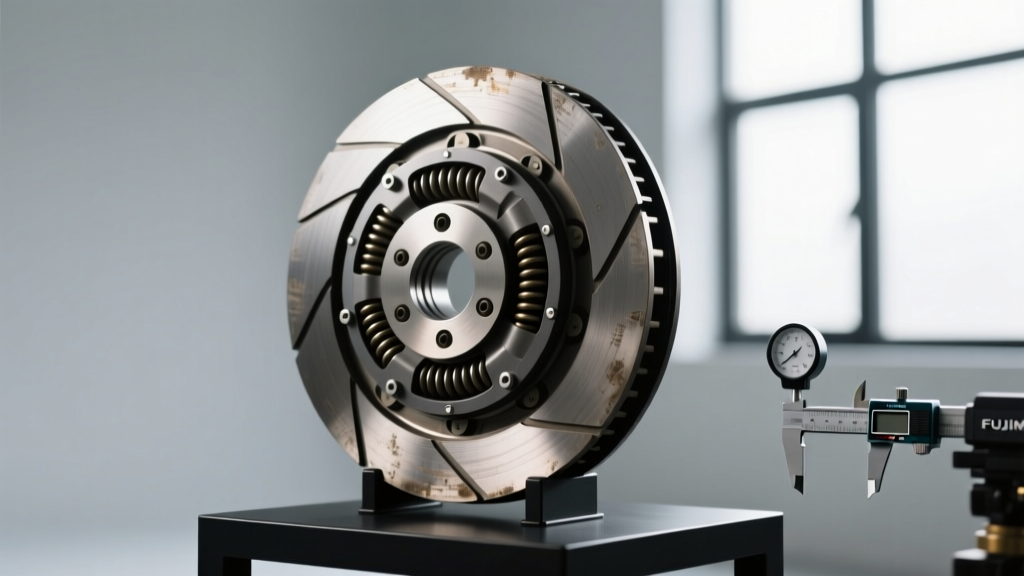
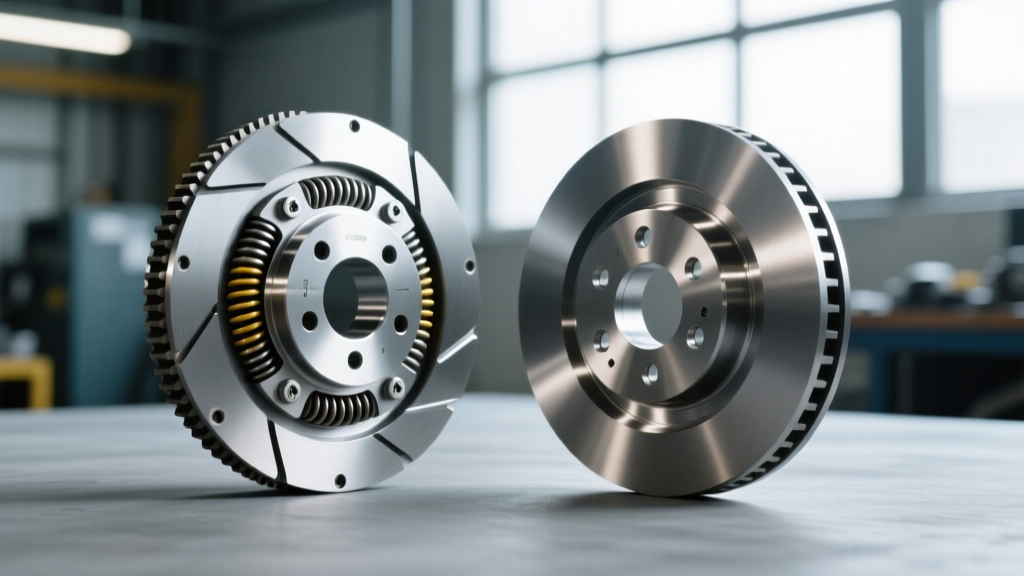
The most common financial mistake DIYers and general repair shops make is attempting to resurface a Dual Mass Flywheel (DMF). DMFs contain internal planetary gears, torsional damper springs, and specialized high-temperature grease designed to absorb the severe harmonic vibrations of modern turbocharged and diesel engines. According to LuK's technical engineering guidelines, machining the primary friction plate of a DMF alters its mass and rotational balance. This destroys the harmonic dampening properties, which will rapidly annihilate the transmission input shaft bearing and cause severe gear rattle.
Furthermore, the heat generated during the grinding process can melt the internal grease seals, leading to immediate DMF failure upon reinstallation. Therefore, if your vehicle utilizes a DMF (common in VW/Audi 2.0T, Ford 6.7L Powerstroke, and BMW N54/N55 platforms), replacement is the only option. A new DMF assembly is a significant investment, typically ranging from $450 to $950 for the part alone. For cost-conscious owners, many opt for an SMF conversion kit (e.g., Sachs SMF conversion kit #3000 950 019 for VW MQB platforms, costing around $350), which eliminates the DMF entirely, though it will increase cabin vibration and drivetrain noise.
2026 Machine Shop Price Matrix: What You Will Actually Pay
Not all flywheels are priced equally at the machine shop. Step-flywheels, heavy-duty truck applications, and multi-plate setups require specialized fixturing and dial-indicator verification, which drives up the cost. Below is the current 2026 pricing matrix for flywheel services at reputable automotive machine shops.
| Service Category | 2026 Average Cost | Material Removal Limit | Application Notes |
|---|---|---|---|
| Standard SMF (Flat) | $55 - $85 | 0.030" Max | Standard passenger cars, older domestic V8s. |
| Step Flywheel (GM/Honda) | $85 - $130 | 0.030" (Friction Surface) | Requires step-height verification; critical for diaphragm spring geometry. |
| Heavy Duty Diesel (14"+) | $120 - $180 | 0.040" Max | Requires heavy-duty Blanchard grinder; often needs balancing post-cut. |
| DMF Replacement (Part Only) | $450 - $950 | N/A (Cannot Machine) | Must be replaced as a sealed assembly; includes internal damper. |
| SMF Conversion Kit | $300 - $450 | N/A (New Part) | Replaces DMF with solid SMF; increases NVH but saves long-term costs. |
Critical Measurements: Step Height and Runout Tolerances
Cost analysis is irrelevant if the machined part fails technical validation. Before handing over your credit card at the machine shop, you must understand the two critical measurements that dictate flywheel viability: Runout and Step Height. As noted by AA1Car's flywheel diagnostic protocols, ignoring these specs guarantees clutch chatter and premature disc wear.
1. Lateral Runout
Lateral runout measures the side-to-side wobble of the flywheel friction surface as it rotates. Using a magnetic-base dial indicator mounted to the engine block, the runout must be measured at the outer edge of the friction surface. The industry standard maximum allowable runout is 0.005 inches (0.127mm). If a resurfaced flywheel exceeds this, it will cause the clutch disc to drag during disengagement, leading to grinding gears and difficult shifts. High runout is often caused by improper mounting on the grinder or a warped crankshaft flange.
2. Step Height (Crankshaft Flange to Friction Surface)
Many modern engines, particularly the GM LS/LT family (e.g., LQ4, LS3, LT1) and Honda K-Series (K20/K24), utilize a 'step flywheel.' The friction surface is recessed relative to the crankshaft mounting flange. This step is engineered to perfectly align the clutch disc hub and maintain the correct diaphragm spring angle.
Expert Machinist Note: When measuring a GM LS3 step flywheel, the factory step height specification is typically between 0.030" and 0.050" depending on the exact clutch manufacturer (e.g., McLeod vs. Exedy). If the machinist cuts the friction surface but forgets to cut the step pad proportionally, the step height increases, destroying the pressure plate's clamping geometry. Always mandate step-height verification on your machine shop work order.
Hidden Costs: Hardware, Alignments, and R&R Labor
When budgeting for a clutch job, the cost of the clutch disc and flywheel service is only the baseline. The 'while you are in there' hardware costs frequently blow up project budgets if not anticipated. In 2026, smart builders factor in the following mandatory ancillary costs:
- Flywheel Bolts (TTY vs. Reusable): Most OEM flywheel bolts are Torque-To-Yield (TTY) and stretch permanently upon installation. They must be discarded. A new set of OEM GM LS flywheel bolts costs roughly $25, while an upgraded reusable ARP bolt kit (e.g., ARP #100-2801) costs around $45. Never reuse TTY flywheel bolts; a sheared bolt inside the crankshaft will result in a $2,000+ engine removal bill.
- Pilot Bearing / Bushing: The pilot bearing supports the transmission input shaft. A frozen pilot bearing will snap the input shaft or destroy the transmission bell housing. Replacement cost: $12 - $35. Always use a sealed needle-bearing pilot or a sintered bronze bushing depending on the application.
- Rear Main Seal (RMS): With the flywheel removed, the rear main seal is fully exposed. A leaking RMS will contaminate the new clutch disc with engine oil, ruining it instantly. OEM RMS parts cost $15 - $40, but the labor to install it is practically free since the flywheel is already off.
- Torque Specifications: Proper installation requires strict adherence to torque specs. For example, a Honda K20C1 flywheel requires 76 lb-ft (103 Nm), while a GM LS3 requires a torque-angle sequence of 15 lb-ft + 51 degrees. Using an impact gun without a calibrated torque wrench invites warped flywheels and cracked crankshaft flanges.
Final Verdict: Calculating Your Total Drivetrain Investment
Ultimately, the decision to resurface or replace hinges on the flywheel architecture and the depth of thermal damage. For Single Mass Flywheels with minor heat spotting and less than 0.020" of wear, spending $65 to $90 at a reputable machine shop equipped with a Blanchard grinder is the most financially sound decision. It preserves the OEM rotational mass and saves over $100 compared to buying a new cast-iron replacement.
However, if your vehicle is equipped with a Dual Mass Flywheel, or if your SMF exhibits deep hard spots, cracks, or exceeds the 0.030" machining limit, replacement is non-negotiable. Attempting to cut corners by over-machining a DMF or ignoring step-height tolerances will result in catastrophic drivetrain harmonics, shattered friction materials, and a repeat repair that will triple your initial investment. Always demand a written printout of runout and step-height measurements from your machine shop, and pair your freshly prepared flywheel with high-quality, matched friction hardware to ensure a seamless, chatter-free engagement for the next 80,000 miles. For deeper engineering insights into clutch system dynamics, refer to the Schaeffler Automotive Clutch Systems technical documentation.