The Misdiagnosis Trap: External Cables vs. Internal Friction Packs
When a vehicle experiences RPM flare, hesitation, or a distinct 'slipping' sensation during acceleration, the immediate fear for most drivers and novice technicians is catastrophic internal failure. However, in the realm of drivetrain diagnostics, confusing a simple external cable adjustment with the failure of internal automatic transmission clutches or manual friction discs is one of the most common—and expensive—mistakes made in the industry. A $30 cable adjustment can easily mimic the symptoms of a $3,000 transmission rebuild if the underlying hydraulic or mechanical linkage is not properly evaluated.
This comprehensive 2026 cost analysis breaks down the diagnostics, adjustment procedures, and true financial impact of clutch cable problems compared to the replacement of internal automatic transmission friction clutches. Whether you are dealing with a traditional manual clutch cable, a Throttle Valve (TV) cable on a classic GM 700R4, or diagnosing slip on a modern ZF 8HP, understanding the cost-to-symptom ratio is critical for accurate repair.
The TV Cable: The 'Clutch Cable' of Automatic Transmissions
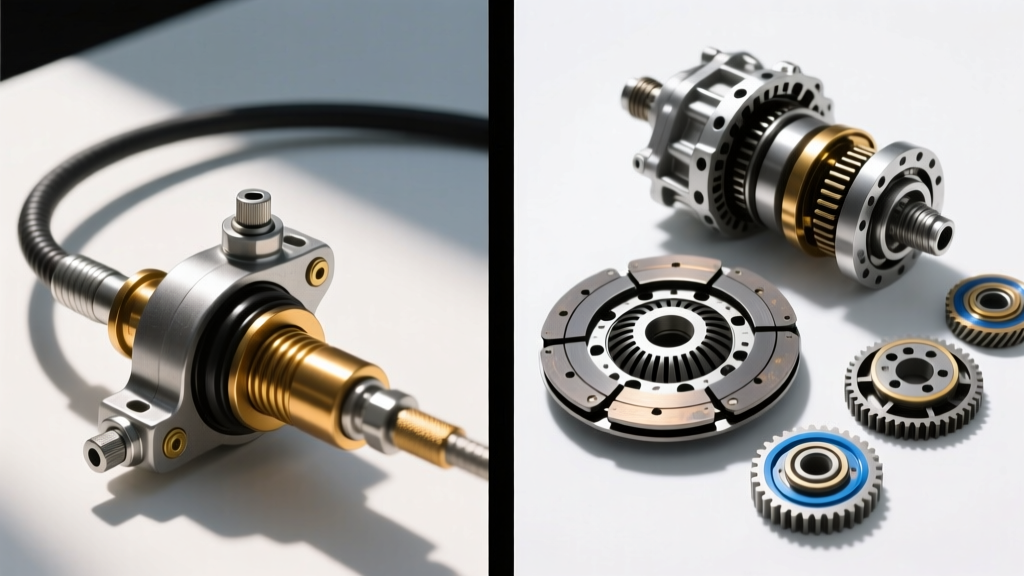
While modern automatic transmissions rely on complex mechatronic units and internal solenoids to regulate clutch apply pressure, older but incredibly prevalent designs like the GM 700R4 and early 4L60 utilize a mechanical Throttle Valve (TV) cable. In many ways, the TV cable acts as the 'clutch cable' of the automatic world. It directly dictates line pressure to the automatic transmission clutches based on throttle position.
Symptoms of a Misadjusted TV Cable
If the TV cable is stretched, improperly adjusted, or missing its plastic retaining bushing at the throttle linkage, line pressure drops under heavy acceleration. The result? The 3-4 clutch pack and 2-4 band slip violently, generating excessive heat and burning the friction material in a matter of miles. Drivers often report a harsh 1-2 shift followed by a severe RPM flare when the transmission attempts to engage third gear.
TV Cable Adjustment Specs and Costs
Adjusting a TV cable requires precision, not guesswork. The geometry between the carburetor/throttle body stud and the cable mounting bracket must be exact. According to Sonnax technical resources, incorrect geometry will either cause low line pressure (slipping) or high line pressure (harsh, breaking shifts).
- Part Cost: A replacement Dorman 924-254 or Lokar SRK4000 TV cable costs between $35 and $85.
- Adjustment Procedure: With the engine off, depress the release tab on the cable housing, pull the sheath outward until it stops, and release the tab. Slowly open the throttle to Wide Open Throttle (WOT) to allow the cable to self-index. Ensure the plastic button at the end of the cable is fully engaged.
- Labor Cost: 0.3 to 0.5 hours ($45 - $75 at a shop rate of $150/hr).
Manual Clutch Cable Problems and Adjustment
For manual transmission vehicles—particularly older platforms like the Ford Foxbody/SN95 Mustangs or 1990s Honda Civics—the clutch cable is the sole physical link between the pedal and the clutch fork. Over time, the inner steel cable stretches, or the self-adjusting quadrant mechanism (common in Ford applications) fails to maintain proper tension.
The Cost of Ignoring Free-Play Specs
When a manual clutch cable loses tension, the throwout bearing remains in constant contact with the pressure plate fingers, preventing the clutch from fully engaging. This causes the manual friction disc to slip under load, a symptom frequently misdiagnosed as a worn-out clutch assembly requiring a transmission drop. Proper adjustment requires exactly 1.25 to 1.50 inches of free-play measured at the clutch pedal pad or the firewall adjuster.
- Part Numbers: Dorman 720-180 (Ford Mustang) or Pioneer CA-855 (Honda Civic).
- Part Cost: $18 to $42.
- Hardware Torque Specs: Firewall adjuster lock nut (15 lb-ft), Clutch fork pivot ball stud (35 lb-ft).
The Catastrophic Cost of Burnt Automatic Transmission Clutches
If a slipping symptom is ignored, or if a driver assumes an automatic transmission will 'adapt' to low fluid pressure, the internal friction clutches will glaze and burn. Replacing automatic transmission clutches requires a complete transmission removal, teardown, and rebuild. Let us analyze the true cost of a 4L60E 3-4 clutch pack failure versus a modern 6L80 clutch hub failure.
4L60E 3-4 Clutch Pack Rebuild (The Classic Failure)
The 3-4 clutch pack in the GM 4L60E is notorious for burning up, especially in vehicles that tow or see high mileage. When this pack fails, the transmission loses 3rd and 4th gears entirely.
- Friction Materials: Raybestos GPZ or Alto Red Eagle 3-4 Clutch Module ($120 - $160).
- Master Rebuild Kit: Includes all seals, O-rings, and paper gaskets ($85 - $130).
- Fluid & Filter: 12 Quarts of AC Delco Dexron VI + Deep Pan Filter ($90 - $120).
- Labor: R&R Transmission (4.5 hours) + Teardown/Rebuild (6.0 hours) = 10.5 hours @ $150/hr = $1,575.
- Total Estimated Cost: $1,870 - $2,085.
Modern 6L80 / ZF 8HP Clutch Pack Replacements
Modern automatics do not use TV cables; they use internal solenoids and mechatronic units. However, when the 4-5-6 clutch hub in a GM 6L80 strips, or the 'E' clutch pack in a ZF 8HP fails, the cost skyrockets due to the complexity of the mechatronic valve body and the requirement for specialized clutch pack compression tools and inch-pound torque calibrations.
- Parts: OEM Clutch hubs, steels, and frictions ($350 - $600).
- Mechatronic/Solenoid Calibration: Requires proprietary scan tools to reset clutch adaptives ($150).
- Labor: 14+ hours of specialized labor ($2,100+).
- Total Estimated Cost: $2,800 - $4,200.
2026 Cost Breakdown: Cable Adjustment vs. Internal Rebuild
The table below illustrates the massive financial gap between diagnosing a linkage/cable issue and replacing internal automatic transmission clutches. This data highlights why a thorough external diagnostic must always precede a transmission teardown.
| Diagnostic / Repair Category | Component / Part Number | Parts Cost (2026) | Labor Hours | Total Shop Cost |
|---|---|---|---|---|
| Manual Clutch Cable Adjustment | Dorman 720-180 (Cable) | $25.00 | 0.5 hrs | $100 - $125 |
| 700R4 TV Cable Replacement | Lokar SRK4000 (TV Cable) | $75.00 | 0.5 hrs | $150 - $185 |
| 4L60E 3-4 Clutch Pack Rebuild | Raybestos GPZ Module + Master Kit | $245.00 | 10.5 hrs | $1,870 - $2,085 |
| 6L80 4-5-6 Clutch Hub Replacement | OEM Hub + Friction/Steel Kit | $550.00 | 14.0 hrs | $2,800 - $3,500 |
| ZF 8HP 'E' Clutch Pack Rebuild | ZF Original Frictions + Mechatronic Reset | $650.00 | 16.0 hrs | $3,200 - $4,200 |
Step-by-Step Diagnostic Decision Framework
To avoid unnecessary teardowns, technicians and DIYers should follow this strict diagnostic protocol before condemning internal automatic transmission clutches or manual friction discs.
Step 1: Verify External Linkage and Cable Geometry
For manuals, measure pedal free-play. If free-play is non-existent, the clutch is being artificially held open by the cable. For 700R4/4L60 automatics, verify the TV cable is pulling fully to the WOT stop and that the plastic retaining bushing at the throttle bracket has not disintegrated (a common $5 fix that saves a $2,000 rebuild).
Step 2: Check Hydraulic Line Pressures
According to Transmission Digest, hooking up a 0-300 PSI transmission pressure gauge to the main line pressure tap is mandatory before removing any transmission. If line pressure is low at idle but rises with RPM, the issue may be a worn internal pump or a stuck pressure regulator valve in the valve body—not necessarily burnt clutches. If pressure is low only under load, suspect a TV cable or electronic solenoid failure.
Step 3: Perform a Stall Speed Test
A stall test will quickly differentiate between a slipping torque converter and slipping internal clutches. If the engine RPMs climb excessively high during a brake-torqued stall test, the internal clutches are slipping or the torque converter stator has failed. If the RPMs are abnormally low, the engine is lacking power or the exhaust is restricted. Note: Never perform a stall test for more than 5 seconds to prevent instant thermal destruction of the friction materials.
Step 4: Scan for Adaptive Pressure Codes
On modern vehicles like the 6L80 or ZF 8HP, use a bi-directional scan tool to monitor 'Clutch Apply Time' and 'Adaptive Pressure' tables. If the Transmission Control Module (TCM) is maxing out adaptive pressure to compensate for a slow-apply clutch, the physical friction material is worn, and a teardown is unavoidable. As noted by Raybestos Powertrain, ignoring these adaptive limits will eventually lead to severe drum scoring, turning a simple clutch pack swap into a complete hard-part replacement.
Final Verdict: Adjust First, Rebuild Later
The financial disparity between a clutch cable adjustment and a full automatic transmission clutch rebuild is staggering. While modern drivetrains have largely eliminated the mechanical cable in favor of electronic solenoids, the fundamental rule of diagnostics remains unchanged: always verify the external command mechanism before condemning the internal hydraulic execution. By mastering the adjustment of TV cables, manual clutch linkages, and understanding the precise line-pressure requirements of internal friction packs, you can save thousands of dollars in misdiagnosed labor and parts.