The Anatomy of RZR CVT Backshifting Issues
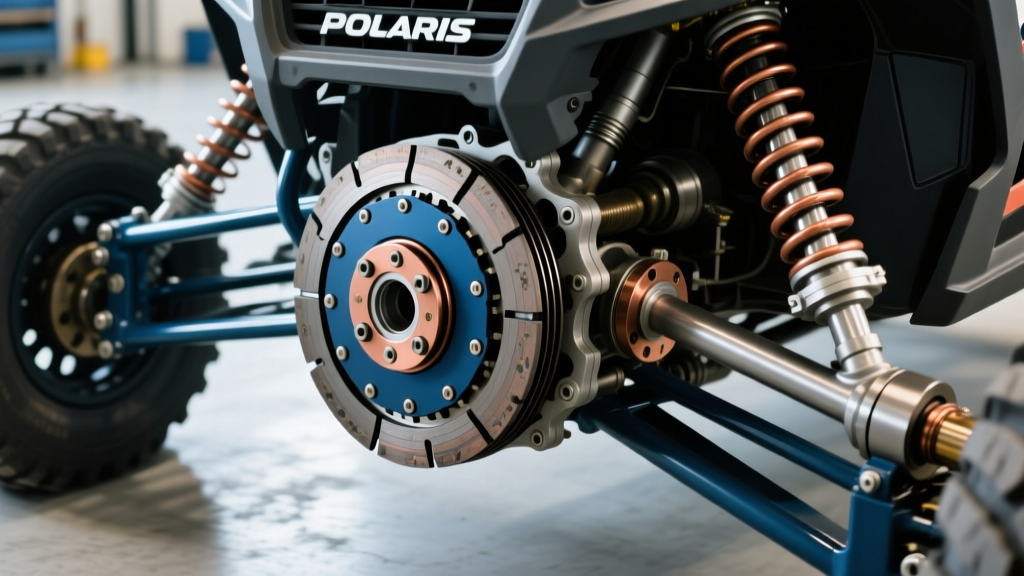
The Continuously Variable Transmission (CVT) in the Polaris RZR lineup relies on a delicate, friction-dependent balance between the primary (drive) and secondary (driven) clutches. While primary clutch wear typically presents as a linear loss of performance, RZR secondary clutch failures frequently manifest as maddeningly intermittent problems. One ride the machine shifts flawlessly; the next, it hangs at high RPMs or exhibits violent belt slip under load.
Unlike traditional automotive manual or automatic transmissions (such as the ZF 8HP or GM 6L80) that rely on hydraulic pressure and discrete gear sets, the RZR's secondary clutch is a purely mechanical, spring-and-ramp-driven device. It utilizes a torsion spring, a precision-machined helix, and movable sheaves to maintain belt tension and control backshifting. When intermittent issues arise, they are almost always the result of thermal expansion, microscopic binding, or contamination rather than catastrophic hard-part failure.
Heat Cycling and the Intermittent Bind Phenomenon
To diagnose an intermittent fault, you must understand how heat affects the CVT system. The secondary clutch is cast from aluminum and operates in an environment that routinely exceeds 180°F (82°C) during aggressive dune riding or slow rock crawling. As the aluminum sheaves expand, clearances between the movable sheave bushing and the stationary shaft change. If the shaft splines are lightly galled or the sheave bushing is worn, the clutch will operate perfectly when cold. However, once heat-soaked, the thermal expansion causes the sheave to bind on the shaft, resulting in a sudden, intermittent inability to backshift when you lift off the throttle.
4 Hallmarks of Intermittent Secondary Clutch Failure
1. Erratic Backshifting (The 'Hanging' RPM)
You lift off the throttle to navigate a tight corner, but the engine RPM remains pinned at 6,000+ RPM instead of dropping to idle. This is caused by the rollers (or buttons) binding in the helix tracks. Intermittent hanging occurs when belt dust accumulates in the helix grooves, acting as a dry lubricant that suddenly turns into an abrasive slurry when mixed with ambient humidity or water crossings.
2. Load-Dependent Belt Slip
If your RZR only slips the drive belt when climbing steep, high-load inclines or when running 32-inch aftermarket tires, the secondary clutch is failing to provide adequate clamping force. This is often due to a heat-faded torsion spring that has lost its metallurgical temper, or glazed sheave faces that only lose their coefficient of friction under extreme pressure.
3. Inconsistent Engine Braking (EBS) Engagement
Modern Polaris RZR models utilize an Engine Braking System (EBS) integrated into the secondary clutch via a one-way sprague bearing. If your machine sometimes engine brakes on deceleration and other times freewheels, the sprague bearing is likely contaminated with degraded grease or the internal EBS roller ramps are experiencing intermittent slip.
4. The 'Clunk' on Re-engagement
An intermittent, harsh clunk when shifting from neutral to drive or when re-applying throttle after coasting indicates that the secondary clutch is not opening fully at idle. The belt remains pinched in the secondary sheaves, keeping the transmission partially engaged.
Diagnostic Matrix: Intermittent Symptoms vs. Root Causes
| Symptom | Intermittent Trigger | Probable Component | Recommended Fix / Part |
|---|---|---|---|
| Hanging RPM on deceleration | High heat / Belt dust buildup | Helix rollers / Sheave bushing | Replace rollers; clean helix tracks |
| Belt slip under heavy load | Steep inclines / Large tires | Torsion spring fatigue | Upgrade to 160/240 lb spring (e.g., EPI) |
| Inconsistent EBS engagement | Cold starts vs. Hot operation | Sprague bearing / EBS grease | Rebuild EBS housing; replace one-way bearing |
| Harsh clunk at idle | Idling on uneven terrain | Shaft spline galling | Polish shaft; replace worn sheave bushing |
Step-by-Step Teardown and Measurement Guide
Diagnosing the secondary clutch requires complete removal and disassembly. Do not attempt to diagnose binding while the clutch is mounted on the transmission shaft.
- Removal: Remove the CVT belt. Use a dedicated Polaris secondary clutch puller (M10x1.5 thread pitch). Never hammer the clutch off the shaft, as this will destroy the internal EBS bearing and distort the sheave.
- Disassembly: Mark the alignment of the stationary and movable sheaves with a paint pen before unloading the spring tension. The torsion spring stores over 200 lbs of force; use a proper clutch compression tool.
- Inspection: Check the UHMW plastic rollers or metal buttons. If they exhibit flat spots or measure below OEM diameter specifications, they will skip and bind in the helix.
- Shaft Verification: Run your fingernail across the transmission shaft splines. Any galling or raised burrs will cause the clutch to bind when hot. Dress minor burrs with a fine jeweler's file.
Expert Warning: Never use compressed air to blow out belt dust from the CVT housing or the secondary clutch. Kevlar and fiberglass particulate matter from degraded belts are severe respiratory hazards. Always use a HEPA-filtered shop vacuum and wipe the sheave faces with brake cleaner and a maroon Scotch-Brite pad to restore the friction coefficient.
Spring and Helix Tuning: OEM vs. Aftermarket
If your intermittent slip is tied to vehicle modifications (like adding a heavy bumper, winch, or larger tires), the OEM secondary clutch tuning is no longer adequate. The stock RZR XP 1000 typically utilizes a 140/220 lb torsion spring. When adding rotating mass, upgrading to a stiffer spring—such as the Extreme Performance Industries (EPI) 160/240 lb spring—increases the clamping force on the belt, eliminating load-dependent slip.
Furthermore, the helix angle dictates how quickly the secondary clutch shifts. A stock helix might feature a 50/38 degree profile. For aggressive dune riding, switching to a Dalton Industries helix with a steeper initial angle provides faster backshifting, keeping the engine in the peak torque band during rapid directional changes.
Reassembly Torque Specs and Best Practices
Proper reassembly is critical to preventing intermittent vibration and shaft walk. Always consult the specific year's service manual, but standard Polaris CVT reassembly protocols dictate the following:
- Clutch Retaining Bolt: Torque to 45 ft-lbs (61 Nm). Always apply a medium-strength threadlocker (Blue Loctite 243) to the bolt threads. Do not use Red Loctite, as it will make future removal require extreme heat that will destroy the EBS sprague bearing.
- Belt Deflection: After reinstalling the belt, press down firmly on the top span of the belt between the clutches. Proper deflection should be exactly 1.25 to 1.5 inches (32-38mm). Too tight causes premature bearing failure; too loose causes startup slip.
- Lubrication: NEVER apply grease, anti-seize, or dry lube to the transmission shaft splines or the inside of the secondary clutch hub. The clutch must slide via metal-to-metal precision fitment. Lubricants attract belt dust, creating a grinding paste that guarantees future binding.
When to Replace the Entire Assembly
While rebuilding a secondary clutch with an OEM rebuild kit (typically $80-$150) is cost-effective for worn rollers and springs, a complete assembly replacement ($400-$600) is required if the stationary sheave bearing is howling, the EBS housing is cracked, or the sheave faces are deeply gouged beyond the capability of sanding. Intermittent problems are a warning sign; ignoring them will inevitably lead to a shattered belt and a stranded UTV on the trail.