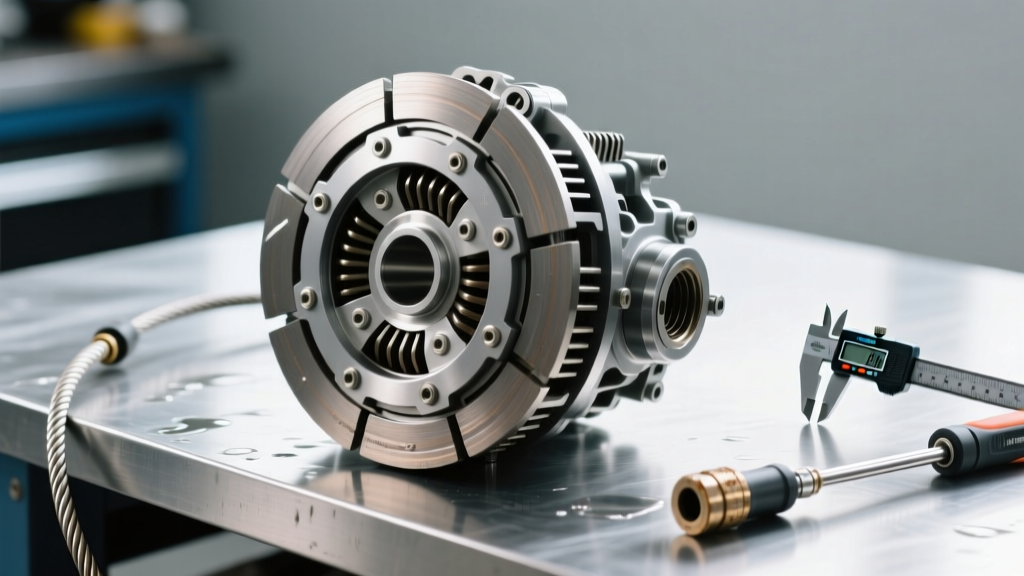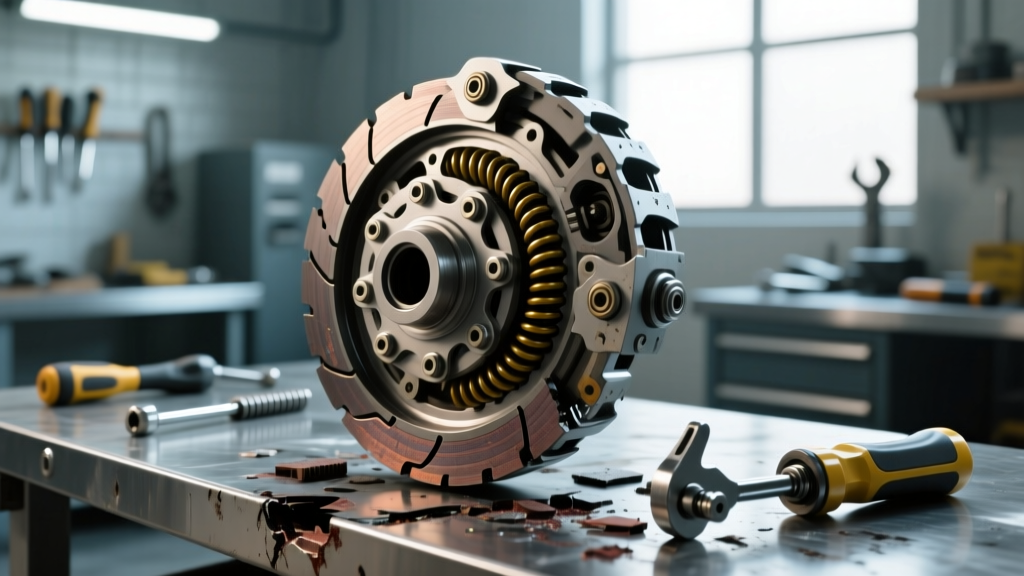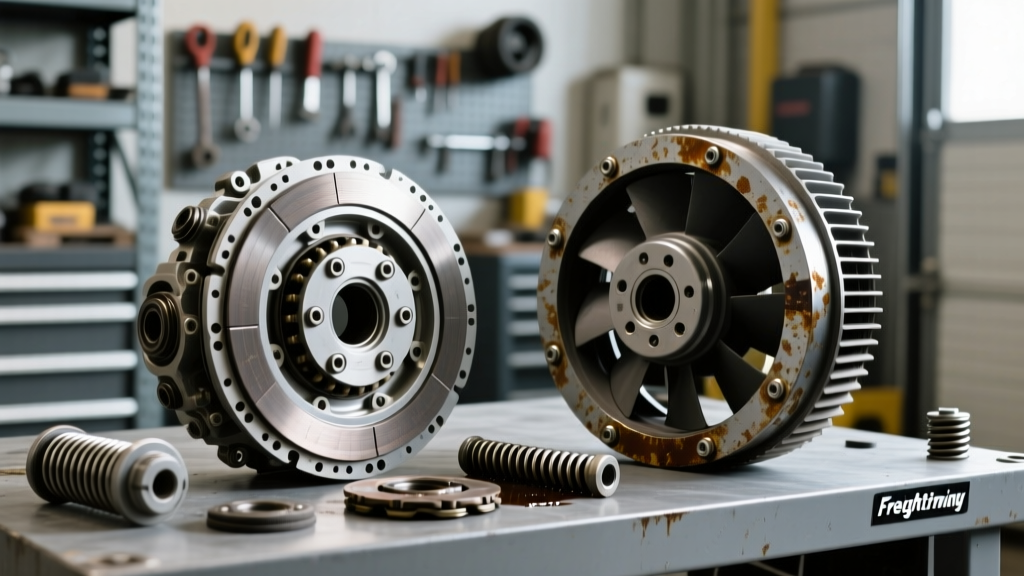
The Fundamental Divide: Viscous Fan Clutches vs. Wet Multi-Plate Systems
While a heavy-duty diesel technician might spend their Tuesday diagnosing a viscous Freightliner Cascadia fan clutch to resolve thermal derating on a 15-liter DD15 engine, their weekend ride presents an entirely different set of friction dynamics. If you are transitioning from heavy commercial trucks to powersports, or you are simply a beginner trying to figure out why your Honda CRF450R is slipping or your Polaris RZR is bogging off the line, this guide is your baseline. In 2026, powersport drivetrains are more advanced than ever, yet the fundamental physics of friction, hydraulic pressure, and centrifugal engagement remain unchanged.
A Freightliner Cascadia fan clutch relies on a bi-metallic strip or electronic solenoid to engage a silicone fluid drive, transferring engine torque to a massive cooling fan based on under-hood temperatures. In stark contrast, a motorcycle's wet multi-plate clutch relies on alternating steel and friction plates clamped together by mechanical springs or hydraulic pressure, all bathed in shared engine oil. Understanding this difference is the first step in accurate clutch system diagnostics.
Top 3 Motorcycle Wet Clutch Symptoms & Diagnostics
Manual motorcycle clutches are incredibly durable, but they are wear items. When they begin to fail, they communicate the issue through distinct physical feedback at the lever and the rear tire. Here is how to diagnose the big three.
1. Clutch Slipping Under Load
The Symptom: You are exiting a corner in third gear, roll on the throttle, and the engine RPMs climb rapidly without a proportional increase in rear-wheel speed. The bike feels like it has lost compression.
The Diagnosis: Before tearing into the engine cases, check your lever free play. A cable-adjusted clutch requires exactly 10-15mm of free play at the lever tip. If the cable is too tight, the throw-out bearing constantly presses against the pressure plate, preventing full clamping force. If your bike uses a hydraulic system (common on 2024-2026 models like the Kawasaki KX450 or KTM 450 SX-F), check for air in the line or a blocked master cylinder return port.
The Oil Factor: The most common beginner mistake is using standard automotive oil. Modern API SP / ILSAC GF-6 car oils contain molybdenum friction modifiers designed to improve fuel economy. In a wet clutch, these modifiers coat the friction plates and cause immediate, catastrophic slipping. You must exclusively use oil certified to the JASO MA or MA2 standard, which guarantees the absence of friction modifiers.
2. Clutch Chatter and Grabbing
The Symptom: When releasing the lever from a dead stop, the bike surges forward violently and jerks, rather than engaging smoothly. This is often misdiagnosed as a dirty carburetor or bad fuel mapping.
The Diagnosis: Clutch chatter is almost always caused by a notched clutch basket. The outer bell and inner hub of a motorcycle clutch are typically made of cast or forged aluminum. Over thousands of engagement cycles, the hard steel tabs of the friction plates hammer into the softer aluminum tangs, creating microscopic grooves (notches). When you pull the lever in, the plates catch in these grooves instead of separating cleanly. When you release the lever, they snap out of the grooves erratically, causing chatter.
The Fix: For mild notching, you can use a fine mill bastard file to carefully dress the aluminum tangs back to a flat surface. For severe notching, the basket must be replaced. Upgrading to a CNC-machined billet aluminum basket (such as those from Hinson Racing or Rekluse) eliminates this issue entirely due to the harder anodized surface.
3. Clutch Dragging (Failure to Disengage)
The Symptom: With the clutch lever fully pulled to the handlebar, the motorcycle still creeps forward, and finding neutral while the engine is running is nearly impossible. Shifting into first gear produces a loud, violent 'clunk'.
The Diagnosis: Dragging occurs when the friction and steel plates fail to separate. This is usually caused by warped steel plates (often due to extreme overheating from a slipping clutch) or an incorrect clutch pack stack height. If the stack height is too tall, the pressure plate cannot retract far enough to break the surface tension of the oil holding the plates together.
ATV and UTV Diagnostics: The CVT Factor
Most modern ATVs and UTVs (like the Can-Am Maverick or Polaris RZR Pro XP) do not use manual wet clutches. Instead, they utilize Continuously Variable Transmissions (CVTs) featuring primary (drive) and secondary (driven) centrifugal clutches connected by a high-tensile Kevlar drive belt.
- Belt Slip & Squeal: Often mistaken for a clutch issue, a squealing belt usually indicates worn sheave faces on the primary clutch or a belt that has lost its top width due to heat degradation. Measure your belt width with digital calipers; if it is more than 2mm under the OEM specification, replace it.
- Primary Clutch Binding: The primary clutch uses a spider with a PTFE (Teflon) button that rides against the movable sheave. When this button wears through, the aluminum-on-aluminum contact causes the sheave to bind, resulting in a erratic idle and the vehicle creeping forward in neutral.
- Secondary Clutch Rollers: Inside the secondary clutch are plastic or Delrin sliders (rollers). If these develop flat spots, the transmission will 'hunt' between gear ratios, causing a surging sensation at steady highway speeds.
For a deeper dive into manual cable adjustments, the Cycle World Clutch Adjustment Guide offers excellent visual references for proper lever geometry.
Diagnostic Data Table: Friction Plate Limits & Torque Specs
When measuring your clutch pack, always use a micrometer or digital calipers. Do not rely on visual inspection. Below are baseline specifications for popular 2026-era powersport platforms:
| Vehicle Platform | Clutch Type | Friction Plate Min. Thickness | Spring Free Length Limit | Pressure Plate Torque |
|---|---|---|---|---|
| Honda CRF450R (2024-2026) | Wet Multi-Plate (4-Spring) | 2.80 mm | 45.5 mm | 12 Nm (8.8 lb-ft) |
| Kawasaki KX450 (Hydraulic) | Wet Multi-Plate (Coil Spring) | 2.75 mm | 41.2 mm | 10 Nm (7.4 lb-ft) |
| Polaris RZR Pro XP | CVT (Primary/Secondary) | N/A (Inspect Belt Width) | N/A (Inspect Rollers) | Spider Torque: 95 Nm |
| Yamaha YZ250F | Wet Multi-Plate (5-Spring) | 2.90 mm | 39.8 mm | 10 Nm (7.4 lb-ft) |
Essential Tools and 2026 Pricing Realities
Diagnosing and repairing powersport clutches requires specific tools. Attempting to remove a clutch basket nut without a proper holding tool will result in stripped gears or personal injury.
- Clutch Holding Tool ($25 - $45): A universal or OEM-specific tool that locks the inner hub to the engine cases, allowing you to apply the necessary torque to break the center nut loose.
- Feeler Gauges & Micrometer ($40 - $80): Essential for measuring friction plate thickness and steel plate warpage (limit is typically 0.1mm to 0.3mm depending on the model).
- Clutch Puller (ATV/CVT) ($30 - $60): CVT primary clutches are tapered onto the crankshaft. You must use a specialized puller (e.g., Polaris tool 2871285) to remove them without damaging the crank threads.
Cost Expectations: A standard OEM friction plate kit (like the EBC CK Series) typically costs between $80 and $140. Heavy-duty spring kits from Pro X run about $35. However, if your clutch basket is deeply notched, expect to pay $250 to $350 for an OEM cast basket, or upwards of $700 for a premium billet setup.
Conclusion
Whether you are troubleshooting a massive thermal management system on a commercial rig or tuning the bite point on your weekend dirt bike, clutch diagnostics always come down to measuring clearances, verifying fluid dynamics, and respecting torque specifications. By understanding the unique wear patterns of wet multi-plate and CVT systems, you can accurately diagnose slipping, chatter, and dragging before they leave you stranded on the trail.