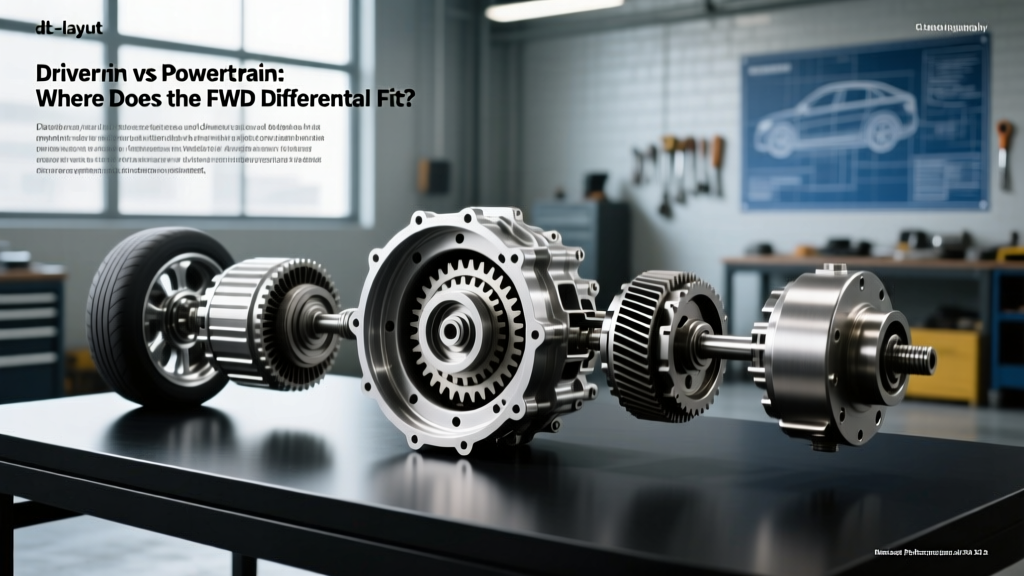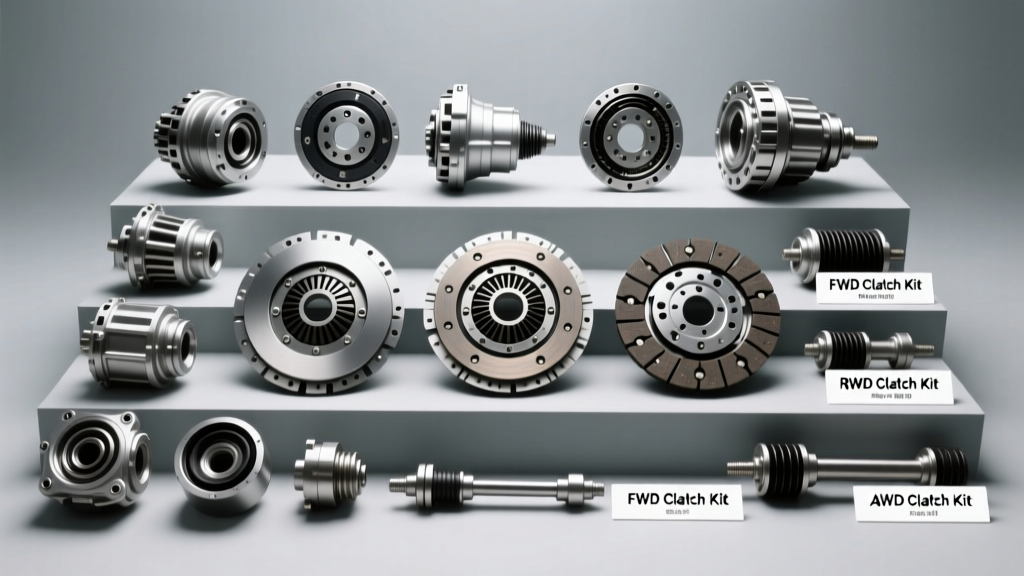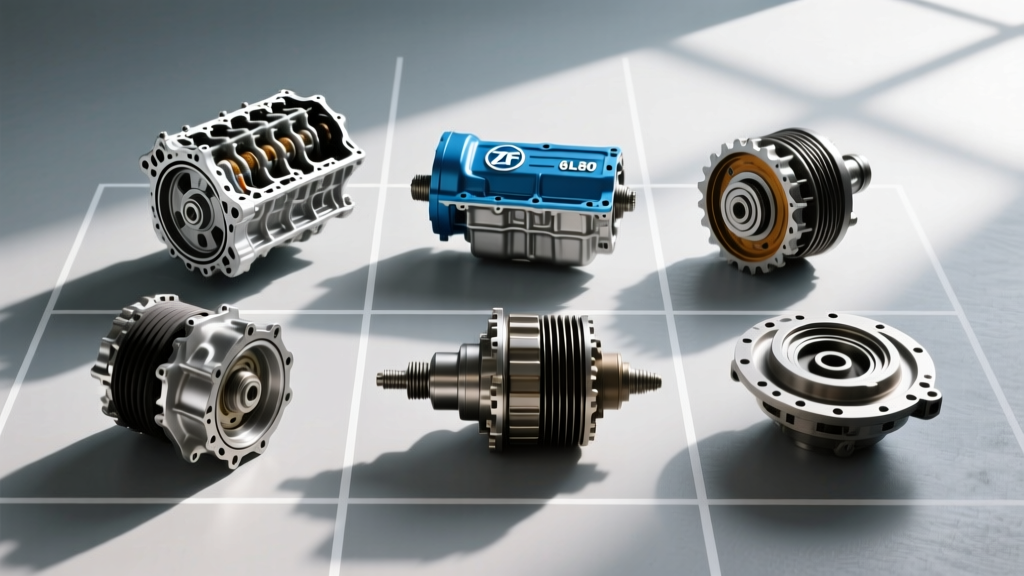
Enthusiasts who cut their teeth on motorcycle or bicycle mechanics often assume automotive power delivery follows the same straightforward logic. However, stepping up from basic bike drivetrain maintenance—where you might simply degrease a cassette, adjust a chain tensioner, or swap a motorcycle's final drive oil—into the multi-axis, high-torque world of automotive layouts requires a massive paradigm shift. A bicycle or motorcycle drivetrain operates primarily on a single plane. Automotive systems, conversely, must manage lateral weight transfer, extreme rotational mass, and multi-node torque distribution.
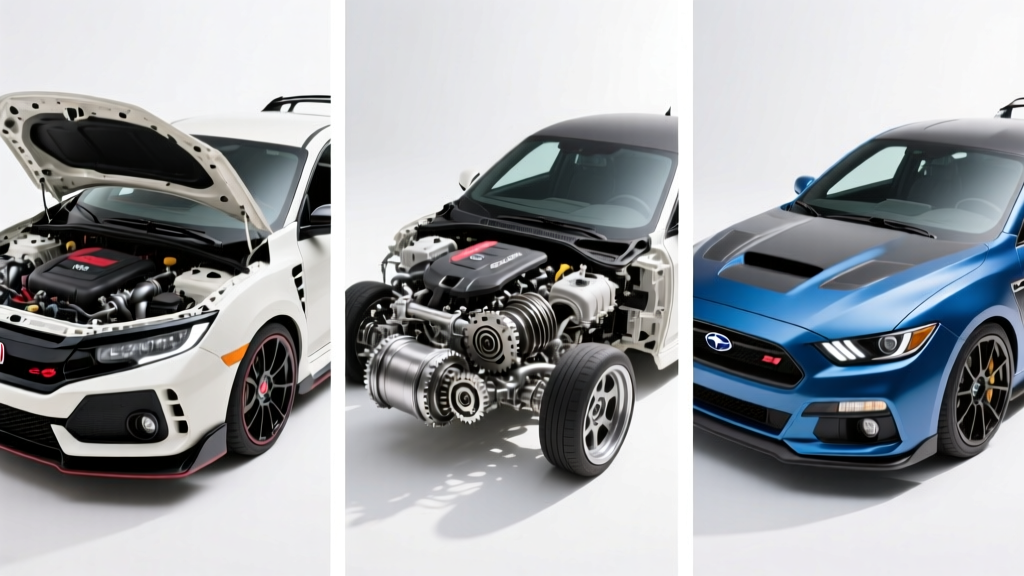
In this 2026 model-specific repair guide, we are moving past generic textbook definitions. We will dissect three modern benchmarks: the Front-Wheel Drive (FWD) Honda Civic Type R (FL5), the Rear-Wheel Drive (RWD) Ford Mustang S650, and the All-Wheel Drive (AWD) Subaru WRX (VB). By examining exact torque specs, fluid capacities, and common failure modes, we will illustrate exactly why automotive drivetrain architecture demands a specialized diagnostic approach.
The Single-Plane Illusion: Bike vs. Automotive Complexity
When performing bike drivetrain maintenance, wear is usually visible. A stretched motorcycle chain or a worn bicycle sprocket shows physical teeth degradation. Automotive drivetrains hide their wear inside sealed cast-aluminum and stamped-steel housings. Furthermore, while a bike's final drive deals with direct longitudinal torque, automotive layouts must incorporate steering angles (FWD/AWD), suspension articulation (RWD/AWD), and thermal management for fluid shearing. Let us break down how these variables manifest in three distinct automotive architectures.
FWD Deep Dive: Honda Civic Type R (FL5) Transaxle & CV Axles
The FWD layout consolidates the engine, transmission, and differential into a single transaxle housing. In the 2024-2026 Honda Civic Type R (FL5), this means the 6-speed manual transmission and the helical limited-slip differential (LSD) share the same fluid bath.
Fluid Specs and Axle Torque
Unlike bike drivetrain maintenance where chain lube is applied externally, the FL5's internal LSD requires precise friction modifiers to prevent chatter during high-G cornering. Honda specifies Honda Genuine MTF (Part #08798-9031). The capacity is exactly 1.9 Liters. Using standard 75W-90 gear oil will destroy the synchronizers and cause severe LSD binding.
The most common FWD repair involves torn Constant Velocity (CV) boots. The FL5's aggressive negative camber and high torque output (310 lb-ft) put immense stress on the outer CV joints. When replacing a half-shaft or axle nut, precision is non-negotiable:
- Axle Nut Torque: 134 lb-ft (181 Nm), followed by a 60-degree turn, then staked into the groove.
- Ball Joint Pinch Bolt: 47 lb-ft (64 Nm).
- Common Failure Edge Case: Inner CV joint tripod wear. If the car vibrates only under hard acceleration but coasts smoothly, the inner joint housing is pitted. A complete OEM Honda half-shaft assembly (Part #44301-T60-A01) runs approximately $650-$800 in 2026.
RWD Architecture: Ford Mustang S650 Driveshaft & Differential
The RWD layout separates the transmission from the final drive, necessitating a longitudinal driveshaft. The 2024-2026 Ford Mustang S650 utilizes either the Tremec TR-4050 manual or the 10R80 10-speed automatic, sending power back to an independent rear suspension (IRS) via an aluminum or carbon-fiber two-piece driveshaft.
U-Joints, Pinion Seals, and Crush Sleeves
While bike drivetrain maintenance might involve checking a shaft-drive spline, the Mustang's RWD system relies on high-speed rotational balance. A common S650 issue is driveline shudder at 65-75 mph, often misdiagnosed as a transmission issue when it is actually a failing center support bearing or unbalanced driveshaft.
At the rear, the Super 8.8-inch differential requires Motorcraft SAE 75W-85 Premium Synthetic Hypoid Gear Lubricant. If you are replacing a leaking rear pinion seal (a frequent repair on high-horsepower builds), you must deal with the pinion nut.
Mechanic's Warning: The S650 rear differential uses a crush sleeve to set bearing preload. If you remove the pinion nut to swap the seal without using a specialized pinion holding tool and a torque multiplier, you will collapse the crush sleeve further upon reassembly, leading to catastrophic bearing failure within 1,000 miles. Always replace the crush sleeve and torque the new pinion nut to 200-220 lb-ft until the exact rotational drag (typically 8-14 in-lb) is achieved. Reference the Ford Service Content portal for exact rotational drag specs based on your specific axle ratio.
The AWD Matrix: Subaru WRX (VB) Symmetrical System
AWD is where automotive engineering completely eclipses the scope of bike drivetrain maintenance. The 2022-2026 Subaru WRX (VB chassis) with the 6-speed manual utilizes a Symmetrical AWD system featuring three distinct differentials: a front helical LSD (integrated into the transaxle), a viscous-coupling center LSD, and a rear mechanical LSD.
Three-Differential Fluid Services
Maintaining the VB WRX requires servicing three separate fluid reservoirs. A mismatch in fluid viscosity between the front and rear differentials will cause the center viscous coupler to overheat and bind, leading to 'torque bind' during low-speed parking maneuvers.
- Front Diff / Manual Transaxle: Requires Subaru Extra-HP 75W-90 GL-5. Capacity is roughly 3.8 Liters. This single fill lubricates the gears, synchros, and front LSD.
- Center Differential: On the 6-speed manual, the center diff is sealed inside the transmission extension housing and shares the front diff fluid.
- Rear Differential: Requires 75W-90 GL-5. Capacity is 0.8 Liters. Drain and fill plug torque is 33 lb-ft (45 Nm).
A critical repair point on the VB WRX is the rear driveshaft flex disc and center support bearing. Unlike the rigid Mustang setup, the Subaru relies on a rubber flex disc to absorb longitudinal shock. If the flex disc cracks, the driveshaft will strike the transmission tunnel under heavy throttle. The center support bearing bolts must be torqued to exactly 35 lb-ft (47 Nm) to prevent harmonic resonance. For factory service manuals, technicians rely on Subaru TechInfo.
Cost & Complexity Matrix: FWD vs RWD vs AWD
To contextualize the leap from bicycle or motorcycle maintenance to automotive drivetrains, review the 2026 average repair data below. Labor rates are based on a national average of $165/hour.
| Layout / Model | Primary Wear Components | Fluid Capacity & Type | Avg. DIY Time | Pro Shop Repair Cost (2026) |
|---|---|---|---|---|
| FWD (Civic Type R) | Outer CV Boots, Axle Seals | 1.9L Honda MTF | 2.5 Hours | $450 - $650 (Boot/Seal) |
| RWD (Mustang S650) | Pinion Seal, U-Joints, Diff Cover Gasket | 1.8L Motorcraft 75W-85 | 3.5 Hours | $700 - $950 (Pinion Seal) |
| AWD (WRX VB 6MT) | Flex Disc, Rear Diff Bushing, Axle Seals | 3.8L Front / 0.8L Rear (75W-90 GL-5) | 5.0 Hours | $1,100 - $1,400 (Flex Disc/Bearing) |
Diagnostic Realities: When Layouts Fail
The ultimate difference between bike drivetrain maintenance and automotive repair lies in diagnostics. If a motorcycle chain skips, you see it. If an automotive differential fails, the symptoms are often masked by modern traction control and torque-vectoring systems.
For example, a failing center differential in an AWD WRX will not immediately leave you stranded. Instead, the vehicle's ECU will detect rotational speed discrepancies between the front and rear axles, triggering a 'Torque Distribution' warning and pulling timing to protect the driveline. Conversely, a worn RWD Mustang U-joint might only present as a faint 'clunk' when shifting from Reverse to Drive, easily mistaken for normal transmission lash.
Whether you are turning wrenches on a Ford, Honda, or Subaru, always consult the OEM service portals like Honda ProsInfo or equivalent manufacturer databases. Guessing torque specs based on 'feel' works for a bicycle bottom bracket; in a 4,000-lb vehicle transferring 300+ horsepower to the pavement, it leads to catastrophic mechanical failure.