Understanding Stall Speed in GMC Drivetrains
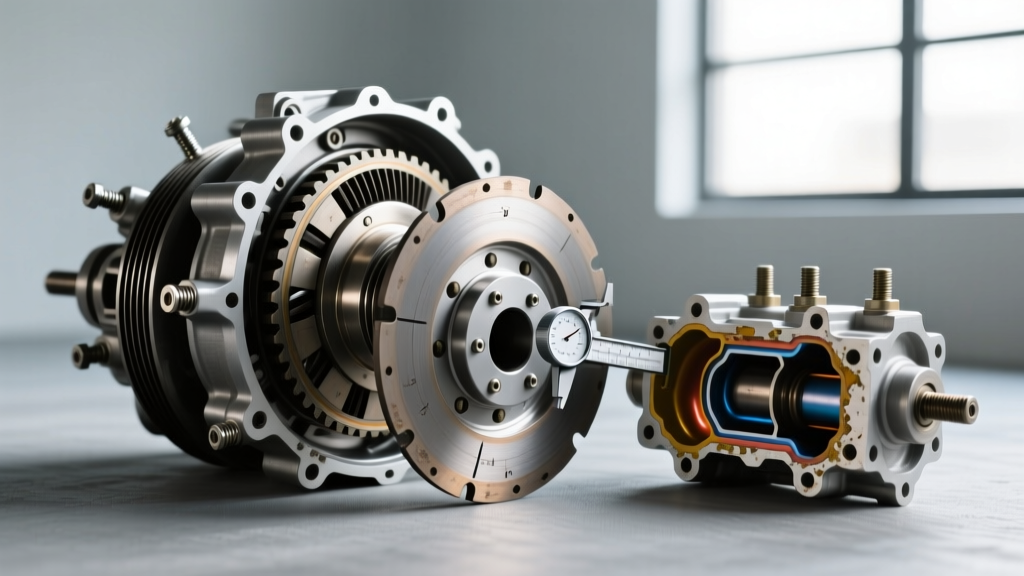
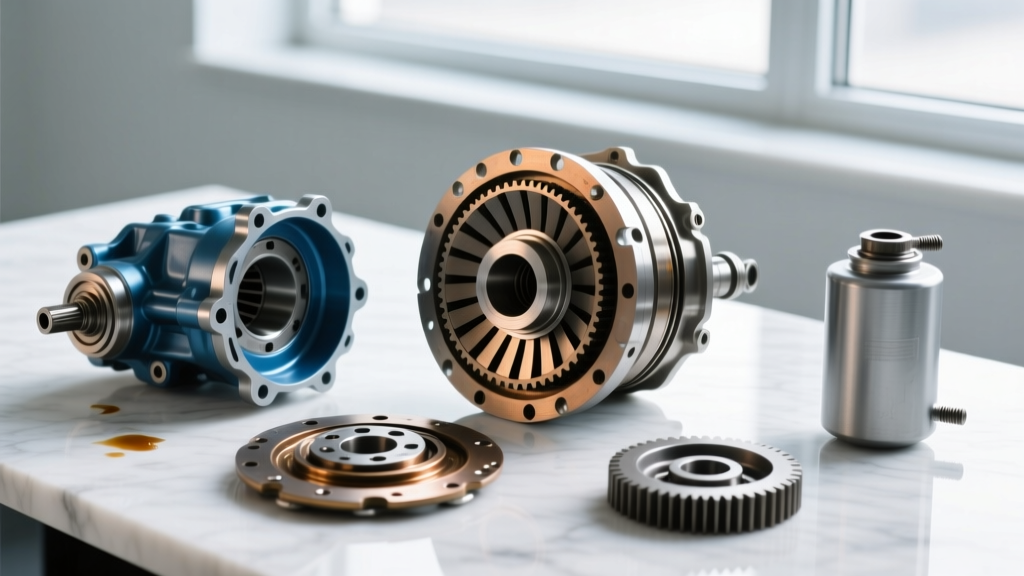
When diagnosing drivetrain performance or planning a powertrain upgrade for your GMC Sierra or Yukon, understanding your torque converter's stall speed is critical. The GMC torque converter acts as a fluid coupling between the engine's flexplate and the transmission's input shaft. Stall speed is defined as the maximum engine RPM achieved when the transmission is in gear, the output shaft is held completely stationary, and the throttle is wide open (WOT).
In modern GMC trucks equipped with the 6L80, 8L90, or the latest 2026 10L80 transmissions, the factory stall speed is typically tuned low (between 1,600 and 2,200 RPM) to prioritize fuel economy, reduce heat generation, and support heavy towing. However, as vehicles age or as enthusiasts modify their engines with aggressive camshafts or forced induction, verifying and adjusting this stall speed becomes a mandatory step in the tuning process.
Required Tools and Safety Protocols
Before initiating any stall testing, you must ensure the transmission is in optimal health and operating at the correct temperature. Performing a stall test on a cold transmission or one with degraded fluid will yield inaccurate data and risk catastrophic internal damage.
- Scan Tool: A bi-directional OBD2 scanner capable of reading live Transmission Fluid Temperature (TFT) and Engine RPM PID data (e.g., Snap-on Zeus or GM MDI2).
- Fluid Temperature Target: The TFT must be between 160°F and 200°F (71°C - 93°C). Cold fluid is thicker, artificially raising stall speed readings.
- Brake System Verification: Ensure your GMC's hydraulic brake system is fully bled and capable of holding the vehicle stationary against WOT engine torque.
- Cooling System Check: Verify the auxiliary transmission cooler is functioning. Stall testing generates immense heat—up to 100°F of temperature increase in just 5 seconds.
Step 1: The Foot-Brake Stall Test (OEM Verification)
The foot-brake stall test is the industry standard for verifying the health of a stock GMC torque converter and the holding capacity of the transmission's internal clutches. This test measures the "true stall" limited by the vehicle's braking capacity.
- Bring the vehicle to a complete stop on a flat, paved surface.
- Verify via your scan tool that the TFT is above 160°F.
- Shift the transmission into Drive (D).
- Apply maximum, two-foot pressure to the brake pedal.
- Quickly push the throttle to Wide Open Throttle (WOT) and hold it for no more than 3 to 5 seconds.
- Record the peak RPM achieved on the tachometer, then immediately release the throttle and shift into Neutral to allow the transmission to cool.
Expert Warning: Never exceed 5 seconds during a foot-brake stall test. Prolonged WOT against the brakes will flash-boil the Dexron VI or Dexron ULV fluid, glazing the clutch packs and destroying the stator bearings inside the torque converter.
Step 2: The Flash Stall Test (Performance Applications)
If your GMC is equipped with an aftermarket high-stall converter, the factory brakes will likely not hold the vehicle stationary at WOT. In these cases, the foot-brake test is useless. Instead, you must perform a "flash stall" test, which measures the RPM the converter flashes to under maximum load during a roll.
- Find a safe, closed-course environment.
- Roll the vehicle at approximately 20 MPH in 3rd or 4th gear (to prevent excessive torque multiplication and tire spin).
- Snap the throttle to WOT.
- Observe the tachometer. The RPM will rapidly spike before the vehicle begins to accelerate heavily or the transmission downshifts.
- The peak of this initial RPM spike is your flash stall speed.
Step 3: Diagnosing Abnormal Stall Speed Readings
Once you have your data, compare it against the manufacturer's specifications. According to the Automatic Transmission Rebuilders Association (ATRA), deviations of more than 200 RPM from the factory baseline indicate a mechanical or hydraulic fault.
GMC 6L80, 8L90, and 10L80 Stall Speed Diagnostic Matrix
| Transmission Model | OEM Part Number | Factory Stall Range | Abnormal High Stall Cause | Abnormal Low Stall Cause |
|---|---|---|---|---|
| GM 6L80 (2009-2014) | 24230235 | 1,800 - 2,100 RPM | Worn 3-5-R clutch pack, low line pressure, leaking stator seal. | Engine power deficit, restricted exhaust, stator one-way clutch failure. |
| GM 8L90 (2015-2024) | 24253928 | 1,600 - 1,900 RPM | Cracked input shaft, failed apply piston seals, degraded ULV fluid. | Incorrect flexplate stack-up, stator freewheeling. |
| GM 10L80 (2025-2026) | 24295412 | 1,500 - 1,800 RPM | Valve body cross-leak, faulty TCC solenoid, torque converter hub wear. | Tuning limitations, aggressive lockup mapping. |
If your foot-brake stall test yields an RPM significantly higher than the factory spec, your transmission is slipping internally. The torque converter is doing its job, but the internal friction elements cannot hold the turbine stationary. Conversely, a low stall speed usually points to an engine issue (such as a clogged catalytic converter or failing fuel pump) or a failed stator one-way clutch inside the converter, as detailed in Sonnax technical bulletins.
Step 4: Selecting and Installing an Aftermarket GMC Torque Converter
When upgrading for modified applications—such as a supercharged 6.2L L86 or a turbo-diesel Duramax—selecting the correct aftermarket stall speed is a balancing act. A higher stall speed allows the engine to enter its powerband faster, spool turbos more efficiently, and multiply torque aggressively off the line. However, it also increases slip, heat, and highway cruising RPM.
- Towing / Daily Driving: Stick to OEM specs or a mild 2,400 RPM stall. Maintain factory lockup capabilities.
- Street/Strip (Camshaft Upgrades): A 2,800 to 3,200 RPM stall (e.g., Circle D Specialties 6L80 3200 Series, approx. $750) is ideal for aggressive camshafts that lack low-end vacuum.
- Dedicated Drag Racing: 4,000+ RPM flash stall. Requires a standalone transmission cooler and an aftermarket transmission valve body to handle the hydraulic volume.
Critical Installation Specifications
When installing a new torque converter in your GMC, precision is non-negotiable. Improper installation will lead to immediate pump gear failure or flexplate cracking.
- Converter Seating: You must feel three distinct "clunks" as the converter engages the transmission oil pump drive gear, the stator support, and the turbine hub. Measure the distance from the bellhousing mating surface to the converter pad; it should be at least 1/8" to 1/4" recessed.
- Flexplate Bolt Torque: Use OEM GM flexplate bolts (Part #11561028). Torque the M8 converter-to-flexplate bolts to 35 lb-ft with a medium-strength threadlocker (Loctite 243). Do not reuse stretched OEM bolts.
- Fluid Fill Procedure: Pre-fill the new torque converter with 2 to 3 quarts of the correct fluid (Dexron VI for 6L80, Dexron ULV for 8L90/10L80) before installation to prevent dry-start pump cavitation.
By systematically testing and understanding your GMC torque converter's stall speed, you can accurately diagnose internal transmission wear, validate engine health, and properly spec aftermarket components for your specific performance goals. For further calibration strategies, consult the tuning guidelines provided by TCI Automotive.