The Voltec ECVT: Beyond Standard Hybrid Drivetrains
As the automotive landscape in 2026 continues to shift toward full electrification, the Chevrolet Volt remains a masterclass in transitional engineering. For technicians and dedicated owners, understanding the Chevy Volt drivetrain requires abandoning conventional automatic transmission logic. The Volt does not use a traditional belt-and-pulley CVT, nor does it rely on the fixed-ratio gearsets of a standard automatic. Instead, it utilizes the Voltec Electronic Continuously Variable Transmission (ECVT), designated as the 4ET50 for Generation 1 (2011-2015) and the heavily revised 4ET55 for Generation 2 (2016-2019).
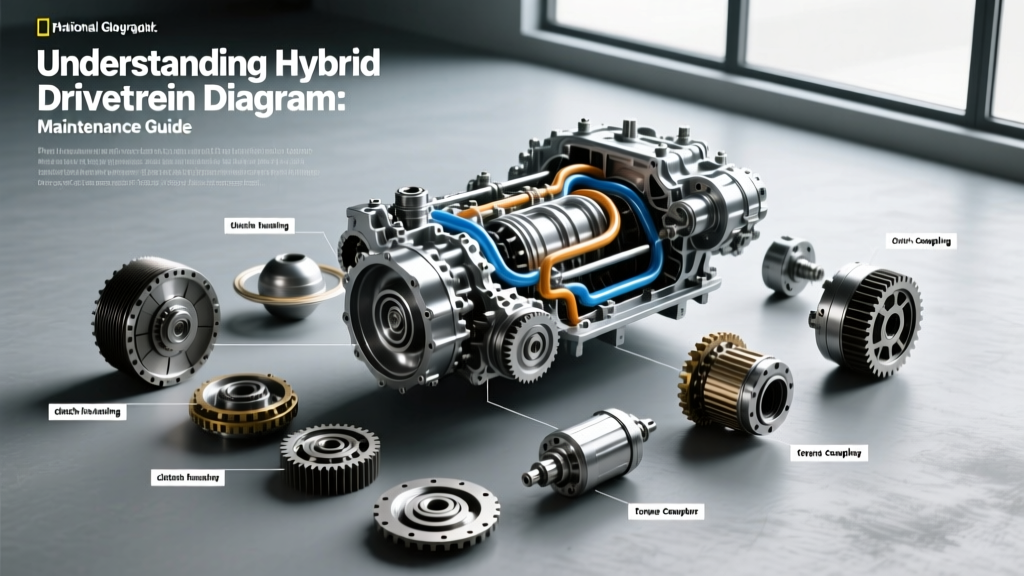
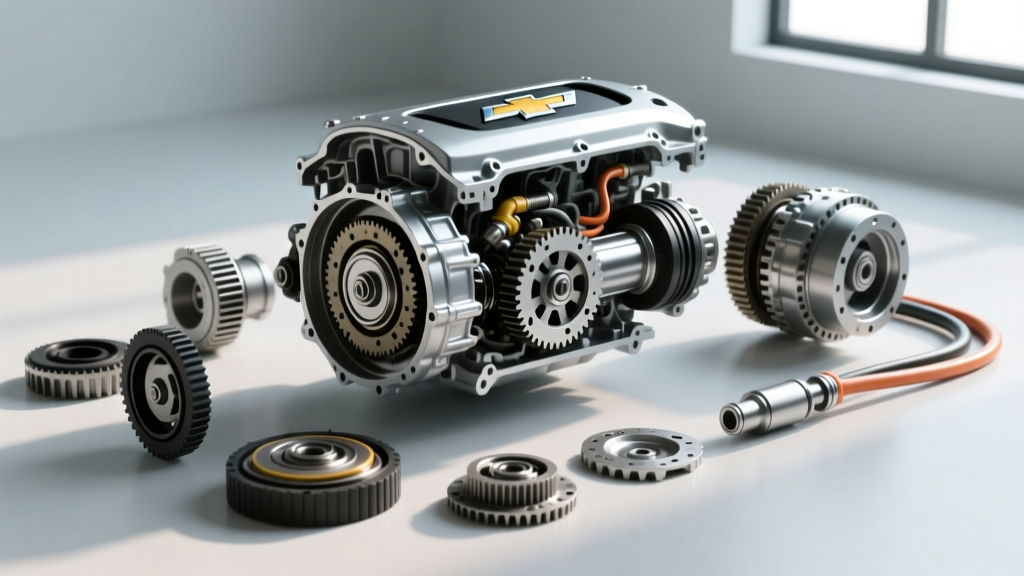
According to SAE International technical papers on the Voltec Gen 2 architecture, this drivetrain integrates two electric motor/generators (Motor A and Motor B), three planetary gearsets, and three wet clutches to seamlessly blend series and parallel hybrid operation. Because the electric motors are housed directly within the transaxle casing and share lubrication with the planetary gears, preventive maintenance is not just about mechanical wear—it is about preserving the dielectric and thermal properties of the fluid protecting high-voltage stator windings.
Fluid Specifications: Dexron VI vs. Dexron HP
The most critical mistake made by independent shops servicing the Chevy Volt drivetrain is treating the Gen 2 ECVT like a conventional automatic. While Generation 1 models require standard ACDelco Dexron VI, Generation 2 models demand a highly specialized fluid: ACDelco Dexron HP (Part # 10-9395).
The Gen 2 4ET55 transaxle operates at significantly higher thermal loads due to the increased output of Motor B (114 kW compared to the Gen 1's 63 kW). Dexron HP features a modified friction modifier package and enhanced oxidation stability designed specifically to protect the insulation on the internal electric motor copper windings while maintaining precise clutch apply rates. Using standard Dexron VI in a Gen 2 Volt can lead to clutch shudder, motor overheating, and eventual dielectric breakdown, triggering severe drivetrain malfunction warnings.
Gen 1 vs. Gen 2 Drivetrain Service Data
| Specification | Gen 1 (2011-2015) 4ET50 | Gen 2 (2016-2019) 4ET55 |
|---|---|---|
| Required Fluid | ACDelco Dexron VI (10-9243) | ACDelco Dexron HP (10-9395) |
| Total System Capacity | 8.5 Quarts (8.0 Liters) | 8.0 Quarts (7.6 Liters) |
| Drain & Fill Volume | ~5.2 Quarts (4.9 Liters) | ~5.5 Quarts (5.2 Liters) |
| Service Interval | Every 97,500 miles (Severe: 45k) | Lifetime (Severe: 45k-60k recommended) |
| Drain Plug Torque | 12 Nm (106 lb-in) | 12 Nm (106 lb-in) |
Execution: The Correct Drain and Fill Protocol
Performing a fluid exchange on the Chevy Volt drivetrain requires strict adherence to procedure to avoid airlocking the internal cooling galleries or stripping the aluminum casing threads.
- Vehicle Leveling: The Volt must be perfectly level on a lift. An uneven stance will result in an under-filled transaxle, starving Motor A's cooling circuit.
- The Golden Rule - Fill Plug First: Always remove the fluid level/fill plug (located on the side of the transaxle case) before removing the drain plug. If the drain plug is removed first and the fill plug is seized or stripped, the vehicle is immobilized.
- Draining: Remove the bottom drain plug using a 12mm hex bit. Allow the fluid to drain for a minimum of 15 minutes. The fluid will be dark due to normal clutch material wear, but should not smell burnt.
- Reinstallation: Install the drain plug with a new crush washer. Torque to exactly 12 Nm (106 lb-in). Do not over-torque; the transaxle case is cast aluminum and highly susceptible to thread stripping.
- Filling: Pump the specified fluid into the fill hole until it begins to weep out. Reinstall the fill plug and torque to 12 Nm.
- Thermal Cycling: Use a bi-directional scan tool (such as the GM MDI 2 with GDS2 software) to monitor the Transmission Fluid Temperature (TFT). The fluid level check must be performed when the TFT is between 86°F and 122°F (30°C - 50°C).
Thermal Management: The Tri-Loop Cooling System
The U.S. Department of Energy notes the complexity of the Voltec thermal management system, which utilizes three distinct coolant loops: the engine loop, the high-voltage battery loop, and the power electronics/drivetrain loop. The drivetrain cooling loop is responsible for cooling the inverter module and the internal stator windings of Motor A and Motor B.
Inverter Coolant Pump Maintenance
The electric coolant pump for the power electronics loop is a known wear item. If this pump fails, the drivetrain will rapidly heat soak under EV acceleration, causing the vehicle to enter a reduced-power 'limp' mode to protect the IGBTs (Insulated-Gate Bipolar Transistors) in the inverter.
- Gen 1 Pump Part Number: 24257832
- Gen 2 Pump Part Number: 24283949
- Coolant Specification: ACDelco Dex-Cool Premixed (Part # 10-5027). Never use generic green antifreeze, as it lacks the specific dielectric properties required in the event of an internal leak near high-voltage components.
Preventive Tip: Inspect the coolant reservoir for the power electronics loop (located on the passenger side of the engine bay) every 10,000 miles. If the fluid level drops but no external leak is visible, suspect a failing internal transmission cooler, which allows ATF and coolant to mix. This is a catastrophic failure mode requiring complete transaxle replacement.
Half-Shafts, CV Joints, and Intermediate Bearings
Because electric motors deliver instantaneous peak torque at 0 RPM, the mechanical drivetrain components connecting the 4ET50/4ET55 to the wheels endure immense torsional stress.
The Gen 1 Intermediate Shaft Vulnerability
Generation 1 Volts utilize an intermediate shaft on the passenger side to equalize half-shaft lengths and reduce torque steer. The support bearing on this intermediate shaft is prone to premature wear, especially in regions where road salt is heavily used. Symptoms include a low-frequency hum that increases with vehicle speed and a subtle vibration under hard EV acceleration.
- Intermediate Shaft Bearing Part: ACDelco 210-1845
- Axle Nut Torque Spec: When removing or replacing CV axles, the staked axle nut must be replaced and torqued to 200 Nm (148 lb-ft).
- Ball Joint Torque: Lower ball joint pinch bolt to 55 Nm (41 lb-ft).
Gen 2 models revised the front suspension and axle geometry, largely eliminating the intermediate shaft, but standard CV joint boot inspections remain mandatory every 15,000 miles to prevent grease depletion and joint failure.
2026 Diagnostic Realities and Repair Economics
As the Chevy Volt ages, owners must be prepared for the economic realities of hybrid drivetrain repairs. Preventive maintenance is vastly cheaper than reactive component replacement.
| Common Failure / Service | Typical DTCs | Estimated Cost (Parts & Labor) |
|---|---|---|
| Voltec Fluid Drain & Fill | N/A | $150 - $250 |
| PE Coolant Pump Replacement | P0A0F, P0A1F, P0560 | $450 - $650 |
| Motor Bearing Whine (Gen 1) | N/A (Audible) | $2,800 - $3,500 (Rebuild/Replace) |
| Inverter/Transaxle Assembly | P0A0A, P0A10 | $4,500 - $7,000+ |
Expert Insight: If you encounter a 'Propulsion Power Reduced' message accompanied by inverter-related DTCs, do not immediately condemn the transaxle. Use an oscilloscope to check the resolver sensors inside the transmission case. These sensors track the exact rotor position of Motor A and B. A $40 wiring harness chafe or a failing resolver can mimic a catastrophic inverter failure. Always verify sensor waveforms before authorizing a $5,000 drivetrain teardown.
By adhering to strict fluid specifications, monitoring the tri-loop cooling system, and respecting the unique torque requirements of the Voltec ECVT, owners can easily push their Chevy Volt drivetrain well past the 200,000-mile mark with minimal degradation in EV performance.