The Core Divide: How Kia AWD Differs from Traditional 4WD
When evaluating modern crossover SUVs and rugged off-roaders, the distinction between All-Wheel Drive (AWD) and Four-Wheel Drive (4WD) extends far beyond traction control algorithms. For automotive technicians and owners alike, understanding these architectural differences is critical, particularly when navigating the complexities of a Kia drivetrain warranty. While traditional 4WD systems rely on robust, chain-driven transfer cases designed for low-range torque multiplication, modern Kia AWD systems utilize highly calibrated, transversely mounted Power Transfer Units (PTUs) and electromagnetic rear couplers. This preventive maintenance guide dissects these mechanical differences and outlines the exact service protocols required to keep your drivetrain protected and your warranty claims valid in 2026.
Kia's Dynamax AWD System Architecture
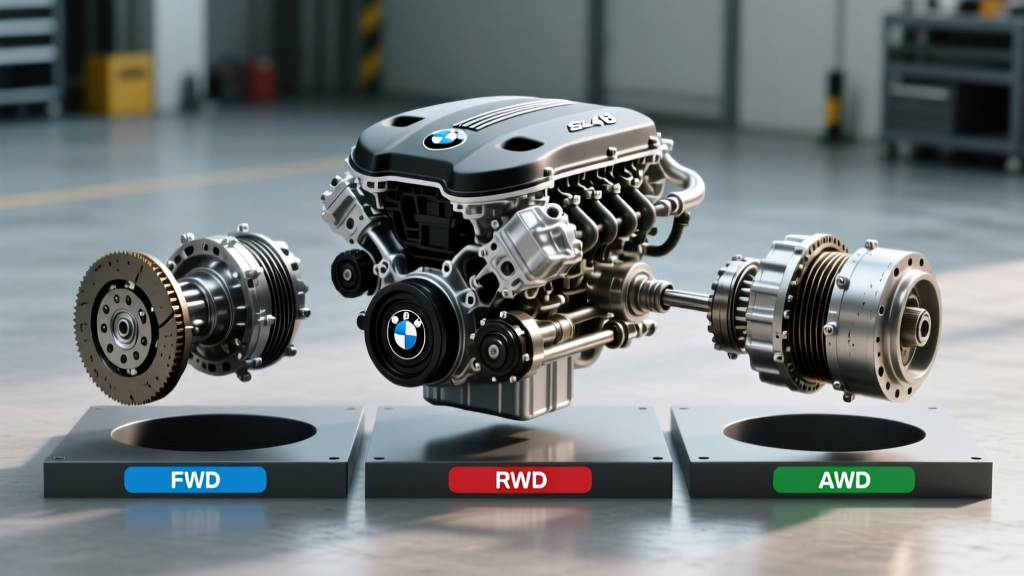
Most modern Kia AWD vehicles, including the Sorento, Sportage, and Telluride, utilize the Dynamax AWD system developed in partnership with Magna Powertrain. This system is designed for transverse engine layouts. The PTU is bolted directly to the front transaxle, receiving torque directly from the transmission output shaft. It redirects power 90 degrees through a hypoid gear set to a carbon-fiber driveshaft, which feeds into an Intelligent Torque Controlled Coupling (ITCC) at the rear differential. The ITCC uses an electromagnetic actuator to press clutch packs together, variably distributing up to 50% of torque to the rear wheels. Because the PTU operates in close proximity to the hot exhaust and transaxle, its internal gear oil is subjected to extreme thermal cycling.
Traditional Part-Time 4WD Mechanics
Conversely, traditional part-time 4WD systems (found in older body-on-frame SUVs and dedicated trucks) utilize a longitudinal engine layout. The transfer case (such as the ubiquitous BorgWarner NV241 or NV246) is mounted behind the transmission and uses a heavy-duty chain and planetary gear set to provide a low-range (4L) gear reduction. These systems are mechanically locked and rely on automatic transmission fluid (ATF) for lubrication and cooling. The thermal loads and shearing forces on 4WD transfer case fluids are vastly different from the hypoid gear crushing pressures experienced in a Kia AWD PTU.
The Warranty Trap: Why Fluid Neglect Voids Coverage
A pervasive myth in the automotive community is that AWD PTUs and rear differentials are 'sealed for life.' This is categorically false and is the leading cause of denied Kia drivetrain warranty claims. Kia's warranty structure typically offers a 5-year/60,000-mile limited drivetrain warranty and a 10-year/100,000-mile powertrain warranty. However, the PTU and rear ITCC coupler often fall under the 5-year/60,000-mile basic or specific drivetrain clauses unless a Technical Service Bulletin (TSB) explicitly extends coverage for a known defect.
If your PTU fails at 65,000 miles and the dealership inspects the unit to find degraded, burnt, or metallic-laced gear oil, your claim will likely be denied due to 'lack of proper maintenance.' According to the official Kia warranty guidelines, components damaged by fluid breakdown or failure to adhere to severe service schedules are not covered. Because the PTU is a wear item subject to fluid shearing, treating it as a sealed unit is a financial liability.
Preventive Maintenance Schedule: AWD vs 4WD
| Component | System Type | Fluid Specification | Capacity | Severe Service Interval | Warranty Impact |
|---|---|---|---|---|---|
| Power Transfer Unit (PTU) | Kia AWD (Transverse) | API GL-5 75W-85 | ~0.65 Liters | Every 30,000 miles | Critical for 5yr/60k Drivetrain |
| Rear Differential (ITCC) | Kia AWD (Transverse) | API GL-5 75W-85 | ~0.60 Liters | Every 30,000 miles | Critical for ITCC Clutch Health |
| Transfer Case | Traditional 4WD (Longitudinal) | ATF+4 or Dexron VI | ~2.0 Liters | Every 60,000 miles | Standard Powertrain Coverage |
| Front/Rear Axle Differentials | Traditional 4WD | API GL-5 75W-90 | 1.2 - 1.8 Liters | Every 30,000 miles | Standard Drivetrain Coverage |
Deep Dive: PTU and Rear Differential Service Specs
To maintain your Kia drivetrain warranty, you must document all fluid services with exact specifications. Dealerships often overlook PTU fluid changes because the fill and drain plugs are tucked tightly against the subframe and exhaust heat shields. Here are the precise service parameters for the 2021-2026 Kia Sorento and Sportage AWD platforms.
Kia AWD PTU (Power Transfer Unit) Service
- Fluid Type: API GL-5 75W-85 Hypoid Gear Oil. (Do not use standard 75W-90; the higher viscosity can cause sluggish oil circulation in the tight clearances of the Dynamax PTU, leading to premature bearing wear).
- Capacity: Approximately 0.65 Liters (0.68 Quarts).
- Drain Plug Torque: 39 Nm (29 lb-ft). Note: The drain plug often features a crush washer that must be replaced (Kia Part #21513-38000) to prevent weeping, which dealerships will cite as a maintenance failure.
- Fill Plug Torque: 39 Nm (29 lb-ft).
- Procedure Note: The PTU must be filled until the fluid is level with the bottom of the fill hole threads. Because of the tight clearance, a pneumatic fluid transfer pump with a narrow hose is required.
Kia AWD Rear Differential (ITCC) Service
The rear differential houses the ITCC clutch pack. Using gear oil without the proper friction modifiers or exceeding the viscosity rating will cause the electromagnetic clutch to engage erratically, resulting in 'binding' during tight turns and eventual clutch pack burnout.
- Fluid Type: API GL-5 75W-85 (Ensure it meets Kia MS591-111 or equivalent ITCC friction specifications).
- Capacity: Approximately 0.60 Liters.
- Drain/Fill Plug Torque: 40 Nm (29.5 lb-ft).
Traditional 4WD Transfer Case Service Contrast
In a traditional 4WD setup, the transfer case relies on ATF (like Dexron VI or Mopar ATF+4). The fluid acts as both a hydraulic medium for the clutch packs (in active 4WD systems like the NV246) and a lubricant for the drive chain. The drain and fill plugs typically require a 3/8-inch square drive, and torque specs are generally lower, around 20-25 Nm (15-18 lb-ft), as the pans are often stamped aluminum or thin cast magnesium. The sheer volume of fluid (2.0L+) makes it a more forgiving system regarding minor thermal degradation compared to the 0.65L PTU.
Real-World Costs and Drivetrain Failure Edge Cases
Ignoring the 30,000-mile severe service interval for your Kia AWD system leads to catastrophic, out-of-pocket expenses that far exceed the cost of preventive maintenance.
Edge Case 1: PTU Bearing Shearing and Case Cracking
When 75W-85 gear oil shears down and loses its film strength, the hypoid gears generate excessive metallic particulate. This debris circulates into the PTU support bearings. As the bearings fail, the internal shaft wobbles, cracking the cast aluminum PTU housing.
Repair Cost: $2,800 to $3,500 for a complete PTU assembly replacement and transaxle reseal.
Warranty Status: Denied if the dealership finds evidence of burnt fluid or missing service records.
Edge Case 2: ITCC Coupler Burnout
If the rear differential fluid is contaminated with water (from deep puddle fording) or degrades, the ITCC clutch plates will slip and overheat. The electromagnetic actuator will continuously attempt to apply clamping force, eventually melting the internal wiring harness.
Repair Cost: $1,500 to $2,200 for the rear differential assembly and ITCC coupler.
Warranty Status: Often denied under the 'environmental damage' or 'lack of maintenance' clauses of the NHTSA-tracked warranty guidelines.
Expert Tip for 2026 Warranty Claims: Always keep physical and digital receipts for your drivetrain fluid services. If you perform the PTU service at home, photograph the old fluid, the new fluid bottles showing the API GL-5 75W-85 rating, and the odometer. Attach these to your vehicle's service history in the Kia Connect app or a physical logbook to preemptively defend against warranty claim denials.
Conclusion: Documenting Maintenance for Warranty Claims
The mechanical differences between 4WD and AWD systems dictate entirely different maintenance philosophies. While a traditional 4WD transfer case is a robust, high-capacity unit that forgives minor maintenance delays, a Kia AWD PTU is a compact, thermally stressed component that demands strict adherence to fluid service intervals. By understanding the exact fluid capacities, torque specifications, and API ratings required for your specific drivetrain, you not only extend the mechanical life of your vehicle but also build an ironclad defense for your Kia drivetrain warranty. In an era where AWD components are increasingly complex and expensive to replace, proactive preventive maintenance is the most cost-effective strategy you can employ.